

The Thermal Efficiency Doctrine: Stop Layering Wrong

Base Layer Selection: Moisture Wicking, Not Just Warm
You want base layers that look invisible under your outfit because you’re afraid people will think you don’t know how to dress for cold. Here’s what actually matters: a base layer’s job is to move sweat away from your skin, not trap heat. Cotton fails here. It absorbs moisture and holds it against your body, dropping your core temperature faster than no layer at all. Merino wool and synthetic fibers pull sweat outward through capillary action, keeping skin dry while you move.
The mechanism is simple biology. Wet skin loses heat 25 times faster than dry skin in cold air. Your base layer succeeds or fails based on how quickly it transfers moisture to the next layer up. Thickness means almost nothing. A thin merino wool or polyester blend outperforms a thick cotton shirt because material type determines moisture transport speed, not mass. Select base layers by fiber composition, not warmth rating.
Mid Layer Insulation: Trapping Air Is The Only Point

Mid-layers work on the same principle as insulation in building construction. Trapped air holds heat. That’s the entire mechanism. Down, synthetic fleece, and wool all work because they create dead air pockets that your body heat warms. The material itself generates no heat. Many people buy mid-layers based on brand or aesthetic and ignore the air-trapping structure underneath. That’s a waste.
Fleece density matters directly. Tighter fleece traps less air. Looser fleece traps more but lets wind through. Synthetic mid-layers outperform down in wet conditions because synthetic fibers maintain loft when damp, while down collapses. Choose your mid-layer by checking how much air space the fabric structure creates, then verify how it responds to moisture in your specific climate. This single decision determines whether you’ll actually stay warm or just look like you tried.

The Kinematic Comfort Principle: Unrestricted Movement Is Non Negotiable

Stretch And Recovery Define How Clothes Feel
You want winter athleisure to look intentional without screaming that you tried. The real mechanism is fabric recovery: how fast material returns to its original shape after movement determines whether you feel restricted or free. Polyester blends with spandex (typically 2-8%) don’t just add stretch—they control how your body reads the garment during dynamic motion. This is biomechanics translated into fiber. Poor recovery means the fabric stays bunched, stretched, or sagging through your workout, creating phantom pressure even when nothing is actually tight.
Most brands treat stretch as a checkbox feature. They throw in spandex and call it done. What they miss is recovery speed. A winter layer with fast-recovery fibers snaps back to form within seconds of movement, keeping the garment aligned with your body rather than lagging behind. When you’re switching between walking, climbing stairs, or stretching, slow-recovery fabrics create a lag that your nervous system interprets as restriction. You end up removing layers or sizing up, which defeats the layering strategy entirely. Test any winter athleisure piece by stretching it hard, then releasing—if it takes more than a few seconds to return flush, the recovery is too slow for dynamic use.
Seam Architecture Enables Or Blocks Movement Patterns
Winter athleisure seams aren’t decorative choices. They’re placement decisions that either align with your body’s articulation points or cross them, creating mechanical friction during motion. Flat-lock seams—common in technical sportswear—sit flush against skin and rotate with your shoulder, hip, or knee rather than resisting. Standard construction places seams on the side or back, which works fine for static wear but catches and tugs when you move through winter activities like getting in and out of cars or reaching across your body.
The articulation rule is simple: seams should run parallel to movement, not perpendicular. A winter athleisure top designed for real mobility places shoulder seams slightly back (not centered on top), runs torso seams vertically along the sides, and positions sleeve seams to accommodate arm rotation. When seams cross the path your limbs actually travel, they create micro-resistance that accumulates. You don’t notice it consciously, but your body does, and you compensate by tensing muscles or limiting range. Check seam placement by putting on a piece and moving through your actual winter routine—reaching for a door handle, pulling a jacket over it, bending to pick something up. If any seam catches or creates tension, the garment wasn’t designed for kinematic function.
The “Put Together Leggings Outfit” Fallacy: It’s About Intent, Not Aesthetics

From Gym To Street Without The Costume Change
You want permission to look intentional without actually trying. That’s the real ask here. The mechanism is simple: most people treat winter athleisure as a style problem when it’s actually a transition problem. In supply chain terms, you’re managing a handoff between two different contexts—movement and stillness—without signaling confusion about which one you’re in. The outfit fails when it looks like you couldn’t decide if you were going to the gym or the coffee shop. It succeeds when every piece makes sense for both.
The difference isn’t the leggings themselves. Premium leggings work gym-to-street because the fit is intentional, the waistband doesn’t roll, and the material has weight instead of transparency. Pair them with a fitted long-sleeve or cropped crew, then add a structured layer like a puffer vest or a technical fleece jacket. The vest creates a defined silhouette that reads as deliberate, not like you grabbed what was clean. Your body shape matters less than the visual hierarchy of your layers.
Accessories That Signal Competence, Not Desperation
Stop accessorizing to hide laziness. You’ll just look like you’re hiding something. Accessories in winter athleisure work when they serve a real function while also marking your intent. A quality gym bag or structured crossbody communicates you have somewhere purposeful to be. Gold or silver hardware on your bag, watch, or small chain reads as intentional faster than no accessories at all. The rule is brutal: every accessory must answer the question “why are you carrying this” with a practical answer first.
Footwear settles the entire outfit. Matching your shoes to your base layer color (white sneakers with light gray leggings, black shoes with black leggings) creates visual continuity that reads as planned. White leather sneakers are the default because they work across contexts without apology. Avoid athletic shoes with heavy logos if you’re moving from the gym into a non-gym space. Minimal branding signals you’re not performing athleticism, you’re just moving through the world in functional clothes.
The Inverted Pyramid Of Warmth: Why Outerwear Isn’t Everything

Shell Integrity: Wind And Water Resistance
You think the jacket is the armor. It’s not. You’re paying for a false sense of security while the real heat loss happens through gaps you can’t see. Shell integrity borrows from material science: a fabric’s ability to resist wind penetration depends on thread density and weave structure, not thickness. Nylon and polyester with a tight weave block convection far better than loose knits. Your expensive puffer means nothing if cold air funnels through an unsealed shoulder seam or cuff.
Water resistance works separately from windproofing, and most athleisure shells sacrifice one for the other. A DWR coating (durable water repellent) beads water off the surface but does nothing to stop wind. A membrane like Gore-Tex blocks both, but reduces breathability and costs significantly more. The mechanism is simple: you choose between repelling moisture or blocking air movement. Winter athleisure requires both, which is why hybrid constructions with sealed seams on the torso and breathable panels at the sides actually perform better than full technical shells that nobody moves in anyway.
Trapped Air Layers Beat Thick Materials
Thermodynamics doesn’t care how soft your base layer feels. The real insulation happens in the dead air space between fabric layers. This principle applies directly to winter athleisure: a thin synthetic base layer plus a fleece mid layer plus a shell traps more heat than one oversized wool sweater under a jacket. Air movement between layers kills this effect, so fitted clothing over looser pieces prevents convection from stripping warmth away while you’re active.
Ventilation isn’t about adding vents. It’s about managing sweat and vapor so trapped air stays effective. When you move, your body dumps moisture that condenses on the inside of your shell if there’s nowhere for it to escape. Strategic gaps at the armpits, side seams, or back panels let humidity out without dumping trapped warmth. The protocol: base layer fitted, mid layer fitted, shell with pit zips or underarm venting, so you regulate temperature by opening or closing specific zones rather than peeling off entire layers.
Elevated Athletic Outfits: The Bio Rhythmic Integration

Your Body Temperature Isn’t Static
You want to look intentional without overthinking every morning. The real mechanism is this: your core body temperature fluctuates predictably throughout the day, and dressing for a static “winter” ignores that reality. Chronobiology, the study of biological time, reveals that your body runs warmest in late afternoon and coldest in early morning. Winter athleisure outfits fail when they treat 7 AM the same as 5 PM.
Start your day in a heavier base layer under your top layer. A merino wool or synthetic long sleeve under a quilted vest traps warmth when your metabolism is lowest. As afternoon arrives, that vest becomes removable dead weight. The outfit stays the same silhouette, but the configuration shifts. By evening, you add the vest back before stepping outside into cooling air. This isn’t fussy. It’s matching clothing to physiological reality instead of pretending winter is one temperature forever.
Match Fabric To What Your Skin Needs
Most people buy winter athleisure by brand name, not by thermoregulation properties. That’s incomplete. Your skin constantly releases moisture and heat, and fabric choice determines whether that process works or works against you. Synthetic blends wick moisture away from skin. Merino wool regulates temperature by absorbing and releasing water vapor. Cotton holds moisture and drops your core temperature faster. The wrong fabric in the wrong layer at the wrong time of day creates discomfort you then blame on the cold.
Layer strategically by matching each fabric to its job. The base layer touching your skin should wick or regulate, not insulate. The middle layer does the actual insulation work and tolerates some moisture. The outer layer blocks wind and sheds water. Swap your middle layer between morning and evening based on your schedule’s demands. A thinner insulating layer in the morning, a thicker one when you’re static for hours. This protocol prevents overheating indoors and underdressing outside.
The Minimalist Momentum Method: Curating A Functional Winter Wardrobe
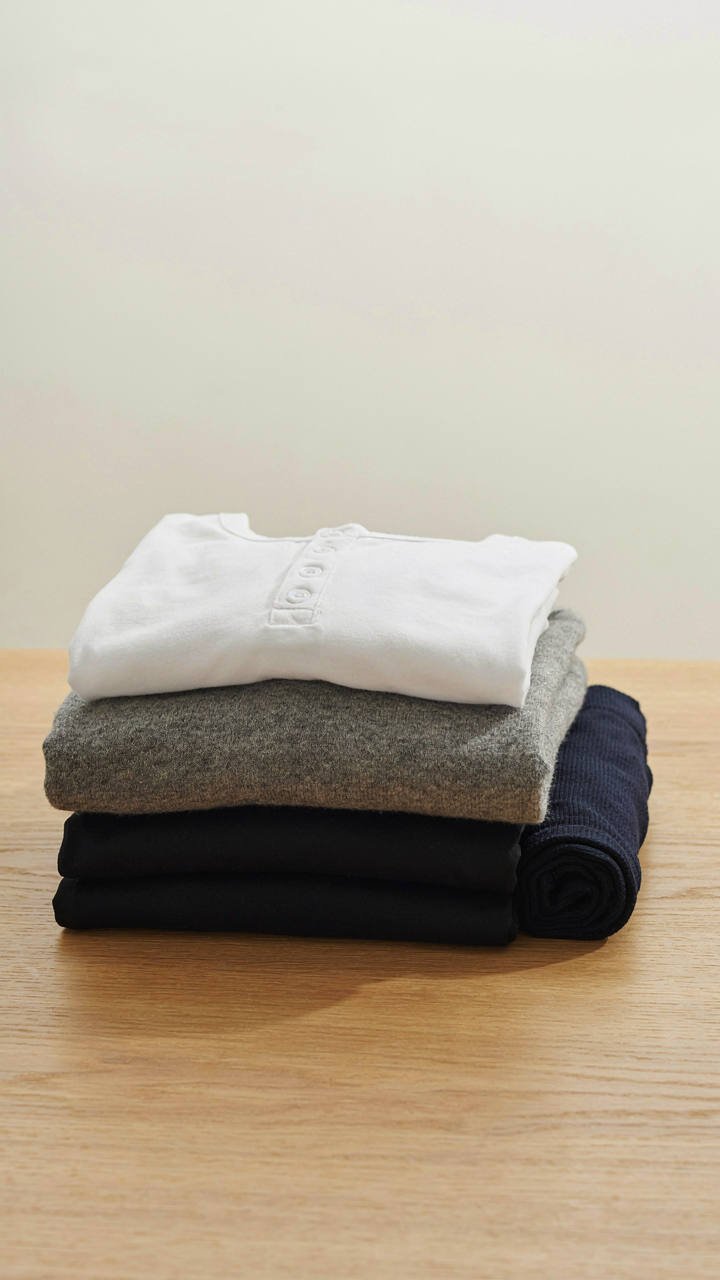
Build Around Neutral Base Layers
You want permission to stop shopping. That’s the real reason you’re reading this. The mechanism is simple: every piece you own either works with everything else or it works with nothing. Winter athleisure demands the same constraint as industrial design—remove one component and the system fails. Neutral base layers are that component.
- Merino wool crew neck long sleeve: Temperature regulating fiber that resists odor and functions from 40 to 60 degrees. Pairs with every outer layer without competing visually.
- Black fitted leggings or joggers: Foundation garment that accepts any top, jacket, or shoe. Works across seasons and body types without trend dependency.
- Charcoal or navy thermal tights: Worn under shorts or pants for layering flexibility. Extends leg coverage options without purchasing new bottoms.
- White or cream heavyweight henley: Creates contrast when layered under jackets. Works as standalone piece in milder winter conditions.
- Gray wool crew socks: Neutral enough to pair with any shoe type. Merino blends manage moisture and temperature better than cotton.
Start with three base layers maximum. Each should exist in only one color. You’re not collecting variety—you’re building a system where every combination works. This removes the decision friction that kills momentum and creates the false sense that you need more.
Strip Away The Single Use Pieces
The conventional advice tells you to buy pieces that “express yourself” or “add personality.” That’s how people end up with a $180 puffer jacket they wear twice because it clashes with 90 percent of what they own. The real constraint is this: if a piece works in only one outfit, it’s a liability disguised as an option.
Winter athleisure demands pieces that serve multiple temperature ranges and multiple outfit combinations. A layering piece that only works under one specific jacket doesn’t belong in a minimal wardrobe. Eliminate anything that requires a second piece to exist. Audit your current winter pieces right now. If you can’t create three separate outfits with one item, remove it. Replace single-use items with mid-weight outer layers like fleece jackets or wool cardigans that layer over or under your base system and work across multiple combinations.
Padel Outfit Winter & Fall Soccer Game Outfit: Specialized Demands, Universal Principles

How Movement Changes Everything
You want to look competent at your sport, not just warm. That’s the real reason you’re reading this. The mechanism here is borrowed from physics: layering isn’t about bulk, it’s about managing heat dissipation rates. Padel demands explosive lateral movement in confined space. Soccer demands sustained runs across open field. Each sport generates different heat curves, so each needs different layer placement and material choices. Generic winter athleisure fails because it treats all movement as identical.
Padel requires a moisture-wicking base and a fitted mid-layer that won’t restrict shoulder rotation or court positioning. Soccer in cold demands a base that breathes during sustained effort, then a shell that blocks wind without trapping sweat that’ll freeze during halftime. The difference isn’t semantic. Padel players overheat faster in enclosed courts, so they need thinner insulation between their core and the air. Soccer players cool down between plays in open air, so they need slightly heavier mid-layers that won’t shed heat too quickly.
Traction Beats Everything Else
Winter court and field surfaces kill your output before cold does. Padel courts freeze with invisible ice films. Soccer fields turn into skating rinks. Your footwear choice determines whether you execute or slip. Forget cotton socks entirely. Merino wool or synthetic blends wick moisture while maintaining grip against shoe insoles, which prevents the dead foot feeling that ruins lateral cutting.
Padel demands low-profile court-specific shoes with gum rubber soles designed for lateral stability. Soccer needs molded studs or firm ground cleats that anchor into grass without catching ice patches. Ankle support matters differently in each sport. Padel sees quick, explosive directional changes on hard court surfaces, so mid-cut shoes with reinforced lateral collars prevent rolling. Soccer involves longer strides and forward momentum, so ankle support comes from shoe structure rather than height. Buy sport-specific footwear, then add thermal sock liners designed for that shoe’s insulation rating.
Mom Athleisure 2026: The Efficiency Of Preparedness, Not Aspiration

Stop Chasing The Aesthetic, Start Building The Rotation
You want permission to feel put-together without performing. Here’s the mechanism: economics teaches us about inventory turnover. In winter athleisure, turnover means wearing five core pieces sixty times instead of twenty pieces six times. The math is brutal. You own too much, repeat nothing, and always feel unprepared. A functional rotation solves this. Build around fabrics that actually dry, cuts that fit your actual body, and colors that don’t show every coffee splash.
The common advice says “invest in basics.” Wrong framing. You’re not investing in basics. You’re eliminating decision fatigue by creating a closed system. A closed system means every piece works with every other piece. Leggings pair with three different tops. The jacket layers over all of them. The base layer underneath everything. This is how prepared people move. They don’t own more. They own less and use it better.
Fabrics Built For Actual Wear
Real durability isn’t about longevity claims on tags. It’s about performance decay. Polyester blends with nylon hold color and resist pilling better than cotton-heavy alternatives. Merino wool maintains temperature regulation after fifty washes because the fiber structure doesn’t break down the way synthetic blends do. Spandex content matters differently in different pieces. A base layer needs fifteen to twenty percent. Leggings need eight to twelve. More spandex doesn’t mean better. It means faster degradation and wrinkles that set permanently.
Easy care isn’t a luxury feature. It’s structural math. Machine wash cold, lay flat, skip the dryer. This protocol works only if you choose fabrics that tolerate it. Elastane fibers deteriorate in heat. Nylon accepts water without absorbing it. Merino resists odor, cutting wash frequency. Test the actual care tag before buying. If it requires special handling, the piece will eventually get abandoned in a drawer. You’ll replace it with something easier. Calculate the real cost of maintenance before price becomes irrelevant.
The Real Obstacle Isn’t The Cold; It’s Your Addiction To External Validation Over Internal Functionality

You’re staring at your closet right now, aren’t you? Wondering if that outfit looks “athleisure enough.” Stop. Pick one warm layer that actually fits your body and your life. Wear it tomorrow. Nobody remembers what you wore. They remember if you showed up or didn’t. The cold doesn’t care about your aesthetic. Your body does.