
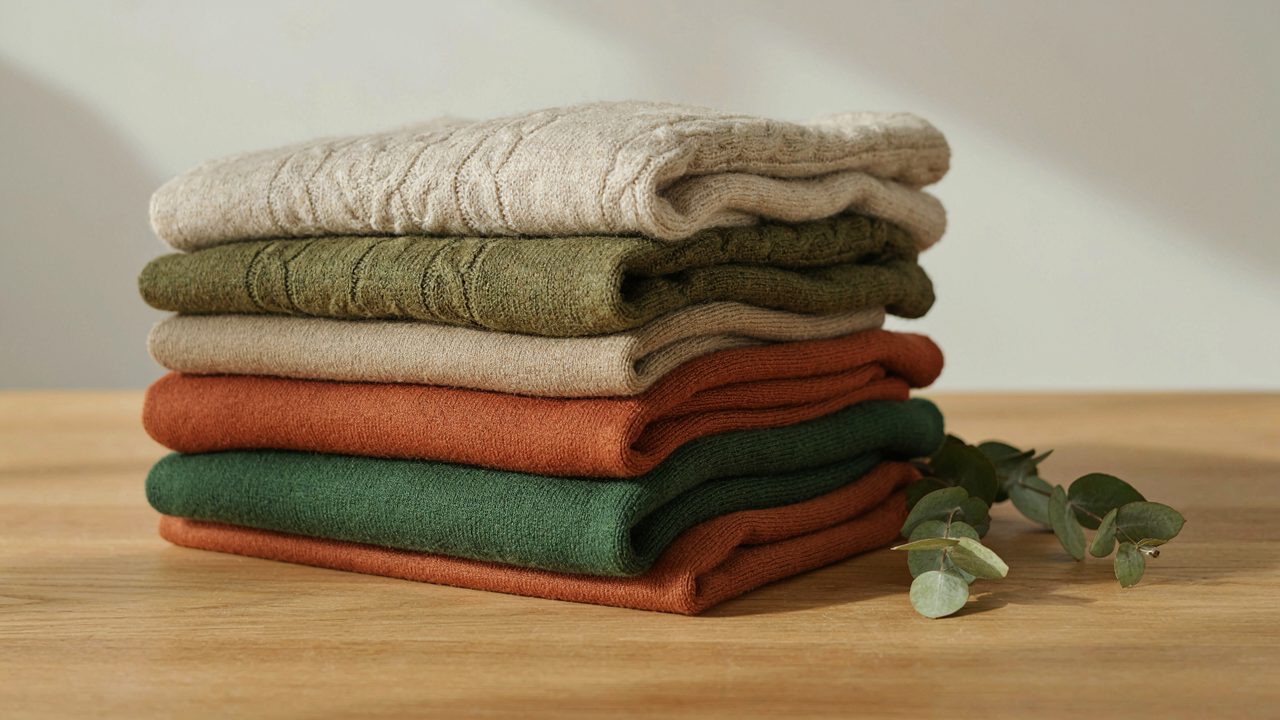
The “Grandpa Sweater” Fallacy: It’s Not About Age, It’s About Archetype

Why You Actually Care About This Label
You’re worried the sweater makes you look old. That’s the real concern hiding under the question. The mechanism is simple: we assign age to objects based on when they were mass-produced, not their actual design merit. A chunky knit from 1987 triggers “retirement home” in your brain because you’ve seen it worn by actual grandfathers. But the sweater itself has no age. Only cultural association does.
The thrifted sweater market runs on this confusion. Retailers sell “vintage” and “retro” as coded language for “old enough to feel authentic, new enough to feel safe.” What actually matters is the construction. Heavy wool, visible seams, deliberate fit—these are design choices, not time stamps. Strip away the label, and you’re left with pure function: a garment built to last and insulate.
What The Sweater Actually Is

Design borrows from architecture: load-bearing structure. A thrifted sweater’s weight distribution determines whether it drapes or stands on its own, whether it anchors an outfit or dissolves into it. Most new sweaters compress fibers to feel light. Thrifted sweaters compress less. That density is what reads as “substantial” and what actually keeps you warm without requiring a jacket layer.
The comfort isn’t nostalgia. It’s engineering. Natural fibers breathe. Looser knits don’t cling to skin. Crew necks and v-necks sit differently depending on shoulder width, not era. When you thrift a sweater that fits your proportions, it fits because someone in a different decade had similar dimensions, not because time made it better. Identify the weight, fiber content, and how the neckline sits on your collarbones. That’s the only checklist that matters.

Unlocking “Dream Clothes”: The Scarcity Mindset Vs. Strategic Thrifting

Why New Clothes Feel Empty
You want to believe buying fresh inventory solves the problem of looking boring. It doesn’t. Fast fashion operates on a deliberate mechanism: flooding the market with identical units across thousands of stores. When everyone owns the same H&M sweater in the same season, the garment loses its only real value—differentiation. The design itself becomes noise because supply overwhelmed demand before you even wore it once.
Thrifted sweaters work differently because they arrive pre-filtered by scarcity. A 1980s wool blend from a regional manufacturer exists in limited quantities. You won’t see your exact sweater on three people at the coffee shop. The garment carries built-in uniqueness not because it’s expensive, but because the supply chain broke fifteen years ago and can’t be replicated. New clothes promise individuality while guaranteeing uniformity. Thrifted pieces deliver the opposite trade.
Supply, Demand, And Why Thrifted Wins
Economics teaches a direct principle: perceived value rises when supply drops and alternatives multiply. Apply this to thrifted sweater outfits. A vintage Shetland sweater in cream represents one finite unit from a finite era. Fast fashion brands produce millions of similar pieces across identical seasons, collapsing their perceived value the moment inventory clears shelves.
When you build outfits around thrifted sweaters, you’re leveraging an inverted economic model. The original designer and manufacturer are gone. No restocks exist. The garment won’t flood department stores in two months. This scarcity mechanism triggers genuine perceived value—not hype, not marketing, but the actual economic law that rare things matter more than abundant ones. Your thrifted sweater outfit carries weight because the supply truly ends.
The Inverse Fashion Protocol: How To Make Thrifted Sweaters Your Statement

Stop Borrowing Other People’s Taste
You want permission to wear what you actually like without looking broke or confused. Here’s the mechanism: trends work backward from what they are. A trend starts niche, gets amplified by algorithm and retail, then dies the moment it saturates. Thrifted sweaters sidestep this entirely because their scarcity is real, not manufactured. You can’t buy the same 1990s wool cardigan in bulk. This means wearing thrifted pieces is already contrarian by default. The fashion industry built consensus around novelty and seasonal turnover. Thrifted sweaters reject that consensus by design.
Personal aesthetic doesn’t emerge from following rules better than everyone else. It emerges from constraint. When you shop thrift, you see what exists, not what marketing promised you should want. You build taste by repeatedly encountering limits and making choices within them. A worn Ralph Lauren sweater doesn’t signal “I followed a guide.” It signals you made a deliberate call. That distinction is the entire game. Your style becomes authentic because it reflects your actual trade-offs and priorities, not a shared mood board.
Unexpected Pairings Collapse The Formula
Layering is economics applied to fabric. In economics, arbitrage means exploiting price differences between markets. In thrifted sweater outfits, it means stacking pieces with mismatched origins and eras to create perceived value that didn’t exist in the components alone. Most people layer to stay warm. That’s correct but incomplete. Strategic layering breaks the visual hierarchy your brain expects, which makes you memorable without trying.
- Wool sweater over linen shirt: Wool adds structure and weight. Linen reads as summer or casual. Together they create temporal confusion that reads as intentional, not accidental.
- Oversized knit with fitted trousers: The sweater suggests comfort or relax. Tailored pants contradict that signal. The tension between them reads as curated, not lazy.
- Chunky cardigan with a slip skirt: Cardigans feel domestic and practical. Slip skirts carry luxury or sensuality. This pairing rewires both pieces into something neither suggests alone.
- Turtleneck under a printed shirt: The turtleneck anchors the look with formality. The printed shirt on top adds narrative and personality. Layering them adds complexity without clutter.
- Crew neck sweater with a leather belt: The belt interrupts the vertical line and adds structure. It signals intentionality rather than casual assembly. The break prevents the outfit from reading as one unit.
The pairings that work aren’t random. They collide two opposing signals and make you resolve them as one deliberate statement. Dark heritage sweater plus lightweight vintage slip. Structured knit plus relaxed denim. The formula: stack pieces that shouldn’t work together, then let the contradiction do the work. Your eye lands on the outfit because something feels off in a good way. That friction is what separates a thrifted sweater outfit from someone who just grabbed what was clean.
Beyond “Outfit Inspo Casual”: Crafting Autumn Outfits Mid Size With Purpose

The Fit Problem Nobody Names
You want thrifted sweaters to work because you’re afraid expensive basics are the real cost of looking put together. Here’s what actually happens: a sweater that doesn’t fit your frame becomes visual noise, not character. Tailoring solves this. The mechanism is simple—take in the side seams, shorten the sleeves, taper the hem. A mid-size body in an ill-fitting thrifted sweater reads as “I grabbed this” instead of “I chose this.” Fit is the first filter between intention and perception.
Thrifted sweaters often arrive oversized, unstructured, or cut for a different body type entirely. Work with a tailor who charges between 30 and 60 dollars per adjustment. This transforms a 12-dollar find into a 50-dollar garment that actually functions in your life. The investment compounds when you buy sweaters specifically for tailoring potential—cotton blends that hold shape, natural fibers without permanent damage, seam construction that tolerates modification. Fit over form stops being advice and becomes your primary purchasing filter.
Balance Through Intentional Proportions
Physics teaches us about counterweight—opposing forces create stability. Apply this to outfit construction: if your thrifted sweater is voluminous or textured, anchor it with fitted bottoms. A chunky cable knit pairs with tailored trousers or a fitted midi skirt. If the sweater is fitted, you can tolerate looser proportions below. Oversized cardigans work with slim jeans or bike shorts. The ratio prevents visual collapse.
Most advice here is lazy—it stops at “balance your proportions” without explaining why. The real mechanism is contrast. Your eye needs a visual rest point. A monochrome palette with one fitted layer and one loose layer creates that rest. Alternatively, two fitted layers with one looser accessory—an oversized scarf, a structured coat, a wide-leg outer layer. The protocol: never stack loose on loose. Assess each piece’s volume first, then build the outfit around opposing tension.
The “Brown Sweater Fits” Deception: Color As A Tool, Not A Crutch

Stop Treating Color Like Safety
You want brown because it feels safe. Brown is the outfit equivalent of a non-answer, the color that promises you won’t fail. But color works like contrast in design: it gains power only through deliberate opposition. A brown sweater alone is invisible. Brown paired against its complement—a mustard or rust or deep teal—becomes a statement. The mechanism is simple: your brain registers difference, not similarity. Sameness dies in the thrift bin.
The real problem with brown sweater advice is that it stops thinking at “earth tones go together.” Earth tones are a crutch for people afraid to commit. Brown works best when you force it into conversation with colors that shouldn’t work. Pair a warm chocolate knit with sage green bottoms. Add a rust-toned accessory. Now the brown isn’t generic. Now it earns its place in your outfit.
Complementary Colors Do The Heavy Lifting
Accessorizing isn’t decoration. It’s math applied to fabric. A muted sweater gets hijacked by whatever hue sits across from it on the color wheel. Navy sweaters come alive with burnt orange. Cream knits gain dimension with deep burgundy. This isn’t opinion. This is how human vision processes color relationships. Your job is to name the opposite and make it visible through a scarf, belt, or bag.
Most people accessorize by adding more of the same color family. They layer beige on beige and call it minimalism. Stop. One complementary piece of color changes everything. A cognac leather belt on a grey sweater. A forest green scarf with a taupe knit. The accessory isn’t supporting the sweater. It’s forcing the sweater to matter. Pull one small item in a contrasting hue and watch the entire outfit sharpen.
Winter Aesthetic Reimagined: The Longevity Of Quality Over Quantity

What Actually Makes A Sweater Worth Keeping
You want permission to stop replacing things. That’s the real ask here. Most thrifted sweater advice skips the economics entirely: buying vintage costs less upfront, so people treat it as disposable anyway. That’s backward. The mechanism is material composition. A sweater made from wool, cashmere, or linen survives repeated wear because the fibers have structural integrity. Synthetics pill, lose shape, and deteriorate in months. Natural fibers compress and relax predictably.
Wool dominates thrifted sweater finds because it lasts. A quality wool sweater from the 1980s or 90s outperforms most new fast-fashion pieces because the spinning and knit density were higher then. Cashmere is rarer in thrift stores but worth the hunt: it holds warmth longer and resists pilling when treated properly. Linen and cotton blends work for layering but degrade faster than wool. Read the tag. If it says 100% acrylic or polyester, move on. The price difference between synthetic and natural fiber thrifted sweaters is usually five dollars. Choose differently.
Mending Becomes Your Competitive Advantage
Most people abandon sweaters at the first sign of damage. That’s your window. A small hole, loose seam, or stretched collar stops them cold. Basic mending skills mean your curated collection compounds in value while theirs depreciates. This isn’t sentiment. It’s inventory management.
Learn to needle-weave small holes before they expand. Sew loose seams immediately, not later. Stretched ribbing at cuffs and hems requires actual repair, but a professional tailor charges fifteen to thirty dollars per sweater. One preventive stitch saves the entire piece. Store sweaters flat or on wide hangers to prevent shoulder stretch. Brush wool gently with a soft garment brush monthly to remove surface lint and restore nap. Wash sparingly in cold water on delicate cycle, then air dry. You’re not washing more frequently; you’re washing correctly. The protocol determines longevity.
From “Mode Inspo” To Masterpiece: Building A Signature Look

The Fit Test You Actually Need
You’re worried people will judge you for wearing thrifted pieces instead of recognizing your taste. That’s the real friction. Here’s the mechanism: your style algorithm isn’t built by consuming mood boards. It’s built by testing what physically fits your body and life, then noticing which pieces you reach for repeatedly across seasons. The brands you see on Instagram don’t matter. The fit does.
Start with one thrifted sweater that fits your shoulders correctly. Shoulders don’t lie. If the shoulder seam lands where your arm bends, the piece has potential. Wear it four times in one week with different bottoms and layers. Track what worked and what felt forced. This isn’t inspiration. This is data collection. After two weeks of rotation, you’ll know if that sweater belongs in your outfit ecosystem or if it was just novelty.
The Counterintuitive Edge
Everyone says thrifted sweaters let you blend vintage with modern. Wrong. That’s the clone effect in disguise. Real differentiation happens when you stop looking for “statement pieces” and start looking for construction details other people overlook. A sweater with an unusual yarn weight, an unexpected waistline seam, or an odd cuff construction creates visual contrast because it breaks the pattern your brain expects, not because it’s “unique.”
Pick two thrifted sweaters that genuinely confuse you at first glance. The confusion is the signal. Pair one with fitted basics and one with oversized bottoms. Wear each combination for a full day. The outfit that doesn’t fight itself is the one that works. Discomfort and friction disappear when construction meets proportions correctly. That’s your signature emerging.
The Thrifted Advantage: Cultivating A Mindset Of Resourcefulness

When Status Anxiety Meets Actual Style
You’re reading this because you want permission to care less about the new collection drop and more about what actually looks good on you. That’s the real motive. The mechanism is simple: thrifting forces constraint, and constraint kills the noise that prevents real taste from forming. When you can’t buy whatever exists, you learn to see what works. You develop pattern recognition instead of brand loyalty.
Most people confuse thrifted sweater outfits with budget shopping. Wrong frame. This is about training your eye to spot construction quality, fabric weight, and fit intention in pieces that already survived decades of wear. A wool sweater from 1985 that still holds shape tells you more about fiber and manufacturing than reading ten fabric guides. You’re reverse-engineering style through material reality instead of scrolling trend forecasts.
Velocity Creates Value In Closed Systems
Economics calls it the velocity of goods: how fast something moves through a system determines its actual value. A thrifted sweater recirculates through your wardrobe differently than a new purchase. It doesn’t sit in a drawer waiting for the “right moment” because you already got it for five dollars. You wear it immediately, pair it differently, discover combinations you wouldn’t stage-manage with expensive pieces.
This creates the inverse of fast fashion’s waste pattern. Instead of buying thirty items and wearing five, you buy five items and wear thirty combinations. The sweater gets layered in October, rolled under jackets in November, styled with collared shirts in December. Your closet becomes generative. Each piece accumulates more outfits over time, not less. The protocol is ruthless: acquire only pieces you’d wear within one week, or pass.
Your Closet Isn’t A Museum; It’s A Toolkit. The Real Obstacle Isn’t What You Wear, But What You Believe It Says About You

You already own thrifted sweater outfits that work. You’re just waiting for permission to wear them. Stop. Permission doesn’t exist. The gap between looking intentional and looking lost isn’t fabric or price tags. It’s conviction. Pick one thrifted sweater tomorrow and actually commit to it. Don’t apologize for its origin story. That hesitation you feel? That’s the real waste. Confidence doesn’t require a receipt.