
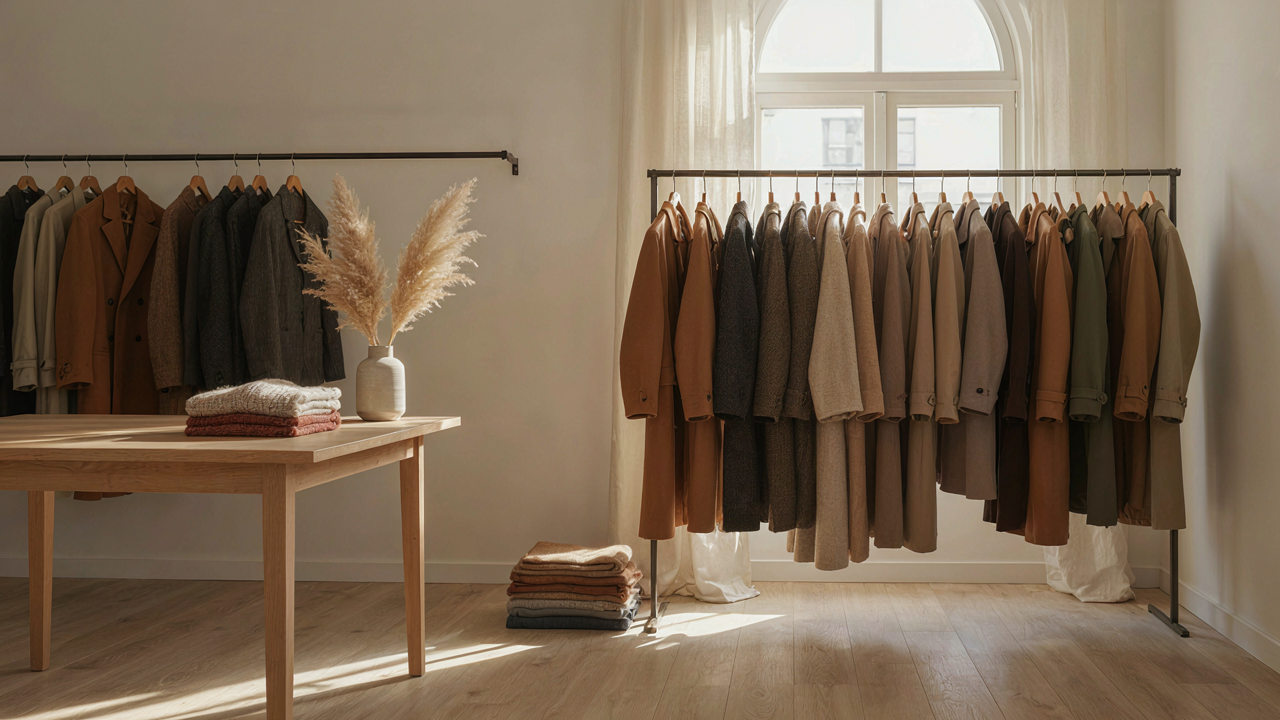
The Inverted Pyramid Of Thrift Aesthetic
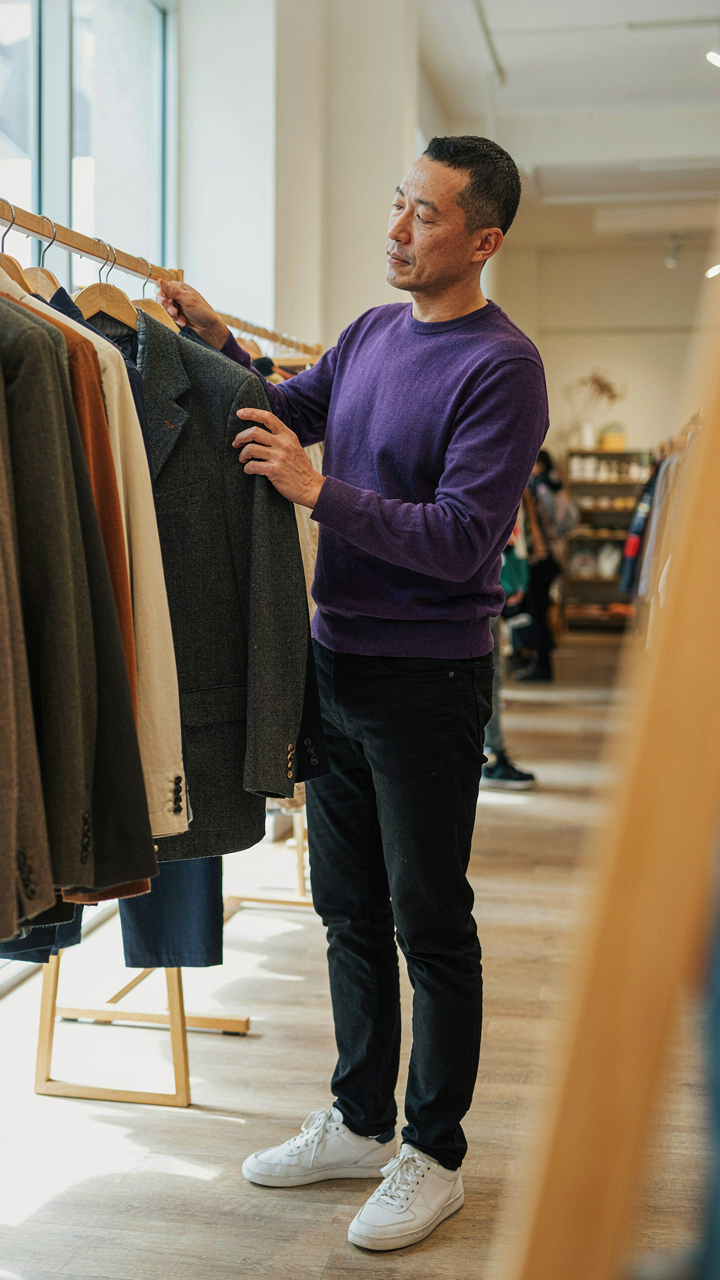
One Piece Beats Ten Cheap Ones
You want permission to look rich without spending money. Here’s the mechanism: fashion works backward from what most people think. The visible marker of wealth isn’t variety or volume. It’s restraint. One wool blazer from 1985 signals more status than ten polyester shirts from this season because it proves you know what lasts. Fast fashion trains your eye to confuse newness with value. Thrift flips this. You’re buying things that survived twenty years in circulation because they were made to survive.
The math is simple economics. A garment costs less per wear when it outlives ten trend cycles. A $12 wool sweater worn for five years costs 46 cents per wear. A $40 synthetic sweater worn for six months costs $3.08 per wear. Thrift forces you into the first equation by default. You’re not choosing between affordable and expensive. You’re choosing between building a wardrobe that compounds in value or one that depreciates before you wear it twice. Most people do the latter and call it normal.
The Fiber Rule Separates Thrift From Trash

Natural fibers carry density. They drape differently. They age into character instead of deteriorating into fuzz. The tell between a thrifted piece that looks intentional and one that looks like you grabbed a random bin is fiber composition. Wool holds structure through decades. Linen develops a lived-in patina that reads as expensive casualness. Silk moves with weight and catches light in ways synthetics can’t replicate. Polyester, acetate, and blended junk absorb odor, pill easily, and signal “I picked this because it was there.” Department store workers know this. Thrift store pickers know this. Most people don’t.
Check every tag. Not the brand. The content. If it says 100% wool, 100% linen, or silk blend, you have a candidate. If it says polyester with trace amounts of natural fiber, keep walking. The synthetic traps masquerade as vintage because they’re from 1995, but synthetics from thirty years ago perform worse than modern synthetics. They’ve degraded. The fabric feels thin. The color has ghosted. Natural fibers improve with age or hold their baseline. Synthetics only go down. Train yourself to skip the tag entirely if the fabric feels hollow between your fingers.

Decoding “Expensive”: Beyond The Price Tag
Tailoring Separates Signal From Noise
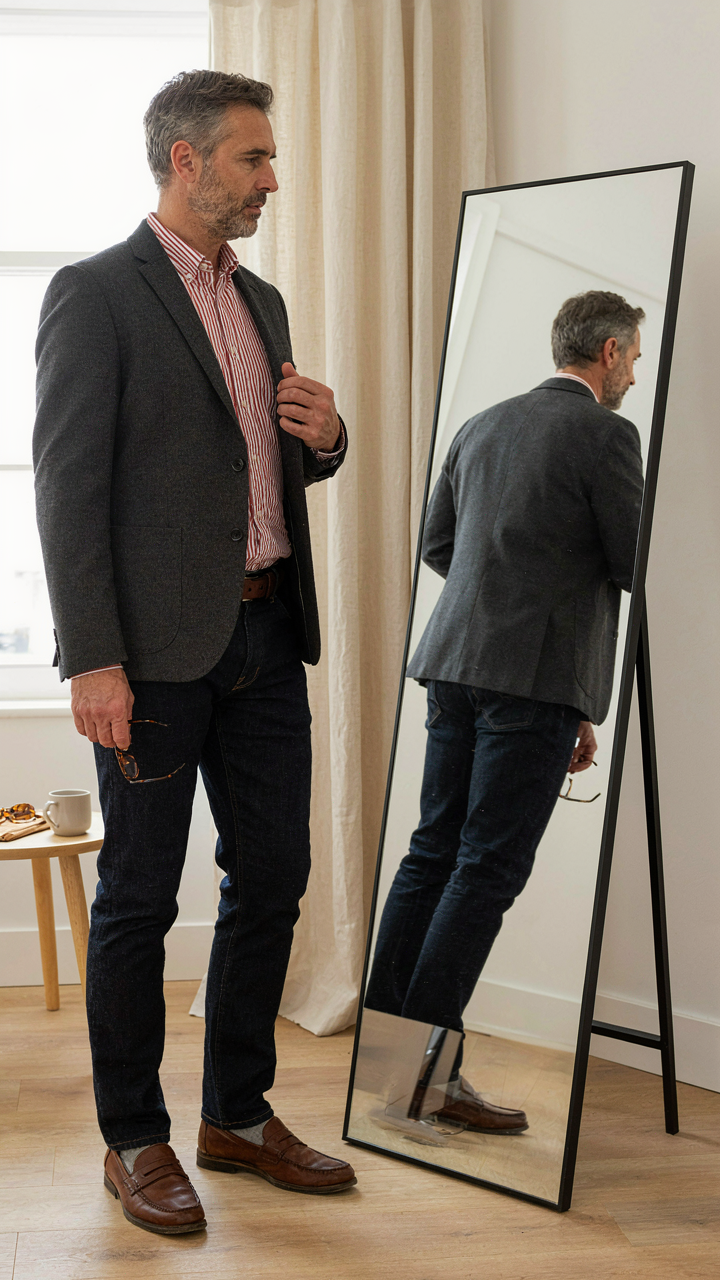
You want proof that you didn’t buy garbage. That’s the real mechanism here. Expensive clothing reads as expensive because it fits the body wearing it, not because of the label or fabric alone. Think of tailoring as information design from fashion: it’s the signal that cuts through noise. A thrifted designer piece drowning in excess fabric communicates the opposite of luxury. It communicates you grabbed whatever hung on the rack.
The mechanic is simple. Shoulders should sit at your shoulder point. Sleeves should end at your wrist bone. Torso length should hit your natural waist, not float past it. These aren’t style preferences. They’re geometric facts. A fifty-dollar thrifted blazer with shoulder seams tailored to your frame reads more expensive than a five-hundred-dollar unworn piece that fits like a tent. Get two basic alterations: shoulder adjustment and length. Everything else is noise.
Restraint Compounds Over Time
The color theory applies here, but the consensus advice is backward. Loud patterns and bright colors don’t read expensive. They read like someone’s trying to distract you. High-end wardrobes operate on a palette so muted it nearly disappears. Neutrals aren’t boring. They’re economical. They multiply outfit combinations and eliminate visual competition between pieces.
Muted tones compound because they layer without friction. Charcoal, cream, olive, tan, black, and soft gray create depth through proportion and fit, not through pattern collision. When you buy thrifted, hunt for these foundation colors first. Then add one statement piece per outfit maximum, and keep it restrained. Wear the muted pieces five times. Wear the loud piece once. This ratio is the actual protocol for looking deliberate instead of scattered.
The Scarcity Mindset Of Thrift Clothes Outfits
The Deal Hunter Trap
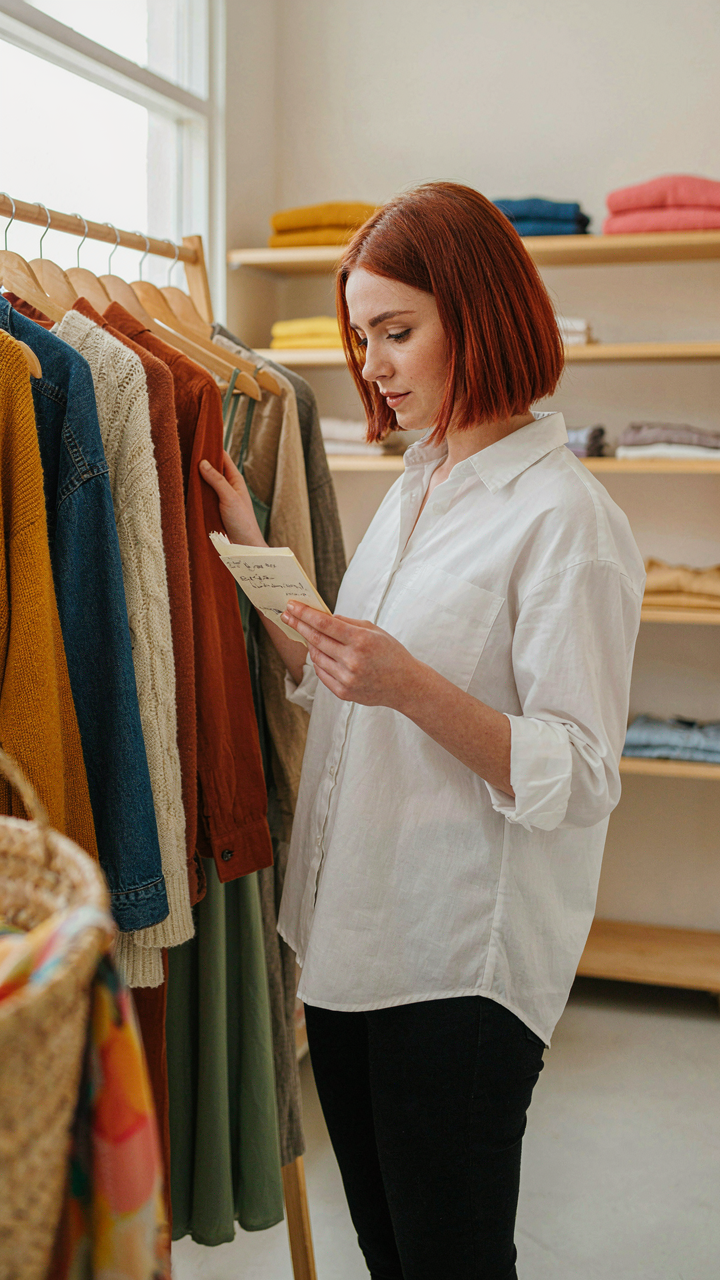
You think you’re being smart by hunting for deals. You’re actually training yourself to see clothes as inventory instead of components. The mechanism here is economic scarcity bias: your brain flags something as valuable the moment it’s rare or cheap, not because it fits your actual style. Every thrift trip becomes a dopamine loop where the find matters more than the fit. You leave with bags of “potential” that never materializes because you selected for price, not purpose. The real cost isn’t the dollar amount. It’s the closet bloat and decision paralysis that follows.
Building a thrifted outfit that reads expensive requires the opposite impulse. Stop scanning every rack. Start identifying the specific pieces your existing wardrobe lacks. This means knowing the gaps before you walk into the store. You’re not hunting. You’re sourcing. A $4 vintage wool blazer only works if you already own the right trousers and shoes to pair it with. Without that foundation, it’s clutter with a price tag. The shift from consumer to curator happens the moment you stop treating thrift as a secondhand bargain bin and start treating it as a design constraint that forces intentionality.
Time Investment Over Purchase Count
The common advice says spend less money at thrift. That misses the actual lever. Economics teaches us the concept of opportunity cost, and thrifted outfit curation has the highest opportunity cost of any shopping method because it demands time, not capital. You’re trading hours for dollars. Most people do this backwards: they minimize hours to maximize transaction volume, then wonder why nothing coheres. A single perfectly selected vintage piece takes longer to find than five mediocre buys. The time investment is the work of real style.
Curate by establishing a rotation, not a collection. Identify five to seven outfits that work across your life context. Then source only the missing pieces to complete each one. A vintage camel coat completes an outfit. It doesn’t start one. Once a piece lands in your wardrobe, it should slot directly into an existing combination. This prevents hoarding and forces genuine need-based shopping. The mechanism: limited slots create scarcity in your own closet, which makes every addition deliberate. Visit thrift stores monthly with a written list, not weekly with open curiosity.
The “Work Outfit” Mirage: Uniformity Vs. Individuality
Breaking The Corporate Uniform
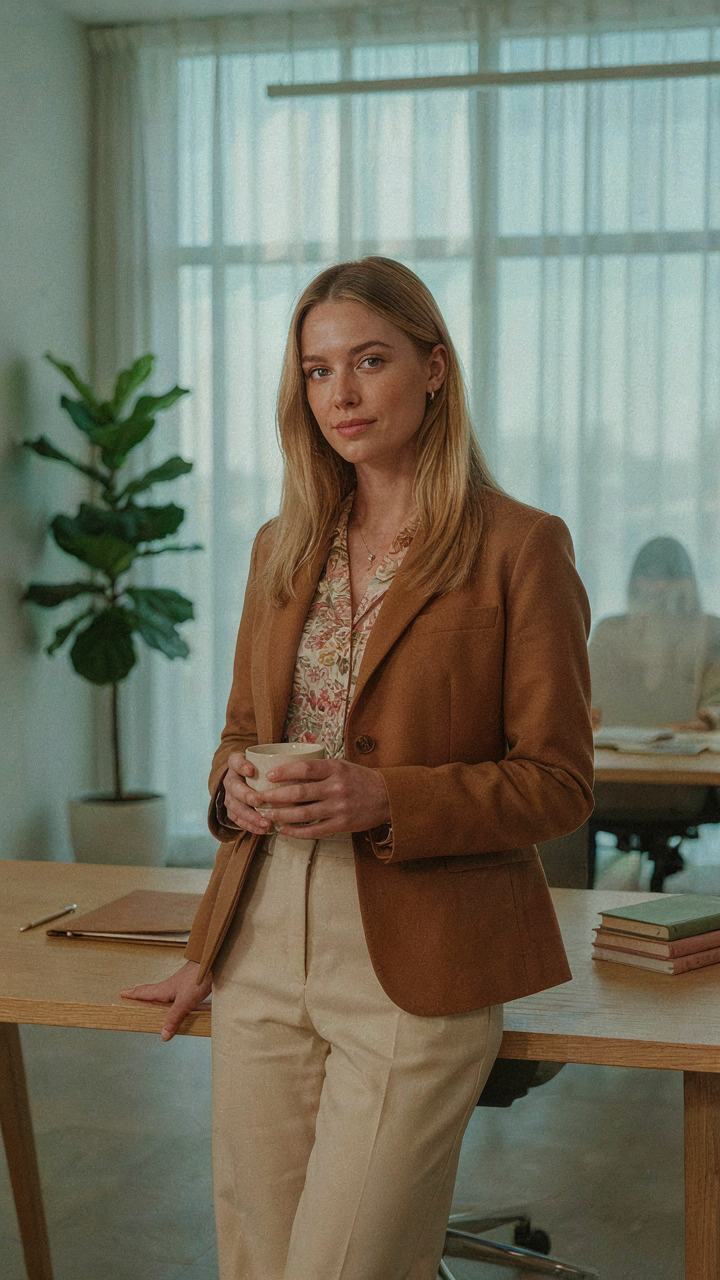
You want permission to dress differently at work without getting flagged as unreliable. The real mechanism at play here is signaling theory from evolutionary biology: humans read clothing as a proxy for competence and trustworthiness because we evolved to make snap judgments. Corporate dress codes exploit this by enforcing visual conformity. But the paradox is that thrift finds in neutral palettes actually outperform fast-fashion basics because they carry texture, weight, and construction details that broadcast intentionality rather than compliance.
Most advice tells you to “add a blazer” to anything and call it professional. That’s lazy. A thrifted structured piece from the 1980s or 1990s—wool blend, natural shoulder, visible stitching—signals you understand fabric and fit in ways a thin polyester jacket never will. The key is sourcing pieces that read as “considered” not “costume.” Look for tailored trousers in gabardine or wool, vintage cardigans with real buttons, and structured shirts in natural fibers. Thrift stores have these in abundance because they were made to last through actual office years. Pair them with new basics underneath, but let the thrifted piece do the heavy lifting of looking intentional.
Accessories As Restraint
The common trap is thinking accessories prove taste. They don’t. Restraint proves taste. One high-quality thrifted piece—a leather belt with visible patina, a vintage watch, a structured bag from a defunct brand with real construction—outweighs five new statement pieces. The mechanism is contrast: a single intentional object draws more attention than noise. Cheap accessories make an outfit read as desperate for validation. Thrifted accessories read as discovered.
Choose one focal point per outfit. If you wear a thrifted leather belt with visible wear patterns, skip the statement necklace. If you carry a vintage structured bag, keep jewelry minimal. The math is counterintuitive but mechanical: more elements demand more coordination, which signals less control. Thrift stores reward patience here because you can find pieces with genuine history—scuffed leather that proves use, hardware with patina, construction details that justify being alone in the space. One well-chosen vintage accessory anchors an outfit in a way ten new ones cannot.
Thrift Aesthetic: The Signal And The Noise

Real Vintage Versus Manufactured Longing
You’re scared you’ll buy fake history and look like you don’t know the difference. The mechanism is simple: mass production flattened quality after 1980, so genuine vintage before that era used better materials and construction methods. Cotton thread from the 1970s doesn’t snap. Seams on wool blazers from the 1960s hold structure without synthetic backing. Polyester dominance started in the late 1970s and accelerated through the 1980s, marking when most garments became disposable by design, not accident.
The tell isn’t the tag. It’s the weight and the seam. Pick up a genuine vintage piece and it feels denser than modern equivalents. The armhole sits different because manufacturers didn’t cut corners on fit back then. Real vintage from the 1950s through early 1970s used natural fibers without filler. Modern reproductions and “vintage-inspired” fast fashion items use lighter fabrics, thinner thread, and machine techniques that produce uniformity, not individuality. Feel the fabric between your fingers for fifteen seconds. If it’s paper-thin or feels plasticky, it’s post-1985 production or a current knockoff pretending otherwise.
Your Own Code, Not A Borrowed One
Everyone says “develop your personal style” like it’s motivational poster advice. It’s not. The real problem is mimicry creates visual noise that cancels itself out. When you copy another person’s thrifted aesthetic, you’re running someone else’s signal through a degraded channel. You lose what made it work in the original context: their body, their proportions, their specific life that justified those choices.
The mechanic is subtraction, not addition. Start with one constraint that’s actually yours, not borrowed from an Instagram account. Maybe you only buy pieces that fit your shoulder width without alteration. Maybe you refuse synthetic fabrics entirely. Maybe you build around one color family instead of chasing trends. This creates a filter that makes every subsequent choice coherent. The outfit looks expensive because it looks intentional, and intention comes from having a rule that’s hard enough to break you into clarity.
The Antifragile Wardrobe Protocol
When Chaos Becomes Your Advantage
You want a wardrobe that survives bad decisions and looks intentional anyway. Nassim Taleb’s antifragility from risk management applies directly here: most people build fragile wardrobes that break under variation, but thrifted outfit ideas thrive on it. A fragile wardrobe needs perfect conditions. An antifragile one gets better when conditions change. Thrift stores force this by accident. You can’t plan every piece. You find what’s there. This randomness builds redundancy naturally, and redundancy is what separates a wardrobe that works from one that collapses when you lose a single item.
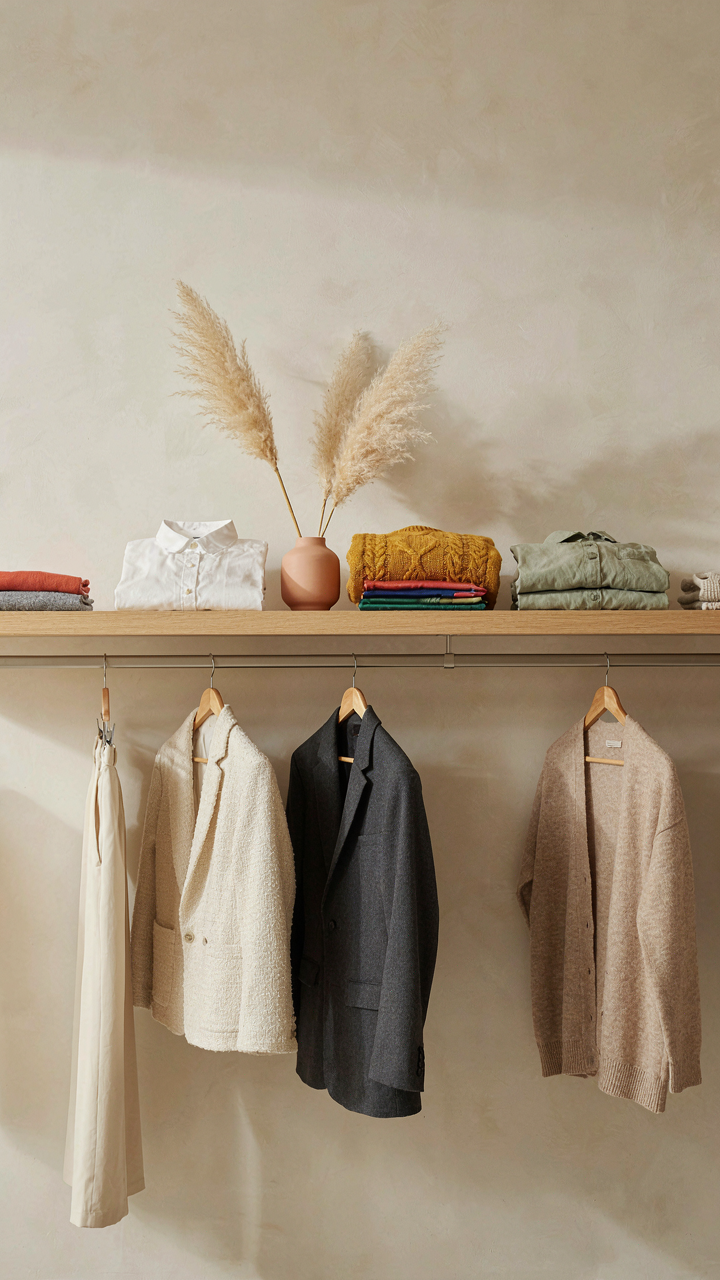
The mechanism is simple: intentional wardrobes are brittle. They’re built around a core narrative that demands specific pieces interact in specific ways. One missing link and the whole system fails. Thrifted wardrobes absorb disruption because their pieces overlap in function. A vintage wool blazer works as outerwear, layer, or statement piece. A neutral linen shirt becomes business casual, weekend wear, or base layer. You’re not building a linear outfit formula. You’re building a system where most combinations work because most pieces serve multiple roles. This is antifragility.
Redundancy And Functional Overlap
The common advice here is wrong: people say buy versatile pieces, which is too vague to execute. What actually matters is purchasing pieces that solve the same problem in different ways so you’re never trapped by a single option. A camel wool coat, a denim jacket, and a linen overshirt all layer over basic tees, but each signals something different depending on context. At the thrift store, you’re not choosing between options that cost the same. You’re choosing between options that cost nothing relative to retail. Buy all three. The redundancy costs almost nothing and buys you freedom.
Functional overlap creates optionality. If three pieces can each work as a top layer, you’re never stuck waiting for laundry or searching for the right piece. Neutral tones amplify this. A gray wool sweater covers you in five different outfit contexts. Add a cream cable knit and a charcoal mock neck. Each costs three to eight dollars. Each handles a different temperature or formality level. By month three, you own a backup for every role. Your wardrobe now runs on redundancy instead of perfection. When you need to get dressed, you pick from viable options instead of hunting for the one correct piece.
Thrifting Clothes Ideas: Beyond The Obvious Racks
Where Most Thrifters Stop Looking
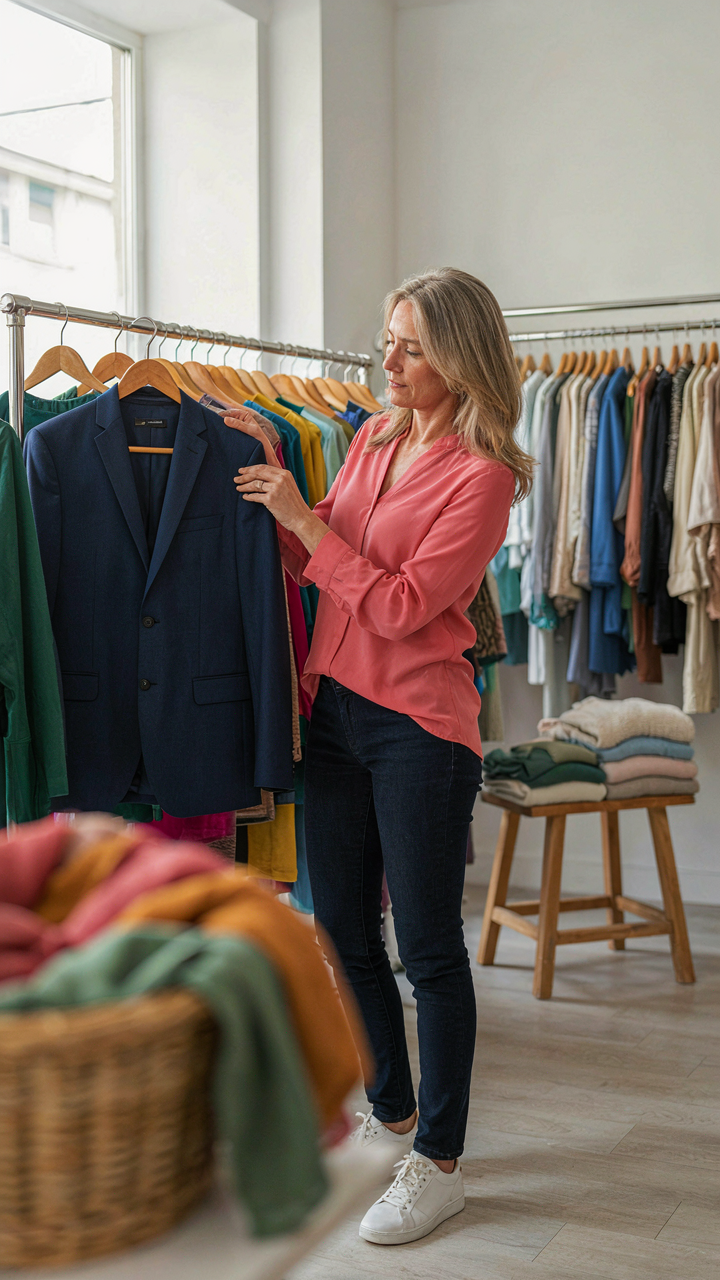
You’re afraid you’ll miss the obvious stuff. That’s why you stay in the mainstream racks. But the mechanism is simple: scarcity drives perception of value. The sections nobody raids have better inventory turnover and less competition for the actual pieces that read expensive. Menswear departments hold structured blazers and wool trousers. Formalwear sections contain tailored pieces from decades when construction meant something. Children’s vintage often contains quality basics in pure fabrics that scale up visually.
Most thrifters don’t hunt here because these sections require translation. A men’s medium blazer works as an oversized layer. A child’s wool coat from the 1990s functions as a statement piece when styled deliberately. Formalwear from the 1980s and 1990s contains natural fiber construction that modern retail abandoned. Check seams, fiber content, and weight before assuming a section has nothing. The pieces exist. You’re just competing against fewer people who know to look.
Online Platforms: The Trade Off
First paragraph about online thrifting goes here. Depop, Vestiaire Collective, Poshmark, and Grailed changed the game by centralizing inventory, but they also increased prices and reduced surprise. You see the item before committing. You lose the hunt. Stock moves faster because reach expanded. Pricing reflects that. The platforms work when you hunt for specific pieces or eras. They fail when you want volume at velocity.
- Depop: Social-first interface attracts younger sellers and trend-focused inventory. Lower price floors than Vestiaire. Shipping often falls to buyer. Best for contemporary vintage and 2000s pieces.
- Vestiaire Collective: Designer-heavy platform with global reach. Higher average price point. Built-in authentication for luxury. Works if you hunt specific designers or decades.
- Grailed: Menswear-focused with streetwear and vintage categories. Community-driven pricing. Buyer protection is standard. Best resource for archive pieces and rare workwear.
- Poshmark: Fashion-forward inventory but algorithm rewards newer listings. Shipping flat-rate at buyer expense. Works for volume browsing, not deep hunting.
- Etsy: Individual sellers control pricing and curation. Quality varies wildly. Niche advantage if you find specialized sellers. Shipping costs compound quickly on lower-priced pieces.
The real cost isn’t the platform fee. It’s your time spent scrolling versus time spent in-store finding pieces nobody else photographed yet. Online wins when you need specific construction details or hard-to-find eras. Local thrift wins when you want price arbitrage and immediate gratification without shipping delays.
Aesthetic Outfits: The Psychology Of Presentation

What Your Clothes Signal Before You Speak
You care about this because strangers form opinions about competence, trustworthiness, and status within seconds, and you can’t undo that with words. This is signal theory applied to fabric: your outfit transmits information faster than your mouth can explain it. Neuroscience confirms people process visual data before language registers. Thrifted pieces work here because they communicate intentionality. A coherent outfit signals you made choices. Randomness signals you didn’t.
The mechanism is simple. People don’t evaluate each item independently. They assess coherence: Do the pieces belong together? Does the wearer understand proportion, color, and finish? Thrifted outfits that look expensive exploit this by pairing high-quality basics with statement pieces that read as deliberate. A vintage wool blazer over a clean white tee works because both pieces communicate restraint. Add cheap synthetic fast fashion and the signal breaks. Cohesion collapses the whole thing.
Dressing For Authority, Not Aspiration
The advice to “dress for the job you want” is incomplete. You don’t dress for a fantasy. You dress to remove doubt about whether you belong in a specific context. Authority dressing works through contrast and constraint, not flash. A thrifted tailored coat over simple pieces broadcasts competence because tailoring is expensive and rare in thrift stores. Finding it signals you understand what matters. Cheap oversized silhouettes signal the opposite.
Projecting competence means eliminating variables. Neutral colors dominate because they don’t compete with your presence. Quality fabrication matters because it holds shape and doesn’t wrinkle unpredictably. Thrifted vintage leather, quality denim, structured wool coats all project this. The person wearing them appears to have made deliberate decisions about durability and fit. This is credibility through material selection. When you shop thrift stores, prioritize pieces that hold their form and show minimal wear, then build outfits around them with intention.
Thrift Fashion: Mastering The Art Of The Steal

The Price Drop Is Negotiable
You want proof that thrifting can deliver luxury without the price tag. That’s the real reason you’re reading this. Here’s what most people miss: thrift stores operate on margin, not scarcity. Inventory economics works backward from retail. A store marks up donated goods 300-400 percent and still moves them slowly. This creates negotiation room that shouldn’t exist but does.
Walk in during off-peak hours with cash. Ask the manager directly about pricing on items held longer than two weeks. Most stores have no system tracking age of stock. They’ll drop 20-30 percent off asking price to clear dead inventory. This isn’t haggling—it’s showing them their own inefficiency. Persistence compounds the discount. Return twice, build rapport, then make your ask on the third visit.
The Overlooked Piece Worth Rescuing
Everyone hunts for obvious wins: pristine designer labels, recognizable brands. Common advice says focus on condition first. That’s incomplete. The real arbitrage lives in well-constructed pieces from defunct mid-tier brands that nobody recognizes anymore. These items have superior tailoring, quality materials, and zero brand tax attached to them.
Hunt for natural fibers in dense weaves: linen blends from the 1980s and 1990s, structured wool blazers without visible damage, quality denim with real indigo saturation. Ignore surface-level aesthetic flaws. A vintage Pendleton shirt with dated color but perfect seams costs three dollars and pairs with modern pieces. Check construction details: thread count, seam finish, lining thickness. If the bones are there, styling transforms the piece into something that reads current and expensive. Your vetting process determines whether you own inventory or collect mistakes.
The Real Poverty Isn’t A Small Budget; It’s A Lack Of Discernment

Most people see a thrift store and freeze. Too many options. No system. So they buy garbage. The wealthy don’t have bigger budgets—they have better taste. Stop wandering aimlessly tomorrow. Pick three specific brands or styles you actually like, then hunt for only those items. Your eye develops faster than your paycheck grows. Taste beats money every single time.