

The Status Inversion: When Sloppy Becomes Statement
Contrast Creates Credibility
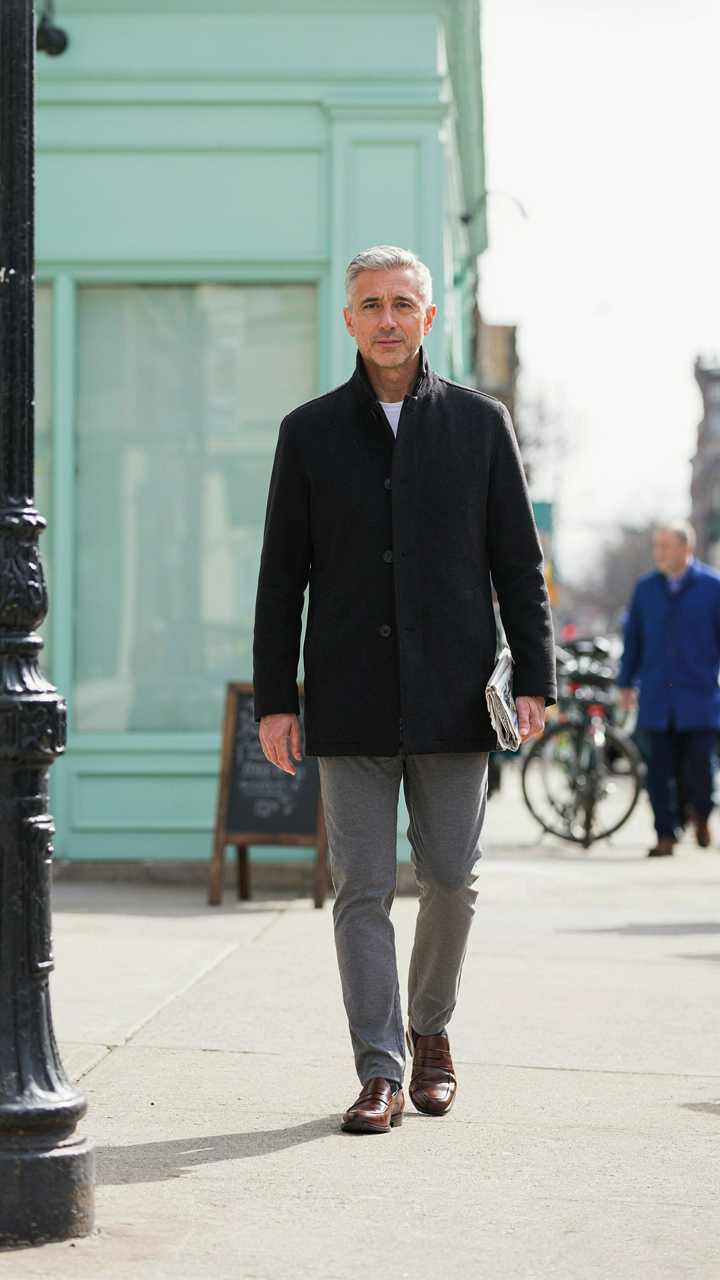
You want permission to look comfortable without looking like you gave up. Here’s the mechanism: contrast is how the eye reads intention. In design, contrast functions as emphasis through opposition, the same way a bold font stands out against plain text. Sweatpants alone read as surrender. Sweatpants paired with intentional opposing elements read as control. A fitted blazer over sweatpants isn’t mixing casual and formal, it’s signaling you chose comfort deliberately, which is different.
The gap between elements is what communicates status. A luxury watch on a casual wrist reads louder than a luxury watch on a formal wrist because the contrast creates cognitive friction. Wear sweatpants with a structured coat, leather shoes, and a single refined accessory. The sweatpants stop looking lazy and start looking like a choice you can afford to make. This works because the brain interprets inconsistency as confidence.
Comfort As Tactical Advantage

Comfort reads as power when the person wearing it doesn’t need validation for the choice. Psychology labels this the confidence paradox, and sweatpants outfit construction weaponizes it entirely. Someone visibly uncomfortable in formal wear signals they need approval. Someone visibly comfortable in casual wear signals they’re past needing it. The sweatpants aren’t the statement. The refusal to perform discomfort is.
This only works if execution is clean and deliberate. Worn sweatpants with visible pilling paired with mismatched pieces reads as genuine poverty, not strategic comfort. The protocol is simple: quality sweatpants in neutral colors, zero wrinkles, sharp opposing pieces, and grooming that matches the elevated elements. When every element except the sweatpants is refined, the sweatpants become proof you’re secure enough to break the rule.

The Un Effort Protocol: Mastering Deliberate Dishevelment

One Refined Piece Anchors Everything Else
You want permission to dress down without looking like you gave up. The mechanism is borrowed from economics: the Veblen good principle. One expensive or visibly crafted item signals intentionality to the observer’s brain, which then recontextualizes everything around it as a choice, not neglect. A structured leather jacket over sweatpants reads as styling. Sweatpants alone reads as laundry day.
The refined piece doesn’t need to be expensive. It needs to show evidence of construction or material quality. A tailored blazer, a leather belt with visible stitching, a knit with cable detailing, a structured bag. The sweatpants become the deliberate contrast rather than the default. This single anchor transforms the outfit from slovenly to calculated.
The Intentionality Signal Separates Styles From Accidents
Most advice says add sneakers or jewelry and you’re done. That’s incomplete. Those additions work only if they also broadcast intentionality. A fresh, expensive sneaker signals care. A beat-up shoe signals you grabbed whatever was there. A single gold chain reads purposeful. Three random bracelets read like you’re hiding something.
The actual rule: every visible element must answer the question “why that?” If you can’t answer it, remove it. A fitted turtleneck under sweatpants answers it. A stained t-shirt does not. Color coordination matters not because of aesthetic theory but because it proves you selected these pieces together. Sweatpants plus mismatched tops equals accident. Sweatpants plus a cohesive color story equals outfit.
Outfits With Gray Sweatpants: The Neutral Canvas Deception

Monochromatic Mastery Through Layered Grays
You’re drawn to this because gray feels safe, which means you’re betting it does the work for you. It doesn’t. Gray is a constraint, not a solution. In design, constraint theory says limits force specificity. Apply that here: gray sweatpants demand you build texture and tonal separation deliberately, or the outfit collapses into visual noise that reads as undecided, not intentional.
Layer a charcoal henley under a lighter heather hoodie, then add a medium-gray overshirt. The tonal shift creates visual hierarchy without introducing color. Each piece occupies a different depth, so the eye tracks movement instead of seeing one flat mass. This works because contrast exists on the spectrum, not just between opposites. Pair this with neutral footwear like white leather sneakers or black boots to anchor the composition without fighting for attention.
Accessories As Structural Elements
Most advice says add a watch or chain and call it elevated. That’s incomplete. Accessories work only when they disrupt the monochrome story you’ve built, making them functional focal points instead of decoration. A structured leather belt, a canvas tote, or a quality backpack doesn’t sit on top of your outfit—it reorganizes how the eye processes the entire look.
The mechanism is visual weight redistribution. A camel or cognac leather piece against gray forces the eye toward your waist or shoulders, creating proportion. A silver chain or stainless steel watch face adds reflection and scale. Gold chains read heavier and older; silver reads cleaner and contemporary. Choose the metal based on the vibe you’re anchoring toward, not what feels fancy. This is why a single intentional accessory outperforms random additions.
The Military Grade Layering Strategy For Sweatpant Fits

Start With Invisible Structure
You want permission to wear sweatpants without looking like you gave up. The real mechanism here is borrowed from military strategy: concentration of force. Instead of distributing visual weight evenly, you compress comfort into the base layer and redirect all attention upward. This means your undershirt does the work nobody sees, so your outer layers can do the work everybody does.
The base layer is not about adding bulk. Wear a fitted tee or long sleeve that actually touches your body. Cotton-poly blends work better than pure cotton because they hold shape without clinging. The fit matters more than the material. If your base layer is loose, it creates visual noise beneath the sweatpants and compounds the slouch effect. Tight base layers disappear and let the sweatpants read as intentional rather than default.
The Outer Layer Pulls All Weight
Conventional advice says layer a hoodie or bomber. That’s incomplete. The outer layer doesn’t just sit on top. It establishes the visual hierarchy that makes the entire fit work. A structured overshirt, unbuttoned cardigan, or jacket creates a defined silhouette that sweatpants alone cannot achieve. The sweatpants become secondary to the narrative the outer layer tells.
Outerwear solves the sweatpants problem by redirecting the eye toward your shoulders and torso. A denim or wool overshirt adds texture and formality. A tailored cardigan adds intentionality. The key is choosing something with actual structure, not drape. Wear it open. Let the base layer show. This creates depth and prevents the bottom half from dominating the visual frame. Finish with simple sneakers or loafers that echo the outer layer’s formality level, then you’re done building the fit.
Sweatpant Outfits For Women: Beyond The Yoga Studio

The Structured Top Rules Everything
You want permission to wear sweatpants without looking like you gave up. Here’s the mechanism: sweatpants signal relaxation, so your top must signal intention. Borrow the principle from architecture’s load-bearing walls. Your top carries the visual weight. A structured fabric, defined shoulders, or intentional layering creates the counterbalance that makes the entire outfit read as deliberate instead of default. The sweatpants become a choice, not a confession.
Avoid the common mistake of pairing sweatpants with equally soft, formless tops. That compounds the relaxation signal and kills contrast. Instead, choose tops with seams, panels, or fitted construction. A cropped sweatshirt with visible ribbing works. A fitted blazer over a tank does too. Even a button-up shirt worn open creates enough visual definition. The top doesn’t need to be tight, but it needs to have a shape that exists independent of your body.
The Shoe Selection Determines Everything
Footwear friction is physics applied to outfit psychology. Your shoes either validate the sweatpants choice or contradict it. The wrong shoes make the outfit feel accidental. The right shoes make it strategic.
- White leather sneakers: Clean lines and intentional material choice signal that sweatpants were selected, not settled for. Avoid beat-up or overly casual canvas.
- Structured loafers or mules: Hard materials and defined silhouettes create tension against the soft fabric. This contrast is what prevents the outfit from reading as purely comfort-driven.
- Heeled boots or ankle boots: A heel shifts the entire outfit’s energy upward. Even 1-2 inches changes how sweatpants read socially. The heel does the work.
- Minimalist leather slip-ons: Understated but intentional. They show you made a choice rather than grabbing what was closest. Material matters more than style here.
- Athletic shoes with clean lines: If you choose trainers, pick ones with minimal branding and monochromatic colorways. The visual noise of logos undoes the structured top’s work.
The shoe’s material and finish matter more than its category. Soft or worn textures pair with soft sweatpants and create visual noise. Hard materials and clean finishes cut through that softness and create definition. Pick shoes that look like you chose them for this specific outfit, not shoes you happen to already own.
Casual Outfits Joggers: The Athleisure Allegiance

Weight And Density In Fabric Selection
You want permission to look put-together without effort. That’s the real reason you’re here. The mechanism is fabric weight. In textiles, weight determines how fabric drapes and reads visually. Heavy sweatpants collapse into formless lumps. Light ones look cheap. Mid-weight French terry (typically 280-320 gsm) sits between structure and softness, holding shape without appearing stiff or gym-specific.
Most people grab whatever sweatpants feel comfortable. That’s backwards. Feel and appearance are separate problems. A mid-weight fabric with a tight weave maintains its form through a full day. Looser weaves pill and bag at the knees. Check the composition too. Cotton blends with polyester hold their integrity longer than pure cotton, which softens into shapelessness after repeated washing. The fabric does the work so your outfit doesn’t look accidental.
Proportional Cut Not Cramped Legs
Everyone says fit matters. Nobody explains why. In tailoring, proportion refers to how a garment’s dimensions relate to your frame. Tight sweatpants suffocate your legs and read as “didn’t try.” Oversized ones drown you and read as “gave up.” The correct fit tapers gradually from hip to ankle, sitting close enough to show your leg shape but loose enough to move without restriction.
Seam placement controls this. A well-cut sweatpant has the inseam positioned directly under your leg, not wrapped around it. The crotch should hit at your natural crotch, not lower. Ankle openings matter too. If they’re too wide, cuffs bunch. Too narrow, and they cut off circulation and look dated. Measure your thigh, knee, and ankle circumferences. Match those to brand specs before buying. This single step eliminates 90 percent of fit failures.
The Cool Girl Sweatpants Outfit: Effortless, Not Accidental

The One Thing That Breaks The Pattern
You’re worried people will think you didn’t try. That’s the real fear underneath this whole section. The mechanism is contrast. In design, contrast is what creates visual hierarchy and draws the eye to what matters. A sweatpants outfit needs one item that contradicts the category of “comfort clothes.” This isn’t about balance or mixing high and low. It’s about installing a single detail that signals intentionality.
That detail can be a structured blazer, vintage leather, a sharp boot, or even a piece of jewelry that reads expensive. The item must come from a different material family than the sweatpants themselves. Cotton knit paired with more cotton knit reads as lazy. Cotton knit paired with suede or wool or hardware reads as deliberate. The contrast does the work your body language can’t do alone.
Posture Anchors Everything Else
Your spine is the foundation of the entire outfit. Slouching in designer pieces looks worse than standing straight in basics. This is biomechanics: the human eye processes silhouette first, color and texture second. When you collapse your torso, you activate the visual weight of fabric and break the clean lines that make sweatpants work at all. Stand with your shoulders back and your ribcage stacked over your hips.
This isn’t motivational talk. Posture directly changes what the outfit communicates. Poor posture makes expensive items look cheap and cheap items look cheaper. Good posture makes basic pieces look intentional. The moment you shift your weight to one leg and engage your core, the sweatpants outfit reads as chosen, not defaulted to. This is non-negotiable.
Baggy Comfy Outfits: The Gravitational Pull Of Good Taste

Volume Play: Balancing Oversized Proportions
You’re worried people will think you’ve given up. That’s the real fear driving this question. The mechanism is simple: fabric mass creates visual weight, and unbalanced weight reads as sloppy. Think of it like physics. In clothing, negative space acts like gravitational force. Too much fabric in one zone and everything collapses toward sloppiness. The sweatpants outfit fails when all proportions expand equally.
Distribute volume strategically across your frame. If sweatpants sit loose through the hip and thigh, taper the top half. A fitted or cropped jacket, a tucked shirt, a slim hoodie. Conversely, if you wear an oversized sweater, let the sweatpants taper. Never stack loose on loose. The eye needs at least one anchor point where fabric meets your actual body shape. This creates contrast that reads as intentional, not resigned.
Textural Tension: Combining Soft With Structured
The generic advice says “mix fabrics for interest.” That’s incomplete. You need opposing material behaviors, not just variety. A sweatpants outfit demands friction between elements to avoid looking like pajamas. Pair the soft, napped surface of sweatpants with something that refuses to bend: a crisp canvas jacket, a structured leather belt, rigid denim, clean leather shoes.
Soft materials absorb light and flatten dimension. Structured materials reflect it and create definition. When you combine both, your outfit gains visual weight and presence. A heavy cotton sweatpant paired with a linen shirt and leather sneakers creates three competing textures with different light-reflecting properties. The brain reads this as intentional styling. Wear this combination standing still, and you already look like you chose your clothes on purpose instead of reaching for whatever was clean.
The Real Obstacle Isn’t The Sweatpant; It’s Your Timid Adherence To External Validation

You already know how to dress a sweatpants outfit well. You’ve seen it work a thousand times. The real problem is you don’t believe you deserve to wear it without apologizing. Stop waiting for permission. Throw on fitted sweats with a structured jacket tomorrow and notice how few people actually care. Most won’t even register the shift. You’ll be the only one keeping score, and that’s the only score that matters anyway.