

The Illusion Of Effortless Style: Why “Easy” Is A Trap

Generic Advice Sounds Good Until You Wear It
You want to believe that style is intuitive, that good taste just happens. You’re hoping the mechanism is simpler than it actually is. The truth: most style advice comes from people describing their own accidents, not their process. They landed on something that works, then reverse-engineered a philosophy that sounds profound but teaches you nothing actionable.
Real style expression requires friction. You have to make decisions that feel unnatural at first. You have to eliminate options instead of collecting them. The gap between “knowing what looks good” and “actually wearing it consistently” is where most people fail because they skip the messy work of defining constraints.
The Price Of Aesthetic Drift

Without a defined style uniform, you leak energy and credibility constantly. Every purchase becomes a micro-negotiation with yourself. Every morning you spend mental cycles deciding instead of executing. This isn’t a preference problem, it’s an efficiency problem.
The cost compounds. Diluted wardrobes mean fewer combinations that actually work. You buy pieces that seem versatile but clash with your existing items. You spend money on clothes you don’t wear because they don’t fit a coherent aesthetic. A defined style uniform collapses this friction into one upfront decision: you decide your constraints once, then you stop deciding.

Deconstructing Your Signature: Beyond Trends And Fast Fashion

Find What You Actually Stand For
You want a style uniform because you’re tired of looking like everyone else and wasting mental energy on decisions that don’t matter. The real mechanism here is constraint. Constraint forces clarity. When you define what you value non-negotiably, you eliminate 90 percent of the noise disguised as choice. Your uniform becomes a filter, not a prison.
Start by naming three to five things that matter to you across any domain of your life. Not aesthetics yet. Function, durability, simplicity, tradition, innovation, autonomy. Look at how you actually spend time, what you defend in conversation, what you notice in other people. These are your non-negotiables. They’re not feelings. They’re operational truths about how you want to move through the world. Write them down in one sentence each. This becomes your grid.
Extract Principles From What Already Moves You
Borrowing from design criticism, your aesthetic DNA operates like a syntax: consistent structural rules applied across different materials and contexts. Look at architecture, visual art, nature, or historical periods that arrest your attention. Not to copy them, but to decode the principle beneath the surface.
If you’re drawn to Japanese minimalism, the principle isn’t emptiness. It’s intentional absence and material honesty. If brutalist architecture pulls you, it’s the refusal to hide structure. If you love 1990s workwear, it’s functional geometry and earned wear. Extract one to three operating principles from each reference point you collect. Principles compound. When you see the same structural rule show up in a building, a painter’s work, and a fabric texture, you’ve found signal. Stack those principles. That stack becomes your aesthetic operating system. Your uniform components must obey these rules before you buy them.
The Strategic Wardrobe Protocol: Building For Impact, Not Volume

Buy Once, Wear Forever
You want permission to spend money without feeling guilty. Here’s the mechanism: cheap clothes force decisions. Every time you open your closet, low-quality pieces demand replacement, forcing you to curate again. Investment pieces eliminate that friction. You buy quality fabric, construction, and fit once—then stop thinking about that category of clothing. The math is simple: a $200 shirt worn 100 times costs $2 per wear. A $40 shirt worn 10 times before it degrades costs $4 per wear. Quality isn’t luxury. It’s efficiency.
Natural fibers—cotton, linen, wool, silk—age predictably and maintain structure through repeated wear and washing. Synthetic blends pill, lose shape, and fade inconsistently. When you choose foundational pieces, prioritize materials that perform the same way at month one and month twelve. This isn’t about status. It’s about owning pieces that survive long enough to actually become part of your uniform. Select four to six foundational items per season: neutral base layers, a structured jacket, fitted trousers or jeans, and one versatile shoe. These form the skeleton everything else hangs on.
Combinations Over Pieces
Think like an economist managing resources. You have a fixed budget and need maximum output. In economics, this is the concept of production efficiency—generating the most value from limited inputs. Your wardrobe operates the same way: each piece must function across multiple outfit combinations, not sit alone. A navy blazer only works if you own three different shirts it coordinates with. A shoe only earns its place if it pairs with at least four bottoms. This is the mechanism most people miss. They buy items they like in isolation, then wonder why nothing works together.
- Neutral Color Anchors: Black, navy, gray, and white pieces serve as connectors between everything else. Build around these before adding personality through color or pattern.
- Texture Contrast: Pair smooth fabrics with structured ones. A silk shirt with wool trousers, or linen with denim. This creates visual interest without relying on color variation.
- Scale Variation: Mix oversized pieces with fitted ones. An oversized button-up over fitted trousers, or a slim turtleneck under a relaxed blazer. Balance prevents visual flatness.
- Layering Capacity: Every top should work standalone and under a jacket. Every bottom should pair with tucked and untucked shirts. Remove pieces that don’t layer.
- Shoe Versatility: Choose shoes that bridge formal and casual contexts. A minimal leather shoe works with dress pants and jeans. Avoid shoes locked into one category.
The constraint forces creativity. When you own 12 pieces instead of 40, you discover combinations you wouldn’t have noticed otherwise. You start layering strategically. You rotate pieces consciously. You notice what’s actually missing versus what you just haven’t worn in four months. After two weeks of wearing only combinations that work, stop adding anything new until you can’t make an outfit that feels intentional.
Uniforms Aesthetic: The Power Of Repetition For Recognition

Recognition Through Consistent Visual Identity
You want people to know who you are without you saying a word. That’s the real driver here. Consistency in appearance works like a trademark in economics: it creates instant recall and reduces cognitive load for everyone processing you. When you wear the same core elements repeatedly, you become visually predictable. Your brain encodes that pattern. Others do too. They stop asking “what is she wearing?” and start asking “where is she?” That shift matters. It means your appearance moved from novelty to signal.
The mechanism is simple repetition breeding familiarity, which breeds recognition, which breeds authority. Steve Jobs didn’t invent the black turtleneck, but he wore it so consistently that the uniform became inseparable from his brand. That wasn’t accident. It was deliberate reduction of variables. When someone sees your silhouette from across a room, they should know it’s you before your face comes into focus. That’s the work a style uniform does. You stop competing on novelty and start dominating through consistency.
The Neurology Of Visual Distinction
Repeated exposure to the same visual pattern creates what neuroscience calls “mere exposure effect” in observers, but the mechanism works differently for you. When you commit to a uniform, your brain stops treating clothing as a daily decision. That frees cognitive resources. The psychological benefit isn’t confidence—that’s lazy framing. It’s reduced decision fatigue combined with increased intentionality. You’re signaling to your nervous system that you’ve already solved this problem. No debate. No friction. Every morning executes a protocol.
For others, your repetition creates a mental anchor. Brains are prediction machines. They love patterns because patterns require less processing power. Your consistent appearance becomes a visual shorthand. People trust what they recognize. They remember what stands out through consistency, not through constant novelty. One distinct silhouette worn 200 times creates more recognition than 200 different outfits worn once each. When you stop rotating variables, you become the variable that doesn’t change.
The Iterative Optimization Loop: Evolving Your Elegant Uniform

Feedback Loops Shape What You Actually Wear
You want to believe your uniform is permanent so you don’t have to think about it again. That’s the fear underneath this whole section. But stasis is death. Cybernetics—the study of feedback systems and control—teaches us that any system without adjustment degrades against reality. Your uniform needs the same closed-loop mechanism: wear it, observe what breaks, update the rule, repeat.
The mechanism is simple. You wear a piece from your uniform for a week. You notice if it rides up, stains, wrinkles in the wrong places, or makes you feel restricted during actual work. You document this friction. Then you swap the piece, adjust the fit, or change the fabric weight. This isn’t refinement through taste. It’s refinement through data from your body and environment colliding with your clothes.
Course Correct Without Losing The Plot
Common advice says “stay true to your vision” while everything changes around you. That’s incomplete. Your uniform’s core—the color palette, the silhouette logic, the fit parameters—stays fixed. But the execution adapts. A uniform that worked for office work in winter doesn’t work for outdoor meetings in summer. You don’t abandon the uniform. You adjust the materials and layers while preserving the identity.
The protocol is this: every six weeks, audit what you actually reached for versus what you planned to reach for. If a piece never left the closet, remove it. If you invented workarounds for something broken, fix the thing itself rather than develop a habit around the problem. If your environment shifted (new job, climate change, different commute), update one variable at a time so you know what caused the drift. Keep the skeleton. Replace the organs.
Beyond Private School Uniforms: Adopting The Uniform Idea For Adults

Discipline Without The Institution
You want permission to stop thinking about what to wear because you’re afraid that caring about clothes means you’re shallow. The mechanism is simple: uniforms transfer decision-making from your brain to your system. In boarding schools, uniforms eliminated choice to enforce conformity. You’re inverting that. You build constraints deliberately so your mind stays free for work that matters. The difference is intention. A school uniform is imposed. Your uniform is designed.
When you remove daily decisions from consciousness, you redirect that mental energy elsewhere. This isn’t mystical. Neuroscience calls it decision fatigue. Every morning choice drains glucose and willpower. A uniform protocol replaces that drain with automation. You dress without negotiating with yourself. The discipline isn’t about looking good. It’s about protecting your cognitive real estate from trivial friction.
Authority Reads As Competence
Everyone claims a uniform projects confidence. That’s incomplete and misses the actual mechanism. Uniform dressing uses scarcity as a signal. In economics, scarcity creates perceived value. When your wardrobe contains intentionally limited pieces that repeat, observers unconsciously register that you’ve eliminated waste. No desperate mixing and matching. No visible searching for combinations. That coherence signals control. People interpret control as competence before they ever notice your clothes.
Professional environments reward this signal because they reward efficiency. A lawyer in a consistent suit doesn’t broadcast luxury or taste. They broadcast that frivolous variation isn’t part of their operation. That mental discipline transfers to how people estimate your work quality. Build your uniform around pieces that read as intentional within your industry, then wear them without variation. The authority compounds because observers see someone who solved a problem and moved on, not someone still figuring it out.
Unique School Uniform Design: Accessorizing For Distinction, Not Distraction
Accessories As Leverage, Not Decoration
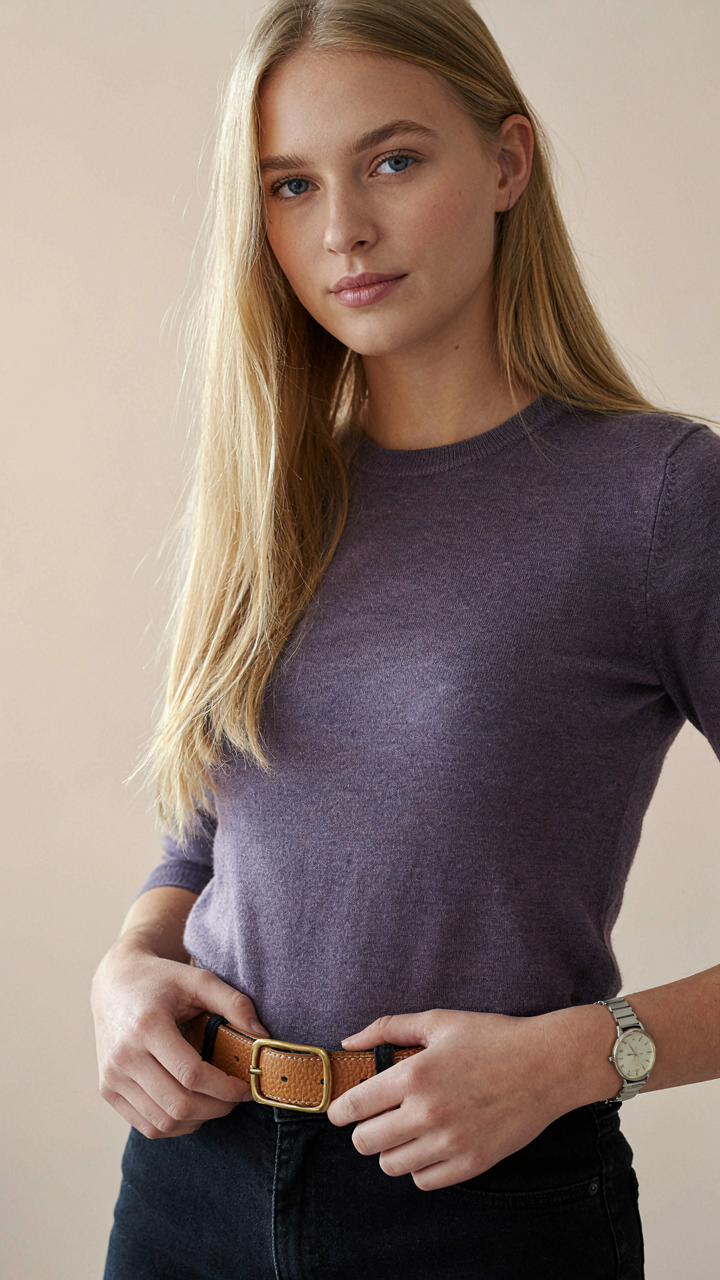
You want accessories to do the work that your clothes won’t, and you’re hoping nobody notices the calculation. Here’s the mechanism: accessories operate on scarcity economics. A uniform is by definition repetitive. Accessories break that repetition without breaking the uniform’s core function. Think of it like signal-to-noise ratio in communications. Your base outfit is the signal. Everything else competes for attention. Strategic accessories amplify your signal. Frivolous ones just create noise.
The 20/80 rule isn’t borrowed marketing speak here. It’s practical arithmetic. Twenty percent of your accessories will generate eighty percent of the distinction you’re after. A single excellent watch, one quality belt, a specific bag. These carry disproportionate weight in how people read you. The mistake most people make is horizontal expansion, not vertical depth. They add more items instead of choosing fewer, better ones. One exceptional piece beats five mediocre ones every time.
Intentionality Over Accumulation
The common advice tells you to express yourself through accessories. That’s incomplete. The real work is subtraction, not addition. Each accessory must solve a problem or own a specific moment. A scarf isn’t warmth plus personality. A structured bag isn’t storage plus style. You’re choosing one primary function and letting the secondary benefit follow naturally.
Clutter is the default state because it feels safer. More options seem smarter. They’re not. When you own an accessory that doesn’t serve your uniform’s logic, it creates friction every time you reach for it. You hesitate. You second-guess. You dilute your consistency. Audit your current accessories and remove anything that requires mental negotiation before you wear it. What remains should feel inevitable, not optional. That inevitability is what makes a style uniform actually work.
Korean School Outfit & Uniform Styling Ideas: Adapting Global Influences Authentically

What Makes A Uniform Actually Work
You want permission to copy something that looks polished without admitting you’re borrowing the structure. Here’s the mechanism: uniforms work because they reduce decision fatigue through constraint. Think of constraint like a filter in signal processing—it removes noise and amplifies the essential information. Korean school uniforms specifically compress choice into a tight range: pleated skirt or trousers, blazer, white shirt, minimal accessories. The aesthetic works because it forces every variable into alignment.
The rule everyone misses is that you don’t admire the uniform itself—you admire what the constraint reveals about the wearer. Clean lines, proportional fit, deliberate color pairing. Strip away the nostalgia and cultural specificity, and you’re left with pure information architecture. The uniform communicates through absence, not presence. What matters for your own system is identifying which constraints generate clarity in your specific life and body type, then building your uniform inside those boundaries.
Build Your Version, Not A Copy
Common advice says “take inspiration” and “make it your own.” That’s incomplete. Imitation with tweaks is still imitation. The mechanism is substitution, not transformation. Look at the Korean school uniform’s actual function: it signals belonging while minimizing friction in getting dressed. Now ask yourself what your uniform needs to signal and what friction you’re trying to eliminate.
If you work from home, a school uniform template collapses immediately—you don’t need the formality structure. If you prioritize movement over presentation, the rigid blazer becomes a constraint that works against you, not for you. The authentic move is to steal the principle of constraint, then populate it with your own variables: fabric weight, color range, silhouette preferences, lifestyle demands. Your uniform should feel inevitable for your life, not aspirational for someone else’s.
The Only Uniform That Truly Constricts You Is The One You Let Others Dictate

Most people never build a style uniform because they mistake conformity for constraint. The real prison is scrolling endlessly, chasing trends, seeking permission from strangers online. A uniform frees you. Pick three colors that make you feel powerful today. Wear them tomorrow. Stop negotiating with yourself. The person who commits to a look owns the room. The person still deciding owns nothing.