

The Minimalist Paradox: More Than Just Less

Buy Things That Earn Their Place
You want permission to own less without feeling like you’re missing out. Here’s the mechanism: Scandinavian design applies portfolio theory to clothing. In finance, a diversified portfolio means fewer total holdings that cover more ground. In your closet, this means buying pieces that function across multiple outfits and seasons, not one-off items that sit unused.
The common advice—”buy less, choose well”—stops too early. The real move is buying pieces with compounding outfit potential. A merino wool sweater in charcoal works over t-shirts, under coats, and layered across seasons. A pair of tailored trousers in navy pairs with sneakers, boots, and loafers. Each piece multiplies the outfit combinations without multiplying the closet. This is why Scandinavian minimalism isn’t deprivation. It’s geometric growth compressed into fewer items.
Outfits Built On Repetition, Not Rotation

The goal isn’t to feel different every day. It’s to feel consistent while looking intentional. Scandinavian style outfits work because they rely on a fixed formula repeated with subtle material or shade variations. Think Uniform Project logic applied to everyday wear, not theatrical constraint. You establish a baseline outfit structure—neutral base, layering piece, outerwear—then rotate within that frame using different fabrics or tones.
This removes decision friction and builds visual cohesion. A cream linen shirt becomes an off-white wool blend in winter. The structure stays identical. Your eye trains itself to recognize quality and fit rather than novelty. Over time, people recognize your style not because you’re constantly reinventing, but because you’ve mastered one thing deeply. The protocol: identify three outfit formulas that suit your life, then source pieces that fit only those patterns.

Copenhagen Street Style: Beyond Trend Chasing

Building A Permanent Wardrobe
You want permission to ignore what’s happening on Instagram this season. Here’s the mechanism: Scandinavian style works because it operates on replacement, not rotation. You buy a piece to replace an identical piece that wore out, not to chase a feeling that will die in six weeks.
The Danes and Swedes treat clothing like infrastructure. A well-cut navy sweater from Cos or By Malene Birger isn’t a trend artifact. It’s a utility that lasts five years, then gets replaced by the exact same sweater. This removes the cognitive load of decision-making and the financial hemorrhage of seasonal shopping. You’re not building a wardrobe that reflects trends. You’re building one that reflects your actual life.
Comfort Built Into The Foundation
Common advice says comfort means loose clothing. That’s incomplete. Comfort in Scandinavian outfits means the fabric, fit, and weight work together so you stop noticing you’re wearing anything. This borrows from ergonomic engineering: the goal is zero friction between your body and the garment.
Danish and Swedish brands obsess over fabric weight because temperature management isn’t optional in Northern Europe. A merino wool sweater or a cotton jersey tee from brands like Arktikoriginalen work because they regulate heat without requiring adjustment or removal. The fit matters equally. Scandinavian cuts aren’t tight or oversized. They sit on your body in neutral. This means you can move, sit, and exist for twelve hours without tugging, shifting, or thinking about how you look. The protocol: test any piece for thirty minutes in the store. If you’re aware of the garment, it fails.
The Scandinavian Wardrobe Protocol: A Strategic Framework
Build Your Foundation In Neutral Anchors
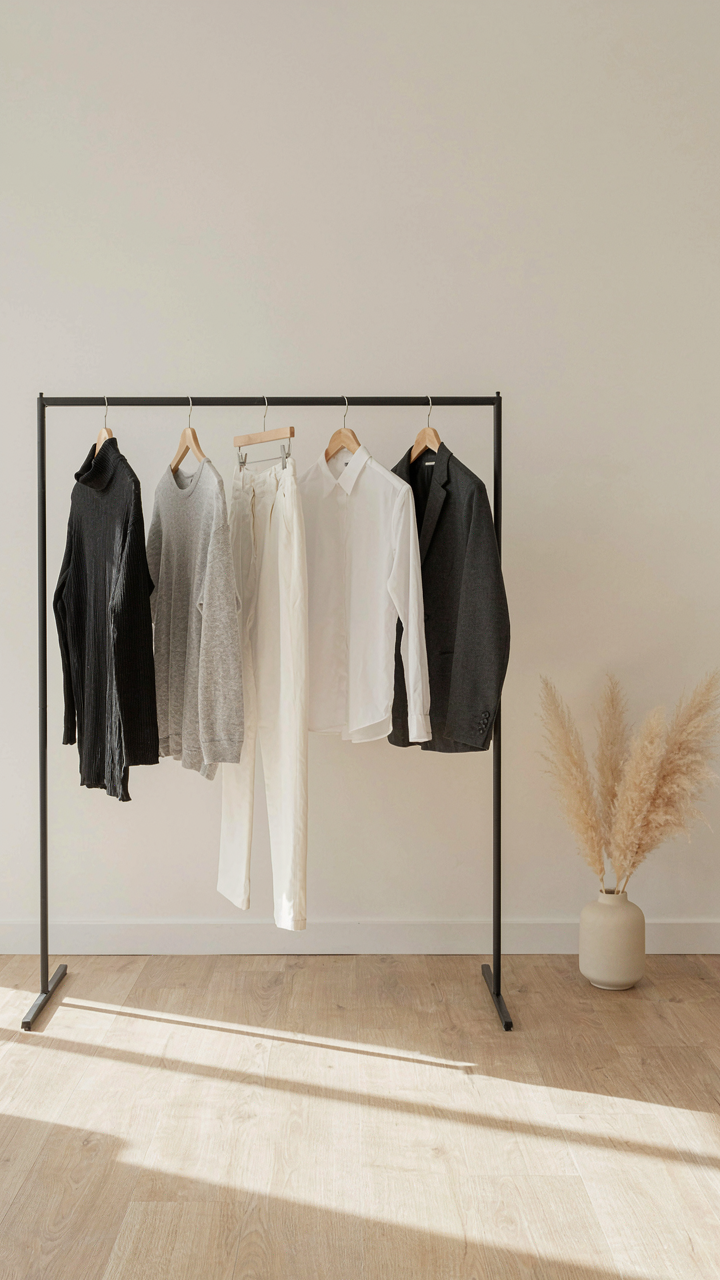
You want to believe a wardrobe just happens. It doesn’t. You’re looking for permission to stop making decisions. The real mechanism is constraint, not creativity. Scandinavian style outfits work because they operate on a closed system. Pick four neutral base colors: black, white, gray, charcoal. Everything else locks into these. You’re not building a wardrobe. You’re building a algebra where every piece multiplies with every other piece.
The modular capsule wardrobe is the Scandinavian answer to decision fatigue. Start with essentials: a fitted turtleneck, a crisp white shirt, dark jeans, tailored trousers. Add a structured wool blazer. Each item should fit your body precisely and use natural fibers like merino wool, linen, or cotton. The count matters less than coherence. Most people own thirty items that fight each other. Own fewer that collaborate.
Layering As An Architecture System
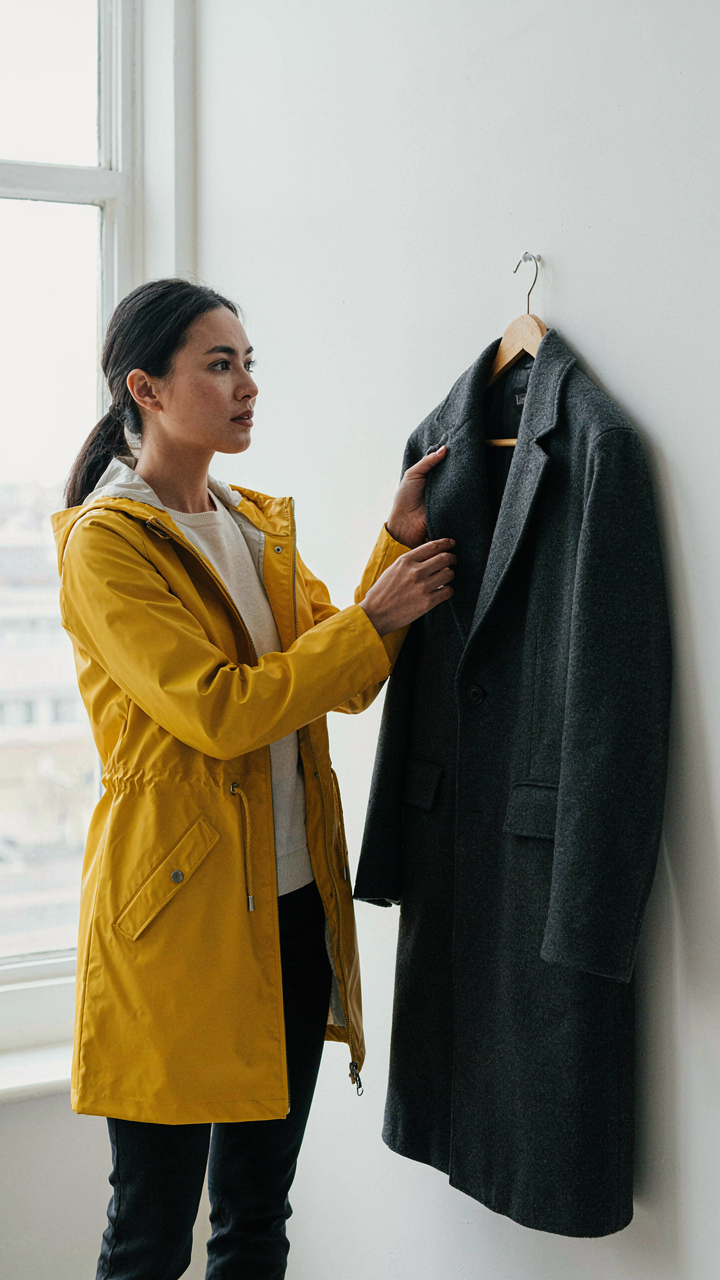
Think in layers like an engineer thinks in load-bearing structures. Scandinavian outfits don’t rely on volume. They rely on proportion and material sequence. Base layer, middle layer, outer layer. Each serves function and feeds the aesthetic. A fitted long-sleeve base, a wool sweater over it, a minimal parka on top. The silhouette stays clean because nothing bunches or overwhelms the line underneath.
The technique stops weather from dictating your look. Add or remove middle layers without changing the foundation. Wool sweaters with varying gauges create texture depth without visual clutter. A linen shirt layered under a wool crew neck works through three seasons. The constraint of the system is its strength. You’re not inventing outfits daily. You’re executing a protocol.
Unpacking Scandi Chic Style: Function Meets Form
Where Purpose Beats Decoration
You want permission to dress well without the noise. That’s the real draw here. Scandinavian style outfits solve this by inverting the design hierarchy that dominates fashion. Instead of decoration justifying the garment, the garment’s function determines what it looks like. This is industrial design applied to clothing. Every element exists because it solves a problem: weather resistance, movement efficiency, layering logic, or durability. Nothing hangs there for status.
This mechanism comes from Scandinavian geography and economy. Nordic countries built design philosophy around harsh winters and limited resources. Waste became unacceptable. A button serves multiple coats across years. A seam reinforces structure and lasts through wear. This constraint created a visual language where restraint signals competence, not poverty. When you build a Scandinavian outfit, you’re not assembling trends. You’re stacking functional decisions that happen to look clean.
Building Depth Through Material Contrast
The common advice says “mix textures for visual interest.” That’s incomplete and misses the mechanism. Texture in Scandinavian style outfits isn’t decorative. It’s tactile honesty. You layer materials that perform differently and feel different because each one solves a specific problem in the outfit’s system, not because you’re chasing aesthetic variety.
Knit fabrics trap air and insulate. Linen breathes and wrinkles in a controlled way that reads as intentional, not lazy. Wool blends regulate temperature across seasons. Smooth cotton provides contrast by structure alone, not shininess. Dense denim anchors an outfit with weight and reliability. You see the material’s actual job when you wear it. The texture variation emerges from that honest pairing, not from hunting for “interesting” surfaces. This is why Scandinavian outfits feel coherent despite their apparent simplicity. Start with the garment’s job, then choose its material. The texture takes care of itself.
The Nordic Neutral Palette: Decoding Its Power
Why Neutrals Actually Work On You
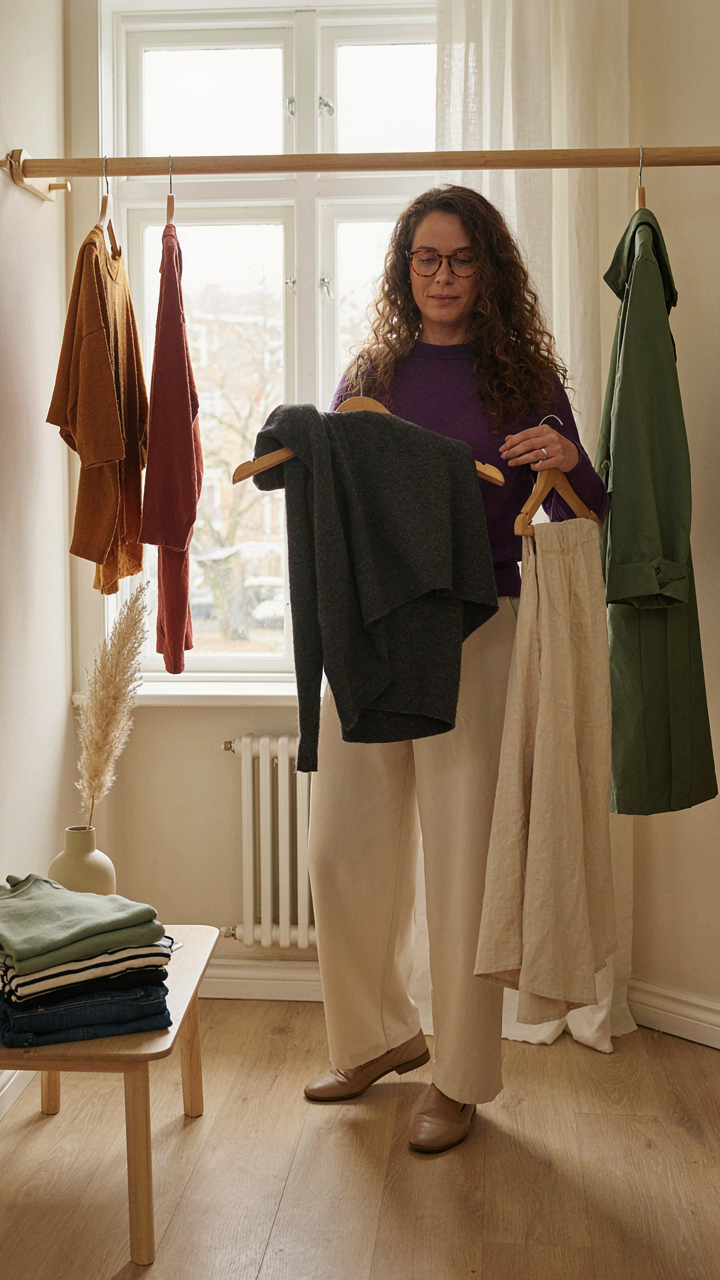
You want permission to wear boring clothes without feeling invisible. Here’s what actually happens: in visual perception, neutral colors create contrast through form and texture instead of hue. Your brain processes shape, fabric weight, and fit faster when it isn’t processing competing colors. Scandinavian design weaponized this. Instead of fighting for attention with color, each piece becomes legible. The mechanism is subtraction revealing structure, not addition masking it.
Neutrals aren’t bland because they lack color. They’re powerful because they force intentionality elsewhere. A charcoal wool sweater over cream linen demands that the knit weight, shoulder seam placement, and sleeve length do the work. You can’t hide behind visual noise. This is why Scandinavian neutrals feel expensive while generic neutrals feel cheap. The difference isn’t the color. It’s the demand for quality in everything else.
Accent Strategy Without The Noise
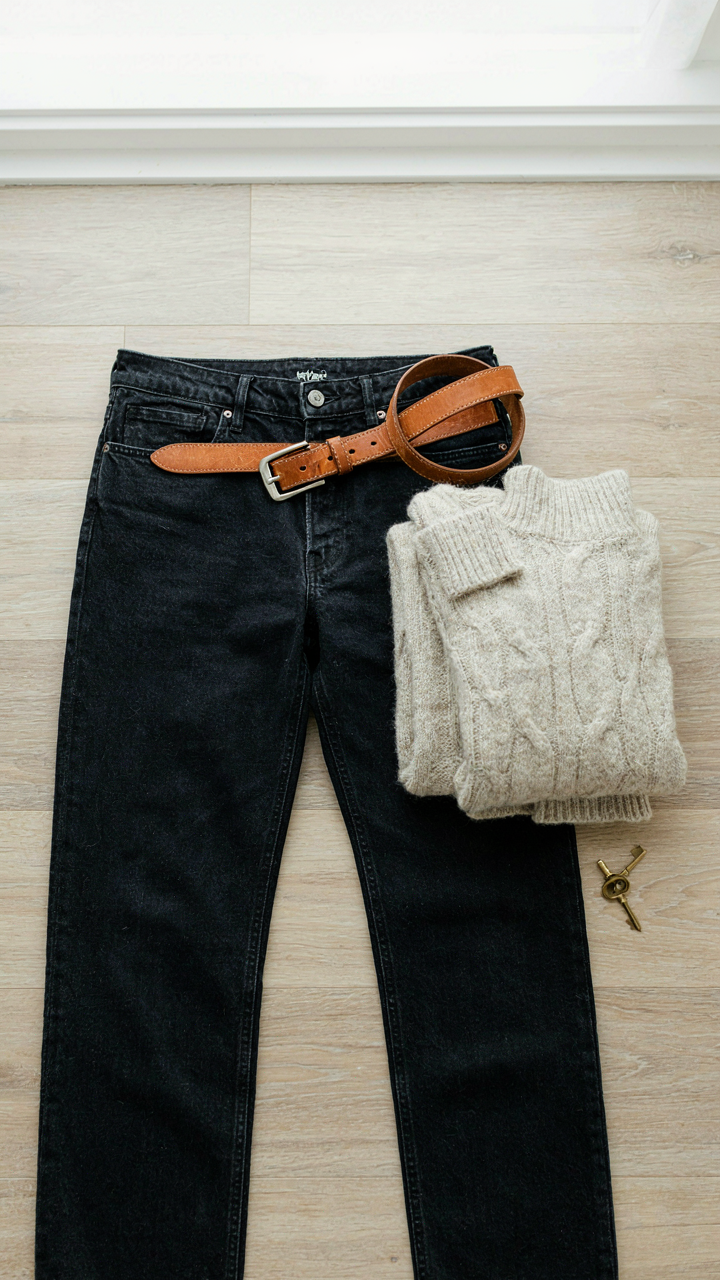
Most advice says add a pop of color. That’s lazy. The real move is understanding that one saturated accent in a neutral outfit functions like emphasis in typography. It works because it breaks a clear pattern, not because it’s bright. Scandinavians use this deliberately: a single cognac leather belt, a forest green knit, or deep navy outerwear against a base of cream, grey, and taupe. The accent lands harder because the background stays stable.
Placement matters mechanically. An accent near your face (scarf, sweater, hat) shifts how people read your entire outfit because the eye lands there first. An accent at the bottom (shoes, bag) anchors the composition. An accent in the middle (belt, layered piece) creates proportion and divides the vertical space. Start with one accent per outfit. Pick one location. Then move to the next outfit. This constraint is how you actually learn what works on your frame instead of chasing trends.
The Accessory Multiplier Effect: Micro Changes, Macro Impact
Why One Scarf Changes Everything
You want proof that small choices matter because you’re tired of spending money on clothes that don’t work. Here’s the mechanism: economics calls this input-output ratio, and Scandinavian style outfits weaponize it. A base outfit—cream sweater, dark jeans, wool coat—sits neutral. Add a single accessory: a structured leather belt, a linen scarf, minimal jewelry. The entire outfit shifts from forgettable to intentional. The base stayed constant. Only the multiplier changed.
Scandinavians build this into their design philosophy. They don’t accessorize to add noise. They add one element that forces the entire system to cohere. A camel coat needs nothing until it gets a leather crossbody bag, then suddenly the proportions and mood crystallize. The accessory doesn’t enhance a weak outfit. It unlocks the potential already sitting there. This is why Scandinavian style feels effortless but isn’t accidental.
The 80 20 Rule Of What You Actually Wear
Most advice tells you to collect a rotation of accessories. That’s incomplete. The Pareto Principle applies directly: 80 percent of your outfit’s visual impact comes from 20 percent of your accessories. Identify which pieces you reach for across seasons and contexts. A camel wool scarf works over winter coats and spring blazers. A simple gold chain layers under everything. A structured tote carries across casual and semi-formal days. These aren’t interchangeable items. They’re load-bearing walls in your wardrobe’s architecture.
Stop acquiring accessories horizontally. Stop collecting versions of the same idea in different colors. Instead, commit to pieces that compress across multiple outfits and seasons. Scandinavian style demands ruthlessness here. One quality leather belt beats six average ones. One neutral scarf in natural fiber beats a closet of seasonal variations. The mechanism works like this: identify your three core activities, then choose exactly one accessory that works across all three. Before adding anything else, live with those choices for two weeks.
Scandinavian Style Women: Beyond The Hype

Outfit Building Around Real Constraints
You want to believe Scandinavian style is effortless. It’s not. The real mechanism at work is constraint-based design from economics. Scandinavian women didn’t invent minimalism because it looked clean on Instagram. They built outfits around scarcity: limited daylight, brutal weather, expensive imported goods. The outfit formula that emerges from these constraints works because it solves actual problems, not aesthetic ones.
Scandinavian style outfits strip away choice paralysis by establishing hard rules. You pick a neutral base, layer for temperature, choose one texture contrast, add one accent. The system works because each piece serves multiple outfits. A charcoal wool sweater pairs with work trousers on Monday and weekend jeans on Saturday. This isn’t minimalism for its own sake. It’s math.
- Neutral Base Layer: A cream or grey merino wool long-sleeve top anchors five or more outfit combinations and works across seasons with layering.
- Structured Trousers: Tailored black or navy wool trousers function in professional settings, casual environments, and layered weekend looks without alteration.
- One Texture Element: A knit sweater, cable-knit cardigan, or linen shirt creates visual interest while maintaining the neutral palette and serving multiple outfit rotations.
- Functional Outerwear: A wool coat or technical jacket handles cold weather and pairs with every base combination without requiring seasonal rotation.
- Grounding Footwear: Leather boots or flat shoes in black or brown anchor outfits and transition between contexts without aesthetic friction.
The payoff appears when you stop treating outfit-building as daily decision-making. Most women waste cognitive energy on combination choices that don’t matter. Scandinavian style outfits eliminate that waste by design. You own fewer pieces that perform harder.
Investment Pieces That Don’t Fade
Timelessness isn’t a promise in Scandinavian design. It’s a byproduct of choosing materials and cuts that resist trend velocity. A wool coat from 2015 looks identical to one from 2024 because the Scandinavian design principle rejects ornamental detail. The construction matters more than the moment.
Longevity in Scandinavian style outfits operates on two levels: physical durability and cultural resistance to obsolescence. Merino wool, linen, and quality leather age gracefully. A worn-in sweater looks better after five years than it did new because the fabric softens without pilling. The cut remains current because Scandinavian designers avoided exaggerated proportions, extreme hem lengths, and logo placement that screams a specific season.
What kills clothes isn’t time. It’s poor fiber choice and construction shortcuts. A synthetic blend from a fast-fashion brand looks dated within eighteen months. A natural fiber garment from a Scandinavian maker holds its relevance because the garment itself wasn’t built around trend cycles. Buy pieces that look right in grayscale photography from any decade.
Maintenance: The Unseen Pillar Of Scandinavian Fashion Outfits

Treating Garments As Capital
You want your clothes to last because you can’t afford to keep replacing them, and you know looking worn out reads as careless. Scandinavian design treats garments as capital assets, not consumables. This logic comes from economics: you invest upfront in quality, then protect that investment through maintenance. A merino wool sweater or linen shirt costs more initially, but proper care extends its lifespan by years. The math is direct. You wash less frequently, hang dry instead of machine dry, and repair small damage before it spreads. This isn’t frugality dressed up as virtue. It’s the only rational response to owning pieces worth the money.
Care protocols matter more than the garment itself. Wool requires cold water and wool-specific detergent because hot water and friction break down fibers. Linen shrinks if dried hot, so air drying is non-negotiable. Natural fabrics demand specificity because they respond to conditions in ways synthetic blends don’t. You either follow the protocol or you don’t. The garment doesn’t care about your intentions. Scandinavian minimalism works because people actually maintain what they own instead of cycling through disposable replacements.
Building Systems That Last
The fashion industry sells urgency, but Scandinavian style is built on the opposite premise: fewer pieces that age well. This applies the principle of durability from engineering, where systems designed to last require deliberate redundancy and maintenance schedules. Your rotation strategy becomes the mechanism. Instead of wearing one piece constantly until it fails, you spread wear across three or four similar items. A rotation of neutral sweaters means no single piece takes the full impact of weekly washing. Each one recovers between wears, fibers relax, and the garment holds its shape longer.
Seasonal storage and fabric conditioning extend garment life. Cedar blocks or lavender sachets protect wool during off-season months. Reshaping knitwear while damp prevents stretching. Minor repairs like loose seams or pilling stop degradation before it becomes irreversible. You don’t wait for collapse. You intercept failure at the first sign. Scandinavian outfits survive because maintenance happens before crisis.
Your True Obstacle Isn’t Style, But The Impulse To Consume Without Strategy

Most people drown in clothes they don’t wear. Scandinavian style outfits work because they reject that noise. You don’t need more pieces. You need permission to stop buying. Today, pull ten items from your closet that actually fit your life. Wear them for a week. Notice what you reach for. That’s your foundation. Everything else is just distraction dressed up as taste.