

The Thermal Efficiency Fallacy: Why More Layers Isn’t Always Warmer

How Heat Actually Leaves Your Body
You want to believe adding another layer solves the problem. It doesn’t. Physics says heat moves from warm to cold through three mechanisms: conduction (direct contact), convection (air movement), and radiation (electromagnetic energy). Your minimalist winter outfit works by blocking these mechanisms strategically, not by stacking mass. Most people treat layering like armor—more stuff equals more protection. That’s a misreading of how thermal transfer works. One well-chosen layer stops conduction better than three poorly chosen ones. The goal isn’t bulk. It’s interruption.
Your body radiates heat constantly. A thin, dense material placed close to skin can trap that radiant energy and reflect it back more efficiently than a loose, thick sweater with air gaps. Wind also matters. Convection pulls warm air away from your body through gaps and loose weaves. Conduction happens when cold fabric touches warm skin directly. A minimalist system addresses all three by choosing materials with high thermal resistance relative to their thickness, then placing them strategically. You’re engineering a barrier, not building a fort.
Density Beats Thickness Every Time

Loft—the air trapped inside a material—gets treated as the holy metric of warmth. It’s incomplete guidance. A puffy jacket with high loft feels warm because air is an insulator, but that same air lets wind pass through. Density, measured by how much material fills a given space, actually determines how long heat stays trapped. Down has lower density than wool, yet wool blocks wind better because its fibers are tighter. Dense materials stop convection. Lofty materials trap radiant heat. A minimalist winter outfit uses both, but prioritizes density where wind exposure is highest.
The mistake most people make is confusing “warm” with “puffy.” A dense merino wool base layer and a dense synthetic shell outperform a thick, lofty jacket with loose construction. Merino at 200 grams per square meter beats a 400-gram synthetic filled with low-density loft. Weight matters less than weave tightness and fiber type. For minimalism, this means fewer pieces doing more work. Choose one shell that blocks wind and moisture over two loose layers that let both through. Density is your operational principle. Build your outfit around it, not around layer count.

The “Cold Spots” Protocol: Eliminating Heat Leaks

Seal The Perimeter First
You want to look intentional without layers stacked like insulation bats. Here’s what nobody says: heat escapes where fabric ends, not where it’s thick. Cuffs, collars, and hems are openings. Wind moves through them. Your body loses warmth in seconds at these points because air circulation bypasses the core insulation entirely. Close them systematically.
A fitted crew neck or mock neck eliminates the collar gap that a loose collar creates. Cuffs matter more than sleeve thickness. Knit cuffs that sit snug at the wrist beat loose fabric every time because they trap the warm air layer your body built. Hems that hit at the hip or lower prevent cold air from riding up under your coat. The mechanism is simple: seal the perimeter, contain the heat envelope.
Compression Points And Gap Elimination
Layering creates gaps when pieces don’t nest together properly. Think about pneumatic pressure: a sealed system retains heat more efficiently than one with micro-exposures. Your torso is the heat source. Everything else is either containing it or bleeding it away. Most people layer randomly and wonder why they’re cold despite wearing three pieces.
Wear a base layer that contacts skin completely, no bunching. Your mid layer sits flush against the base layer, not floating. Your outer layer compresses everything inward without restricting movement. Where layers transition between garments, tuck the base layer into your pants or the mid layer into the outer shell. This removes the dead air pockets that let wind circulate. Your outfit works because all pieces lock together, not because you own expensive fabric.
The Material Science Of Minimal Warmth: Beyond Wool And Down

Synthetic Innovations For Warmth To Weight Ratio
You want synthetic materials to feel like a shortcut to looking smart without actually understanding fabric. Here’s the mechanism: thermodynamics doesn’t care about your intent. Synthetic fibers trap air in their structure the same way natural fibers do, but they engineer that trap deliberately. Polyester, nylon, and acrylic don’t insulate through material composition alone—they insulate through loft, the space between fibers where dead air sits. Better loft density per gram means you wear less weight for the same heat output.
The real advantage isn’t that synthetics are “better.” It’s that they’re engineered reproducibly. Natural fibers vary batch to batch. Synthetic fibers maintain consistent performance across production runs. This matters for minimal dressing because consistency lets you build repeatable outfits. You know exactly what a 200-weight synthetic base layer will do in specific conditions.
- Polyester Microfiber: Holds loft longer than natural fibers under compression and retains structure through multiple wash cycles, making it reliable for layered systems.
- Acrylic Blends: Mimic wool’s warmth-to-weight ratio at lower cost and dry significantly faster, reducing the outfit’s dependence on air circulation to stay functional.
- Nylon Outer Shells: Provide wind resistance without bulk, letting you cut the number of layers needed when temperatures drop sharply.
- Polypropylene Base Layers: Wick moisture away from skin faster than merino wool and don’t retain odor, simplifying your laundry protocol in minimal wardrobes.
- Fleece Composites: High-loft synthetics engineered to compress without losing recovery, meaning packed jackets take up minimal space and maintain insulation when unpacked.
Minimalist winter outfits fail when you add weight to solve a problem synthetics already solved. Pick one synthetic insulation system and commit to it across your cold-season pieces. This removes decision friction and prevents you from accumulating redundant layers.
Hydrophobic Treatments And Moisture Management
Moisture kills minimal outfits faster than cold does. A single layer soaked in sweat stops functioning as insulation. The fix isn’t complicated—you need fabric treated to repel water without creating a vapor barrier that traps condensation against your skin. Durable water repellent coatings, often fluorocarbon-based, sit on the fiber surface and cause water to bead and roll off instead of wicking into the weave. This distinction matters because traditional wool absorbs moisture and still insulates, but synthetics lose their loft when wet.
The problem with common advice is it treats DWR as optional luxury. It’s structural. Your outfit becomes useless in damp conditions without it. Check that your base layers use treatments that enhance moisture transport while your mid and outer layers block external water. A minimalist winter outfit typically requires only two items with active DWR treatment—your shell and your base layer—if you choose materials correctly. Everything else manages moisture through fabric selection alone. Test the treatment by pouring water on a small area before committing. If water beads and rolls away cleanly within five seconds, the coat still has active repellency.
The Tactical Wardrobe: Building From Base To Shell

Transport, Not Insulation
You want the base layer to do invisible work so you don’t think about sweat ruining your fit. Here’s the mechanism borrowed from fluid dynamics: a base layer functions as a pressure gradient system, moving moisture away from skin toward outer layers faster than air can evaporate it directly on your body. Cotton fails here because it absorbs and holds moisture. Merino wool and synthetic blends work because their fiber structure actively wicks, not absorbs.
The job of a base layer is transport, not warmth. It sits against skin in a winter outfit and must move perspiration outward continuously, whether from exertion or layering friction. Merino wool handles temperature regulation automatically through its hygroscopic properties, meaning it absorbs moisture vapor without feeling wet and releases it under drier conditions. Synthetics like polyester achieve the same transport effect through fiber geometry. Neither traps heat against your body. That’s the mid-layer’s role.
Thermal Regulation Without Bulk
Mid-layers don’t insulate through thickness alone. They trap still air in their fiber structure, and dead air is what actually stops heat loss. One quality mid-layer outperforms three thin ones because consistency matters more than volume. Fleece, down alternatives, and lightweight wools all work by the same principle: creating air pockets that resist convection. The mistake most people make is choosing mid-layers for appearance or brand rather than fiber density and loft recovery.
The mid-layer sits between base and shell, and its job is selective insulation, not permanent warmth. You add or remove it based on exertion and wind exposure. This is why minimalist winter outfits work tactically: you build a system where each piece has one job, and you control temperature by managing layers, not by buying more clothes. Pick a mid-layer with consistent loft that compresses without losing its air-trapping structure when you move or when the outer shell compresses it.
Outerwear As Your Personal Microclimate: The Half Coat Advantage

Why Half Coats Work Better Than Your Expectations
You want proof that minimalism isn’t sacrifice. A half coat delivers that. In thermodynamics, layering systems work by trapping air in dead zones between fabric. A half coat cuts off at the hip, which means your torso stays insulated where your core temp matters most, while your legs stay mobile and unencumbered. You get the heat where it counts.
Most people buy full-length coats because they assume longer equals warmer. Wrong. A half coat keeps you warm through active movement and breathability. Your legs generate their own heat when you walk, bike, or move through the world. Restricting them with heavy fabric wastes energy and creates sweat accumulation that turns cold when you stop moving. The half coat respects how your body actually works.
Materials That Actually Repel Water And Wind
Shell durability isn’t mystical. It’s about weave density and coating type. A tightly woven nylon or polyester shell with a DWR (durable water repellent) finish stops wind dead and sheds water for months before losing effectiveness. Most minimalist winter outfits fail here because people cheap out on the shell, then wonder why water penetrates.
Your half coat shell needs a minimum 20-denier density to perform. Most quality options use 100-denier or higher, which means the weave is tight enough that wind doesn’t slip through gaps. DWR coating lasts roughly 20 to 30 washes before degrading. Re-treat it with commercial DWR spray when water stops beading on the surface. That single action keeps a half coat functional for years, not seasons.
Footwear Foundation: Classic Leather Winter Loafers And Thermal Barriers

Where Insulation Actually Happens
You care about this section because you want proof that minimalist winter outfits work without looking like you’re bracing for a blizzard. The mechanism is simple: insulation operates on trapped air. A loafer’s insulated sole doesn’t warm your foot—it stops heat from leaving it. Waterproof membranes like Gore-Tex don’t repel cold, they block moisture that accelerates heat loss through evaporative cooling. Most people buy winter boots for grip or bulk. You’re buying them for thermodynamic control.
Leather loafers with rigid insulated soles outperform sneakers because density matters. A compressed cork or EVA foam sole traps fewer air pockets than a puffy athletic sole, but the compression prevents moisture penetration that collapses insulation entirely. Waterproof membranes sit between the outer leather and inner lining. When snow melts against your shoe, that membrane stops water from wicking into the insulation layer. Without it, you’re wearing a heat sink. The sole thickness must hit the floor without compressing—usually 1.5 to 2 inches for winter conditions.
The Sock Layer You’re Underweighting
Socks determine whether your feet warm or freeze, and everyone gets this backwards. Most people choose socks based on thickness. What matters is fiber composition and moisture management. Merino wool or synthetic blends pull sweat away from skin while retaining insulative properties even when damp. Cotton absorbs moisture and holds it against your skin, dropping core temperature faster than wearing no sock at all.
Thermal barriers work through layering physics: a thin baselayer of moisture-wicking fiber, then a thicker insulative layer. Don’t stack two thick socks. Your foot needs compression against the shoe. Compression improves circulation and heat distribution. Choose a merino wool blend at 70 to 80 percent wool content for winter. Pair it with a loafer that fits snug enough to support blood flow without cutting off circulation. Check this by pressing your thumb on the top of your sock after five minutes of wear. Your skin should return to color immediately.
The Systems Thinking Approach To Winter Outfits Travel

Where Extra Layers Stop Working
You want to believe more insulation solves cold. It doesn’t, and that’s the mechanism most people miss. Economics teaches us diminishing returns: each additional layer adds warmth at a declining rate while increasing bulk, weight, and restricted movement. You hit a threshold where the marginal benefit of one more sweater becomes negative. You’re warmer but slower, stiffer, and burning calories fighting the dead weight instead of preserving them.
The real play is identifying your personal thermal threshold, not chasing maximum insulation. A base layer, mid layer, and shell with proper fit does what three sweaters plus a coat cannot: it traps warm air efficiently without generating excess heat that forces you to strip down mid-trip. Once you understand this curve, you stop buying gear and start buying nothing. You’ve solved the problem and can travel with less.
Regulation Happens On The Feedback Loop
Cybernetics—the study of control systems—maps directly onto your body’s temperature regulation. Your skin detects cold, signals your core, and your body responds by restricting blood flow to extremities or increasing metabolic output. Most people fight this feedback loop by overdressing. Instead, you should align with it. Tight, layered fabrics trap the heat your body generates naturally and send the right signals back to your thermostat.
Moisture breaks the loop. Sweat cools you down through evaporation even in cold weather because your body can’t read the environment correctly anymore. The fix isn’t adding warmth; it’s wearing materials that wick moisture away and let your body regulate without interference. Merino wool does this better than cotton because it moves moisture to the air rather than holding it. Once you dress for your body’s actual regulation system instead of fighting it, you travel lighter and stay warmer.
Aesthetics Of Intent: Ruched Loafers Outfit And Black Pants Outfit Autumn

When Choice Becomes Constraint
You want permission to wear the same thing twice. That’s the real question under all this. Minimalist winter dressing works because it removes the friction between intention and execution, leaving only the pieces that survive repeated scrutiny. In economics, this is called revealed preference—your actions show what you actually value, not what you claim to value. A ruched loafer outfit or black pants combination becomes your uniform not because you’re boring, but because you’ve eliminated the gap between what you own and what you wear.
The mechanism is simple: fewer pieces force higher utility per item. Black pants paired with a ruched loafer create visual contrast through texture and silhouette, not through color noise. This outfit recycles across seasons because the base layer adapts. You wear it in autumn, layer it in winter, strip it down in spring. The ruched detail on the loafer does the work of ornamentation without requiring additional accessories. One piece carries the visual weight that would normally demand three.
Building Office To Evening Without Changing
The common advice says build a capsule wardrobe and everything will mix. That’s incomplete. What actually works is designing each piece to function in two distinct contexts without looking like you tried to make it do so. A black pants outfit designed for an office dinner party outfit for women isn’t a compromise between two worlds—it’s a piece engineered for both.
The ruched loafer serves as your transition mechanism. In the office, it reads as refined and restrained. At an evening event, the gathered texture catches light differently and shifts the entire outfit’s register upward without requiring a wardrobe change. Swap the daytime top for a silk shell or fitted knit, keep the same black pants, and the outfit transforms. The loafer’s architectural detail means it doesn’t fade into the background when paired with evening pieces. You move from desk to dinner without a costume change, which means you actually move—no friction, no second-guessing, no time wasted deciding if the outfit works.
Your Real Enemy Isn’t The Cold; It’s Your Unexamined Assumptions About It
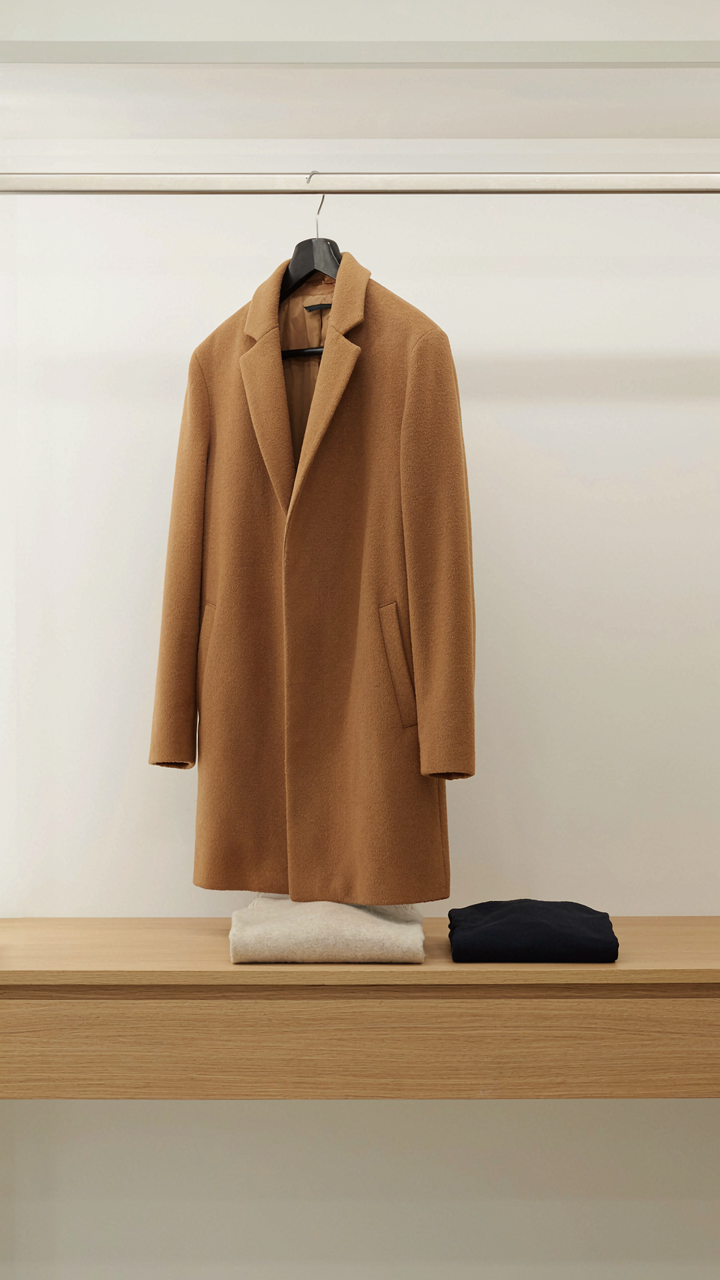
Most people believe staying warm requires more. More layers, more bulk, more options. The opposite is true. Minimalist winter outfits work because they force you to buy better pieces instead of more pieces. Today, pick one coat, one sweater, one base layer that actually fits your body and your life. Wear it until you understand it. The best wardrobe isn’t the biggest one; it’s the one you stop thinking about.