

The Wardrobe As A System: Beyond Disposable Trends

Why Your Closet Fails You
You’re afraid people will notice you’re wearing the same thing twice. That’s the real problem nobody names. But here’s the mechanism: fashion marketing has inverted scarcity. It used to be that owning fewer items signaled wealth and restraint. Now owning many items signals wealth. This flipped the script. Economics calls this “positional goods”—items whose value depends on relative scarcity. Your repeated outfit signals the opposite of wealth. So you buy more. The system works.
Fast fashion exploited this perfectly. It made buying cheap clothes feel like the rational move instead of the wasteful one. A twenty-dollar shirt feels disposable. A two-hundred-dollar garment feels like an investment. But the math breaks in reverse: wear the cheap shirt five times, it costs four dollars per wear. Wear the quality piece fifty times, it costs four dollars per wear. One rots in a landfill. One doesn’t. The wardrobe that repeats outfits efficiently is the one built on items with staying power, not volume.
The Myth Of The New Outfit

Everyone says build a capsule wardrobe. Then they say add staples. Then they say get statement pieces. This advice is incomplete because it avoids the hard part: most people wear the same five outfits on rotation and call the rest inventory. The “new outfit” fallacy assumes adding items creates outfits. It doesn’t. Combination does.
Three shirts and two pants make nine outfit configurations before you repeat. Ten shirts and five pants make fifty. But only if the pieces actually work together. Most wardrobes are scattered. A blue shirt that matches nothing. Pants that don’t pair with any top. This creates perceived need for novelty instead of solving the actual constraint: pieces that interact. Calculate your true rotation by counting combinations that work, not items owned. Then repeat those combinations without guilt until they demand replacement through genuine wear.

Your Personal Brand Uniform: The Anti Chameleon Method

Build Around Core Pieces That Anchor Everything
You’re worried people will notice and judge you for wearing the same thing twice. That fear is backwards. The real mechanism at play here is attention scarcity. People don’t retain outfit details unless they’re tied to a consistent identity. Build a uniform around 3 to 5 core pieces that form the skeleton of every outfit you wear. These aren’t trend items. They’re materials and silhouettes that work across seasons and contexts. A black blazer, dark jeans, a white shirt, a neutral sweater. These pieces become invisible because they’re predictable. That predictability is your defense.
The reason generic advice tells you to “mix and match” is because it sells more clothes. You need the opposite strategy. Choose pieces in neutral colors and classic cuts that last multiple years without looking dated. Leather, cotton, wool, linen. Materials that age visibly but predictably. When you build every outfit from the same five core pieces, people see a person with a defined style, not someone rotating through options. You’re no longer choosing an outfit each morning. You’re selecting variations on a theme that already exists.
Create A Visual Signature Through Repetition
Branding works through consistent visual markers, and your wardrobe is a personal brand you wear. The mechanism is recognition through pattern. When someone sees you repeatedly in the same type of silhouette, color palette, or accessory, their brain stops processing it as “outfit choice” and starts filing it as “how this person looks.” Steve Jobs wore a black turtleneck. Not because he loved turtlenecks uniquely, but because the repetition became his signature. You do this by selecting one consistent element that appears in most outfits: a specific type of shoe, a scarf color, a watch, a jacket. This marker becomes so associated with you that variation becomes invisible.
People notice novelty, not consistency. When you wear the same core uniform repeatedly, the baseline becomes neutral. On the rare occasion you wear something different, it stands out. But within the uniform, you can swap pieces freely and nobody tracks the rotation. If you wear black boots with 80 percent of your outfits, nobody calculates whether those boots appeared Tuesday or Thursday. Your visual signature makes the repetition itself the camouflage. The protocol is simple: pick one signature element, wear it consistently for two months until it becomes your identity marker, then rotate outfit combinations around it without hesitation.
The Wardrobe Architecture Protocol: Build For Versatility

Core Pieces As Foundational Elements
You’re worried people will notice you wearing the same thing twice. They won’t, but that’s not why this matters. What actually matters is that you’ve been told to buy more instead of buying smarter. The real mechanism is material and cut consistency, not variety. A navy blazer in wool, a white oxford cloth shirt, dark jeans, and a black crewneck sweater form the skeleton of dozens of outfits because each piece stays the same across multiple wears while the combinations shift.
Core pieces work because they have neutral signals and practical durability. Wear the blazer with chinos Monday, jeans Wednesday, trousers Friday. The shirt layers under sweaters, under the blazer, or stands alone. Nobody tracks this because these pieces are designed to disappear into normalcy. Build five to seven core pieces in neutral colors and natural fabrics that actually age well. These pieces do the heavy lifting while accessories and secondary layers create the illusion of variety.
Accessory Leverage Multiplies Outfit Formulas
The common advice is to buy more basics. Wrong. Economics calls this the principle of leverage: small inputs create disproportionate outputs. A single belt changes a blazer-and-jeans combo into three distinct looks. A watch, scarf, or hat transforms the same base outfit without anyone tracking the repetition. Accessories cost less than new clothes, take no storage space, and signal intentionality instead of budget limitations.
The math is brutal and simple. Five core pieces plus three watches, two belts, four scarves, and two hats generates combinations most people won’t cycle through in a year. You wear the same jeans forty times but pair them with different accessories every third or fourth wear. This is how stylish people actually dress: not by owning more, but by extracting maximum variation from the same pieces through deliberate accessory rotation.
The Illusion Of Novelty: How Perceived Change Works

Your Brain Isn’t Recording What You Think It Is
You’re worried people are tracking your outfit repetition like it matters. They’re not. Your brain doesn’t work like a security camera. It works like a pattern-matching machine that only flags deviations. Cognitive psychology calls this selective attention: your mind filters out repetition and locks onto what’s different. You wore the same black blazer four times this month. Your coworker noticed it zero times because their brain categorized it as background noise after the first encounter.
Memory doesn’t store complete outfit data. It stores impressions and emotional markers. Your colleague remembers you as “put together” or “casual,” not the specific garment rotation. When someone sees you in the same pants a week later, their brain doesn’t cross-reference the previous sighting. It simply processes: pants. The pattern recognition system in human cognition evolved to spot threats and novel opportunities, not to catalog your wardrobe. Repetition becomes invisible because visibility requires conscious flagging, and your outfit isn’t a threat.
Attention Lives Where Contrast Exists
The mechanism here comes from design theory: negative space. In visual composition, the eye travels to contrast points, not uniform areas. Your repeated outfit succeeds or fails based on what changes around it, not the core pieces. Swap your top, keep the same bottoms, and your audience perceives an entirely different outfit. The mind doesn’t process individual items in isolation. It processes the outfit as a gestalt, and gestalt perception prioritizes change over consistency.
This is why strategic variation in one or two pieces demolishes recognition of repetition. A repeated blazer becomes invisible when paired with rotating shirts. The brain’s distinctiveness hierarchy treats accessories and color as primary signals. Texture and silhouette shift attention before item identity does. If you repeat the exact same outfit down to the shoe, recognition happens. If you repeat 60 percent and vary 40 percent, the variation becomes the story your audience tells themselves about what they saw. Change one variable and the entire outfit reads as new.
Strategic Outfit Formulas: Curated, Not Coincidental

The Uniform Approach To Daily Dressing
You’re afraid people will notice you wearing the same thing twice. That’s the real problem here, and it’s not actually a problem. The mechanism is simple: a formula removes daily decision friction by establishing non-negotiable anchor pieces that rotate through predetermined combinations. You’re not shopping more. You’re shopping once, then extracting maximum utility from constraint.
A uniform template works because limitation forces coherence. Steve Jobs didn’t wear the same black turtleneck because he lacked options. He wore it because it eliminated the variable that wastes mental energy. Your formula does the same thing at scale. You decide the rules upfront, then execute them without thinking.
- The Base Layer Constant: One neutral color in one fabric weight that serves as your foundation piece. Worn 3-4 times weekly, rotated with different tops to appear like different outfits.
- The Accent Piece Rotation: Two to three secondary items that change weekly but pair predictably with your base. This creates perceived variety without expanding your actual inventory.
- The Seasonal Swap: One piece that changes every three months based on weather. This single swap resets pattern recognition in observers who see you regularly.
- The Context Exception: One outfit reserved for situations where your usual formula doesn’t apply. This prevents the formula from becoming so visible it becomes a liability.
- The Repeat Interval Gap: Minimum seven days between wearing identical combinations. This timing matches the human cognitive limit for casual acquaintance recognition.
The formula succeeds because it operates on scarcity, not abundance. Most people fail at repeat outfits because they try to hide repetition through variety. You succeed by making the repetition invisible through strategic spacing and anchor pieces that look different depending on what surrounds them.
The Modular Math Of Mixed Pieces
Mix-and-match advice always sounds the same and misses the core mechanism: you’re not trying to create infinite combinations. You’re trying to create enough combinations that the same pieces never appear in the same context twice within your social cycle. This is a math problem, not a creativity problem.
Here’s what works: five core pieces, properly chosen, generate fourteen distinct outfit combinations when rotated through two-week intervals. The pieces don’t need to be trendy. They need to be neutrally colored, proportionally similar, and fabricated in materials that read as intentional rather than accidental when worn together. A well-fitted navy trouser paired with a cream sweater reads differently than that same navy trouser paired with an olive button-up, even though the bottom half is identical. Context determines perception. The observer’s brain registers difference before it registers repetition.
The real move is choosing pieces with what designers call “chromatic flexibility.” A piece that works in three distinct color palettes can be combined more times before visual fatigue sets in. A neutral base in a versatile fabric lets you swap tops, jackets, and layers without the bottom looking like a repeat. You’re not hiding repetition. You’re distributing it across enough combinations that people never see it.
The Capsule Wardrobe Outfits Myth: Less Is More, Applied

Function Before Fashion
You want permission to own fewer clothes without feeling like you’re settling. The real mechanism isn’t about minimalism as philosophy—it’s about constraint forcing design decisions. In systems thinking, constraint is the variable that produces innovation. When you limit your pieces, you stop choosing based on novelty and start choosing based on output: how many finished outfits does each item produce?
Most capsule advice is backwards. It prioritizes aesthetics and coordination over the actual problem: maximizing outfit combinations from minimum pieces. A true functional capsule eliminates items that only work in one specific outfit. Every piece must solve multiple problems. A cream linen shirt works over a t-shirt, under a blazer, and alone—that’s three outfit contexts, not one.
Ruthless Elimination Through Rotation
The common advice says “keep only what you love.” That’s useless because you love things emotionally, not functionally. The real filter: does this piece create a new outfit combination I don’t already have? If it duplicates the function of something you own, it goes. If it only works with one other item, it goes. You’re not building a wardrobe—you’re building a system where every addition multiplies options.
Track what you actually wear for two weeks without changing behavior. Document each outfit. Then examine the pieces that appeared zero times. Those aren’t keepers you’re “saving for later.” They’re dead weight masquerading as future use. Replace them with pieces that solve real gaps in your rotation—items that work with your existing pieces, not against them. This creates density in outfit combinations, which is what makes repeat outfits invisible.
The Decoy Effect: Shifting Focus From Repetition

Where Attention Goes, Repetition Disappears
You’re worried people will notice you wearing the same outfit twice. That’s the real fear underneath this entire chapter. The mechanism that solves this isn’t hiding your clothes—it’s understanding how human attention works. Borrowed from cognitive psychology, this is called the spotlight effect: people allocate attention resources to what stands out, not what repeats. The outfit doesn’t matter as much as what captures the viewer’s mental bandwidth in that moment.
Most people think repetition gets noticed because clothes are visible. That’s backwards. Repetition gets noticed only when it’s the most salient thing in the environment. If you shift what demands attention, the repeated base layers become invisible. Your brain processes new information first. Everything else fades to peripheral data. The repeated outfit only registers as repetition if nothing else competes for that cognitive real estate.
Statement Pieces As Strategic Misdirection
A statement piece is a deliberate attention anchor. Wear the same black jeans and white shirt fifty times, but pair them with a different bold jacket, scarf, or bag each time, and nobody catalogs the base. They catalog the jacket. This isn’t complexity—it’s pure information hierarchy. The eye lands on contrast, color, texture, novelty. The foundational pieces become infrastructure, not content.
The key move is rotating statement pieces on a schedule independent from your base outfit rotation. If your base repeats every three days but your statement piece changes weekly or monthly, observers see variety. They remember the interesting element. The repetition gets filed under “consistency” rather than “this person doesn’t own enough clothes.” When the statement piece is distinctive enough, it rewrites the entire outfit in memory.
Mastering The Put Together Effect: Effortless Authority

Fit And Tailoring Shape Perception
You care about this section because you’re afraid fit will expose you as someone who doesn’t have standards. The mechanism is simple: fit is signal compression. In tailoring, a garment’s silhouette controls how much visual information registers at a distance. Loose fabric broadcasts inconsistency. Precise fit broadcasts intention. When you repeat an outfit, tight tailoring makes the repetition invisible because observers process the garment’s architecture, not its identity.
Poor fit kills repeat outfits faster than anything else. A well-fitted piece absorbs color and fabric into its construction. An ill-fitted piece announces itself as a problem. Invest in tailoring before you invest in pieces. A $40 shirt altered to your actual proportions reads as expensive. A $200 shirt hanging loose reads as careless. Get your repeated outfits tailored to your shoulders, chest, and sleeve length before rotating them into heavy rotation.
Grooming Writes The Subtext
Grooming is the variable that resets perception between wears. Hair, skin, and facial hair status change daily while the outfit stays identical, yet the overall composition reads as entirely different. This is the substitution principle from visual attention research: observers cannot track both elements simultaneously, so they weight the most recent change heaviest. You wore the same outfit yesterday and today. Nobody notices because your grooming changed.
The protocol is direct: establish a grooming baseline that requires minimal daily variation. Consistent hair length, consistent skin texture, consistent facial hair style. These three elements, kept stable, allow your outfit repetition to vanish into the background. The outfit becomes furniture in the room, not the room itself. On days you repeat, sharpen one grooming detail slightly. A closer shave. Fresher hair product. One degree more effort in presentation. The outfit becomes invisible.
Seasonal Adaptability: The Wardrobe’s Evolutionary Design

Dynamic Transitions Beat Static Repetition
You’re worried someone will notice you wore the same thing last month. They won’t. But here’s what actually matters: the mechanism is seasonal transition. Clothing functions differently across temperature and daylight shifts. A navy blazer worn in July over linen reads completely different than the same blazer in February over a wool sweater. The outfit isn’t repeated. The context changed it.
Most people treat seasons as aesthetic shifts: swap colors, add texture. Wrong. Seasons are functional constraints. Winter demands insulation. Summer demands breathability. Spring and fall are overlap zones where the same base pieces perform dual roles. Your repeat outfit survives detection because layering, fabric weight, and accessories absorb the seasonal logic. The human eye tracks environmental fit before item recognition. Exploit that.
Layers Multiply Without Addition
Layering isn’t about looking intentional. It’s about geometric expansion. One base shirt worn alone is one outfit. That same shirt under a cardigan is outfit two. Under a blazer is outfit three. Under an overshirt is outfit four. You’re not buying more. You’re compounding the utility of what exists.
The force multiplier works because each layer fundamentally alters silhouette, color blocking, and visual weight. A cream t-shirt reads as casual. The same shirt under a charcoal sweater vest reads structured. Add an unstructured linen jacket and it reads relaxed again. Layers don’t hide repetition. They create new outfits from the same components. Rotate your layers on a fixed schedule: blazer weeks, cardigan weeks, overshirt weeks. The base stays constant while the top layer cycles visibility.
The Cost Of Constant Novelty: Time, Money, And Mental Space

What You Actually Lose By Always Buying New
You’re afraid you’ll be seen wearing the same thing twice. That’s the real driver here, not taste or preference. The mechanism is simple: fashion marketing convinced you that repetition signals low status or limited resources, so you chase novelty to prove you have both. This costs you everything.
The economics are brutal. A person who buys twelve new outfits per year spends roughly 2-3 times more than someone who repeats a core wardrobe. That’s not accounting for the time spent shopping, researching, photographing new combinations, and managing storage. Decision fatigue compounds it. Every morning becomes a small project instead of a solved problem.
Reclaiming Time By Defaulting To Systems
The common advice here is weak: “just pick a uniform and stick with it.” That’s incomplete. The real mechanism comes from operations management. In manufacturing, standardization reduces waste. In your closet, it eliminates the decision tax entirely. You’re not settling for less. You’re removing friction so your actual life has room to expand.
When you repeat outfits intentionally, you’re not choosing boring. You’re choosing bandwidth. The five hours per month you’d spend finding new combinations now belongs to work, learning, or rest. Your brain stops treating your appearance as a variable that needs solving and starts treating it as solved infrastructure. Document your repeat rotations in a phone note, screenshot the combinations, and remove the option to deviate during decision windows.
The Real Obstacle Isn’t Your Clothes; It’s Your Insecurity To Own Your Choices
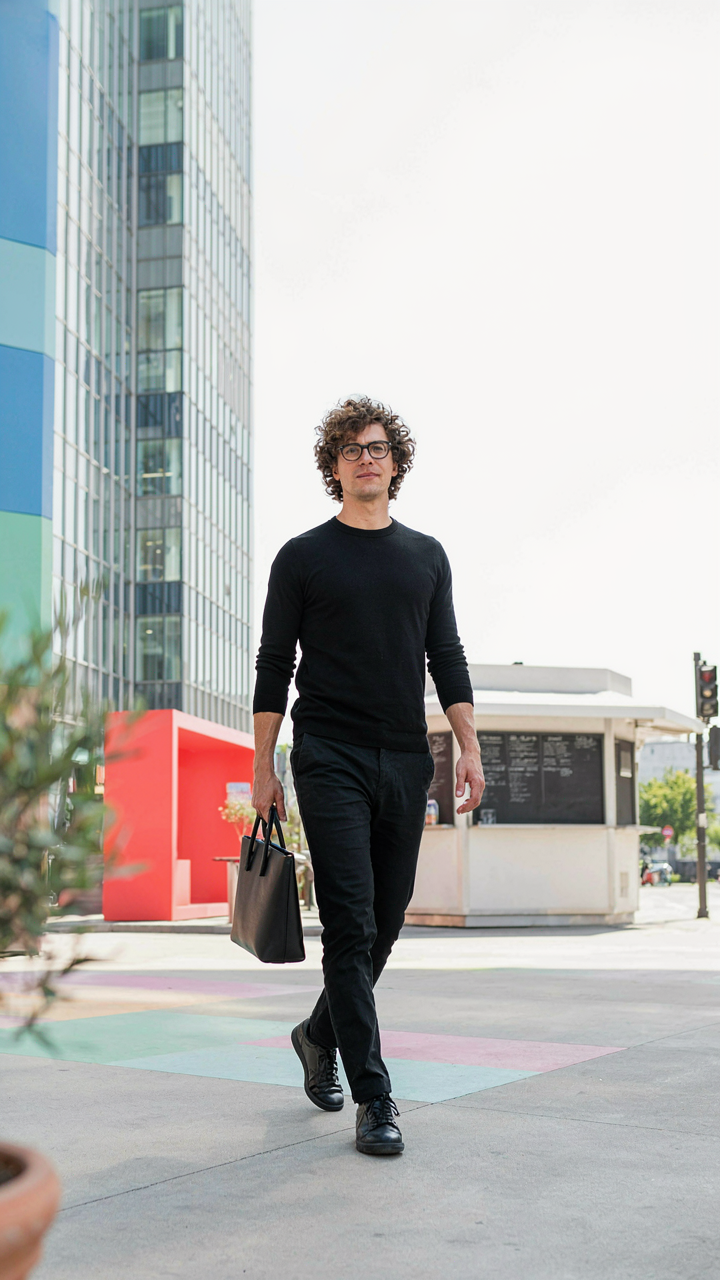
You don’t repeat outfits because you care what strangers think. You repeat them because you haven’t given yourself permission to stop performing. The person wearing the same black shirt twice isn’t lazy. They’re efficient. They’re confident. They made a choice and executed it. Wear what works. Stop apologizing for consistency. People remember how you carry yourself, not your rotation schedule. Your outfit repetition is just proof you stopped wasting mental energy on the wrong problem.