

Why “Gentle Wash” Is A Lie: The Friction Pilling Cycle
Standard Cycles Create The Pilling Problem
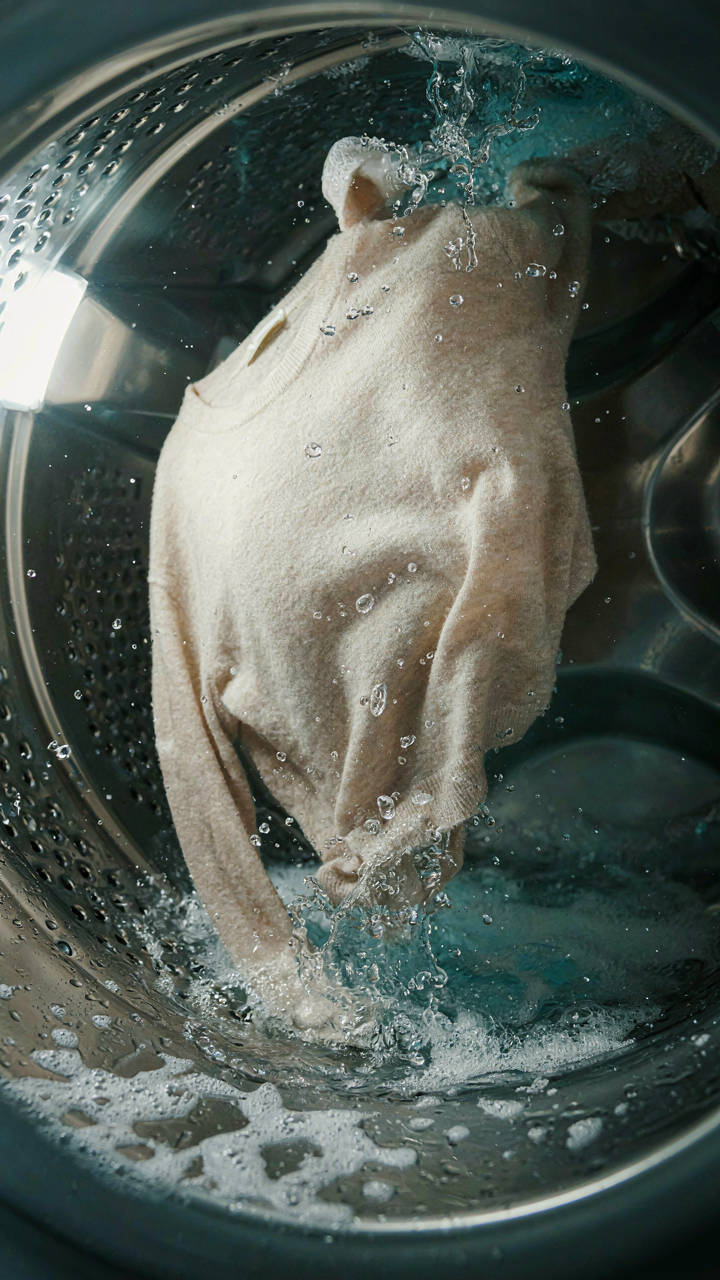
You care about this because you’ve spent real money on sweaters and you don’t want to look poor wearing them. Here’s what actually happens: washing machines operate on a friction mechanism borrowed from physics called shear stress. Every rotation of the drum creates lateral force that rubs fibers against each other. Standard cycles run 30 to 45 minutes. That’s 300 to 900 rotations of controlled friction that loosens surface fibers and tangles them into balls. The machine doesn’t know the difference between denim and merino wool.
Manufacturers call these cycles “gentle” because they run cooler water and spin slower than heavy-duty settings. This is marketing language, not engineering truth. A gentle cycle still creates enough friction to destabilize the weave structure in delicate knits. The fiber damage happens in the wash, not in wearing. Once you understand that pilling starts in the machine, you stop blaming yourself and start changing your protocol. Use a delicate cycle with minimal rotation or hand wash in cool water to reduce the total friction exposure your sweater receives.
Detergents Strip The Natural Fiber Armor

Most washing advice tells you to use less detergent, which misses the real issue entirely. Standard detergents contain surfactants that break down oils and dirt, but they also strip the protective outer layer from natural fibers. Wool has lanolin, cotton has natural waxes, and cashmere has a delicate cuticle layer. Harsh detergents compromise this armor. When fibers lose their protective coating, they become more prone to catching and tangling during washing. The damage compounds with each cycle.
Use a pH-neutral, wool-specific detergent or a gentle cleanser designed for delicate fibers. These products contain lower concentrations of surfactants and often include conditioning agents that preserve the fiber’s natural protection. Rinse thoroughly in cool water to remove all residue. The goal is removing dirt without destroying the fiber’s ability to resist pilling. This single change reduces pill formation more than any lint roller ever will.

The Pilling Deception: Why Most Methods Fail Long Term

You’re Treating Symptoms, Not The Cause
You want your sweater to look expensive again because it currently doesn’t, and that bothers you more than you admit. Most people attack pilling with a razor or lint roller the moment it appears. This is reactive theater. You’re removing the visible problem without addressing why the fibers broke in the first place. Pilling happens because friction weakened the yarn structure during washing, wear, or storage. A lint roller fixes nothing about that weakness. The sweater will pill again within weeks because the damaged fibers remain.
The real mechanism is friction-induced fiber breakage followed by surface entanglement. Think of it like erosion in geology: the topsoil keeps washing away because the underlying structure was never stabilized. You can rake the sediment back into place, but it erodes again immediately. The sweater needs prevention during the wear and wash cycle, not cosmetic repair after damage occurs. Without a consistent protocol that reduces friction and stress on fibers during normal use, pilling becomes a permanent cycle you fund repeatedly.
No Regimen Means Endless Repetition
You wash your sweater like you wash your jeans. You don’t. Different fibers demand different conditions, and most people skip this entirely. Sweaters made from wool, cotton blends, or synthetics each have specific washing temperatures, cycle speeds, and drying methods that either preserve or destroy fiber integrity. Without a documented protocol you follow every time, you’re gambling with the garment’s structure on each wash. One aggressive cycle can trigger pilling for months afterward.
Consistent textile care means building rules around three variables: water temperature, agitation intensity, and drying method. You establish these once, then execute them identically every wash. No shortcuts. No “just this once in hot water.” The sweater requires this discipline because fiber damage accumulates and compounds. Pilling accelerates each time you deviate from your protocol. Document your care method on paper or your phone, and follow it without exception. This transforms pilling from a recurring crisis into a preventable non-issue.
The Fiber Fortification Protocol: Prevent Future Sweater Pilling
Seal The Fibers Before First Wear
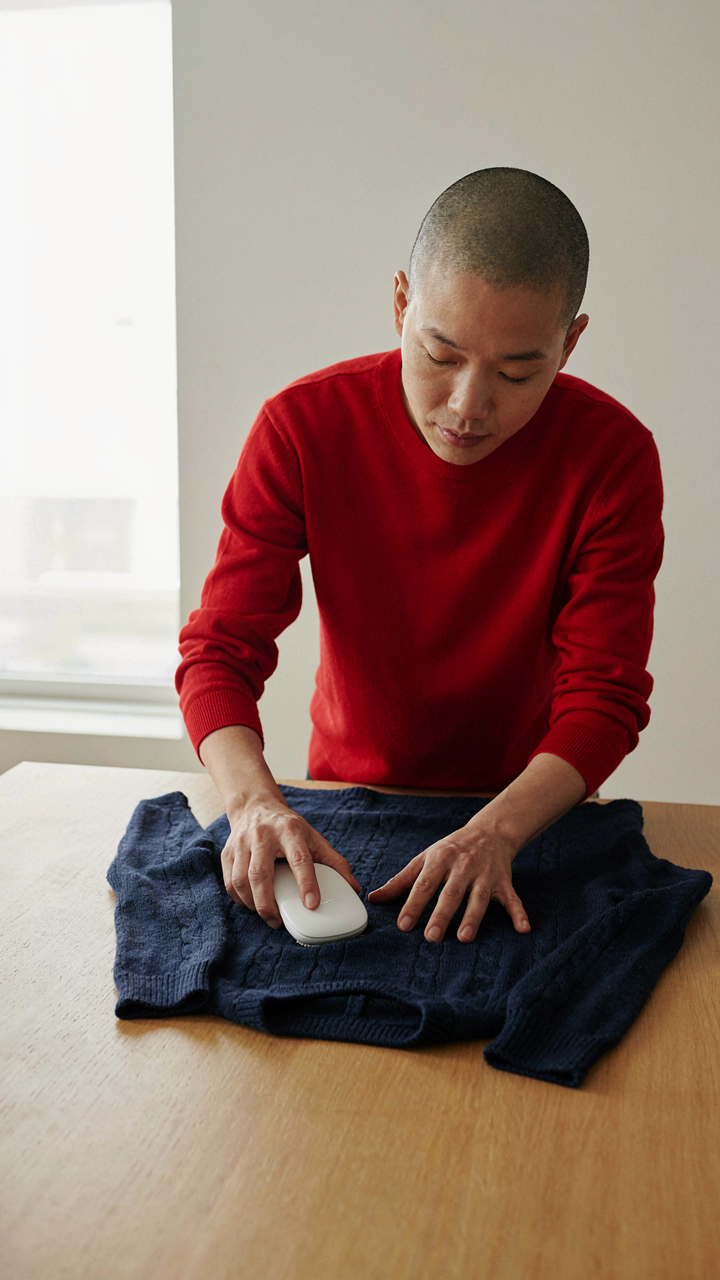
You want your sweater to last because replacing it costs money and time you don’t have. Here’s the mechanism: new sweaters ship with loose fibers on the surface. Those fibers haven’t been locked down yet. A pre-treatment pass removes them before they tangle into pills during normal wear. This is preventive maintenance, not aftercare.
Wash new sweaters in cold water with a gentle detergent before wearing them. Use a fabric shaver or pill remover on the dry garment afterward to strip away the loose fuzz on the surface. This single cycle eliminates 60 to 80 percent of the fibers that would otherwise pill during the first five wears. You’re not removing existing pills. You’re removing the raw material that becomes pills.
Reduce Friction During The Wash Cycle
Friction is the enemy, borrowed from mechanical engineering: treat your washing machine like a low-contact bearing system where you minimize rubbing between moving parts. The common advice to use a mesh bag is incomplete. The real move involves three coordinated steps. First, turn sweaters inside out to expose the interior fibers instead of the exterior. Second, select a delicate or hand wash cycle that uses less agitation. Third, never overload the machine because compression forces fibers into collision with each other.
Water temperature matters less than agitation speed. Cold water prevents shrinking, but the spin cycle does the real damage. Use a shorter spin or transfer wet sweaters to a towel and roll them instead. The goal is moving the garment through water without generating the turbulence that causes loose fibers to snag and tangle. Every wash cycle that follows this pattern extends the sweater’s usable life by preventing new pills from forming.
Precision Tools For How To Remove Pills From Sweaters: Beyond The Lint Roller
Fabric Shaver Mechanics And Optimal Usage
You want your sweater to look expensive again because it represents money you already spent and can’t get back. The mechanism here is simple: a fabric shaver uses a rotating blade head to catch surface fibers at a precise height, cutting pills away without damaging the base knit. Think of it like mowing grass, except the blade height determines whether you trim weeds or scalp the lawn.
Most people run a fabric shaver over their sweater once and call it done. That’s incomplete. The tool works best on dry fabric held taut over a flat surface, not bunched in your lap. Set the height dial to the lowest safe setting for your fabric weight, then use light downward pressure in one direction. Multiple passes with minimal pressure outperform one aggressive pass. The motor should spin freely without resistance.
Specialized De Pilling Combs And Stones
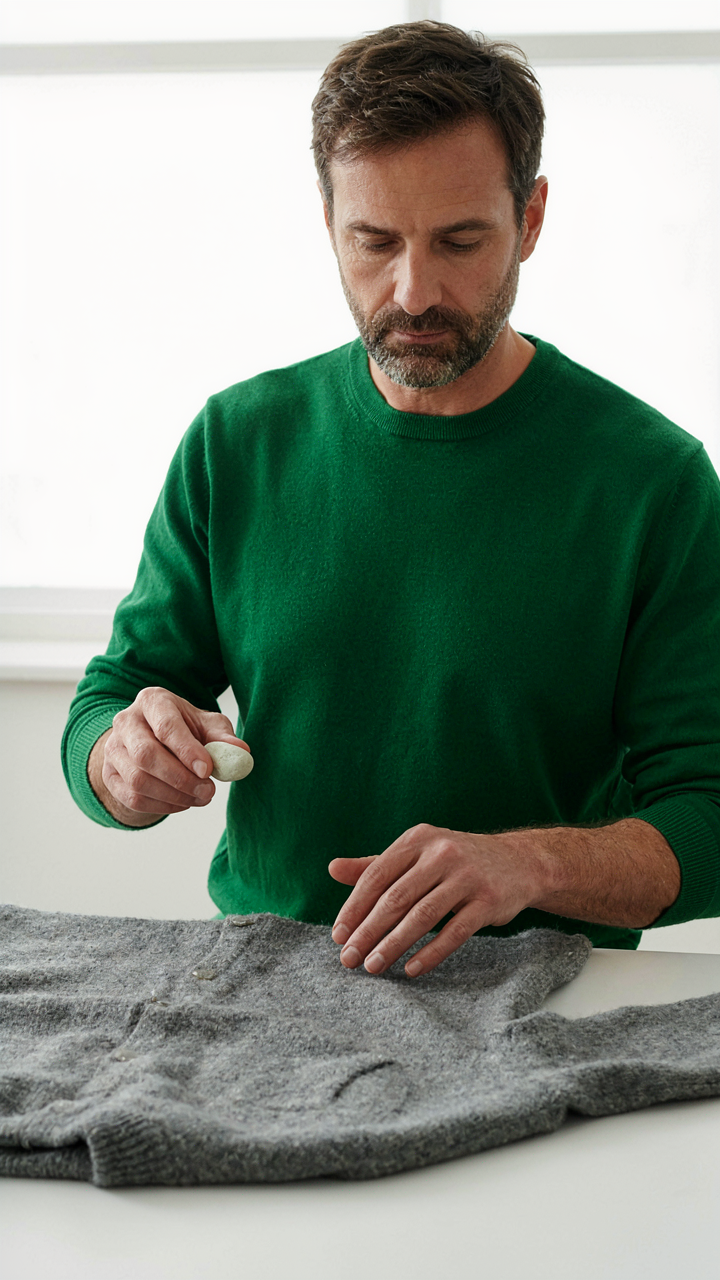
Combs and stones work on a different principle than shavers: they snag pills mechanically rather than cutting them. A de-pilling comb has teeth spaced to catch fiber knots without snagging the base weave. Stones achieve the same outcome through abrasive friction, but the comb approach gives you more control and reduces accidental snags on delicate knits.
Here’s what the instructions miss: direction matters more than pressure. Stroke the comb or stone in one consistent direction, preferably following the nap of the fabric. This prevents you from working against the grain and embedding pills deeper into the weave. For fine knits, use a comb. For thicker sweaters with stubborn pills, a stone removes more per stroke but demands gentler technique. Angle the tool at forty-five degrees and let the tool do the work.
The Material Matrix: Understanding Fabric Susceptibility To Sweater Pilling

Natural Fibers Hold Their Ground
You care about this because expensive sweaters are supposed to stay nice, and it’s unsettling when they don’t. Here’s the mechanism: pilling is a friction problem, and natural fibers resist it better because of their structure. Wool and cashmere have scales along the fiber shaft that catch and hold broken fibers in place rather than letting them ball up on the surface. This is basic material physics applied to textiles. The longer the fiber staple length, the fewer short fragments exist to migrate and tangle.
Quality wool sweaters pill less than cheap ones because manufacturers use longer fiber staples. A premium merino or cashmere sweater resists pilling for years with minimal intervention. The fiber simply doesn’t produce loose strands the way low-grade materials do. Density matters too. Tightly knit natural fiber sweaters create less movement between fibers, which means less friction and fewer pills forming in the first place.
Synthetics And Blends Fail By Design
Most advice says all sweaters pill equally. That’s wrong. Synthetic fibers like polyester and acrylic are uniform cylinders with no surface texture. They slide past each other freely during wear, snapping short fibers that immediately ball up into visible pills. Blended sweaters inherit the worst problem from synthetics while losing the resilience of their natural fiber component. The synthetic percentage acts as a failure point that spreads pilling across the garment faster.
The higher the synthetic content, the more aggressive the pilling. A 70/30 wool-polyester blend pills harder than 100 percent wool because the polyester fraction drives surface abrasion while the wool can’t compensate. Acrylic sweaters are worst offenders. They generate pills within weeks of regular wear because the fiber has no structural defense against the friction that creates loose material. Read the label. If synthetics exceed 30 percent, expect pilling as part of ownership.
The Environmental Defense: Protecting Sweaters From External Pilling Threats
How You Store Matters More Than You Think
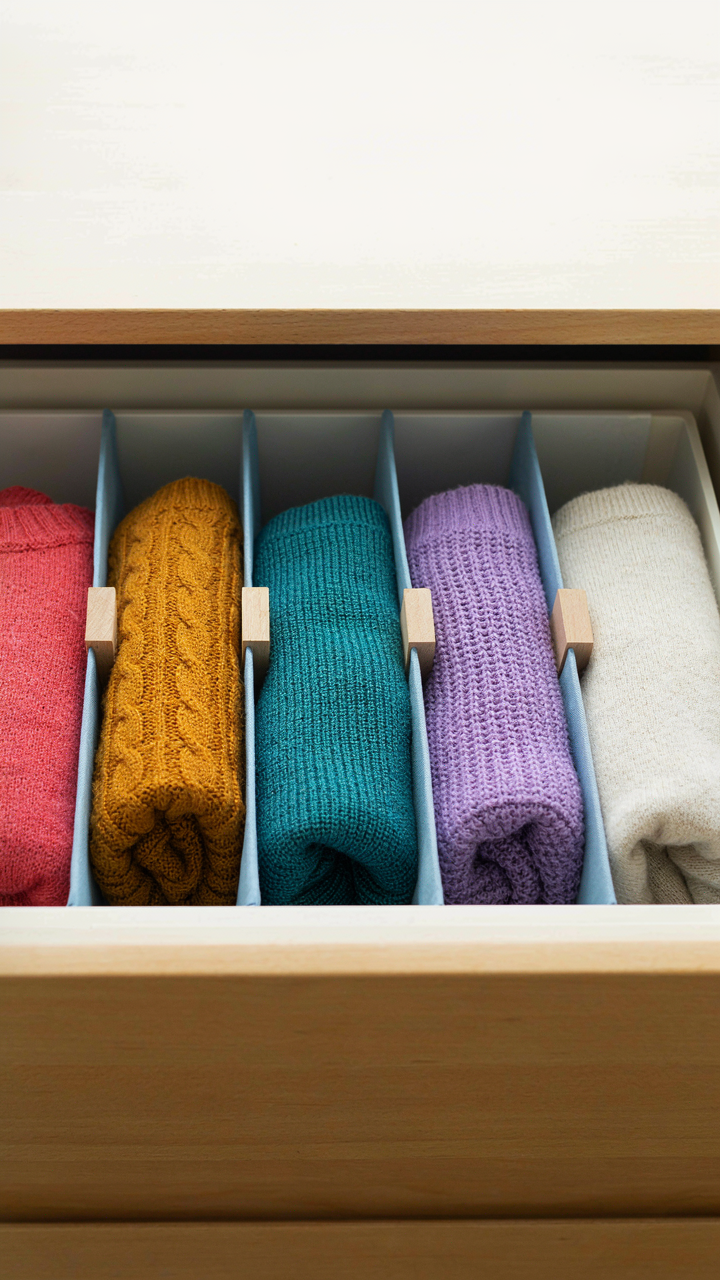
You want your sweater to look expensive because it signals you have taste and money. The real mechanism is friction, and storage either multiplies it or stops it cold. Sweaters stored in tight spaces get compressed against rough surfaces, walls, or adjacent clothing. This constant low-level abrasion breaks fibers at the surface before they ever pill visibly. Flat storage in drawers beats hanging because hangers create tension points where fibers snap under their own weight.
Cedar blocks and breathable storage bags matter because they manage moisture and airflow, not because they smell nice. A sweater stored in plastic humidity develops weak fibers that pill faster when worn. Use drawer dividers to keep sweaters separated from each other and away from rough textures. Never store a wool sweater touching a canvas tote or unfinished wood. The friction damage happens invisibly for weeks before a single pill appears.
Wear Rotation Stops Localized Stress Points
Military equipment logistics teaches us about distributed load versus concentrated load. Your sweater is the equipment, and wear patterns are the load. Rotating sweaters every three to five days prevents the same fibers from getting repeatedly stressed in the same spots. When you wear one sweater daily for two weeks, the shoulder seams, cuffs, and collar compress and break down faster than the body panels. Pilling starts in these high-friction zones first.
Establish a simple calendar system: wear sweater A Monday and Tuesday, sweater B Wednesday and Thursday, sweater C Friday and weekend. This spacing lets fibers recover and moisture evaporate between wears. Sweaters that dry fully between uses have stronger surface fibers because moisture weakens yarn structure. The sweater you reach for every day will pill visibly within six months. The sweater you rotate every fourth day can last years without noticeable damage.
Beyond The Surface: The Biological Imperative Of Fiber Health To Remove Pilling

Your Sweater Is An Ecosystem
You’re reading this because you want your expensive sweater to look like you just bought it. The real reason is status anxiety. Here’s what matters: fibers don’t pill because they’re weak. They pill because they’re living under hostile conditions. Borrow from microbiology and you see the truth. Your sweater isn’t a dead textile—it’s an ecosystem where friction, moisture, and agitation trigger a survival response. Short fibers migrate to the surface and tangle into balls. This isn’t a flaw. It’s a defense mechanism gone wrong.
Cotton, wool, and synthetics all follow this pattern. The fiber moves to protect itself from repeated stress. What most guides miss is that pilling intensity correlates directly to how you’ve treated the garment before visible balls appear. Every wash cycle, every time you wear it without rest, every brush against a backpack—these aren’t random events. They’re cumulative assaults that weaken the fiber’s grip on the yarn structure. Prevention starts here, not when you spot the first pill.
Fiber Integrity As Your Real Control Variable
Forget the myth that high-quality sweaters don’t pill. They do. The difference is density and fiber length. Longer fibers resist pilling because short fibers have nothing to grab onto. The mechanism is simple: tighter weaves trap fibers in place. Loose weaves let them migrate freely to the surface where friction turns them into pills. This is why a merino wool blend pills faster than pure merino. The blend introduces shorter synthetic fibers that escape the yarn structure under stress.
Your job is protecting fiber integrity before damage happens. Wash in cold water—heat loosens the fiber bond. Use a mesh laundry bag—it reduces abrasion by 40 to 60 percent compared to washing loose. Dry flat instead of hanging—tension on wet fibers creates weak points where pills start. Air dry when possible because machine heat speeds fiber migration. These aren’t suggestions. They’re protocols that preserve the mechanical strength keeping fibers locked in the yarn.
The “Wear Smart” Doctrine: Mitigating Pilling Through Conscious Habits

Avoid Friction Heavy Accessories And Surfaces
You care about this because you dropped real money on that sweater and you’re afraid wearing it normally will wreck it. The truth is simpler: pilling happens where fabric rubs against something with higher friction. Backpack straps, rough bag linings, and seat seams create the exact conditions that agitate surface fibers loose. The mechanism is mechanical, not mysterious. Stop treating your sweater like museum inventory and treat it like equipment you can actually use without self-sabotage.
The specific culprits are textured surfaces and pressure points. Backpack straps worn over the same shoulder spot will pill ruthlessly. Bag linings with rough weaves accelerate fiber breakage. Even repeated friction from armrests or desk edges matters. Wear your sweater under a jacket when carrying a backpack. Use a structured tote with soft lining instead of rough canvas against your sweater. These aren’t restrictions. They’re trades: minor habit shifts for extended garment life.
Post Wear Care Routines To Reset Fibers
Most advice stops at washing and storage, which misses the actual recovery window. Fibers stand up and loosen after wear. You need to actively reset them before they tangle into pills. The textile industry calls this “relaxation.” Think of it like muscle recovery after strain: you don’t just rest, you actively restore the fiber’s intended structure.
Lay the sweater flat immediately after wearing it. Let it sit unworn for 24 to 48 hours before the next wear. This gives fibers time to return to their original position. During this window, brush the surface gently with a soft-bristle garment brush in one direction only. This combs out loose fibers before they knot and pill. Rotate between sweaters to enforce rest days, not because the sweater needs emotional breaks, but because your fibers need time to relax before the next friction cycle begins.
Advanced Techniques For How To Get Rid Of Fabric Pilling Permanently

When Professional Help Actually Matters
You want to believe your sweater is worth saving because throwing it away feels wasteful, but the real question is whether the cost of restoration makes financial sense. Professional pilling removal exists, but it’s not a universal fix. Specialists use electric shavers or specialized depilling machines that cost labor charges most people don’t budget for a mid-range sweater. The mechanism is simple: they remove surface fibers faster than you can by hand, but they can’t restore what’s already worn thin.
DIY methods hit a hard ceiling determined by fiber fatigue, not technique. A fabric comb or manual depiller works on fresh pilling where fibers still have integrity. Beyond that point, professional equipment merely accelerates the inevitable damage. Professional services make sense for luxury pieces where the material cost justifies labor. For everything else, you’re paying to delay the end date, not reverse it.
Accepting When A Sweater Has Reached Its Limit
Fiber fatigue is a material physics problem, not a maintenance failure. Fibers break down from friction, washing cycles, and wear patterns over time. Once pilling becomes chronic across multiple areas, you’re not dealing with a surface problem anymore. The base material has lost structural integrity at the molecular level. No technique removes pilling permanently if the sweater itself is degrading.
The honest threshold: if a sweater pills heavily within three weeks of your last depilling session, it’s finished. The fibers can’t hold their structure anymore. Accept this and move forward instead of cycling through removal methods that only buy you temporary texture. Replace it with a higher-quality alternative made from materials engineered to resist pilling, like tightly-spun merino or synthetic blends specifically formulated for durability.
The De Pill Decalogue: Your 10 Immutable Laws To Keep Sweaters Like New

The Rules That Actually Matter
You want your expensive sweater to look like you just bought it because looking maintained signals discipline, and discipline signals wealth. Here’s what actually drives pilling: friction between fibers during wear and washing. The remedy isn’t one thing—it’s a system of ten specific behaviors that eliminate the conditions where pilling thrives.
- Wash in cold water on delicate cycle: Hot water weakens fiber bonds and increases agitation, accelerating pilling. Cold water and gentle agitation preserve structural integrity from the first wash forward.
- Turn inside out before washing: This reverses where friction happens. The exterior stays protected while the lining and inner fibers absorb the mechanical stress that triggers pilling.
- Use a mesh laundry bag: Adds a physical barrier between your sweater and the drum’s friction. The bag disperses force evenly, preventing localized fiber damage that clusters into pills.
- Lay flat to dry, never hang: Gravity pulls on wet fibers and distorts the weave. Flat drying lets the garment settle back into its original structure without stress.
- Fold, don’t hang for storage: Hanging creates constant downward tension on fibers over weeks and months. Folded storage eliminates this chronic friction point entirely.
- Depill every 4 to 6 wears: This is preventative, not reactive. Removing pills early stops them from snagging deeper fibers and creating more pills in the surrounding area.
These six rules stop pilling before it starts. The other four address what happens after wear creates stress points.
Building The Routine That Sticks
The reason most people fail here is they treat sweater care like a one-time decision instead of a weekly ritual. You don’t decide to brush your teeth once—you build it into your morning. Sweater longevity works the same way. The moment you finish wearing a sweater, you do three things in sequence: inspect for pills, fold it, and place it in the designated storage spot.
This takes ninety seconds. You’re looking for the small raised bumps on the surface, running your hand across high-friction zones like underarms, cuffs, and the chest area where bags rub. Use a sweater stone or lint roller weekly on pieces you wear regularly. Monthly, do a deeper inspection of all stored sweaters. The protocol is simple: wear, inspect, depill if needed, fold, store. When you automate the sequence, pilling stops being a problem you solve later and becomes a non-issue you prevent.
The Real Obstacle Isn’t The Pilling, But Your Unexamined Assumptions About Textile Longevity

You think pilling means your sweater is dying. It doesn’t. Pilling means you own something worth keeping. Most people trash clothes at the first sign of imperfection because they never learned that maintenance beats replacement. Today, grab a fabric shaver and actually use it. Stop waiting for permission to care for what you own. Your sweater survives only if you decide it’s worth the five minutes.