
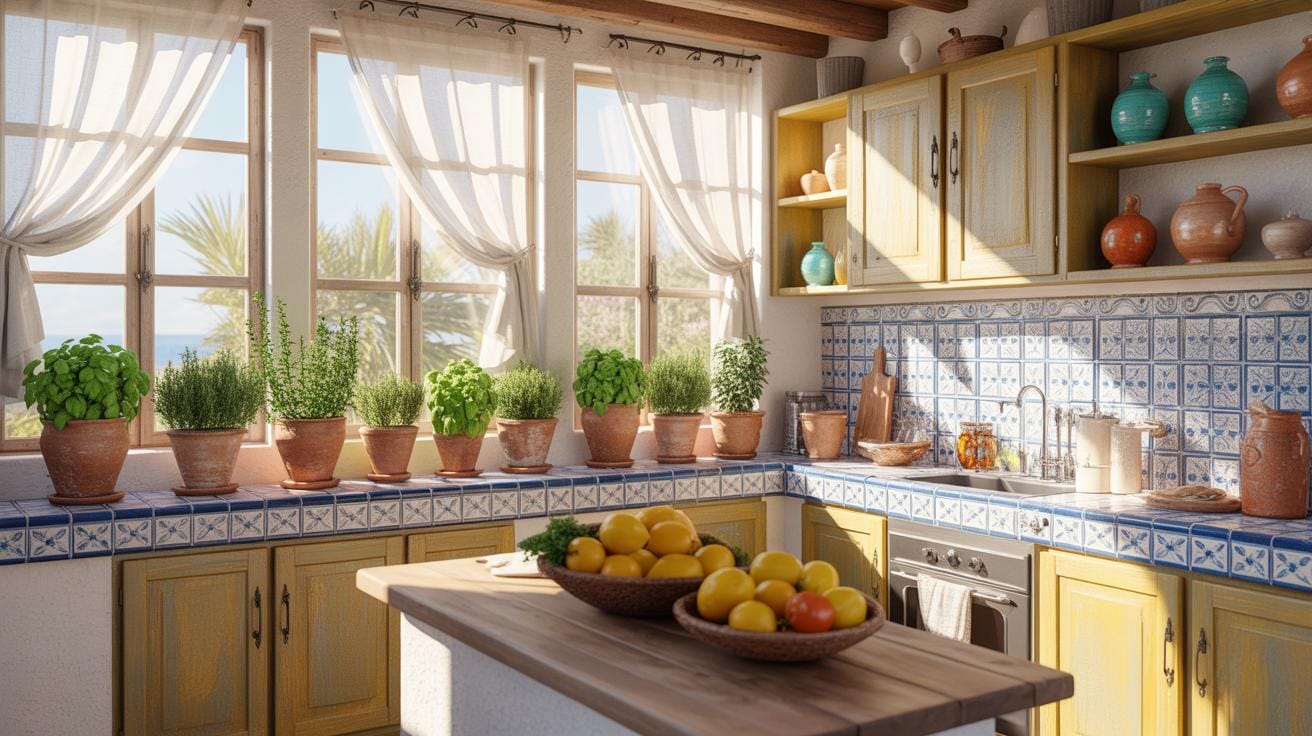
Start Your Mediterranean Kitchen Makeover Transition
Color Palette
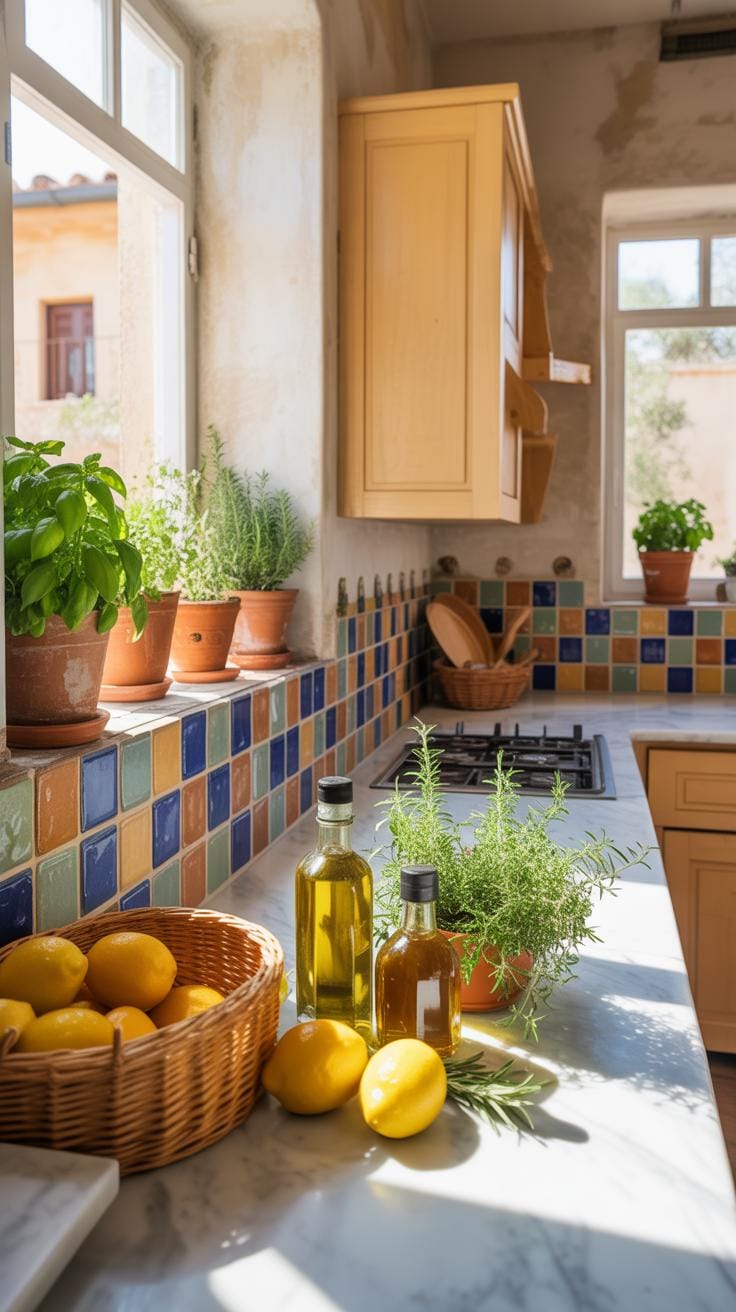
Select a base of warm neutrals to begin your Mediterranean kitchen makeover. Use terracotta, sand, and burnt umber to mimic natural stone and clay. These earth tones provide the essential warmth seen in any Mediterranean homes interior kitchen. Avoid cool grays or clinical whites that feel sterile. Mediterranean kitchen design relies on pigments that absorb and reflect heat effectively. Stick to a organic palette for authenticity.

Apply deeper accent colors like cobalt blue or olive green to create focal points. These shades represent the sea and local vegetation found in Mediterranean decor kitchen environments. A modern Mediterranean kitchen often balances these traditional colors with crisp plaster finishes. Use matte or eggshell textures rather than high-gloss paints. This approach builds a tactile Mediterranean kitchen that feels grounded in history but remains functional for today.
Planning Layout
An effective Mediterranean kitchen design ideas strategy prioritizes flow and social interaction. Move away from cramped galley styles. Mediterranean kitchen ideas focus on large central islands or massive farmhouse tables that act as a hub. Ensure the workspace allows multiple people to cook simultaneously. Modern Mediterranean kitchen design utilizes open floor plans to connect the cooking area directly to the dining room for a seamless transition.

Prioritize natural lighting and ventilation in your Mediterranean kitchen layout. Wide windows and open shelving help air circulate and keep the space bright. This architectural choice defines the Mediterranean rustic aesthetic by highlighting raw materials like wood and wrought iron. Keep high-traffic zones clear of clutter. A successful Mediterranean kitchen maximizes floor space to accommodate large gatherings while maintaining a high level of daily efficiency for the user.
Essential Mediterranean Kitchen Design Elements
Textural Finishes
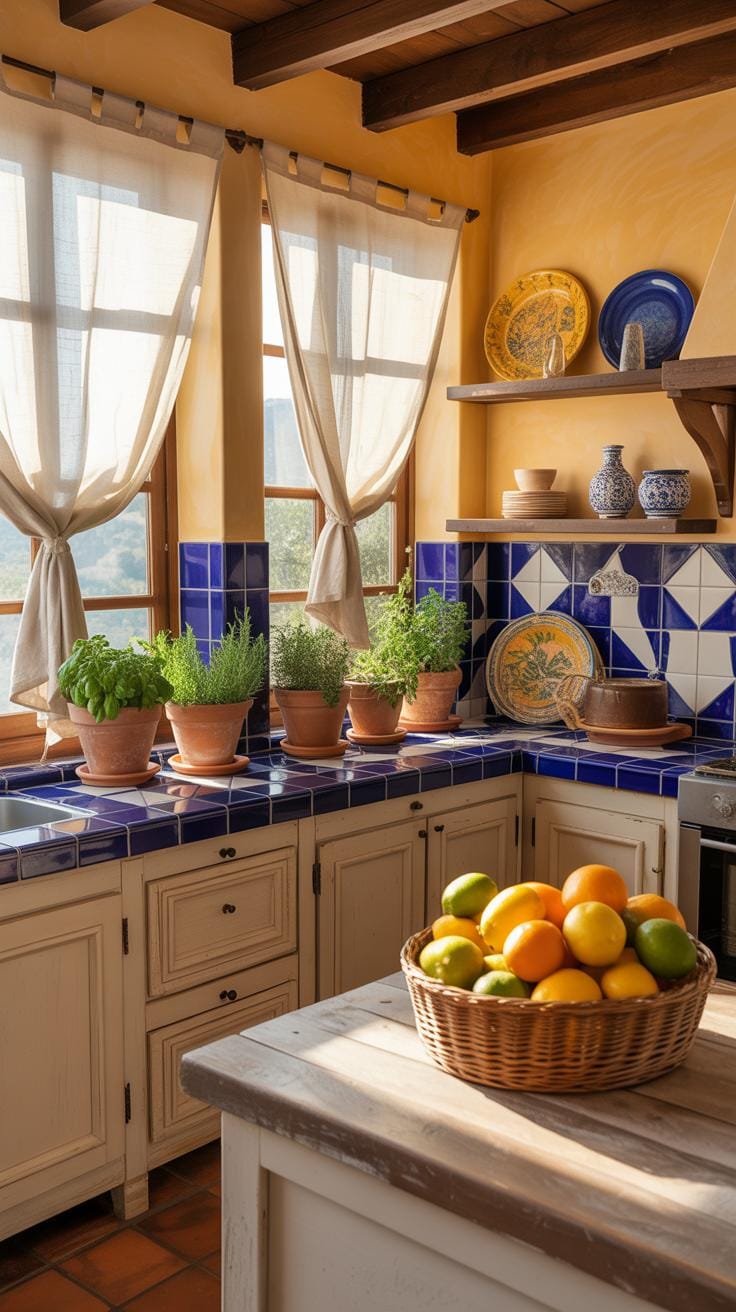
Authentic Mediterranean Kitchen Design relies on tactile surfaces to create depth without visual clutter. You must prioritize lime wash or plaster finishes over flat latex paint. These materials allow walls to breathe and develop a natural patina over time. Incorporating rough-hewn stone or unglazed terracotta tiles adds necessary friction to the space. Use these Mediterranean Kitchen Ideas to ground the room in traditional building practices.
A Modern Mediterranean Kitchen uses smooth limestone or honed marble to balance rougher elements. You should apply hand-applied plaster techniques to soften the transition between walls and ceilings. This approach defines the Mediterranean Homes Interior Kitchen by mimicking aged European villas. Avoid synthetic textures that look manufactured. Stick to raw materials that show slight imperfections. This reflects a true Mediterranean Rustic aesthetic while maintaining a clean and functional environment.
The olive tree is surely the richest gift of Heaven. With a few simple strokes, you can turn your kitchen into a sun-drenched sanctuary of the south.
Archways
Structural curves define the Modern Mediterranean Kitchen Design by breaking up harsh linear grids. You can retrofit standard rectangular doorways using drywall kits to create soft radius corners. This architectural shift improves the flow of light and movement throughout the Mediterranean Kitchen. These curves pay homage to historic bridge and cathedral builds. Integrating these shapes is a core requirement for a cohesive Mediterranean Decor Kitchen.
Successful Mediterranean Kitchen Design Ideas often include arched alcoves for shelving or cooking ranges. You should use rounded transitions to frame focal points like a wood-fired oven or a wine display. This softens the overall look of the Mediterranean Kitchen while adding structural interest. Do not overcomplicate the design with ornate moldings. Keep the lines clean and purposeful to maintain the balance of a Modern Mediterranean Kitchen.
Authentic Mediterranean Kitchen Features And Cabinetry
Cabinet Styles
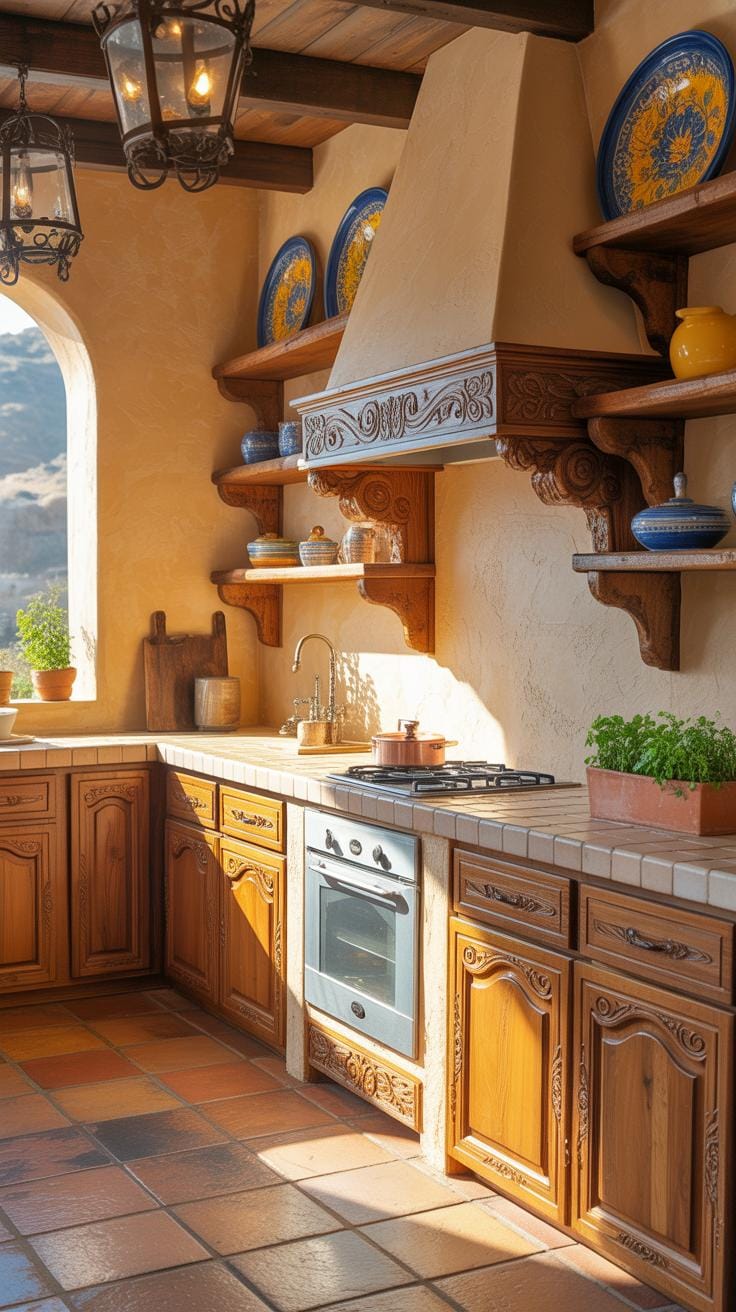
Mediterranean Kitchen Design relies on heavy wood surfaces to ground the room. Historically, homeowners used local timber like walnut, oak, or cherry. You must choose doors with raised panels or recessed carvings to match a Mediterranean Kitchen. These details mimic the craftsmanship found in old coastal villas. Avoid flat surfaces or minimalist slabs. Those styles belong in industrial lofts, not Mediterranean Homes Interior Kitchen spaces.
Execute a Mediterranean Rustic look by applying distressed finishes to your wood. Use a sander to wear down edges where natural contact occurs. Apply a dark glaze over light paint to create artificial age. This technique defines the Modern Mediterranean Kitchen Design by mixing old textures with clean layouts. High-quality Mediterranean Kitchen Ideas always prioritize depth and touch over shiny, thin veneers found in budget big-box stores.
Hardware Choices
Wrought iron is the only legitimate choice for Mediterranean Decor Kitchen hardware. Blackened metal provides the necessary weight to balance thick wood doors. Use oversized ring pulls or heavy hammered latches to secure your cabinets. This metalwork reflects the blacksmithing traditions of Spain and Italy. Modern Mediterranean Kitchen styles often swap ornate scrolls for clean, square lines but keep the matte black iron finish.
Effective Mediterranean Kitchen Design Ideas incorporate functional metal elements beyond simple handles. Install exposed barrel hinges on the exterior of cabinet frames. This adds structural visual appeal and reinforces the Mediterranean Kitchen aesthetic. Choose hand-forged pieces with slight imperfections rather than mass-produced factory items. A Modern Mediterranean Kitchen requires these tactile details to feel authentic. These small hardware upgrades transform standard cabinets into a cohesive historical statement.
Integrating Mediterranean Homes Interior Kitchen Style
Tile Work
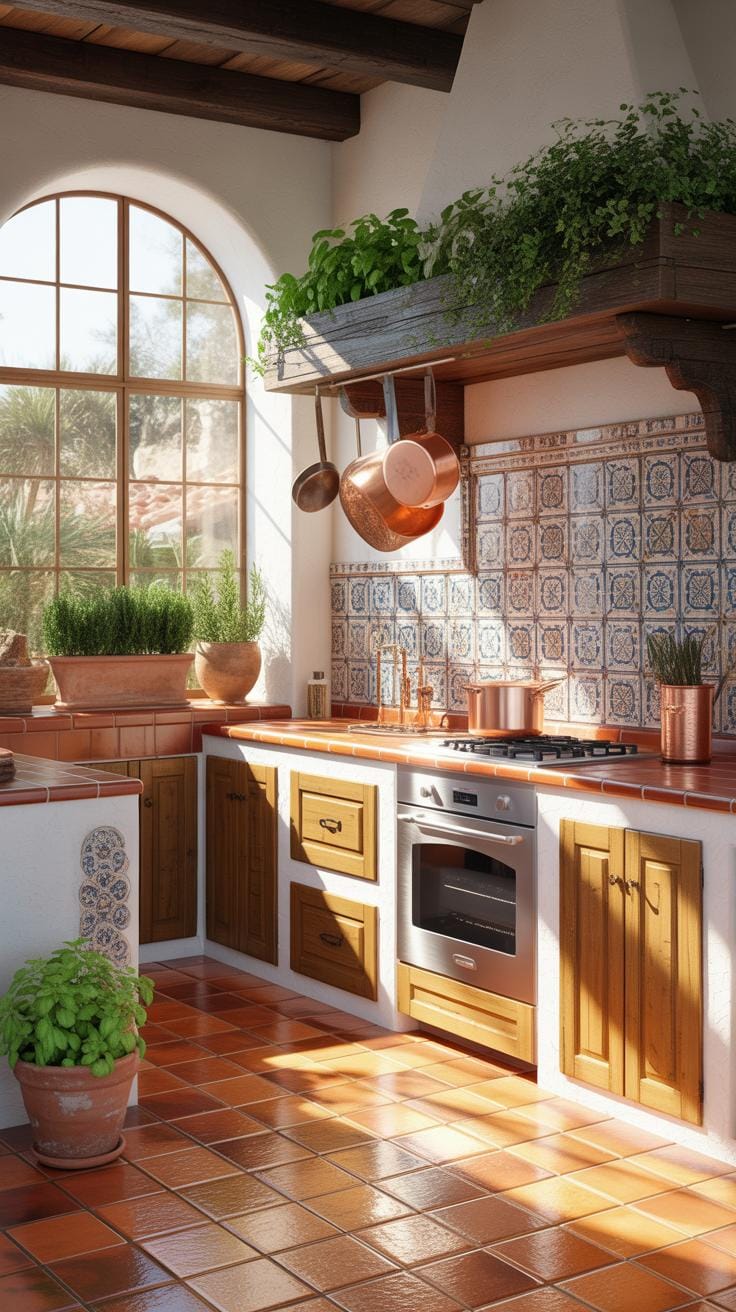
Hand painted terracotta and Talavera tiles define the backsplash in a Mediterranean Kitchen. These ceramic pieces feature geometric patterns and cobalt blue pigments rooted in Spanish and Moorish history. You must use matte or satin finishes to maintain a Mediterranean Kitchen Design that feels authentic rather than plastic. Install these tiles in small sections to create focal points behind the stove or inside recessed wall niches.
A Modern Mediterranean Kitchen Design balances these busy patterns with neutral cabinetry. You should choose high quality glazes that resist heat and moisture in high traffic zones. Mediterranean Decor Kitchen trends favor imperfections in the clay which add necessary texture. This approach honors the Mediterranean Rustic aesthetic while providing a durable surface for daily cooking. Proper sealing ensures these porous materials last for decades.
Flooring Options
Your flooring serves as the structural foundation for Mediterranean Homes Interior Kitchen layouts. Natural stone like travertine or limestone provides a cool surface underfoot and handles heavy weight. You should select large format tiles with chiseled edges to achieve a Modern Mediterranean Kitchen look. These materials reflect the geological landscape of the region and provide a neutral base for other Mediterranean Kitchen Ideas.
Reclaimed brick is your best choice for a Mediterranean Rustic finish. Arrange bricks in a herringbone pattern to increase visual interest and structural integrity. Mediterranean Kitchen Design Ideas often focus on these earthy red and brown tones to ground the bright walls. Modern Mediterranean Kitchen styles use wide grout lines to mimic traditional masonry techniques. This floor choice resists wear and hides dirt effectively in busy homes.
The Elegance Of Modern Mediterranean Kitchen Design
Modern Upgrades
A Modern Mediterranean Kitchen Design balances advanced utility with classic aesthetics. You must integrate high-performance technology without disrupting the historic feel of Mediterranean Kitchen Design Ideas. Focus on concealing electronics behind custom cabinetry or selecting finishes that mimic natural metals. This approach maintains the warmth of Mediterranean Homes Interior Kitchen layouts while providing the efficiency required for a high-traffic regional cooking space.
- Paneled Refrigeration: Hide large cooling units behind wood panels that match your Mediterranean Kitchen cabinetry. This removes the visual jarring of cold stainless steel and keeps the focus on natural textures found in a Modern Mediterranean Kitchen.
- Integrated Induction Cooktops: Install sleek black glass surfaces into stone countertops to maintain a clean profile. This tech fits a Modern Mediterranean Kitchen Design by offering precision heat without the bulky look of traditional heavy iron gas grates.
- Antique Brass Hardware: Swap standard chrome for unlacquered brass or wrought iron on your drawers and cabinets. These materials age naturally over time and provide the necessary Mediterranean Rustic feel that distinguishes these spaces from standard modern builds.
- Built-in Espresso Stations: Create a dedicated niche for coffee equipment to reflect European lifestyle habits. This creates a functional focal point in Mediterranean Decor Kitchen planning and reduces counter clutter common in smaller Mediterranean Kitchen designs.
- Reclaimed Wood Hoods: Wrap your ventilation system in salvaged timber to ground the room in history. Using old-growth wood provides a tactile contrast against new appliances and reinforces the Mediterranean Kitchen Design theme through authentic reclaimed materials.
Smart upgrades prioritize workflow and durability in a Mediterranean Kitchen. Use professional-grade ovens with matte finishes to avoid excessive glare in sunny rooms. These Mediterranean Kitchen Ideas work because they bridge the gap between ancient stone foundations and 21st-century culinary needs. High-quality Mediterranean Decor Kitchen elements must withstand heavy use while looking like they have existed for centuries. Choose materials that develop a patina rather than those that just wear out.
Minimalist Accents
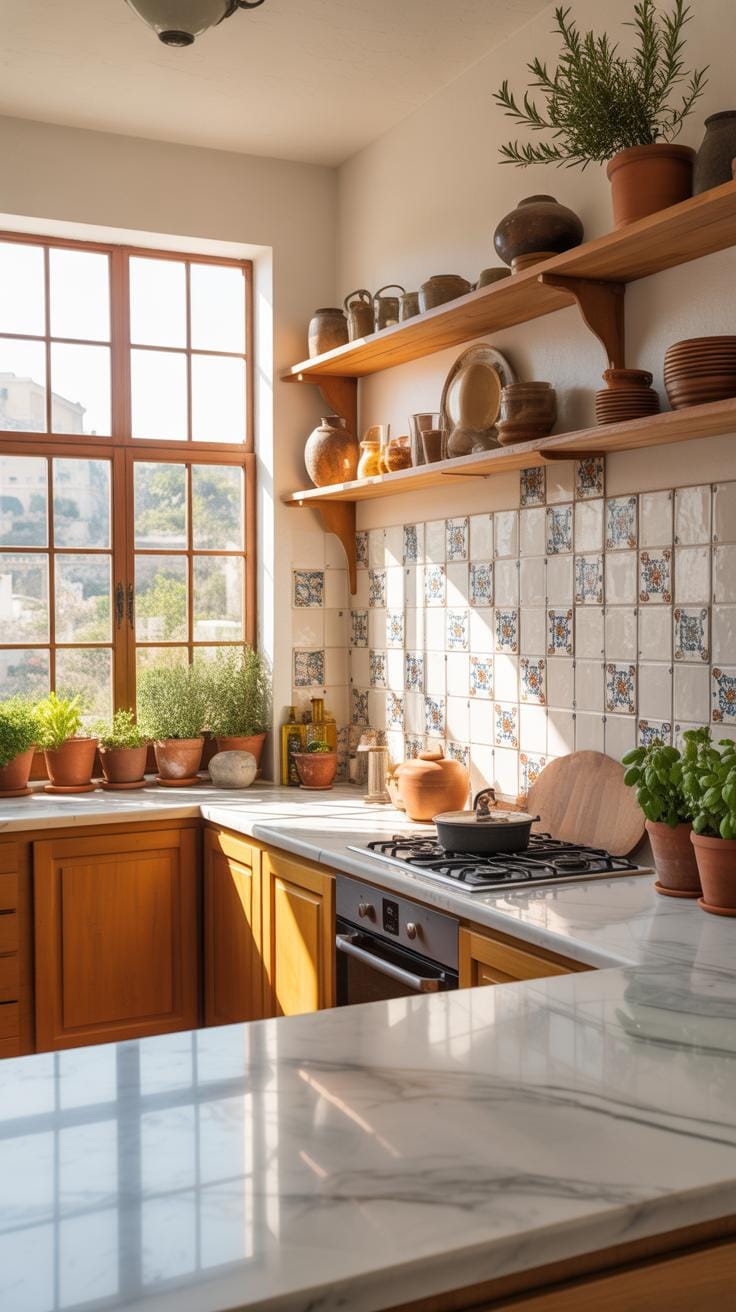
Modern Mediterranean Kitchen Design relies on a “less is more” philosophy regarding clutter. Remove excessive wall cabinets to make room for thick floating shelves. This technique highlights the negative space and emphasizes the structural beauty of Mediterranean Homes Interior Kitchen walls. Use light-colored plaster or lime wash finishes to create a soft backdrop. This allows a few high-quality Mediterranean Kitchen elements to stand out without overwhelming the senses.
Balancing Minimalism with Traditional Textures requires strict discipline in material selection. Choose one or two dominant materials like terracotta or limestone for the flooring. Avoid busy patterns that distract from the Mediterranean Rustic architecture of the home. A Modern Mediterranean Kitchen uses raw tactile surfaces to provide visual interest instead of decorative baubles. This strategic approach ensures your Mediterranean Kitchen Ideas remain timeless and functional for years of heavy daily use.
Embracing The Mediterranean Rustic Aesthetic
Reclaimed Wood
Install reclaimed wood beams to anchor your Mediterranean Kitchen Design. Structural or decorative timber mimics the architecture found in traditional Mediterranean Homes Interior Kitchen layouts. Use heavy oak or pine with a rough-hewn finish to create immediate visual weight and age. This tactic breaks up flat ceiling planes. It adds a necessary layer of Mediterranean Rustic texture that balances out smooth plaster walls or modern tiled surfaces.
Select salvaged wood with visible knots and grain patterns for your Modern Mediterranean Kitchen. You must treat the wood with matte sealants rather than glossy finishes to maintain a raw look. Proper placement involves spacing beams Parallel across the narrowest span of the room. This technique draws the eye upward and reinforces the Mediterranean Kitchen vibe. It provides the architectural backbone required for a truly authentic and high-end renovation.
Exposed Elements Decor
Displaying functional items is a core principle of Mediterranean Decor Kitchen styling. Real copper cookware provides both utility and a warm metallic glow that contrasts with stone. Hang heavy pots from a wrought iron rack or place them on open shelving. This strategy moves your Modern Mediterranean Kitchen Design away from sterile minimalism. It creates a lived-in environment focused on food preparation and regional tradition.
Incorporate hand-painted ceramics to finalize your Mediterranean Kitchen Ideas. Arrange terracotta bowls and glazed pitchers in plain view to add splashes of color and organic shapes. These items serve as the primary Mediterranean Kitchen Design Ideas for homeowners who want impact without a full remodel. Use grouping techniques to organize your Mediterranean Kitchen tools by size and color. This creates order while celebrating the textures of a busy workspace.
Fresh Mediterranean Kitchen Ideas For Decorating
Decor Essentials
Successful Mediterranean Kitchen Design relies on functional items that double as visual focal points. You must prioritize materials like wrought iron, terracotta, and reclaimed wood to ground the room. These elements provide the necessary weight for a Mediterranean Kitchen without requiring a full renovation. Use authentic textures to bridge the gap between Modern Mediterranean Kitchen Design and traditional European utility.
- Hand-Painted Ceramic Platters: Use large glazed platters for Mediterranean Decor Kitchen accents on walls or open shelving. These items reflect traditional craftsmanship found in Mediterranean Homes Interior Kitchen layouts. They offer splashes of cobalt blue and ochre that define the regional palette.
- Wrought Iron Pot Racks: Install heavy metal racks to reclaim cabinet space and add vertical interest. Iron fixtures are core components of Mediterranean Rustic styling. They provide a sturdy place for copper cookware which improves thermal conductivity and adds a metallic warmth to the room.
- Terracotta Storage Vessels: Place unglazed clay jars on countertops for holding dry goods or oils. These vessels are classic Mediterranean Kitchen Ideas that offer textural contrast against stone surfaces. They remain breathable and help keep certain ingredients cool in a Modern Mediterranean Kitchen environment.
- Vintage Olive Oil Cruets: Display glass or ceramic oil containers near the cooking surface for immediate access. This is a practical Mediterranean Kitchen move that highlights the importance of regional ingredients. Select Tinted glass to protect the oil from light degradation while maintaining high visual appeal.
- Woven Seagrass Baskets: Use natural fiber baskets for storing produce or linens on lower shelves. These textures are essential for Modern Mediterranean Kitchen Design because they soften hard tile surfaces. They provide organic shapes that break up the rigid lines of standard cabinetry and island units.
Layering these items ensures your Mediterranean Decor Kitchen feels lived-in rather than staged. Focus on objects that serve a daily purpose to maintain the Mediterranean Rustic aesthetic. Avoid plastic or synthetic materials that clash with the organic nature of Mediterranean Kitchen Design Ideas. High-quality decor pieces allow you to achieve a cohesive Mediterranean Kitchen look through strategic placement and thoughtful selection.
Herbal Gardens
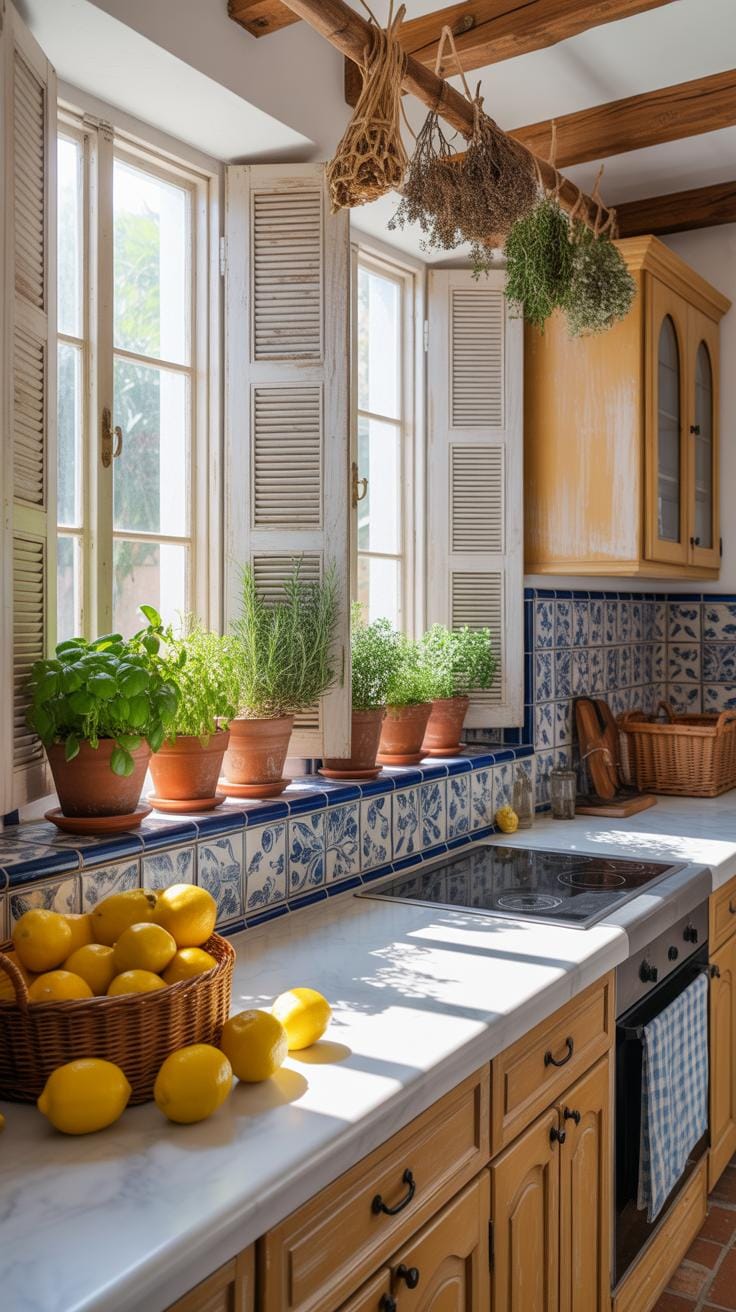
Indoor herb gardens are vital for any Modern Mediterranean Kitchen because they provide fresh aromatics and living color. Place drainage-heavy pots on window sills to give plants like rosemary and thyme maximum sunlight. This functional greenery is a staple of Mediterranean Kitchen Ideas because it integrates food production directly into your workspace. Greenery softens the hard stone surfaces common in Mediterranean Homes Interior Kitchen settings.
Choose terracotta or stone containers to house your herbs to maintain a Mediterranean Rustic feel. Basils and oregano thrive in well-draining soil and contribute to the authentic scent of the space. This approach supports Modern Mediterranean Kitchen Design by balancing sleek finishes with natural elements. Smart placement of these plants ensures your Mediterranean Kitchen Design Ideas remain grounded in the practical reality of regional cooking traditions.
Mastering Mediterranean Decor Kitchen Lighting
Natural Light
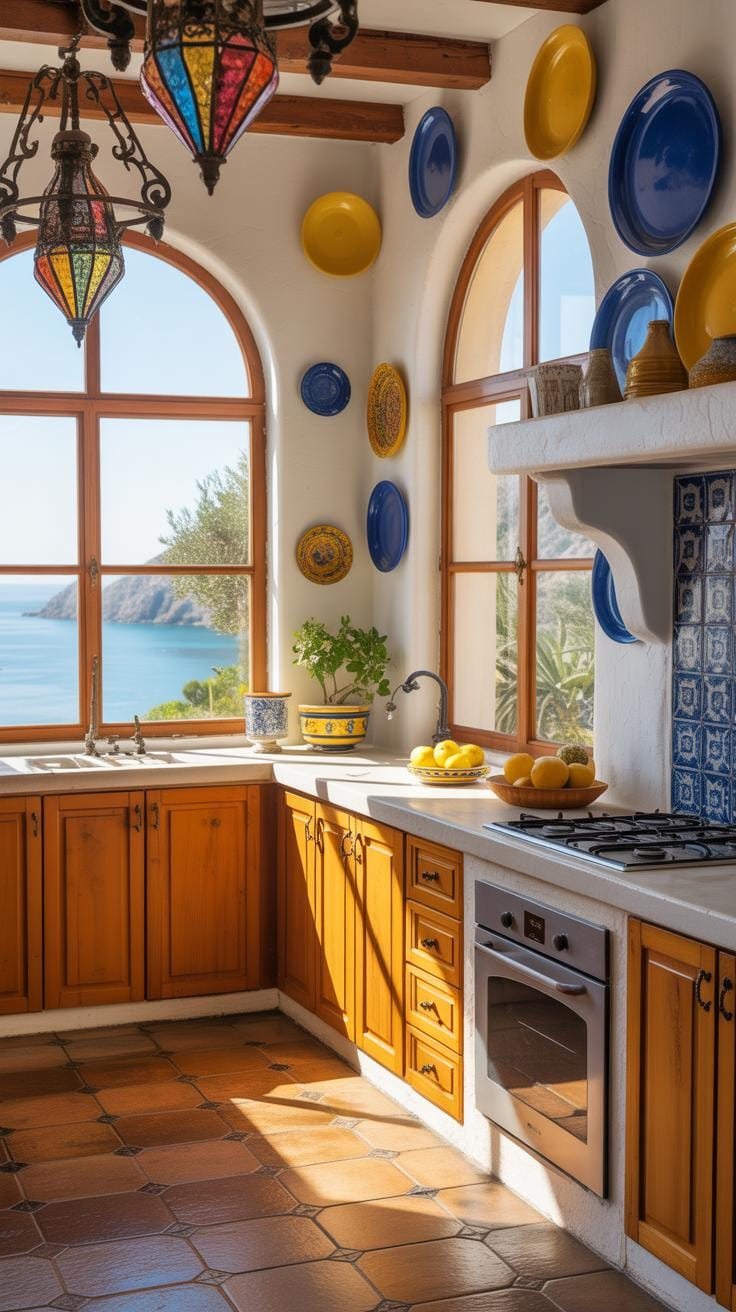
Maximize sunlight to achieve a true Mediterranean Kitchen Design. Large, unobstructed windows allow natural light to reflect off light-colored plaster walls. Use thin linen curtains or leave windows bare to increase brightness. This technique highlights the organic textures found in Mediterranean Homes Interior Kitchen layouts. Strategic placement of windows ensures that the workspace remains functional while connecting the indoor environment to the outdoors.
Daylight is the most critical element in a Modern Mediterranean Kitchen. Position your main prep areas near south-facing windows for maximum exposure. Use light-colored surfaces like marble or quartz to bounce light into darker corners of the room. This approach reduces the need for artificial lighting during the day. Effective Mediterranean Kitchen Ideas rely on this balance of sun and shadow to create depth and warmth.
Pendant Lighting
Mediterranean Decor Kitchen fixtures must serve as focal points. Select wrought iron lanterns or colorful glass mosaic pendants to ground the space. These materials reflect Mediterranean Rustic traditions and provide necessary task lighting. Heavy metal frames add a sense of history while glass elements soften the overall look. Choose warm-toned bulbs to maintain a cozy atmosphere during evening hours in your Modern Mediterranean Kitchen Design.
Layered lighting is vital for successful Mediterranean Kitchen Design Ideas. Use oversized pendants over island counters to define the room. Ensure the scale of the lights matches the height of your ceiling. A Mediterranean Kitchen requires fixtures that feel substantial yet functional. Integrate dimmers to control the intensity of the light throughout the day. This tactical choice allows you to transition from high-intensity meal prep to soft ambient dining.
Frequently Asked Questions

What are the key elements of a Mediterranean kitchen design?
To achieve a Mediterranean kitchen makeover, focus on warmth, natural textures, and organic materials. Think sun-drenched terracotta tiles, rustic wood accents, and a color palette inspired by the sea and earth—like azure blues, olive greens, and ochre. Incorporating wrought iron fixtures and open shelving with ceramic pottery will instantly transform a dull space into a breezy, coastal sanctuary that feels both timeless and inviting for family gatherings.
How can I quickly update my cabinets to fit the Mediterranean style?
A simple yet effective way to start your Mediterranean kitchen makeover is by painting your cabinets in soft, matte shades like cream, sage, or antiqued white. To add authentic character, swap out modern hardware for hammered brass or dark wrought iron knobs. For a more dramatic weekend project, consider removing a few upper cabinet doors to create open shelving, allowing you to display colorful mosaic plates and hand-painted olive oil dispensers.
Can I achieve a Mediterranean look on a tight budget?
Absolutely! You don’t need a full renovation to capture this aesthetic. Focus on affordable swaps like adding a mosaic tile peel-and-stick backsplash or placing a woven jute runner on the floor. Bringing in life through greenery, such as small potted olive trees or a windowsill herb garden in clay pots, adds that essential Mediterranean soul. These small, cost-effective decorative touches create a high-end, relaxed coastal vibe without breaking the bank.