

The Authenticity Illusion: Why Generic Poses Fail You

The Pose Industry Sells Fear, Not Confidence
You’re looking for the “right” pose because you’re afraid the wrong one will tank how people perceive you. The mechanism is simple: generic poses work against you because they signal compliance, not conviction. When you adopt a template pose, your body language reads as borrowed. Borrowed patterns trigger skepticism in the viewer’s brain. Confidence isn’t about hitting a position. It’s about occupying space with intent.
Photography borrows from portraiture’s central principle of alignment: how a subject positions themselves relative to the camera reveals their relationship to being seen. In headshots, misalignment happens when your pose doesn’t match your actual baseline. You adopt someone else’s shoulder angle, chin tilt, or eye direction. The camera captures the discord. Viewers feel it before they see it.
What Your Body Already Knows

Your unique physical signature exists whether you acknowledge it or not. How you stand in conversation, how you tilt your head when listening, how you carry tension or ease in your shoulders, these patterns are yours. Generic advice tells you to “relax your shoulders” or “angle your body at 45 degrees.” That’s incomplete. The real work is identifying which of your natural positions already communicates confidence, then amplifying that through camera placement and lighting.
The pose becomes credible only when it reflects how you actually carry yourself under pressure. Not how you think you should. Not how Instagram tells you to. A photographer’s job during a headshot session is to catch the micro-moment when your body settles into its most aligned state, not to sculpt you into an unfamiliar shape. The pose that works is the one that looks like you on your best day, not like you trying.

The Pre Shoot Priming Protocol For Professional Headshots Women

Anchoring Your Nervous System Before The Camera
You’re worried you’ll look stiff or fake in front of the lens. The real mechanism is this: your nervous system state determines your facial musculature before you ever think about posture. Neurobiology shows us that your sympathetic and parasympathetic branches control micro expressions. When you’re activated or anxious, your face tightens. The small muscles around your eyes contract. Your jaw locks slightly. This reads as defensive on camera, not confident. You need to downregulate your nervous system first, not visualize better outcomes.
Spend fifteen minutes before the shoot doing box breathing or cold water exposure. Box breathing means four counts in, four hold, four out, four hold. Repeat eight to ten cycles. This activates your vagus nerve and shifts you into parasympathetic dominance. Cold water on your wrists or face works faster if you’re short on time. The goal is simple: arrive at the camera relaxed, not pumped. Your face will naturally soften. Your eyes will have clarity instead of strain. This is the foundation all pose coaching builds on top of.
Wearing What Aligns Your Psychology
Most advice says wear something that makes you feel confident. That’s incomplete. The real variable is whether your clothing creates congruence between your internal state and external appearance. Fabric choice matters more than most realize. Natural fibers like cotton and wool absorb moisture and don’t cling. Synthetic fabrics create a thin layer of friction against your skin that registers as discomfort in your nervous system, even subconsciously. You want fabric that disappears, not fabric you’re aware of wearing.
Color works through contrast and association, not magic. Jewel tones and deep neutrals photograph with dimension. Pale pastels flatten. Wear what you’d wear to a meeting where you needed to be taken seriously, not what you think a photographer wants. Your body language will be more natural because your mind won’t be managing an unfamiliar persona. Choose a fitted silhouette that shows your actual shape without restriction. Avoid anything that requires you to hold your stomach in or adjust throughout the shoot. The moment you focus on your body instead of your presence, your face tightens and the camera sees it.
Commanding The Frame: Micro Expressions For Business Portraits Woman

Eyes Signal Intent Before Words Do
You want people to trust you before you speak. That’s the real reason you’re reading this. The camera captures eye position before it captures anything else, and eye placement determines whether the viewer reads you as present or checked out. In portrait photography, eye contact operates like directional force in physics. The vector of your gaze creates momentum that pulls attention toward you or away from you. Eyes pointed slightly above the camera lens read as aspirational. Eyes locked dead center read as confrontational. Eyes soft and slightly left of center read as thoughtful and available. None of these are accidents.
The mechanics are simple. Open your eyes slightly wider than normal, not in a startled way but as if you’re actively receiving information. Lift your lower eyelid just enough to eliminate the dead space between iris and lid. This single adjustment eliminates the tired, disengaged look most women default to in photos. Your eye shape matters less than eye activation. The photographer should capture the moment just after you’ve made a micro decision, not the frozen moment of holding a pose.
Authority Lives In Shoulder To Jaw Geometry
Most headshot advice says tilt your head and angle your shoulders. That’s incomplete. The real signal comes from the relationship between your shoulders, neck, and jaw. In military posture terminology, forward shoulder carriage reads as defensive. Pulled back shoulders with lifted chest read as command. The angle matters, but the tension pattern underneath matters more. Drop your shoulders away from your ears, elongate your neck by imagining a string pulling upward from the crown of your head, then angle your body roughly forty-five degrees away from the camera while keeping your face more direct than your torso.
This creates approachability without submission. Your jaw appears defined without looking harsh. Smile with only your eyes first, then add a quarter smile with your mouth. The mouth movement should feel minimal from inside your own face. The camera will read it as warm and controlled. Between frames, drop everything and reset. Holding tension creates micro twitches that read as anxiety in still images. The photographer fires the shot in the moment of release, not the moment of effort.
The Unposed Advantage: Capturing Genuine Business Headshots Women
Give Direction, Not Instruction
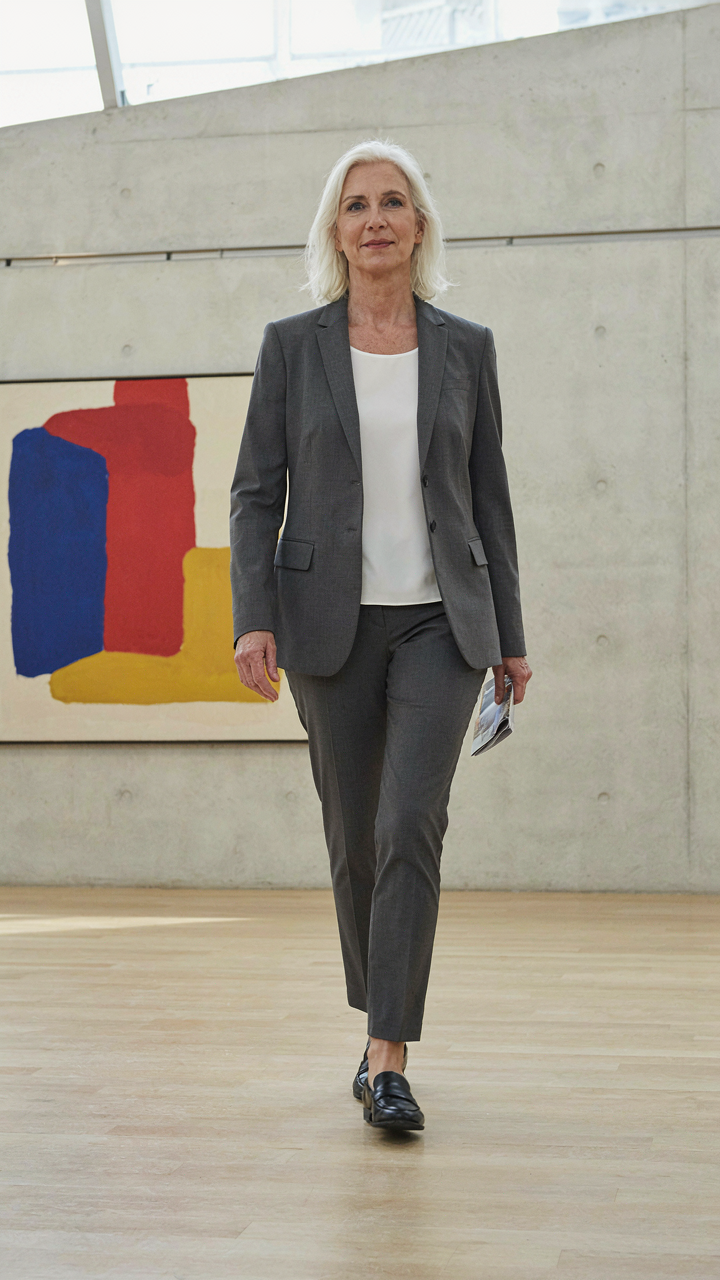
You want to look effortless because you’re afraid stiff posing reads as insecure. The mechanism is simple: rigid instructions kill micro-expressions. In photography, “direction” means pointing the body toward a focal point or angle. Apply this to headshots by cueing the subject toward the camera rather than commanding specific limb placement. Tell her to step closer, turn her shoulder toward the light, or shift her weight forward. These directional cues engage her proprioception instead of her self-consciousness.
The photographer’s job becomes choreography, not choreography. You’re not saying “put your hand here” or “tilt your chin down.” You’re creating environmental prompts that make her body settle into natural alignment on its own. A woman directed to “lean into the frame” generates authenticity faster than one told to “straighten your posture.” The difference is agency. She moves herself into the frame rather than being positioned like an object.
Let Movement Generate Expression
Common advice tells you to “find natural expressions through conversation.” That’s incomplete. The real mechanism borrows from kinesiology: sustained stillness contracts muscles and flattens the face. Movement releases tension and surfaces genuine expression. Brief, intentional motion before the shot creates the micro-moment where her face settles into confidence rather than strain.
Have her walk toward the camera, then stop. Shift her weight side to side, then land on center. Roll her shoulders back, then drop them. These micro-movements oxygenate her face, activate her eyes, and reset her default expression away from the camera-awareness grimace. Shoot during the two frames after she stops moving, not during the movement itself. The expression that emerges is genuinely hers, not performed.
Contextualizing Confidence: Editorial Portraits Women For Impact

The Background As Visual Authority
You want the background to do work you don’t have to explain in words. In portrait photography, the background functions like framing in graphic design: it either anchors or distracts. A busy or mismatched background splits the viewer’s attention and weakens perceived authority. Clean, intentional backgrounds—whether solid, blurred, or architecturally simple—force focus onto your face and posture. This is not aesthetic preference. This is signal theory. Choose environments that either stay neutral or reinforce your professional category. Avoid spaces that compete.
The most common mistake is treating the background as decoration rather than statement. Your background should reflect the world you operate in or aspire to operate in. A corporate consultant photographs differently against drywall than against natural light in an office. An entrepreneur positioned against exposed brick reads differently than one framed by windows. The background communicates context before your face does. Select one that matches the stakes of what you project.
Props And Positioning As Brand Language
Holding something tangible in a headshot is nearly always wrong. Props dilute focus and introduce questions the viewer shouldn’t need to answer. The exception: objects that are literally inseparable from your work identity, and even then, they must be intentional. A stethoscope around a physician’s neck reads differently than a stethoscope held mid-frame. Integration beats presentation. Your hands matter more than any object. Hands resting naturally, positioned with purpose, communicate ease and command.
The setting itself becomes a prop when used correctly. A desk behind you doesn’t add information unless you’re actually seated at it with work visible. A bookshelf works only if books are genuinely part of your daily environment and the shot frames you against it naturally, not staged. The goal is removing all friction between what the camera captures and what’s true about your work life. Authenticity in environmental choice reads as confidence because it requires no performance. Choose a location you actually inhabit and the pose follows.
The Kinesiology Of Credibility: Posture For Corporate Headshot Poses

Spinal Alignment For Commanding Presence
You want people to take you seriously without saying a word. That fear drives most of this section. Biomechanics tells us that spinal alignment is the load-bearing system of perceived authority. Neutral spine position—shoulders back, chest open, chin level—activates the same neurological response in viewers that military bearing does. You’re not slouching or overextending. You’re stacking your skeleton efficiently, which reads as someone who knows what they’re doing.
The mistake most women make in headshots is tilting the chin down or forward to appear “softer.” This collapses the cervical spine and signals submission, not approachability. Keep your ears aligned over your shoulders. Your spine should feel like a column, not a curve. The photographer should shoot at eye level or slightly above, never below. This position engages your core stabilizers and projects control of the frame.
Open Versus Closed Posture And Perceived Influence
The common advice here is backwards. You don’t need to sprawl and take up space like a man in a suit to look credible. Perceived influence comes from strategic openness, not aggressive expansion. In social psychology, “openness” means accessible but not penetrable. Your shoulders stay back and down, not hunched forward or raised. Your arms have space between them and your torso. Your hands stay visible and relaxed, never crossed or hidden.
Closed posture—crossed arms, inward shoulders, hands in pockets—reads as defensive or uncertain. Open posture without purpose reads as unstable or compensating. The mechanism is specificity. You open only the upper chest and shoulders. Keep your core engaged and your stance narrow, feet hip-width apart. This creates the paradox of approachable authority. The viewer sees someone comfortable in their own frame and unafraid of being seen.
Beyond The Pixel: Your Photo LinkedIn Strategy

Matching Your Headshot To Your Brand Identity
You want the photo to do the social work for you so you don’t have to explain yourself. Here’s what actually matters: your headshot must operate as a visual extension of how you show up in text, video, and conversation. Think of it as brand coherence, borrowed from design systems language where every element reinforces the same signal. Inconsistency between your photo and your actual presence creates cognitive friction. People sense the gap and distrust closes.
The pose you choose sets a baseline for expectations. If your photo shows soft shoulders and downward gaze but your emails are direct and commanding, the mismatch undermines your positioning. Your headshot is a contract. It says, “This is how you’ll find me when we meet.” Match the pose intensity to your actual communication style. Don’t pose passive if you operate aggressive. The photo should lower friction, not create it.
Platform Specific Image Selection
Your single best headshot doesn’t work everywhere, and pretending otherwise wastes the tactical advantage of format specificity. LinkedIn’s algorithm and user behavior reward certain visual signals differently than email signatures or company websites. On LinkedIn, slightly wider shoulder positioning and direct eye contact perform better because the platform is built on direct professional messaging. Email signatures need tighter framing because the context is intimate and the image is small. Your company website may demand environmental context that LinkedIn’s cropped format destroys.
- LinkedIn: Shoulders squared to camera, eye level or slightly above, minimal background. The platform’s feed rewards clarity and directness. Avoid extreme angles.
- Email Signature: Tighter crop emphasizing face and neck. The image renders small on most clients. Head tilt of 5 to 15 degrees works here without reading as passive.
- Company Website: Wider framing allows shoulder context and subtle environmental cue. You can soften intensity slightly without losing confidence. Asymmetrical poses work better here.
- Profile Picture Cards: Square or near-square format demands centered composition. Avoid extreme head tilt. This is your baseline visual identity across all platforms.
- Printed Materials: Higher resolution requirements force you to choose poses with minimal motion blur in fabric or hair. Static, squared shoulders perform better than dynamic angles.
Audit your current presence across platforms. Note which image you use where and whether it reinforces or contradicts your messaging. Then run a simple protocol: take your top three headshot candidates and place each one in a LinkedIn mockup, email signature mockup, and website mockup. The image that performs strongest across all three without requiring mental adjustment is your winner.
Reframing The Professional Pic: Investment, Not Expense

Your Visual Asset Compounds Over Time
You’re reading this because you sense a weak headshot is costing you money, and you’re right. A strategic headshot functions like capital in economics: it works for you across channels without degradation. LinkedIn profiles, speaker bios, agency rosters, media kits, book jackets—the same image generates credibility across multiple touchpoints simultaneously. Each platform multiplies the ROI of a single shoot.
Most women treat headshots as one-off expenses because they follow the freelancer pricing model instead of the asset model. You pay once, use it forever, and the value compounds as your network expands and those images reach more eyes. A professional headshot taken today reaches more people in year three than year one. That’s not sentiment. That’s distribution math working in your favor.
What A Weak Impression Actually Costs
The consensus advice says a bad headshot just looks unprofessional. That’s incomplete. A weak headshot creates friction in the decision-making moment. When a hiring manager, client, or collaborator sees an unclear angle, poor lighting, or misaligned posture, they don’t consciously think “unprofessional.” They think “uncertainty.” That hesitation—that split-second doubt—redirects attention to competitors with clearer visual positioning.
One weak headshot on your LinkedIn doesn’t sink you. But a weak headshot paired with inconsistent messaging, poor lighting, and angled shoulders signals resource scarcity to people evaluating whether to invest in working with you. A strategically shot headshot eliminates that friction point entirely. You control whether someone’s first visual judgment takes five seconds or gets derailed by ambiguity. Most women never calculate what that friction costs across a year of networking, pitches, or applications.
The Real Obstacle Isn’t The Camera; It’s The Curated Self You Believe You Need To Project

You don’t need another pose. You need permission to stop performing. The women who command rooms in their headshots aren’t doing anything special with their bodies. They stopped trying to look like what confidence should look like and started looking like someone who actually knows what she wants. Take one photo today where you’re not thinking about angles. Just thinking about the next thing you’re about to do. That’s the shot that sells you.