

The Failsafe Fabric Contrast Protocol: Double Denim Done Right

Dark Wash Denim Inherent Sophistication
You’re worried people will think you got dressed in the dark. That fear is backwards. The real mechanism is contrast density. In visual hierarchy, dark absorbs light while light reflects it. Dark wash denim on top anchors the outfit because it demands less visual attention from the viewer. Pair it with medium or light wash on bottom, and the eye naturally travels downward through intentional variation rather than flatness.
Dark wash works because it reads as deliberate restraint. A charcoal or deep indigo jacket over lighter jeans creates tonal separation without clashing. The viewer perceives this as a choice, not an accident. This is why fashion professionals default to dark on dark when they want to appear competent. The mechanism isn’t about looking expensive. It’s about reducing cognitive noise in your appearance so people process your presence instead of your outfit.
Light Wash Denim Casual But Intentional

The common advice says light wash looks cheap or dated. That’s incomplete. Light wash is actually harder to execute because it reads as transparent about intent. You can’t hide behind understatement. Medium to dark wash bottoms beneath a light wash jacket create the same tonal separation as the reverse, but signal something different: you’re comfortable being seen, and you’ve thought about the math.
Light wash demands precision in fit and fabric quality because nothing buffers poor construction. A crisp light indigo or stone-washed jacket paired with dark jeans or black chinos works because the contrast is immediate and legible. The mechanism is clarity. You’re not trying to look expensive or safe. You’re signaling that you understand the outfit is a system, not a collection of items. Execute the proportion correctly and the outfit reads as intentional rather than accidental.

Beyond Matching: Strategic Shade Variance For Denim On Denim

Varying Washes Create Deliberate Visual Separation
You’re worried people will think you didn’t try. That’s the real fear underneath this whole section. The mechanism is contrast: your eye needs a break between the top and bottom layers, or the outfit collapses into one flat plane. Without it, denim on denim reads as a costume choice, not a styling choice.
Light wash on dark wash works because the value difference is immediate and readable from distance. Dark on light inverts this but achieves the same goal. The rule most people miss is that medium wash on medium wash fails because there’s no visual anchor. Your brain can’t separate the layers, so it defaults to thinking you made a mistake. Pick washes that sit at least two stops apart on the spectrum.
Tonal Layering Builds Subtle Depth
The borrowed framework here is color theory, and the term you need to understand is “saturation separation.” A saturated indigo shirt over a faded or desaturated denim pant creates depth through intensity, not just value. Most advice says “just wear different shades,” which is incomplete. Saturation is the hidden variable that separates intentional from accidental.
A raw or rigid denim jacket over worn-in, vintage-wash jeans uses saturation to signal intentionality. The newer piece looks more alive; the older piece grounds it. This isn’t about matching tones—it’s about creating a visual hierarchy that tells a story of deliberate assembly. Layer the piece with higher saturation on top, lower saturation below, then stop adjusting.
The Texture Game: Elevating All Denim Outfits

Raw Denim For Visual Contrast
You’re worried people will think you’re trying too hard. The mechanism that saves a denim-on-denim fit is contrast, borrowed from visual design: high-value items demand differentiation in surface quality, not just color. Raw denim—unwashed, rigid, deep indigo—creates immediate visual separation from a lighter or worn wash. This isn’t aesthetic preference. It’s structural.
Raw denim reads as intentional because the fabric hasn’t been processed into uniformity. The nap sits differently. Light reflects off it differently. Pair raw selvedge jeans with a faded chambray shirt, and your eye registers two distinct materials even though both are denim. The weight and drape of raw fabric also differs enough that the proportions don’t collapse into one flat mass.
Distressed Denim Needs Strategic Placement
The common advice says distressed denim looks dated. That’s incomplete. Distressed denim looks dated when both pieces carry the same wear pattern in the same places. The real rule: concentrate distressing on one piece only, and keep it below the waist. A distressed jacket paired with clean, dark jeans works because the eye moves down. The contrast in condition creates motion.
Distressing also reveals the core fabric underneath—the warp and weft structure shows through, adding another visual layer. A jacket with strategic rips over the chest paired with structured, undamaged jeans establishes hierarchy. The distressed piece becomes the statement. The clean piece becomes the anchor. Never distress both simultaneously in overlapping zones.
Proportion Principles: Mastering Jean On Jean Outfit Silhouettes

The Contrast Rule That Actually Works
You’re worried this will look sloppy. That’s the real fear underneath the question. Here’s the mechanism: proportion in denim on denim works like load distribution in architecture. One piece carries weight, the other breathes. If both compete for visual dominance, neither wins. You need one fitted element and one relaxed one. Top fitted, bottom loose. Top oversized, bottom tapered. The eye reads this as intentional, not accidental.
Most people reverse this. They stack loose on loose and wonder why it reads formless. The outfit collapses into itself. Contrast doesn’t mean different colors. Contrast means different volumes in the same visual frame. A slim-fitting dark wash shirt tucked into wide-leg medium wash jeans reads clean. The same shirt hanging loose in the same jeans reads like you forgot to finish getting dressed.
Structured Versus Relaxed Fits
Mixing structure with relaxation is not about balancing. It’s about hierarchy. One fit leads, the other follows. Pick which piece does the work. A structured shirt with rigid seams, proper shoulder construction, and a fitted waist demands a subordinate bottom. That bottom should surrender volume or taper. A relaxed, oversized shirt with dropped sleeves and no taper demands a jean that holds its shape. Skinny or straight leg. Anything that doesn’t fight back looks weak by comparison.
Avoid the amateur move of two medium fits. Medium structure plus medium relaxation creates visual noise. Neither piece establishes authority. You need one element that announces the outfit’s intention and one that supports it. Wear a crisp, structured denim jacket over an oversized vintage tee with fitted black jeans. The jacket announces. The tee and jeans listen. This hierarchy is what makes denim on denim read as a choice instead of a mistake.
Accessorizing The Double Denim Outfit: The Amplifier Effect

Footwear Choices Grounding The Look
You’re worried shoes will break the outfit instead of completing it, but that’s backwards thinking. In physics, an amplifier doesn’t add noise randomly—it magnifies a specific signal while dampening others. Your footwear works the same way: it either amplifies the denim pairing’s intentionality or exposes it as accidental. The shoe choice determines whether double denim reads as deliberate styling or like you grabbed whatever was clean.
Leather boots, particularly Chelsea or structured silhouettes, anchor double denim by introducing material contrast without competing for attention. Sneakers work only when they’re minimal and worn—pristine white leather reads as lazy, while beat-up canvas signals you know what you’re doing. Avoid anything flashy or heavily textured; the denim already dominates the visual field. The mechanism is material hierarchy: leather > denim > everything else. Choose footwear that sits lower in that hierarchy.
Statement Pieces Intentional Disruption
Most advice says accessories should be “subtle” with double denim, which is why most double denim looks forgettable. Subtlety here means invisible, and invisible accessories do nothing. You need one piece that breaks the denim’s tonal range deliberately. A structured leather belt, oversized watch, or metal-hardware bag creates a focal point that makes the entire outfit feel controlled rather than monochromatic.
The key is singular disruption, not multiple competing pieces. One strong accessory reorganizes how people process the outfit—it signals you chose this, didn’t fall into it. A vintage chain necklace or substantial rings work because they introduce a different material and light reflection. Pick one statement piece, commit to it, then leave everything else quiet. This prevents the look from collapsing into visual noise.
Denim Outfits For Women: The Architectural Approach To Layering

Start With Weight And Proportion
You’re reading this because you’re afraid denim on denim reads as costume instead of intentional. The real mechanism is weight distribution. Think of architecture’s load-bearing principle: your base layer must support the visual mass above it without collapsing the silhouette. A heavyweight 14-ounce denim bottom paired with a lightweight 10-ounce jacket creates hierarchy. Reverse it and the outfit inverts into visual chaos. The base anchors. Everything else responds to that decision.
Most advice tells you to vary wash colors to “add contrast.” That’s incomplete. Weight matters more than color. A dark indigo 12-ounce straight-leg jean paired with a medium-wash oversized trucker jacket works because the bottom provides structural resistance. The eye reads it as intentional composition, not accident. Start by choosing your denim base first, then select outerwear that weighs less or matches the weight exactly. Never go heavier on top.
Jacket Fit As Visual Boundary
The jacket isn’t decoration. It’s the perimeter that makes or breaks the outfit. In design, negative space defines form just as much as mass does. A cropped denim jacket over a high-waisted jean creates a defined waistline and stops visual flow mid-torso. An oversized trucker jacket extends the silhouette vertically and absorbs the lower half into one unified shape. Pick one logic, not both.
The dated denim on denim look came from the 1990s because both pieces had identical fit and wash, creating an undifferentiated block. Modern execution requires at least one piece to define a boundary. A fitted dark-wash jacket over a relaxed light-wash straight leg gives you contrast through proportion, not color. Length matters most here: the jacket must end at least two inches above or below the jean’s natural break point at your ankle. Anything in between creates visual ambiguity.
The Fall Denim Formula: Seasonal Adaptations That Work

Heavier Fabrics, Better Proportion
You’re worried fall denim on denim looks cheap because you’re defaulting to summer weight. The mechanism is simple: thinner denim drapes like cotton sweatpants in cold weather. Heavier fabrics hold structure. They anchor an outfit instead of clinging. Weight creates intentionality. A 14-ounce or 15-ounce denim jacket over matching jeans reads as deliberate tailoring, not accidental repetition. Thinner denims (under 12 ounces) flatten the silhouette and kill dimensionality.
- 14-16 ounce sanforized denim: Industry standard for structured jackets. Holds shape through repeated wear and wash cycles without excessive shrinkage risk.
- Slub weave denim: Creates visible texture variation across the fabric surface. Breaks visual monotony between jacket and pants while maintaining weight integrity.
- Right-hand twill weave: The traditional construction method. Produces cleaner creases and maintains darker indigo saturation compared to lighter alternatives.
- Stretch denim above 12 ounces: Elastane content (1-3%) adds comfort without compromising structure. Essential for fall fits where layering demands movement flexibility.
- Japanese selvedge denim: Typically 13-15 ounces with tight weave density. Wears into unique fading patterns that differentiate jacket from pants over time.
Fall temperatures demand denim that holds its own against layering underneath. A jacket that’s too light wrinkles against sweaters and collapses into the body. Heavier denim resists compression, so your outline stays readable even under a coat. The jacket maintains its own shape and doesn’t dissolve into an undifferentiated denim blob. This is the only reason denim on denim works seasonally: the fabrics actually look like separate pieces instead of one wrinkled mass.
Knitwear As Structural Anchor
Knitwear layering isn’t about warmth. It’s about breaking the horizontal monotony that kills denim on denim fits. A crew neck sweater in cream, charcoal, or burgundy interrupts the jean-to-jacket line and creates visual separation between upper and lower denim. The knitwear acts as a circuit breaker. Without it, your torso reads as one uninterrupted column of blue. Add a fitted sweater and suddenly the jacket becomes a distinct object sitting on top of something else.
The texture contrast matters more than the color. A cable knit or ribbed knit surfaces create depth that flat denim can’t achieve alone. Tuck the sweater partially into the jeans or leave it loose depending on fit, but always ensure the knitwear sits visibly between both denim pieces. This layer transforms denim on denim from a costume choice into a functional outfit with intentional structure. The mechanism is straightforward: your eye now processes three separate garment types instead of two competing blues, which eliminates the visual confusion that makes the look feel dated or amateur.
Beyond Blue: Color Theory For Modern Denim On Denim Outfits
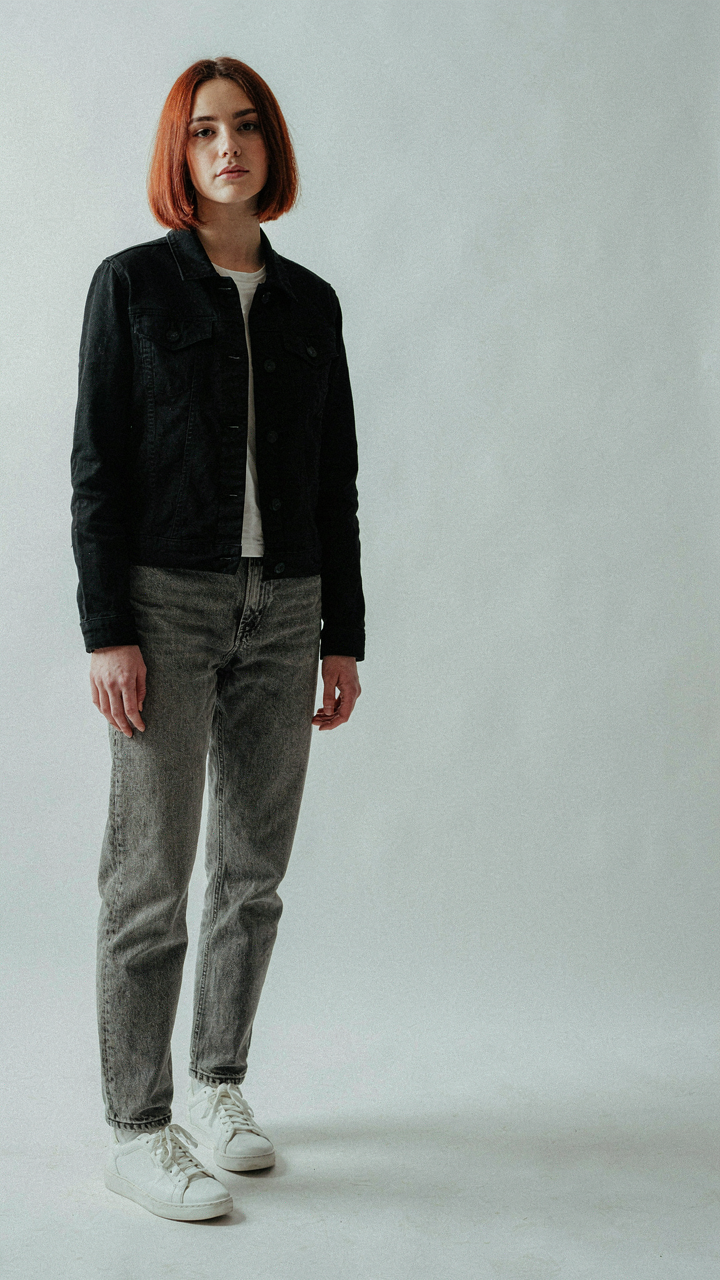
Black And Grey Denim Minimalist Power
You’re worried that denim on denim reads as trying too hard, so you’re defaulting to safe. The mechanism is contrast value: in color theory, contrast determines visual hierarchy and legibility. Black and grey denim create separation through tone alone, not hue. Your eye reads the outfit as intentional composition rather than monotonous accident. This works because the viewer’s brain processes value difference before color difference.
Black denim against grey denim creates the cleanest visual break. The darker piece anchors the fit while the lighter piece breathes. This pairing works across body proportions because the contrast does the work for you. You’re not relying on fit tricks or layering complexity. The outfit states a single idea clearly: control.
Colored Denim Calculated Risk
Colored denim on denim stops working the moment both pieces compete for attention. This is where most people fail. They stack two saturated colors and wonder why the outfit feels chaotic. The real mechanism is dominance: one piece must be obviously more muted or darker. Dark indigo with light tan works. Saturated blue with saturated burgundy does not.
When you introduce color, you’re committing to hierarchy. Make one piece the protagonist and one piece the supporting actor. The supporting piece should sit in a lower saturation range or deeper tone. Most people skip this step and treat colored denim as interchangeable. That’s why their outfits collapse. Decide which color owns the outfit before you get dressed.
The “Fit First” Mandate For Double Denim Outfit Women

Tailoring Precision Over Trend
You’re worried fit will expose you as someone who doesn’t understand clothes. Here’s the mechanism: denim on denim only works because the two pieces must have opposing silhouettes. If both are loose or both are tight, you’ve created visual noise instead of contrast. The real work is tailoring the second piece to fit your actual frame, not chasing what looks good on someone else’s body in an Instagram photo.
Most advice says “just find the right wash.” Wrong. Wash matters less than proportions. A dark indigo top over light wash bottoms works the same way as light over dark. What fails is identical fit stacked on identical fit. Get the jacket or shirt tapered at the sides if it bunches. Shorten the rise on one piece if they stack awkwardly at your waist. This costs money upfront but saves you from looking sloppy for years.
Your Body’s Geometry Demands Specificity
Think in terms of volume distribution, borrowed from physics. Your frame occupies three zones: shoulders, torso, hips. Denim on denim succeeds when one zone stays narrow and the other stays wide. This is contrast as a load-bearing function, not decoration. A fitted jacket over wide-leg jeans works because it creates tension. The eye moves between the two pieces instead of settling into boredom.
Measure your actual shoulder width, chest circumference, and hip width. These numbers tell you whether to pair a cropped jacket with standard-rise jeans or an oversized shirt with slim bottoms. The common mistake is assuming proportions work universally. They don’t. A woman with narrow shoulders and wide hips needs different stacking than someone with an athletic build. Let these measurements drive your choices, not preference. The fit either creates visual balance or it amplifies imbalance. There is no middle ground.
The Mindset Shift: From Trend Follower To Denim Master
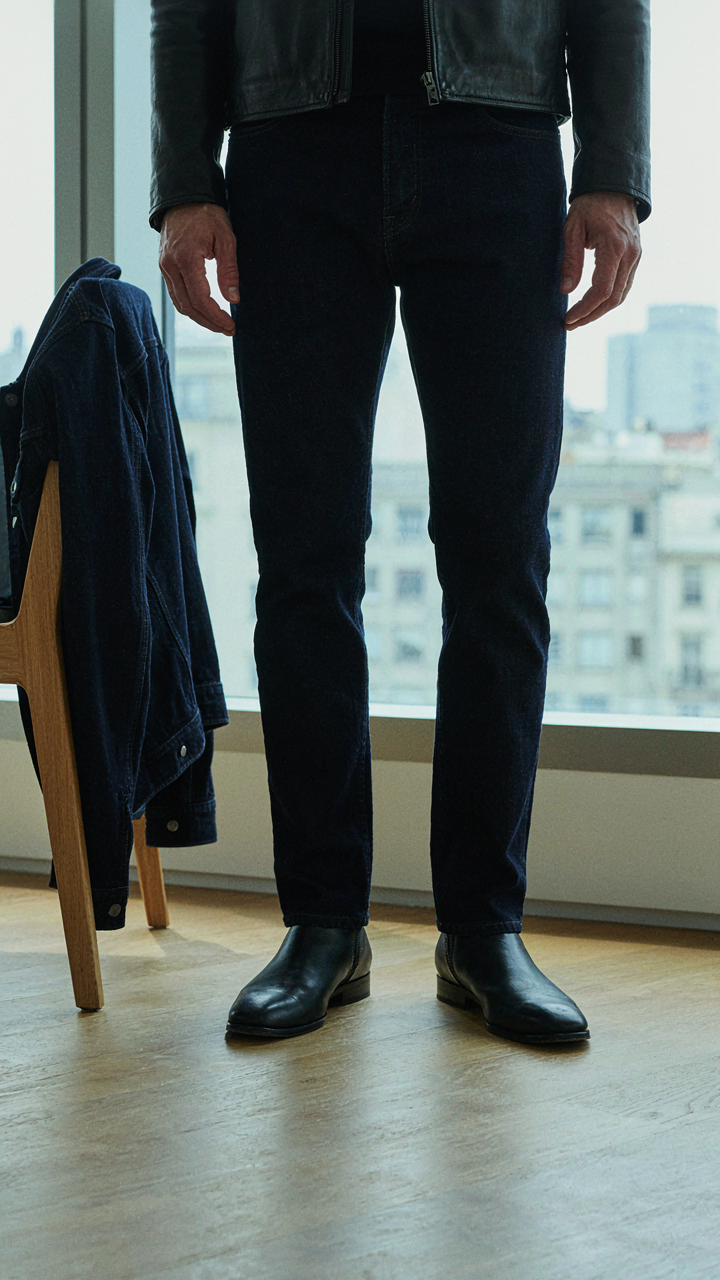
Your Eye Needs Training, Not Permission
You’re reading this because you want proof that denim on denim won’t make you look stuck in 2015. That’s the real fear underneath. The mechanism is simple: your eye hasn’t been trained to distinguish between dated execution and timeless proportion. Most people conflate the two. They see bad denim on denim from a specific era and conclude the formula fails. It doesn’t. The formula was fine. The fit, wash, and layering were wrong.
Training your eye means studying how denim behaves across different body types, washes, and cuts. You need reference points, not rules. Observe how a dark rigid indigo pairs with a medium stonewashed jacket versus how it looks with a matching dark indigo. Notice the visual weight, the contrast, the break at the ankle. These observations build intuition faster than any checklist. Your brain will start flagging bad proportions before you consciously think about them.
Disregard What Trends Declare Dead
The common advice says to avoid denim on denim because it “dates your outfit.” Wrong. What dates your outfit is following a trend’s expiration date instead of understanding the underlying structure. Denim on denim isn’t a trend. It’s a formula with variables. Trends told you to wear skinny jeans with cropped jackets in 2013. That specific combination aged poorly. The silhouette did, not the layering concept.
Fads change every 18 to 24 months because they’re built on novelty, not utility. Denim on denim persists because it solves a real problem: creating visual cohesion and intentional contrast with minimal pieces. When you stop chasing what fashion media says is “in,” you start seeing what actually works for your body and lifestyle. Pick your washes and fits based on proportional logic, not whether an influencer posted it last month. This distinction is how you build a wardrobe that survives multiple cycles.
Your Fear Of Dated Denim Isn’t About The Fabric; It’s About Your Adherence To Invisible Style Rules That Don’t Exist

The gatekeepers of fashion want you paralyzed. They convinced you that wearing denim twice in one outfit makes you look like you raided a 2009 closet. It doesn’t. What actually makes an outfit dated is hesitation dressed up as taste. Wear the denim on denim fit you want today. Pull your favorite dark wash over your favorite light wash. Take the photo. Send it. The only rule that matters is the one you stop believing in first.