

The Unfiltered Beach Photoshoot Truth: Imperfection As An Asset

Movement Over Stillness
You want this section to work because you’re afraid a stiff pose will expose you. Here’s the mechanism: rigid posing creates tension in your body that reads as uncertainty in the frame. Movement disguises this tension because your muscles are doing something functional instead of holding a forced arrangement. When you walk, adjust your outfit, or shift your weight, the photographer captures the gap between poses where your body exists naturally. This is where confidence actually shows.
The common advice tells you to “find your angles” and “hold still.” That’s incomplete. Still poses amplify every self-consciousness you bring to the beach. Motion introduces variables that work for you. Your body moves through space in ways it knows how to do. A flowing cover-up catches wind differently than it sits. A linen shirt moves when you walk. These micro-movements create visual interest and hide the calculated nature of posing altogether. Shoot while you’re doing something, not while you’re thinking about being shot.
Elements Work Harder Than Flatness

Think of aerodynamics: the way air moves around an object creates lift or drag. Sand, wind, and water operate the same way against fabric. They’re not obstacles to manage around. They’re texture generators that add dimension to your outfit at zero effort from you.
Wind doesn’t ruin beach photoshoots. It activates loose fabric, creates separation between layers, and shows volume in ways standing still cannot. Sand sticks to damp skin and clothing, which reads as lived-in rather than sterile. Water darkens fabric and clings to your silhouette in ways that flatter most body types. Saltwater also ages cotton and linen in real time, giving new pieces that worn-in credibility photographers seek. Let these elements do the work. Your job is to wear fabrics they can actually move, not fight against them.

Beyond Boho: Deconstructing The “Effortless” Beach Aesthetic
The Illusion That Costs You Time
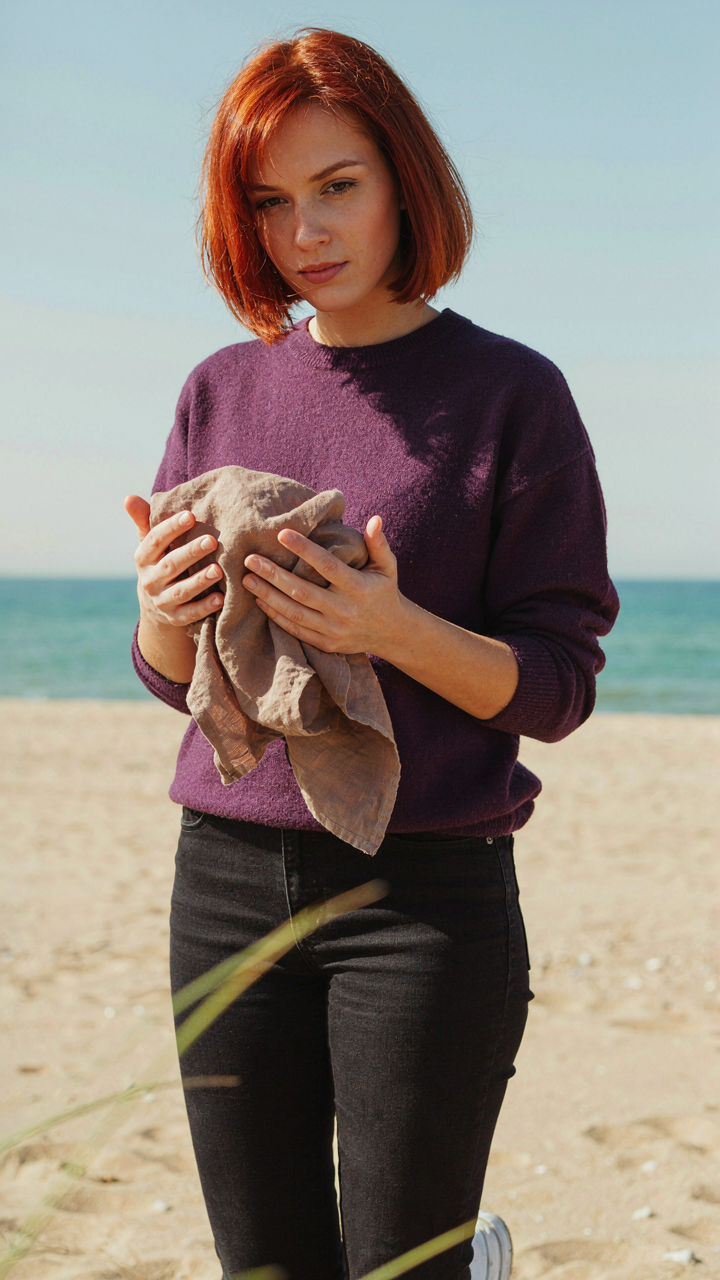
You want to look like you didn’t try. That’s the real motive here—status through the appearance of non-effort. The mechanism is simple: effortless beach looks require more planning, not less. The looseness you see in photos comes from deliberate constraint, not freedom. Photographers and stylists engineer casualness through outfit composition, fabric behavior, and pose direction. You’re paying attention to this section because you sense the gap between what looks easy and what actually works.
Every “just threw this on” beach outfit involved decisions made before the camera appeared. The fit had to work with body movement. The proportions needed to read clearly from ten feet away. Colors required testing against skin tone in actual sunlight, not studio conditions. These aren’t creative flourishes—they’re technical requirements that determine whether the photo lands or fails. Skipping this work produces the opposite result: clothes that read as sloppy rather than relaxed.
Fiber Selection Shapes How Fabric Moves
Fabric choice operates like a constraint in industrial design—you remove options to improve performance. Cotton, linen, and silk move differently on skin and in wind, and photographers choose fabrics based on how they photograph, not comfort. Linen wrinkles intentionally, creating texture that reads as authentic on camera. Cotton holds shape better and moves slower, giving structure to loose silhouettes. Silk catches light and drapes with weight, which photographs sharper than lightweight materials that disappear against skin.
Natural fibers also telegraph intention to the viewer’s eye. Synthetic blends often photograph with a sheen that signals “costume” rather than “outfit.” Linen and cotton absorb light naturally, creating dimensional shadows that give depth to beach photos. When you choose a 100-percent linen shirt over a linen-poly blend, you’re not choosing comfort—you’re choosing how light behaves around your body in the frame. Test fabric movement in actual wind and sunlight before the shoot, then select pieces that hold their intended shape under those conditions.
The Environmental Reciprocity Principle: Dress For The Beach, Not The Studio

What The Beach Actually Demands
You care about this because you’re afraid a photo will expose you as someone who doesn’t belong there. Here’s the mechanism: biology uses mimicry as camouflage, but also as belonging. When you dress for the beach environment instead of dressing for a camera, you trigger recognition. The beach has specific conditions: salt air, UV intensity, sand texture, wind patterns, and water proximity. Your outfit either acknowledges these forces or fights them. Clothes that work with the environment photograph better because they move correctly, sit correctly, and read as intentional rather than transported.
Cotton and linen dominate beach photoshoots because they’re native to tropical climates and behave predictably in humidity and salt air. Synthetic fabrics hold moisture and create unflattering cling or visible sweat patterns. When you choose materials the beach environment rewards, the camera catches ease instead of strain. This isn’t about looking casual. It’s about removing friction between your body, your clothes, and the actual conditions in front of the lens.
How Light Behaves On Different Surfaces
Physics governs reflection: smooth surfaces bounce light directly back at the camera and create harsh highlights, while textured surfaces scatter light and absorb it unevenly. A shiny polyester bikini reflects concentrated light and reads as plastic. A textured linen cover-up scatters that same light across the fibers, creating dimension and depth. The beach environment is already high-contrast because sand and water are reflective. Your outfit either compounds this problem or solves it.
Matte fabrics and natural weaves beat polished finishes in beach light. Cotton jersey, gauze, and raw linen absorb and diffuse light rather than throwing it back. This is why the same outfit looks dramatically different in studio soft-box lighting versus beach sun. When you understand light reflection, you stop choosing fabrics based on how they feel in an air-conditioned store and start choosing them based on how they’ll behave under direct UV. The protocol is simple: test your outfit in midday sun before the shoot. If it creates glare on camera, change it.
The Monochromatic Myth: When Color Blocks Win At The Beach Shoots

Single Hue Strategy For Maximum Impact
You want monochromatic outfits because they feel safe and you’ve seen influencers use them. Here’s what actually happens: in photography, a single color creates contrast through value, not variety. Borrow from graphic design’s principle of visual hierarchy. One color forces the camera to read depth through fabric texture, body shape, and light instead of competing hues. The mechanism is subtraction, not addition.
A cream linen shirt and matching shorts don’t look boring because they’re one color. They work because sand, sky, and water become the secondary palette. Your body becomes the focal point. The photographer controls where the eye lands by managing light and shadow on fabric surface alone. This is why solid colors dominate editorial beach shoots. Pick a hue with enough saturation to read clearly, but not so bright it bleaches out in direct sun.
Skin Tone Matching For Intentional Contrast
Most advice says pick colors that flatter your skin tone. That’s backwards. You should pick colors that create visual separation between your body and the background. If you have warm undertones and the sand is warm, wear cool tones to pop. If you have cool undertones, warm colors create depth. This is basic color theory applied to flesh and environment, not vague aesthetic preference.
The real mechanism is contrast ratio. A high contrast outfit reads sharply in photographs. A low contrast outfit melts into the environment and weakens the entire composition. Test this: stand in front of sand wearing a color close to your skin tone, then wear the opposite. The second version photographs with more dimension and presence. Shoot test frames before committing to a full outfit choice.
Accessories: The Minimalist Multiplier For A Summer Fashion Editorial

One Statement Piece Over Visual Noise
You want accessories to fix what your outfit lacks. That’s the real reason this matters. Here’s the mechanism: your eye processes a beach photo in under three seconds. Every accessory competes for attention. Add five pieces and none register. Add one intentional piece and it anchors the entire image. A gold layered necklace, a structured leather belt, or a vintage hat becomes the focal point the camera locks onto instead of scanning chaos.
The difference between editorial and amateur is restraint. Professional beach photoshoots use accessories the way copywriters use white space. One gold cuff speaks louder than a wrist full of bangles. One wide-brim straw hat defines the aesthetic. One pair of minimal sunglasses creates intrigue. Remove everything except what moves the narrative forward. The piece you keep must solve a problem: break up fabric monotony, add texture contrast, or establish era and intent.
Function Drives The Frame
Accessories borrowed from utility design signal authenticity to cameras. Think of semiotics, the study of signs and meaning. Your beach bag functions as a symbol. A vintage leather crossbody says “I have taste and history.” A white canvas tote says “casual and deliberate.” A woven straw bag says “I understand the context.” Functional accessories don’t just sit on your body—they tell the camera what the wearer does and values. A photographer frames around them because they explain the scene.
Practical accessories also solve technical photoshoot problems. A scarf becomes a wind management tool and a color layer. A cover-up adds texture and movement without replacing the core outfit. A hat controls shadows on your face and adds dimension to overhead shots. Sunglasses balance face proportions while protecting your eyes from squinting. The best beach accessories work twice: they serve the image and serve the shoot itself. Choose pieces that do both jobs, and you’re no longer just accessorizing—you’re building the shot.
The “Wear Again” Rule For Casual Beach Family Photos Outfits

Investing In Pieces With Life Beyond The Camera
You’re worried about wasting money on something you’ll wear once. That’s the real problem here, not finding the “perfect” outfit. The mechanism is simple: clothes that work in multiple contexts have exponentially higher utility than occasion-specific garments. A linen shirt functions at the beach, in casual settings, layered under jackets, and in warm climates year-round. A piece designed only for photos has zero post-shoot value and trains your brain to treat clothing as disposable.
Build your beach photoshoot outfits from items already earning their keep in your regular rotation. Neutral linen, white cotton, and natural-fiber basics work at a photoshoot, then transition seamlessly into everyday wear. This approach eliminates decision fatigue during outfit selection and removes the guilt of one-time purchases. When you choose pieces you actually wear, you stop overthinking the shoot itself and focus on what matters: being present with family.
The Subtle Power Of Well Loved Garments
Worn-in clothing reads better on camera than pristine pieces. The fabric hangs naturally, folds follow the body’s actual shape, and there’s no visual stiffness that signals “new outfit bought for this day.” Photographers notice this constantly—a shirt that’s been washed ten times photographs with more dimension than something still holding warehouse creases. The visual difference isn’t dramatic, but it’s consistent enough that experienced shooters prefer it.
Your comfort level shows in photos more than most people admit. Wearing something familiar that you’ve moved in, sweated in, and lived in removes a layer of self-consciousness. That ease translates to your facial expression and posture. Start with pieces you’ve already broken in, worn to actual events, and felt confident wearing around people who matter. This eliminates the anxiety of a new purchase and creates the relaxed aesthetic that defines authentic family photos.
Layering For Impact: The Art Of Strategic Addition For A Beach Fashion Shoot

Building Shape Where Fabric Alone Won’t
You want layering to work because it signals sophistication. Most people think layering means throwing on more clothes. That’s wrong. Layering is about contrast and proportion—the military term is “asymmetrical advantage.” You stack pieces of different weights and textures in unexpected combinations to create visual tension. A linen shirt over a fitted tank, unbuttoned. A mesh cover-up tied at the waist. A lightweight scarf draped once, not wrapped. The mechanism is simple: each layer breaks the eye’s path and forces it to work, which reads as intentional.
The technical play is negative space. Drape one layer loose while keeping another fitted. Add an open shirt over a structured swimsuit. Use layers to frame your body, not hide it. A cropped linen jacket over a one-piece creates dimension that a one-piece alone cannot. The photographer captures depth through overlap and shadow. This is why stylists layer at beach shoots—not for warmth, but for image complexity that translates to stronger frames.
Timing Your Transitions Without Stopping
Golden hour shoots demand two separate looks, but stopping to change kills momentum. The real play is building pieces that work in both light conditions without feeling like costume changes. Wear a neutral base—white, cream, or sand-toned swimsuit—and swap only the outer layer. Remove the overshirt when the sun dips. Add a lightweight kimono or button-up as light softens. Keep accessories consistent so the transition reads as intentional refinement, not desperation.
The second shift happens in tone, not category. Daytime layering uses crisp, structured fabrics like linen and cotton. Twilight layering softens into flowing materials—rayon, silk blends, gauze. Sunglasses come off. Jewelry stays the same or adds one heavier piece. Never layer identically in both conditions. Shoot the clean, minimal look first while light is harsh. Then add fabric, texture, and movement as the sun descends. This protocol keeps your shoot moving while giving the editor two distinct visual stories from one location.
The Anti Trend Protocol: Timeless Looks For Beach Side Photoshoot

Why Trends Die Faster Than Your Photo Album Grows Outdated
You want to feel current. That’s the real driver here, not aesthetics. The mechanism is simple: trends move through adoption curves, and by the time a beach outfit trend hits mainstream visibility, you’re already past the peak. What looks fresh in a July 2024 Instagram reel looks dated by next summer because the cycle accelerates. Fashion moves faster than your ability to re-shoot photos. A dated outfit kills the entire image’s shelf life.
Trends function like fashion’s version of Moore’s Law in computing. The reference point deteriorates. That neon mesh cover-up or those ultra-high-waisted shorts with the specific cut get tagged to a moment, not a person. Once the moment passes, the photo reads as a timestamp rather than a timeless capture. Your beach photoshoot outfit becomes evidence of when it was taken, not what you looked like.
The Silhouettes That Don’t Betray The Year
Forget the advice about “investing in basics.” That’s incomplete. You need silhouettes with structural integrity, meaning they hold visual weight independent of seasonal details. High-waisted swimwear sits differently than low-waisted cuts, and that difference persists across decades. A wrap sarong with generous fabric drape won’t look like 2010 or 2025 specifically. It looks like the garment itself.
The equation is this: silhouette plus neutral color minus trend-specific details equals timeless photography. A fitted one-piece in black or navy. An oversized button-up shirt in linen. Wide-leg linen pants. A simple A-line cover-up dress. These hold their form across five, ten, fifteen years of photos because the structure doesn’t reference a particular era’s obsessions. Shoot with these as your anchor pieces, then layer or accessorize from there.
Footwear Fallacy: When Barefoot Is The Only True Accessory

The Camera Sees What You Hide
You’re worried barefoot looks unfinished. That’s the real problem here, and it’s backwards. The camera rewards visual honesty over perceived completeness. Barefoot creates what photographers call “negative space closure”—your foot connects directly to the sand without visual interruption. Shoes break that line. They fragment the frame by introducing a third color, texture, and shape that competes for attention instead of anchoring it.
Sand texture on skin reads as intentional in photos. Footwear reads as a choice you made out of uncertainty. The strongest beach portraits eliminate visual noise. Your bare feet against sand are content. Shoes are distraction. Professional beach photographers understand this: the fewer elements between you and the environment, the stronger the visual story becomes.
Terrain Solutions Without The Compromise
Not all beach locations have forgiving sand. Rocky coastlines, pier shoots, and broken shell terrain demand practical alternatives.
- Minimal leather sandals: Flat, strappy designs that sit close to the foot. They photograph as thin lines rather than solid blocks, maintaining visual continuity with your leg and ground.
- Metallic or nude ankle wraps: Thin cords or chains that bind around the ankle and between toes. They register as jewelry, not footwear, in camera frames.
- Water shoes in neutral tones: Designed for rocky surfaces, these mold to the foot with minimal volume. Choose black or sand-tone to avoid visual jarring.
- Barefoot sandals with toe posts: Delicate chains connecting ankle to big toe. They satisfy terrain concerns while maintaining the barefoot aesthetic photographers want.
- Sheer mesh socks or foot tights: Virtually invisible on camera but provide protection on rough surfaces. They blur the line between skin and ground rather than severing it.
The mechanism is simple: protection doesn’t require visual weight. Choose gear that minimizes volume and matches your skin tone or the environment. Remove the footwear before final shots if terrain allows. The protection was insurance, not the final edit.
Movement Over Stillness: Capturing Dynamic Energy In Beach Outfit Photoshoot

Clothes That Let Your Body Move
You want the photo to make people stop scrolling, which means you need motion that reads as confidence rather than chaos. The physics principle of “momentum” applies here: your outfit must have low resistance to movement so the photographer captures intention, not constraint. Tight fits kill this. Loose layers, open silhouettes, and unstructured pieces move with your body instead of against it, creating the visual separation between you and the static background that forces attention.
Fabric weight matters more than cut. Heavy cotton, linen, and structured blends stay in place during movement, creating clean lines. Light synthetics collapse into your body and read as formless. A loose linen shirt or oversized cover-up catches the wind and frames motion without looking accidental. The goal is deliberately loose, not haphazardly draped. When you move, the fabric should lag slightly behind your body, creating depth and layers in the frame that a stationary pose cannot deliver.
The Language Fabric Speaks In Motion
Nobody tells you this: fabric in motion is a communication tool, not decoration. Silk and silk-adjacent synthetics telegraph speed and fluidity. They move faster than your body and create trailing lines that suggest energy. Linen and cotton move slower, creating deliberate, substantial gestures that read as grounded. The photographer captures different stories based entirely on fiber composition.
Choose fabric based on the energy you want the image to convey, not based on what looks good on a hanger. If you want the shot to feel effortless and active, reach for lighter materials that respond to wind and body movement. If you want grounded power, use structured fabrics that hold shape even when moving. The fabric choice determines whether the motion reads as playful or commanding. Test movement in the outfit before the shoot: walk, reach, turn, and watch how each piece behaves. That behavior becomes the actual content of the photograph.
The Only Thing Holding Back Your Next Beach Photoshoot Is Your Commitment To Manufactured Perfection

You’re waiting for the perfect outfit. The perfect light. The perfect body. Stop. Your next beach photoshoot starts when you pick one item from your closet today and commit to it. Imperfect action beats perfect planning every single time. The outfit doesn’t make the shot. Your willingness to show up while feeling uncomfortable does.