

Beyond The Mat: Unconventional Pilates Photoshoot Locations

Breaking Studio Walls
You want to shoot outside the studio because you think it looks fresh. The real mechanism is scarcity. Like real estate economics, location signals exclusivity. A pilates photoshoot in a sterile white room communicates commodification. The same workout in a raw industrial space or botanical setting communicates that your method is rare enough to exist anywhere. Scarcity compounds perceived value.
Urban decay locations work because they contrast the precision of pilates movement. Concrete floors, exposed brick, natural light through warehouse windows, brutalist architecture. These settings force the body to become the focal point instead of relying on studio design to carry the visual weight. The photographer’s job simplifies: isolate the client against texture, not clutter them within it.
Location As Brand Statement

Most advice says pick a pretty background. That’s incomplete. Your location should decode your philosophy without explanation. If you teach pilates as corrective movement for desk workers, shoot in a corporate office or minimalist apartment, not a resort. The setting becomes a client mirror. They recognize themselves in the environment, which means they recognize themselves in your method.
Authenticity here means stopping the lie that pilates exists in a vacuum. It exists in bodies living real lives in real spaces. A founder shooting their photoshoot in their own home studio versus a rented luxury venue tells different stories. The home version signals scrappiness and accessibility. The venue signals scalability. Choose the story your brand is actually living, not the one you wish it were. Schedule your shoots in locations you can access repeatedly so consistency becomes possible across content pieces.

The Anti Aesthetic Pilates Photography Raw And Real

Stop Chasing The Instagram Studio Look
You want these photos to feel exclusive because you think polished equals professional. The opposite is true. The mechanism is simple: contrast breaks through noise. Everyone scrolls past perfect. They stop at real. A client mid-rep, breathing hard, muscles engaged, creates tension the viewer actually feels. That tension converts because it proves the work happens. Staged perfection signals theater. Effort signals results.
Capture the moment instruction matters most. Frame your instructor mid-correction, hands guiding a client’s spine, eyes focused on alignment. Shoot sweat on foreheads during reformer sequences. Get the grimace during the hundred or the teaser. These frames work because they show the mechanism of change, not the fantasy of it. Strip the flattering angles and shoot what Pilates actually demands from a body.
Strength Over Composition Rules
Biomechanics teaches us that form determines outcome. In photography, the same principle applies: show the load, not the line. Most pilates photoshoots fail because they prioritize pose aesthetics over movement integrity. Your client holding a perfect teaser looks weak if you miss the tremor in their legs. Shoot the moment their core activates, not the moment they’re resting in the shape.
Move your camera to angles that expose the work. Shoot from below a plank to show spinal alignment against gravity. Shoot the side body during a stretch to capture actual elongation, not just a bent frame. Shoot during transitions when balance breaks and the body recalibrates. These real moments of movement reveal function. That revelation is what sells the value of pilates, not images that look like fitness clichés.
Narrative In Motion: Crafting A Story With Pilates Photos
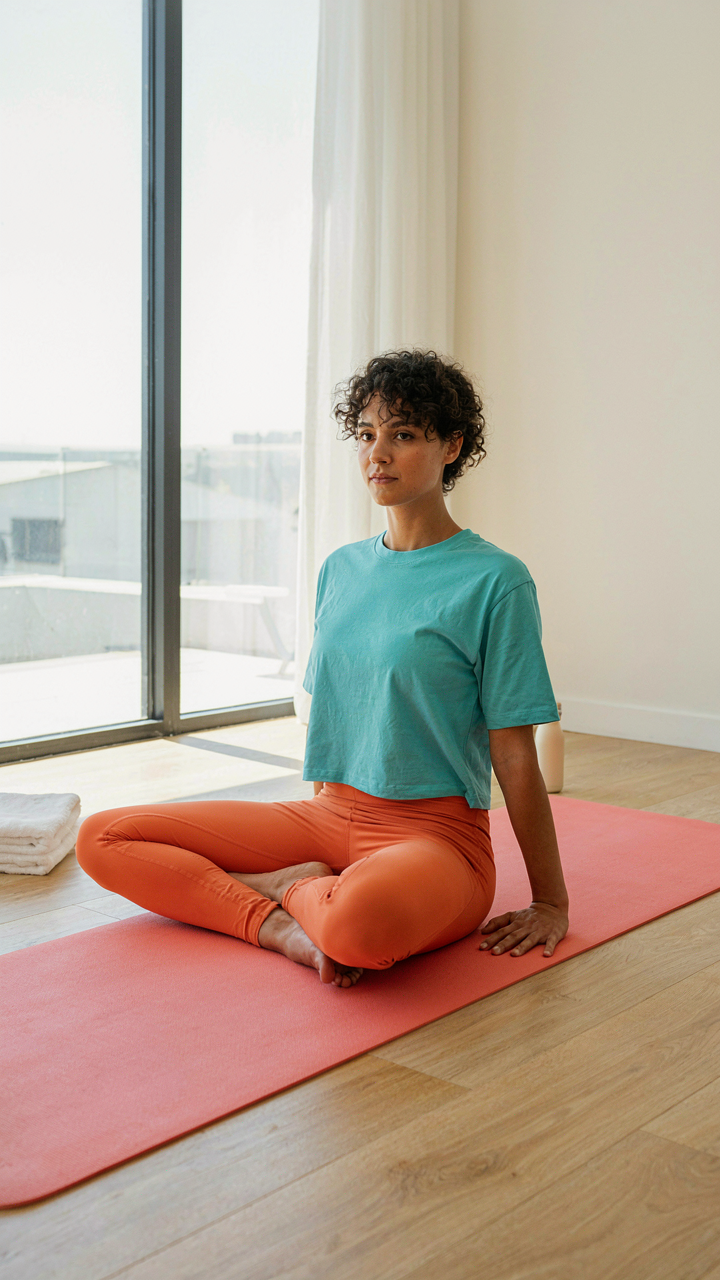
Build The Arc, Not The Moment
You want these photos to feel important because you want to feel important showing them. The real mechanism is this: a single pose tells the viewer nothing about effort or transformation. Narrative photography borrows from film editing—each shot becomes a frame in a sequence that compounds meaning. In pilates, this means shooting the setup, the tension point, and the exit as three separate images, not one hero shot. The story emerges only when someone sees the progression and understands what the body had to do.
Most pilates photoshoots capture static positions. That’s incomplete. You need the before-state where the client is mentally preparing, the mid-rep where the load is maximum and visible in the face or tremor, and the recovery where control dominates. This three-beat structure mirrors how your clients actually experience the work. The camera documents the journey through their nervous system, not just the shape their body made. Shoot tethered to a monitor so you catch the exact frame where effort becomes visible.
Light For Subtext, Not Just Illumination
Cinematic lighting does one job: it communicates context without narration. Sidelighting from a single source creates shadows that read as depth and effort. Flat, even lighting erases dimension and makes pilates look like stretching. You need directional light to show muscle definition, spinal alignment, and the spatial relationship between the client and the apparatus. The light itself becomes part of the story’s language.
Position your key light at forty-five degrees, slightly above eye level, and leave the shadow side mostly dark. This mimics how light reveals form in real space. A hard light source reads as intensity. Soft light reads as accessibility. Choose based on the mood you want the image to communicate about pilates work. Then compose so the client’s shadow falls across the apparatus—the apparatus becomes part of their silhouette, suggesting they’re integrated with the tool, not just using it.
The Visual Cadence Method: Strategic Pilates Poses For Impact

How Eyes Actually Move Through Your Frame
You want to know which poses photograph best because you’re afraid your content looks amateurish compared to the studios with actual production budgets. Here’s the mechanism: human vision operates like a Z-pattern or F-pattern depending on cultural reading direction. Your eye doesn’t scan randomly. It enters the frame at the top left, moves right, drops diagonally, then sweeps left. In pilates photography, this means the most compelling part of the pose—usually the extension or tension point—must land where the eye naturally stops, not where you think it looks cool.
The reformer itself becomes a compositional tool, not just equipment. A client in full extension on the carriage naturally creates that diagonal sweep the eye craves. Place the head or the point of maximum stretch in the lower right quadrant of your frame. The body becomes a line that guides vision through the shot before the viewer consciously realizes they’re being guided. This isn’t artistic theory. It’s neurology. Test it by shooting the same pose three ways: center-focused, left-aligned, and positioned to follow the Z-path. The Z-path version holds attention longest.
Negative Space As Visual Tension, Not Emptiness
Most pilates studios fill every inch of the frame because they think empty space looks unfinished. It’s the opposite. Negative space is pressure. In design language borrowed from gestalt psychology, negative space creates visual weight through absence—the eye fills the gap with anticipation. A client doing a side-lying leg lift with 70 percent of the frame left bare isn’t a wasted shot. That emptiness makes the working leg the only place tension can live.
The mechanics work like this: position your subject so one limb extends toward the empty space rather than away from it. The eye reads this as potential energy. The pose becomes active rather than static. Shoot a reformer setup where the client occupies the left third and the carriage extends into open space on the right. That void isn’t negative. It’s directional force. The pose gains authority the moment you remove what doesn’t matter and let the working muscles own the frame completely.
Activewear Photoshoot Deconstructed: Beyond The Product Shot

Fabric Behavior Under Load
You want the shot to prove your gear works—that’s the real reason you’re reading this. But most activewear photography fails because it treats fabric like a static object instead of a system that changes shape under tension. Think of fabric behavior through the lens of physics: drape is simply how material responds to force. When a pilates instructor moves, fabric either fights the body or cooperates with it. The camera must capture that cooperation in real time.
High-stretch blends reveal this best. Nylon-spandex combinations (typically 85-15 or 88-12 ratios) show compression without bunching. Shoot during actual movement—lunges, rotation, planks—not posed holds. The fabric should appear flush against skin, not baggy or transparent under tension. Position lighting to show seam placement and how the weave pattern responds to load. This isn’t aesthetic. It’s forensic proof of engineering.
Movement Under Pressure
The tired advice says “show the product in action.” That’s incomplete. Real activewear photoshoots document failure points—where fabric tears, rolls, or separates from the body during maximum exertion. This is stress testing on camera, not marketing theater. Pilates generates repetitive micro-stress: constant micro-adjustments, sustained tension in the core, friction at the waistband during transitions between exercises.
Shoot reformer work specifically. The machine’s metal frame creates visual contrast against fabric. Capture the moment fabric experiences maximum tension: pulling straps, holding springs, bearing weight on the carriage. Use fast shutter speed to freeze these moments crisp. The seams should hold flush. The waistband shouldn’t roll. The leg opening shouldn’t ride up. Document three complete reformer circuits before you have one usable frame. Film durability the way engineers test it: under load, repeatedly, until something fails or it doesn’t.
Pilates Photos With Personality: Injecting Your Brand’s Voice

Instructor As Visual Archetype
You want people to remember you instead of the ten other pilates instructors flooding their feed, and that requires you to stop blending in. The mechanism is archetype recognition—borrowed from psychology and branding, where a visual archetype functions like a psychological shortcut your audience’s brain recognizes instantly. Your instructor persona in photos must be consistent enough to become a symbol, not just a person doing exercises.
Most instructors photograph themselves as generic fitness professionals. Wrong move. Define whether you’re the precision-obsessed technician, the intuitive movement philosopher, the no-nonsense drill sergeant, or the encouraging mentor. This isn’t about personality type—it’s about visual consistency. Your clothing, setting, posture, and framing must telegraph one clear role every single time. When your audience sees a pilates photo without your name, they should think of you, not pilates generally.
Visual Metaphors For Brand Values
Using visual metaphor to represent brand values is borrowed from design semiotics—the study of signs and meaning. A metaphor in your pilates photoshoot translates an abstract value into something concrete the viewer’s brain processes faster than words. If your brand value is “controlled strength,” the metaphor isn’t motivational chaos—it’s precision, stillness, and tension held deliberately.
Don’t load photos with symbolic clutter hoping meaning sticks. One clear visual metaphor per shoot works. Minimal studio background represents clarity of focus. Sharp lighting angles represent precision. A reformer positioned to show the mechanism of resistance represents transparency in method. Your photos should answer this without captions: what does this brand actually believe about how bodies change? The answer lives in what the photo shows, not what the caption claims.
Monochromatic Mastery: Elevating Aesthetic Pilates Pictures
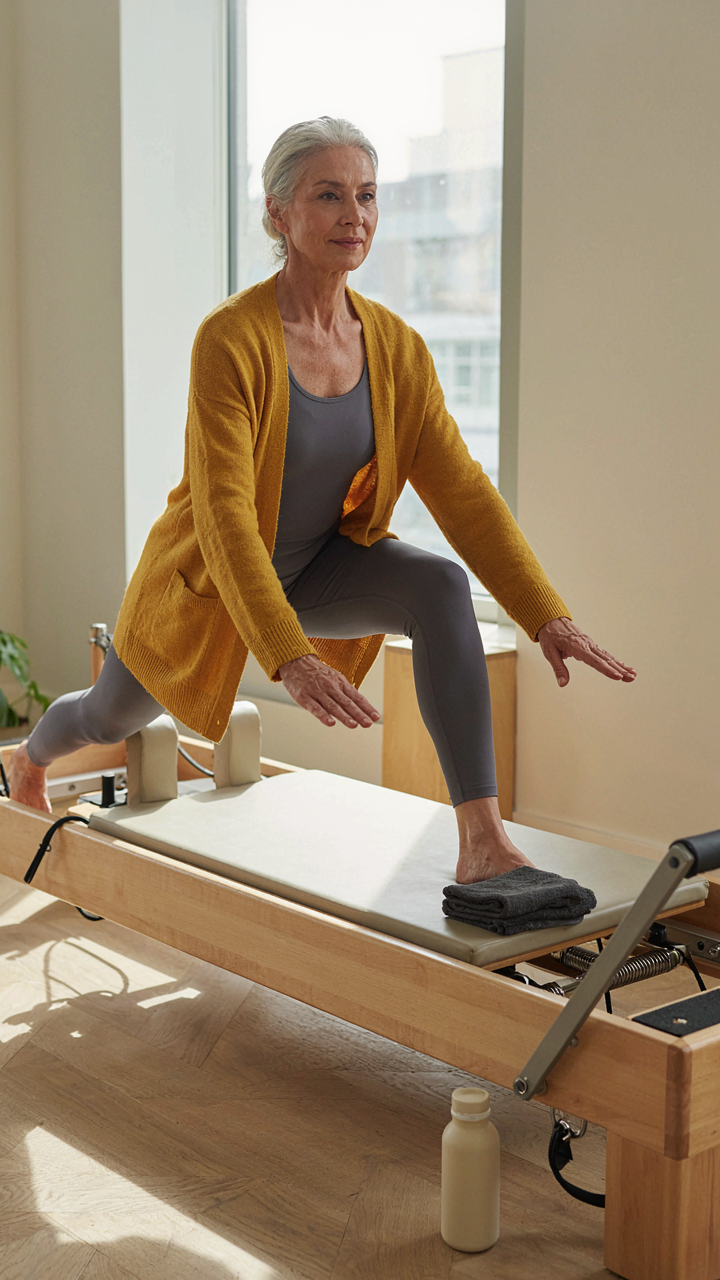
When Color Disappears, Attention Stays
You want monochromatic shoots because you think limitation makes you look refined. It does. But the real mechanism is that limited color palettes remove cognitive load from the viewer’s brain. When you strip away competing hues, the eye locks onto form, posture, and the actual work happening in the body. This is why high-end luxury brands abandon color. It forces focus.
A single color family creates visual hierarchy without trying. Your client’s body becomes the subject instead of fighting against a busy background. The viewer processes the image faster and retains it longer because their brain isn’t parsing multiple color decisions. Neutrals, single-tone environments, or coordinated apparel all funnel attention to the one thing that matters: demonstrating strength and control through movement.
Sculpting With Tone, Not Color
Light and shadow operate like contrast ratios in design. You’re using the physics principle of value separation to carve dimension into a flat image. A monochromatic pilates photoshoot demands aggressive lighting because you’ve eliminated color as a depth tool. This means hard directional light becomes non-negotiable.
Side lighting creates visible muscle definition. Backlighting separates the body from the background. Underlit shadows emphasize the concave spaces created by core engagement. These aren’t decorative choices. They’re structural.
- Side-Angle Lighting: Position key light at 45 degrees to the client’s body. This reveals muscle tone and creates shadow valleys that read as depth and tension on a monochromatic background.
- Backlighting For Separation: Place a rim light behind the subject to create a glowing edge. This pulls the body forward against neutral backgrounds without relying on color contrast.
- Shadow As Negative Space: Use controlled shadows to define the waistline, ribcage, and hip flexors. Dark tones become as important as light tones in creating visual interest.
- Reflected Fill Light: Bounce light back into shadow areas with white reflectors to maintain tonal range without flattening the image. This prevents blown-out highlights and crushed shadows.
- Three-Point Lighting Adaptation: Key, fill, and back light work together in monochromatic work to create separation and dimension that color alone cannot provide.
The mechanical step: meter your key light source first, then position your fill reflector to lift shadows by no more than two stops. This maintains contrast while preserving muscle definition visibility. Shoot in RAW format to preserve tonal gradation during post-processing. This tonal precision is what separates a monochromatic pilates photoshoot from looking flat.
Post Production Power Plays: Enhancing Pilates Studio Photography

Color Grading Without The Ego Trip
You want post-production to make you look like you know what you’re doing. Here’s the mechanism: your brain reads color temperature as emotional truth before it reads anything else. Warm tones signal safety and competence. Cool tones signal control and precision. In pilates photography, you’re not adding drama—you’re amplifying what’s already there.
The mistake most people make is crushing contrast and oversaturating skin tones. That’s not enhancement, that’s falsification. Instead, lift blacks slightly to preserve muscle definition, push cyan into shadows for depth, and desaturate one color channel while leaving flesh tones alone. This keeps the image credible while making the body read clearer. Consistency across your entire shoot matters more than individual perfection.
Composition Refinement Through Cropping
Strategic cropping isn’t about hiding mistakes—it’s about eliminating visual noise that competes for attention. Your eye follows lines and contrast first. Crop tight enough that the viewer can’t escape the core action: the spine extension, the core engagement, the limb alignment. Loose framing dilutes impact.
Rule of thirds feels abstract until you test it. In pilates, position your subject one-third from the edge, then crop the remaining two-thirds to negative space or equipment. This creates visual weight. The reformer bed or mat becomes a leading line that directs the eye toward the body position you’re trying to showcase. Apply this consistently and your feed becomes recognizable before text ever matters.
The Real Obstacle Isn’t Your Camera, It’s Your Fear Of Standing Out

Every pilates instructor scrolls past stunning photoshoots and thinks they need better equipment. Wrong. They need permission to look different. Your competitors play it safe with generic studio shots. You win by going weird first. Stop asking if your idea is “professional enough” and start asking if it’s memorable enough. Pick one concept that makes you uncomfortable today, book it, and shoot it this week. The market doesn’t reward perfection. It rewards the person brave enough to actually show up differently.