

The Persona Pre Selection Protocol: Why Your Mindset Dresses You First
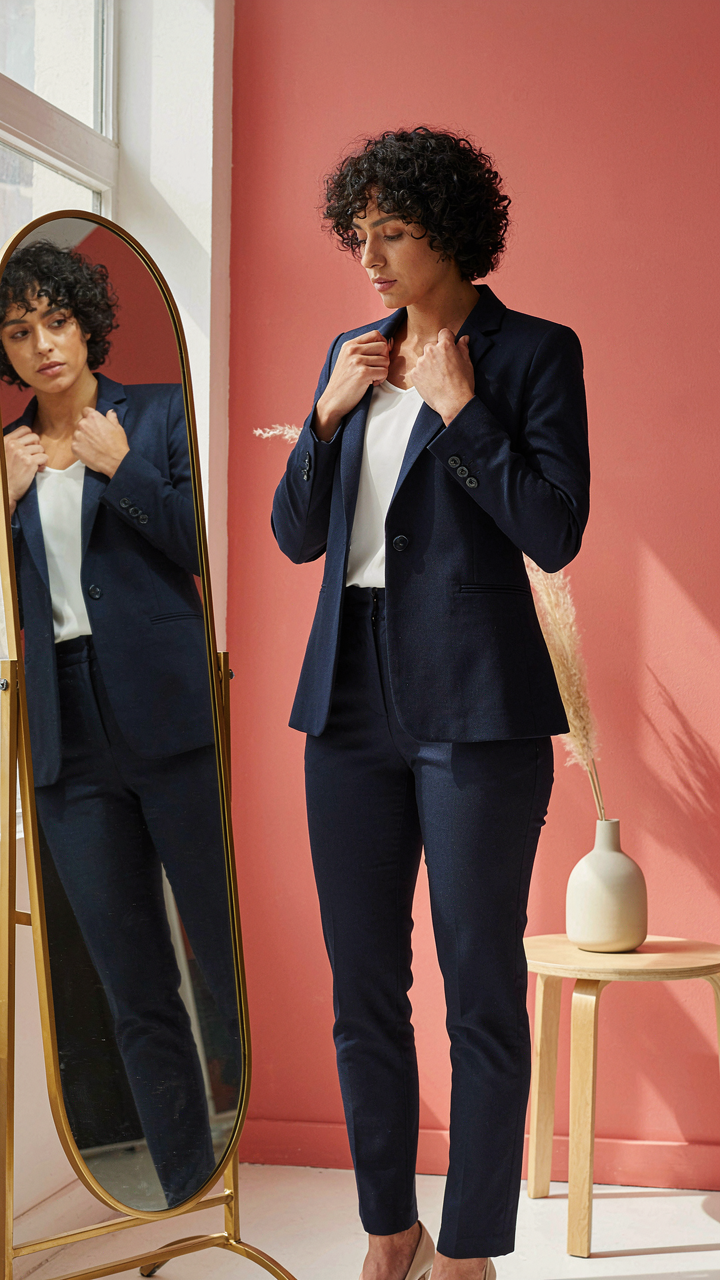
Decide What You Want People To Feel
You’re here because you think the outfit matters. It doesn’t. The outfit is downstream. What actually moves the needle is the emotional response you’re engineering before you ever step in front of the camera. This is borrowed from theater: casting directors call it “emotional temperature.” You need to establish yours first, then build the visual language that transmits it. The camera picks up what you decided to radiate, not what you wore.
Most advice tells you to “find your style” or “pick colors that flatter you.” That’s incomplete. You need to reverse engineer the feeling you want the image to produce in the viewer, then design your outfit to be the physical manifestation of that emotional state. Confidence reads different than approachability. Mystery reads different than warmth. The outfit is just the vehicle. Your job is to define the destination emotion.
Translate Feeling Into Visual Markers

Once you know the emotional impact you want, you anchor it to specific visual properties. If you want to read as trustworthy and composed, you need garments with clean lines, intentional fit, and neutral or muted color palettes. If you want to read as creative and energetic, you introduce asymmetry, texture contrast, or unexpected color combinations. These aren’t subjective choices. They’re based on how the visual cortex processes information. Sharp edges and symmetry signal control. Soft lines and organic shapes signal ease. Hard contrast signals intentionality. Minimal contrast signals subtlety.
The outfit works because every element reinforces the same emotional frequency. A blazer communicates authority only if it fits sharply and you pair it with groomed hair and intentional jewelry. The same blazer reads sloppy if paired with worn denim and no accessories. You’re not picking clothes. You’re stacking visual signals that either converge on one feeling or cancel each other out. Before you choose a single piece, know which signals you’re sending and why.

Deconstructing The Photograph Well Myth: It’s Not The Fabric, It’s The Form

Lighting’s Unforgiving Truth On Texture
You want to believe the outfit itself matters because that feels controllable. The real mechanism is optical: light interacts differently with surface density. Physics governs what the camera sees before any aesthetic choice does. Rough textures scatter light in unpredictable directions, creating visual noise. Smooth surfaces reflect light uniformly, which the camera interprets as intentional and clean.
This is why expensive fabrics often photograph better than cheap ones. High thread count cotton, silk, and quality knits have molecular density that manages light reflection predictably. Cheap polyester and loose weaves diffuse light chaotically. The camera doesn’t care about price. It cares about how evenly the surface bounces photons back at the lens. Choose fabric weight and finish before choosing color or style.
Silhouette Over Embellishment Every Time
The common advice here is backwards: people believe details sell the outfit to a camera. Wrong. The camera compresses three dimensions into two. Embellishments compete with your actual body shape for visual real estate. They create static and distraction instead of definition. Silhouette does the opposite. Clean lines read instantly.
Defined silhouettes photograph because they register as intentional form rather than clutter. A fitted waist reads. A structured neckline reads. Defined shoulders read. Pockets, buttons, seams, and patterns only work if they reinforce the underlying shape, not interrupt it. Before selecting any piece, trace its outline with your eye. If the outline is unclear, the photograph will be unclear. Prioritize garment structure that broadcasts your body’s actual geometry to the lens.
The Unseen Layer: Undergarments As Structural Engineering
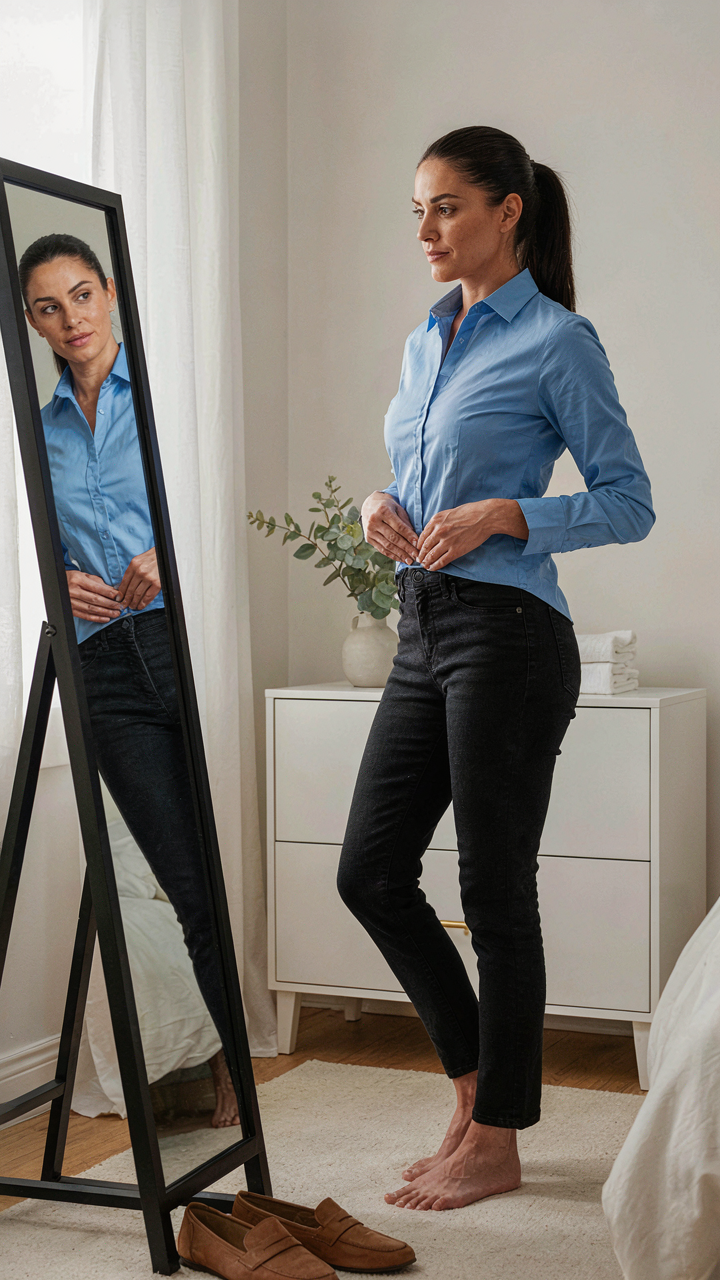
Foundation Garments Create Visual Proportion
You care about this because visible panty lines or fabric bunching destroy credibility in a frame, and you know the camera catches what your eye misses. The real mechanism is structural: undergarments function like load-bearing walls in architecture. They redistribute fabric weight and body volume to create clean silhouettes. Without this foundational layer, clothes drape unpredictably, collapsing into wrinkles or clinging to unintended contours. A fitted bra creates consistent chest placement. Shapewear smooths transitions between body segments. The camera sees geometry first, then the person inside it.
The common advice here is wrong. People say “wear what feels comfortable.” That’s incomplete. Comfort and structure are different problems. The right undergarment should be invisible on camera while creating a stable anchor point for the outer layer. A poorly fitted bra shifts during movement, changing the neckline position mid-shoot. Shapewear that’s too tight creates pressure marks visible through fabric. Test both in the exact pose and lighting you’ll use during the shoot. The goal is a rigid foundation that lets the outfit do its job without distraction.
Invisible Architecture Enables Confident Positioning
Structural confidence in photographs comes from knowing your body won’t shift mid-frame. In biomechanics, tension stabilizes movement. Applied to photoshoots: proper undergarment tension allows you to hold poses longer without micro-adjustments that break frame consistency. When your undergarment drifts or bunches, you subconsciously compensate by shifting weight, tilting shoulders, or tensing your face. The camera captures this tension as stiffness. A well-fitted foundation removes that variable entirely.
The mechanism is straightforward: eliminate one variable, gain one advantage. You’re not thinking about fabric position, so your attention goes to actual posture, eye direction, and expression. Photographers call this “settling into the frame.” Your body recognizes it has structural support and stops fighting for stability. Before each shoot, wear the exact undergarment and outfit combination in your actual shoot poses for fifteen minutes. This primes your nervous system to hold that position without conscious effort during the session itself.
Color Theory In Action: Manipulating Perception, Not Chasing Trends

How Dominant Colors Shape Viewer Hierarchy
You care about this because you think the right color makes you look good. That’s backward. Color works like psychology, not decoration. Your outfit’s dominant hue controls what the viewer’s eye processes first, second, and third. In psychology, this is called the “primacy effect”—early information anchors everything that follows. Pick your dominant color and you’ve already written the narrative the camera will tell about you before anyone reads your face.
Dominant colors set the frame. Warm tones (rust, terracotta, deep gold) read as grounded and intentional. Cool tones (navy, slate, charcoal) read as controlled. Neutral dominants (cream, black, gray) disappear and let secondary elements work. The camera doesn’t see color the way your eye does. What looks balanced in person flattens in photos. Test your dominant on video first. One color should occupy 60 to 70 percent of your outfit’s visible area. Everything else is subordinate.
Contrast Cuts Through Visual Noise
The common advice says “complement your skin tone.” Wrong. That’s too soft. Real contrast works through opposition, not harmony. In design, contrast is the deliberate clash that forces attention. High contrast outfits photograph with impact because the camera resolves them cleanly. Low contrast outfits fade into a single tone. A cream sweater over cream pants reads as one blob. Cream over charcoal reads as two distinct shapes. The second option photographs.
Contrast lives on a spectrum. Maximum contrast: black and white, or deep jewel tones against ivory. Medium contrast: navy and cream, olive and sand, burgundy and beige. Minimum contrast: monochrome or near-monochrome. Choose based on what you need the photo to communicate. Interview or professional work demands maximum or medium contrast for clarity. Creative or lifestyle content can use lower contrast if the secondary elements (jewelry, texture, pose) carry the frame. Your goal: make the camera’s job easier by giving it visual separation to lock onto.
The Wardrobe’s Natural Selection: Evolve Your Look From Within. Model Images Fashion.
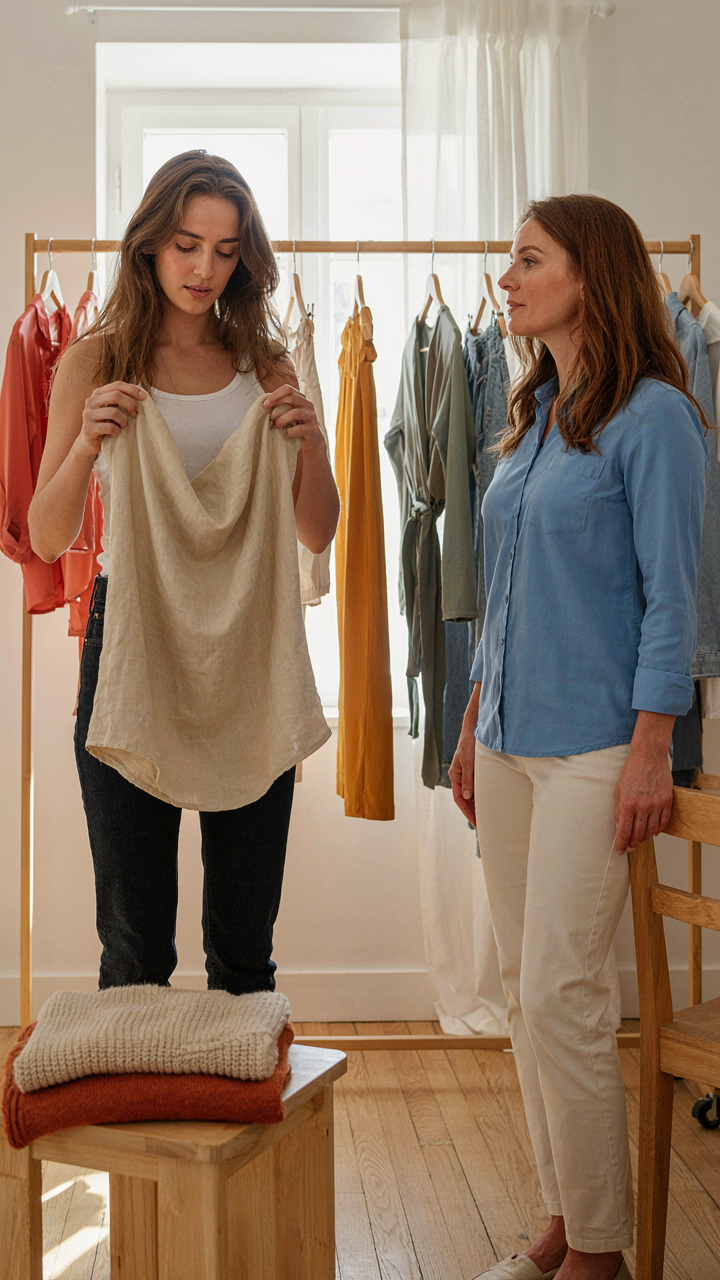
Adapt To Your Environment First
You want to know which outfit will make you look good in photos because you’re afraid the wrong choice will waste the shoot and expose you as someone who doesn’t know what works. The mechanism is environmental fit. In evolutionary biology, organisms survive by matching their habitat. Your outfit survives the camera by matching the shoot’s context, not by chasing generic “flattering” rules. The background, lighting, and shoot purpose dictate what fabric, color, and silhouette actually register on film.
Most advice skips this entirely and jumps straight to “wear solid colors” or “avoid patterns.” That’s incomplete. A solid color works in a studio with controlled light. The same solid absorbs into shadow outdoors at golden hour. A pattern that fails indoors can anchor a composition outside. Your wardrobe choice is an adaptation problem first, an aesthetics problem second.
Authenticity Beats Aspiration Every Time
Stop dressing for the version of yourself you think should photograph well. The camera detects tension in how you hold borrowed aesthetics. Real authenticity reads as confidence on film because your body isn’t fighting the outfit’s intent. Survival of the fittest in photoshoot wardrobing means the looks that align with your actual movement patterns, color ranges, and lifestyle edge out the rest. When you wear something that contradicts how you naturally exist, the lens catches that contradiction.
Pull outfits from your existing rotation first. Notice which pieces you return to, which materials feel right against your skin, which colors you choose without thinking. These aren’t accidents. These are the aesthetic truths your body already knows. Build the shoot wardrobe by intensifying what already works, not by importing foreign aesthetics. Before adding anything new to a shoot plan, wear it for a full day and document how it moves with you.
Texture As A Narrative Device: Beyond Smooth And Shiny
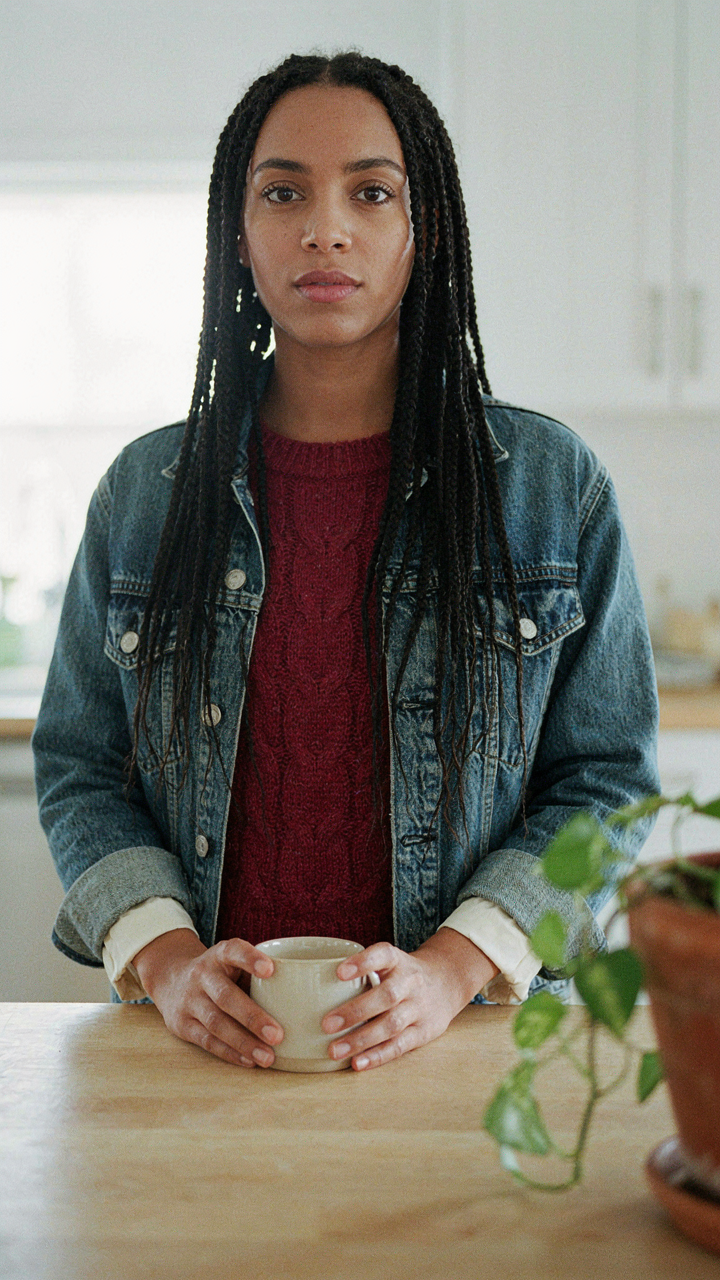
How Texture Tells Before Words Do
You want texture to make you look intentional instead of accidental. The mechanism is simple: the camera reads surface quality as information about status, effort, and character before it reads anything else. In design, we call this “haptic communication”—the idea that surfaces speak. Rough linen reads as honest. Silk reads as control. Worn leather reads as earned. The photographer doesn’t need to explain your outfit. The texture does.
Most advice tells you to avoid texture. That’s incomplete. The real rule is that texture must be deliberate or invisible. Random textures create noise. Chosen textures create narrative. A woman in a raw denim jacket over a smooth silk blouse isn’t mixing textures randomly—she’s contrasting resilience with refinement. The camera sees strategy.
Strategic Surface Choices For The Lens
Texture hits different on camera than it does in person. What feels subtle to your hand reads bold in the frame. Start by choosing one dominant surface quality, then layer one complementary contrast if the outfit demands depth.
- Structured Cotton Blends: Photographs with clean definition and holds shape under lighting. Works for professional and editorial looks without reading stiff.
- Raw or Selvedge Denim: Captures texture without looking busy. Reads as intentional wear and grounds outfits with visual weight that translates to screen.
- Linen: Creates soft shadows through weave texture. Adds dimension without competing for attention. Reads casual but considered.
- Knit Fabrics (Wool or Quality Cotton): Photographs with subtle depth. Drapes naturally and maintains silhouette under camera angles.
- Leather or Suede: Commands presence through surface sheen or matte finish. Small leather details (belt, shoes) add credibility without overwhelming the frame.
The mechanic: choose your base texture first, then add one accent that contrasts it. If your base is smooth, add one rough layer. If your base is matte, add one refined surface. The camera needs to see decision-making, not collection.
Accessorizing With Intent: The Strategic Dissent From Blandness

Every Piece Tells You Something
You want accessories to fix a weak outfit and make you look expensive without saying it out loud. Here’s the mechanism: accessories work in photography because they compress information. The camera flattens dimension. A strategically placed necklace, belt, or watch creates a visual anchor that the lens reads as intentionality. Without it, you’re just a person in clothes. With it, you’re a person who made a choice. The distinction matters more in photos than in real life because the image has no context beyond what’s visible in the frame.
Most advice tells you to “add what feels right” or “let accessories express yourself.” Wrong. In photoshoots, accessories solve a specific problem: they break up large flat areas of fabric and create focal points the camera needs. A simple black dress is invisible in film. That same dress with a structured belt, layered necklaces, or statement earrings becomes graphically interesting. Your accessories aren’t decoration. They’re load-bearing visual elements that prevent the camera from reading your outfit as incomplete or lazy.
When Adding More Creates Less
The paradox is borrowed from signal processing: noise and signal are inversely related on film. Every accessory competes for the camera’s attention. Add too many and you’ve created visual chaos. Add too few and you’ve created a void. The distinction isn’t about quantity. It’s about contrast and placement. One statement piece positioned near your face or torso works harder than five understated pieces scattered across your body.
The real error is thinking accessories should be subtle because subtlety feels sophisticated. Subtlety is invisible in photos. A thin, delicate bracelet disappears into skin tone and fabric texture. A bold cuff or structured watch becomes compositional architecture. Test this: position your accessories to create geometric relationships with your body’s lines, not to complement your outfit’s color palette. In film, geometry reads before color. Place a belt at your natural waist to create horizontal definition. Layer a necklace to draw the eye downward and create depth. These are mechanical choices, not aesthetic ones.
Movement And Flow: The Unsung Hero Of Dynamic Shots. Full Body Fashion Pose.
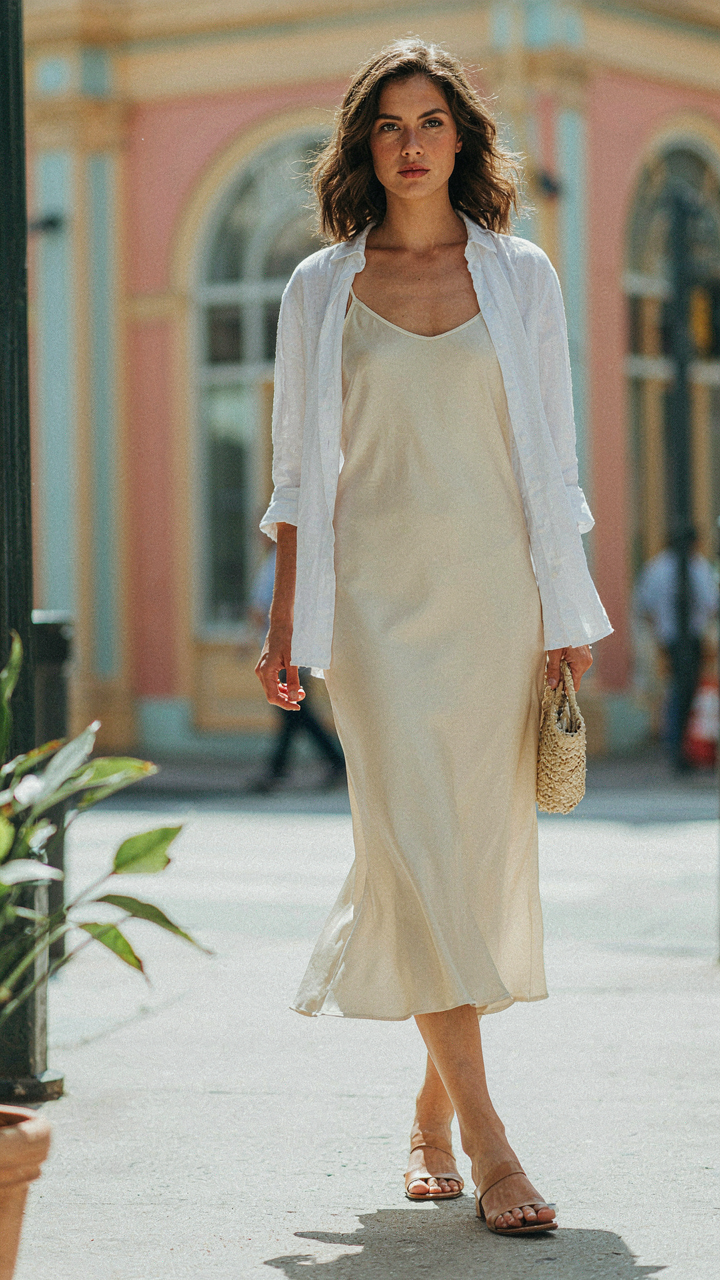
Fabrics That Move With Purpose, Not Just Drape
You want to look effortless in photos because you’re terrified of looking stiff or trying too hard. The mechanism is physics. Fabric weight and fiber type determine how an object behaves in motion, and your outfit is no exception. Heavy cotton or dense knits lock your silhouette into one shape. They don’t respond to your body’s actual movement, so you freeze mid-pose. Lightweight natural fibers like linen, silk, and cotton blends move independent of your frame, creating separation between fabric and body that reads as dynamism in still frames.
The common advice says “just wear flowy stuff.” That’s incomplete. Flow without structure looks formless. You need tension between movement and weight. A silk slip dress alone collapses. Add a structured linen overshirt, and the contrast creates visual interest. The dress moves around your legs while the shirt holds its shape at the shoulders. This interplay is what photographers actually capture. Test this in your own mirror: wear one flowy piece solo, then layer it with something structured. The second version photographs sharper because the eye has something to track besides shapelessness.
Designing For The In Between Moments
Most women think about posed moments, then panic when the photographer says “just walk naturally.” Posing is static. Movement is the story. The camera fires multiple frames per second, so the actual shot often lands during transition, not the moment you intended. Your outfit must work in motion, not just planted positions. This means avoiding pieces that bunch, ride up, or require constant adjustment during movement. Wide-leg trousers fold unpredictably when you walk. Fitted pants maintain their line. A crop top shifts during arm movement. A tucked shirt stays anchored.
Shooting in-between is deliberate strategy, not accident. A photographer shoots bursts specifically to capture the frame where your body is in transition, because that’s where genuine motion reads as confidence rather than self-consciousness. Your outfit choice determines whether that transition frame works or betrays you. Wear something that stays where you put it: high-waisted pieces that don’t slip, seams that align with your natural angles, and lengths that don’t change depending on your stride. The protocol is simple: try every piece in motion before the shoot. Walk, reach, sit, bend. If it requires repositioning, eliminate it.
The Anti Trend Imperative: Cultivating Timelessness Over Fleeting Style. Actress Outfit.

Build Your Wardrobe Like Capital, Not Inventory
You want outfits that work in photos because you’re afraid of looking dated in six months. Here’s the mechanism: fast fashion operates on velocity, not durability. You buy trend-dependent pieces that lose credibility the moment algorithm favor shifts. The actress outfit plays a different game. She invests in garments constructed from materials that photograph consistently and cut that transcends seasonal noise. Cotton, linen, wool, silk, and quality denim hold their visual weight across years and contexts. Generic trend pieces—neon accents, cutout patterns tied to a specific moment—create the opposite effect. They date footage instantly because they were never designed to survive beyond their marketing cycle.
Real investment means buying pieces you can photograph from multiple angles across different seasons without them appearing contextually misplaced. A well-fitted blazer in navy or charcoal works in spring, summer, fall, and winter depending on what you layer underneath. A crisp white button-up maintains its value whether worn oversized or tailored, in 2024 or 2030. The actress outfit prioritizes garment longevity over collection size. You need fewer pieces that photograph well repeatedly than many pieces that photograph well once.
Define Your Constraints, Not Your Mood
The common advice here is wrong: stop trying to find your “personal style.” Personal style is marketing language for permission to chase whatever feels good today. What you actually need is a constraint system. Constraints force coherence. Pick three to five colors that work with your skin tone, hair color, and the lighting environments where you shoot most often. Pick two or three silhouettes that flatter your frame. Pick a texture range: smooth or textured, minimal or patterned. Those boundaries are your real brand.
Actresses don’t reinvent themselves for every role. They develop a recognizable aesthetic and then work variations within it. This works because viewers register consistency as authenticity and authority. When your outfit choices follow a visible system rather than mood swings, photos accumulate visual weight. The actress outfit achieves this through repetition of principle, not repetition of identical pieces. You can photograph 50 outfits that look distinct but belong to the same visual language because they operate from the same constraint set. Document your color palette, your silhouettes, your material preferences. Then build every shoot outfit inside those boundaries.
The Real Obstacle Isn’t The Outfit; It’s Your Fear Of Authentic Self-expression In A Filtered World

You already know what to wear. The real problem is you’re dressing for an imaginary audience instead of yourself. Every outfit choice you make in front of a camera reveals whether you’re performing or being. Pick one outfit today that makes you feel dangerous, not safe. Wear it. Shoot it. The camera doesn’t lie about intention, and neither should you.