

The Invisibility Cloak Fallacy: Why Hiding Fails

The Myths That Kill Your Wardrobe
You want to disappear into your clothes because you think invisibility equals acceptance. It doesn’t. The fashion industry sold plus size consumers a lie: that strategic dark colors and loose layers would make their bodies acceptable to observers. This mechanism works in reverse. Concealment signals shame, and shame signals that the body needs apologizing for. That’s the actual message being sent.
The common advice is broken. Dark colors don’t slim. Horizontal stripes don’t balance. Oversized silhouettes don’t flatter. These rules assume a fixed body and a fixed viewer. They ignore the basic principle that proportion is relational, not absolute. A size 18 in an oversized blazer creates visual noise, not elegance. The blazer competes with the body instead of working with it. This is why generic “flattering” guidance fails across plus size capsule wardrobes.
Scale Matching Over Subtraction

Borrow from architecture: plus size dressing requires load-bearing design, not visual weight reduction. A piece that fits your actual proportions carries structural integrity. One that’s too loose creates mass without purpose. Your body has volume. Clothing that acknowledges volume through proper scale and intentional fit reads as confident, not conceding. The inverse is also true: oversized pieces on a plus size frame create visual ambiguity and make the body appear formless instead of shaped.
Proportional fit means garments that respect your measurements at the shoulder, bust, and hip without excess fabric pooling at the sides or back. A well-fitted dress in a solid color will always outperform a loose dress in a “slimming” shade. Your capsule wardrobe succeeds when each piece sits on your body with intention, not when it attempts to camouflage. Build around pieces that touch your actual frame and define your actual shape.

The Authority Archetype: Dressing For Impact

Find Your Power Aesthetic
You want permission to take up space without apologizing for your size. That’s the real question here. The mechanism is simple: authority isn’t about looking smaller or blending in. It’s about occupying your frame with intention. In architecture, there’s a concept called “mass and void”—how a structure uses its physical presence to command a space. Your wardrobe works the same way. Larger bodies need larger visual statements, not smaller ones. A plus size capsule built on authority uses proportion, not concealment.
Most advice tells plus size women to hide. Wear dark colors. Vertical stripes. Anything that makes you “disappear.” This is backwards. Your power aesthetic instead amplifies what exists. Start by identifying one non-negotiable visual element that makes you feel capable: structured shoulders, bold color, clean lines, or statement texture. This becomes your anchor. Everything in your capsule orbits around it. You’re not building a wardrobe that makes you acceptable. You’re building one that makes you unavoidable.
Pieces That Establish Dominance
Structured blazers in plus sizes function as the uniform of authority. Not because blazers are inherently powerful, but because they’re specifically engineered in tailored silhouettes for larger bodies, creating defined shoulders and a coherent frame. A well-cut blazer in a plus size wardrobe doesn’t minimize—it organizes. Pair it with high-waisted trousers or a midi skirt in a complementary solid. The visual stack communicates competence before you speak.
Monochromatic dressing dominates executive wardrobes for one reason: it eliminates visual noise and creates an unbroken vertical line from shoulder to hem. For plus size capsules, this principle matters more, not less. A single-color outfit in black, navy, or camel creates visual cohesion across a larger surface area. Add one quality statement piece—a structured bag, intentional jewelry, or a textured fabric like ribbed knit or wool blend—and you’ve built an outfit that registers as deliberate rather than assembled.
The Strategic Silhouette Protocol
How Fabric Behaves On Your Frame
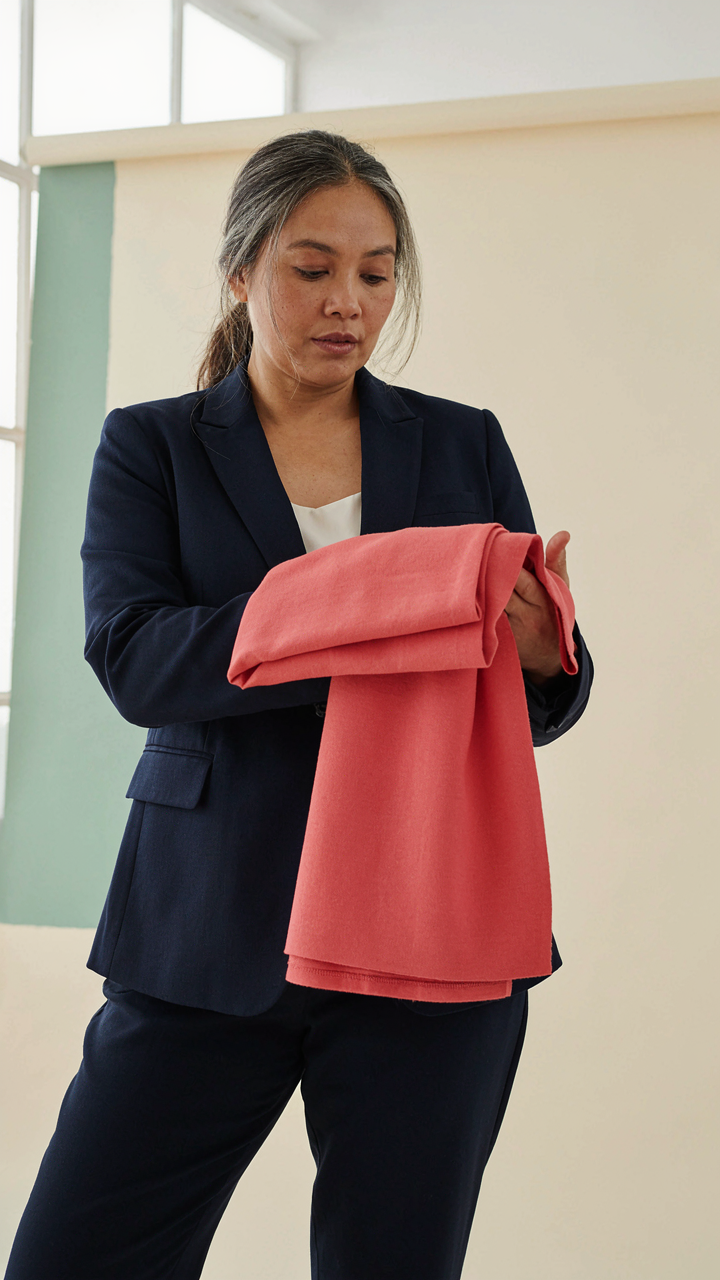
You want to look thinner. That’s the real reason you’re reading this, and that’s fine—but the mechanism isn’t magic, it’s physics. Fabric drape works on tensile strength: the material’s resistance to stress. Cotton blends hold shape. Loose weaves collapse. Dense knits compress volume. The difference between a fabric that flatters and one that adds ten pounds is measurable material property, not opinion.
Structure matters more than weight. A ponte knit with high elastane maintains tension against your body without clinging. Rayon crepe skims and moves without pooling at problem areas. Rigid fabrics like cotton sateen hold architectural form. Cheap synthetics wrinkle into your curves. The strategic move: test fabric performance by draping it over your forearm first—if it slides or bunches unnaturally there, it will perform worse on larger surfaces.
Layering As Load Bearing Architecture
Common advice says layer to hide. Wrong. Layering in plus size capsule design works like load-bearing walls in construction: you’re distributing visual weight across structured points, not concealing. Engineering calls this load distribution. Applied here: each layer carries visual weight differently based on placement and density.
A fitted base layer, structured overshirt, and open cardigan create three distinct visual planes. The eye processes each plane separately instead of reading one continuous mass. Monochromatic layering amplifies this effect—no horizontal color breaks to interrupt the vertical line. The protocol: base layer fitted, middle layer defined at waist or hip, outer layer open or curved. This sequence controls how observers track your silhouette.
Plus Size Capsule Wardrobe 2026: Beyond Trends

Investment Pieces That Outlast The Cycle
You want permission to spend more money on fewer items because it feels smarter than buying cheap. Here’s the mechanism: trends die because they’re designed to die. Fast fashion operates on planned obsolescence. Your job is to invert that logic by selecting pieces built on construction principles that don’t age out. A well-made blazer in a neutral tone doesn’t become unwearable because the silhouette shifts. The seams hold. The fabric doesn’t pill. The structure doesn’t collapse after thirty washes.
Real investment pieces carry forward because they solve a fundamental dressing problem, not a trend problem. A structured ponte pant works in 2026 the same way it worked in 2020 because it addresses fit and movement for a plus size body. The difference between an investment piece and a disposable one isn’t the price tag. It’s whether the garment was engineered to perform consistently or manufactured to fill a seasonal gap. When you buy investment pieces, you’re buying reliability, not status.
The Core That Makes Everything Else Work
A plus size capsule operates like a supply chain network from operations management: each piece either moves inventory forward or creates waste. Your core items are the nodes that connect everything else. Without them, you own separates. With them, you own a system that generates outfits. The core consists of four to six foundational pieces that accept other pieces without friction. These aren’t personality pieces. They’re infrastructure.
- Neutral ponte pants or trousers in two fits: One tailored, one relaxed. These anchor sixty percent of your outfit combinations and work across seasons when you layer correctly.
- Structured blazer in black or navy: A tailored blazer in a solid color compounds with almost everything. It transforms casual pieces into intentional looks without requiring trend alignment.
- White and black fitted tees or shells: These are filler pieces that let other items breathe. They don’t compete for visual attention and work under layers or as standalone bases.
- Neutral knit in medium weight: A crew neck sweater or cardigan in cream, grey, or camel creates warmth variety without pattern noise. It bridges seasons and works over or under other pieces.
- Denim in one versatile wash: Medium indigo denim works casual and semi-casual. Avoid trendy washes or cuts that lock you into a specific year’s silhouette.
- Minimal structured bag in leather or high-quality synthetic: One neutral bag that holds your daily essentials. It doesn’t need to change because it’s not a statement piece, it’s a system piece.
Once you assemble these core pieces, every additional item you add must multiply options, not replace them. A printed blouse works because it pairs with the neutral pants. A textured knit works because it layers under the blazer. Each addition should increase outfit combinations geometrically, not linearly. When you’re choosing a new piece, ask whether it works with at least four core items in your existing rotation. If it works with two, it’s not a capsule addition. It’s a solo purchase that fragments your wardrobe.
The Curvy Capsule Wardrobe: Fit As Foundation
Mastering Alterations For Custom Precision
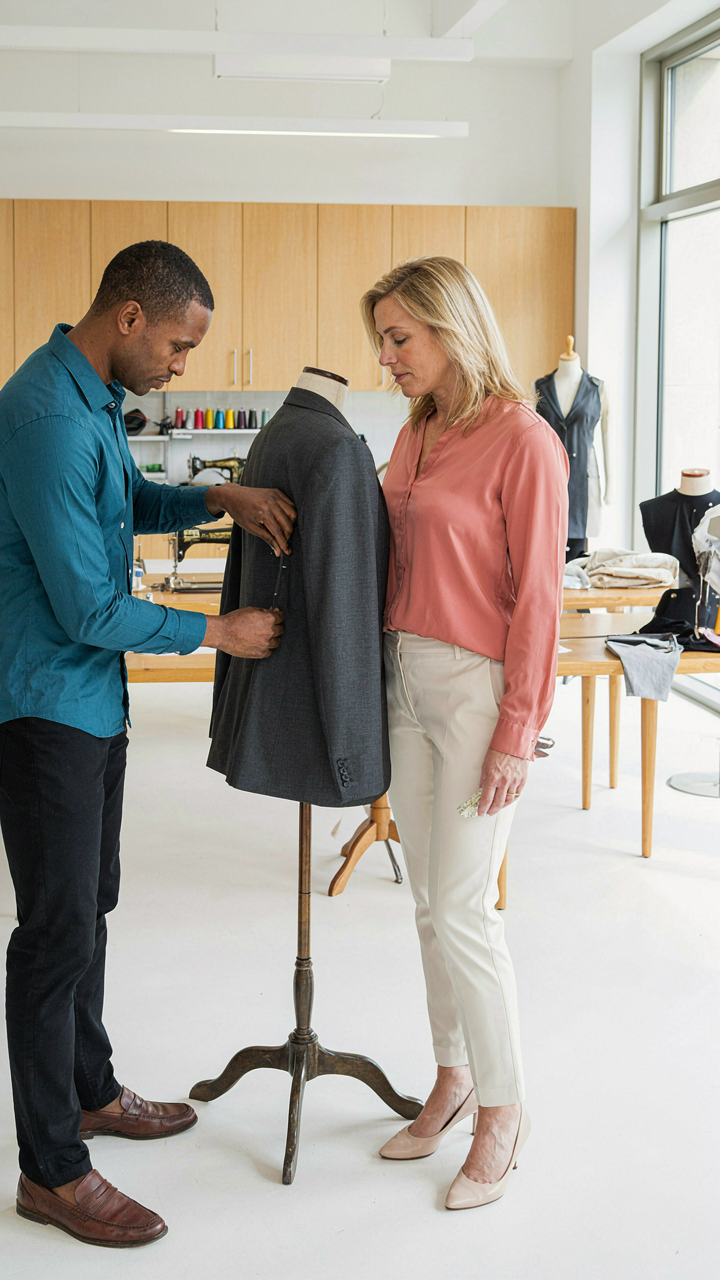
You want alterations to feel like a luxury you can’t afford. The real mechanism: fit is a supply problem, not a demand one. Most brands cut for a standardized body. Your body isn’t standard. Tailoring closes that gap with surgical precision. A tailor doesn’t guess. They measure, pin, and adjust until the garment matches your actual shape. This is the only way a capsule wardrobe scales across your life without constantly replacing pieces.
Start with the garments you already own that almost work. A tailor can take in side seams, adjust sleeve length, reshape armholes, and taper pant legs in ways that transform a mediocre fit into a piece that moves with you. Expect to spend 15 to 40 dollars per adjustment depending on complexity. A single well-fitted blazer worn 50 times over two years costs less per wear than a poorly fitting one worn twice. Get measurements taken once and keep a digital record. Reorder those same measurements with every new tailor you visit.
Why Ill Fitting Clothes Dilute Your Presence
Borrowed from physics: presence operates like signal-to-noise ratio. Ill-fitting clothes generate visual noise. Your body disappears behind fabric chaos. The observer’s eye lands on wrinkles, gaps, and bunching instead of your face, posture, and intent. This isn’t shallow. It’s neurological. The brain processes visual information in layers. When a garment fights your shape, it commands attention you never granted it.
A well-fitted piece does the opposite. It becomes invisible infrastructure. People see you, not your clothes. Fabric follows your line, moves with you, and stops demanding interpretation. Ill-fitting clothes make you work harder to be heard. They add friction to every interaction. Replace one poorly fitting staple with a tailored version and watch how differently people listen when you speak. The mechanism is direct: reduce visual noise, increase perceived authority.
Plus Size Office Capsule Wardrobe: Executive Presence

Power Pieces That Signal Competence
You want people to take you seriously before you open your mouth. That’s not vanity—it’s how perception works in hierarchical spaces. In game theory terms, you’re establishing a credible signal: a visible commitment to the role that’s costly enough to be believable. Tailored blazers and structured trousers form the backbone here. The fit matters more than the fabric. A blazer that skims your torso without clinging or billowing communicates control. The shoulder seam should hit your actual shoulder bone. Arm length stops at your wrist bone when your arms hang naturally.
The second layer is structured dresses. A wrap dress or sheath silhouette in a heavyweight fabric works because the structure does the talking—not your body. Navy, black, charcoal, and deep jewel tones read as authoritative without announcement. Pair these with quality basics: white cotton shirts, neutral shells, minimal jewelry. Every piece should look intentional and well-maintained. Wrinkles and loose threads destroy authority faster than any cut can build it.
From Boardroom Formality To Grounded Authority
The mistake everyone makes is thinking casual authority requires dropping all the rules from formal authority. It doesn’t. It means applying the same precision to fewer items. A structured blazer over jeans works because both elements are deliberately chosen, not a compromise. The blazer stays. The trousers become well-fitted denim or ponte pants in neutral shades. The jewelry stays minimal. The grooming stays sharp.
The real mechanic is consistency within context. Wear the same silhouettes and color palette across both environments. This builds a visual identity people recognize and remember. When you shift from boardroom to casual, you’re not abandoning authority—you’re translating it. The structured pieces remain; the formality level adjusts through fabric weight and occasion-appropriate layering. This repetition creates a personal uniform that works across settings.
The Art Of Accessorizing: Amplifying Impact

Where You Draw The Eye First
You want accessories to do the work so your body doesn’t have to. That’s the real reason you’re reading this. The mechanism is visual hierarchy: accessories function like spotlights on a stage. You place them where you want attention to land. In a plus size capsule, this means one statement piece per outfit commands the focal point while everything else recedes. A bold necklace, a structured bag, a pair of shoes with presence. Not because accessories are decorative. Because they redirect the gaze entirely.
Most advice says “let your proportions decide.” That’s vague and unhelpful. Here’s what actually works: identify the single strongest accessory you own, then build the outfit around it being the story. A statement necklace means a simpler top. A sculptural bag means neutral shoes. A standout shoe means a quieter upper half. You’re not balancing or “complementing.” You’re placing one thing so deliberately that everything else becomes context. This eliminates decision fatigue and creates visual clarity in seconds.
Restraint Reads As Intentional
The common mistake is treating a capsule like it needs to prove itself through abundance. Too many textures, too many colors, too many pieces fighting at once. Clutter on a larger frame reads as noise, not personality. Strategic restraint is the opposite of boring. It signals control. One statement necklace with a t-shirt and jeans says you made a choice. Three necklaces competing says you’re unsure.
The rule is simple: one focal point, two supporting elements maximum, one neutral base. A structured handbag carries the weight of your outfit’s story. One belt can redefine proportions by creating a defined waist line. A scarf either grounds an outfit or adds depth depending on where you wear it. Everything else should fade into the backdrop. When you remove unnecessary pieces, the ones that remain gain power. This isn’t minimalism for its own sake. This is strategic visibility.
Plus Size Fall Capsule Wardrobe: Seasonal Mastery

Building Depth Without Bulk
You’re worried layering will make you look wider. That’s the fear stopping you from the one technique that actually creates visual proportion in fall. Borrow from architecture: load-bearing walls distribute weight by stacking materials with intention, not by adding more mass. Layering works the same way. Each piece carries visual load differently based on fabric weight, length, and color placement.
The mechanism is simple. A fitted base layer under a structured overshirt under a long cardigan creates vertical lines and breaks the body into segments. Each segment reads as separate, which interrupts horizontal width visually. The fabric matters: dense knits (merino, structured cotton blends) hold shape better than loose weaves. Loose weaves add volume without definition. Choose dense fabrics as your foundation layers, then use looser textures only in outer pieces where the weight sits away from your body.
Seasonal Color And Texture Strategy
Most advice tells you to wear “fall colors” like you’re following a paint swatch. Wrong. Fall textures matter more than colors because texture creates shadow and dimension where a flat print cannot. Corduroy, knit jacquard, and structured wool read differently on the body than smooth jersey or cotton blends. The texture breaks up visual mass by casting micro-shadows.
Pair two textures per outfit, maximum. A smooth wool blazer over a textured knit sweater. Structured corduroy trousers with a fine ribbed top. This is not about aesthetic preference. Textured pieces absorb light. Smooth pieces reflect it. Together they create visual separation between sections of your body. For color, restrict yourself to three per outfit: one dominant neutral, one secondary tone, one accent. Fall demands this restraint because the season itself is already textured visually. You’re not adding complexity. You’re controlling it.
Your Real Obstacle Isn’t Your Size; It’s The Internal Narrative Dictating You Must Conform. Break The Mold, Build Your Empire

Stop waiting for permission to dress like you matter. The fashion industry sold you the lie that plus size means compromise, and you bought it. Today, pick one piece from your closet that makes you feel powerful and wear it somewhere you normally wouldn’t. That single act breaks the spell. Your wardrobe becomes your rebellion the moment you stop dressing for approval and start dressing for dominance.