
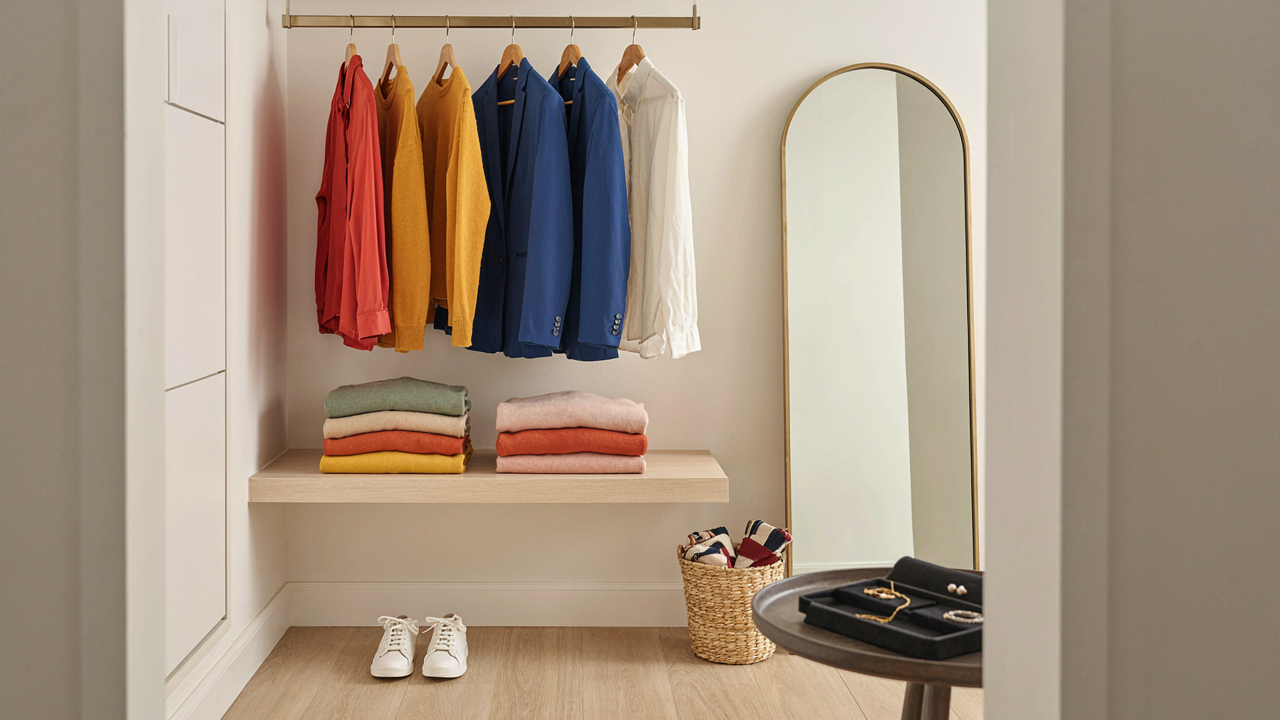
The Wardrobe Blueprint: Deconstructing Your Visual Brand

Who You Actually Are, Not Who You Think You Should Be
You want permission to stop guessing. That’s the real reason you’re reading this. Most people build wardrobes around aspirational identities instead of functional ones, which means they buy clothes that sit unworn while they wear the same five pieces. The mechanism is simple: you can’t dress a version of yourself that doesn’t exist in your actual life. Your wardrobe must anchor to the roles you occupy and the time you spend in them, measured in hours per week, not in fantasy scenarios.
Start by mapping your weekly time allocation. Identify the three to five dominant contexts where you spend the most hours: office work, remote work, parenting, gym, social events, creative projects. Don’t inflate minority activities. If you spend two hours a week at formal events but forty hours at a desk, your wardrobe ratio should reflect that reality. This isn’t about limiting yourself. It’s about building a system that actually functions because it’s built on where your body actually lives, not where your ego wants it to live.
Roles Translate To Garment Jobs, Not Outfit Ideas

Function precedes aesthetics in wardrobe design. Think of each role as a system requiring specific outputs. In systems engineering, components are designed for their operational context, not their appearance. Your work context requires different garment functions than your weekend context. A blazer isn’t a garment you own because it looks professional. A blazer is a tool that signals formality and creates a visual barrier in hierarchical environments. That distinction changes what you actually buy.
For each role, list the garment functions you need, not the items. If you work in a client-facing role, you need garments that communicate authority and attention to detail. That translates to pieces without wrinkles, stains, or visible wear. If you’re remote, you need garments that work for video from waist up and actually feel comfortable to wear for eight hours. If you parent young children, you need garments that allow movement and can withstand repeated washing. Only after defining function do you select specific pieces that solve that function efficiently.

The Wardrobe Dimensions Fallacy: Space As A Strategic Asset

Optimize Existing Space For Maximum Utility
You think you need more closet space because you believe more space solves scarcity. It doesn’t. The real mechanism is density paired with intentional constraint. Think of your closet as inventory management: retailers don’t expand warehouses to fix waste—they fix their stock rotation. Your clothes occupy linear feet, but they also occupy decision-making bandwidth. When you cram pieces without organization, you lose visibility into what you own, which kills the entire purpose of shopping with a list.
The standard advice says “get organizers and hang everything.” Lazy. What actually works is mapping your existing dimensions first, then assigning categories to zones based on how often you access them. Front-facing, eye-level real estate gets daily rotation items. Seasonal or occasional pieces go vertical or deep. This forces ruthless editing: if something doesn’t fit the system, it leaves. No exceptions.
Visibility Dictates Actual Ownership
Access and visibility are not the same thing as having more space available. This principle comes from operational efficiency in manufacturing: throughput depends on how fast you locate what you need. A packed closet where you can see every item beats a half-empty one where three jackets hide behind each other. The pieces you cannot see do not exist in your decision-making process, which means you buy duplicates and waste money.
Start by auditing what you physically cannot see right now. Pull everything forward. Fold visible stacks instead of hanging when depth is limited. Use the back wall for off-season or rarely worn pieces. When you shop with a list, visibility becomes your reality check: if a piece doesn’t integrate into your visible system, you know the list item was wrong. That feedback loop tightens your buying accuracy.
The Minimalist’s Manifesto: How To Start A Capsule Wardrobe Closet Without The Fluff

Build Your Foundation Before Buying Anything
You want permission to buy less and feel smarter about it. The real mechanism is this: most people start with shopping and reverse-engineer a wardrobe from impulse purchases. That’s backward. A capsule works because you establish constraints first, then every purchase serves multiple functions. You’re applying the economic principle of opportunity cost to clothing. Every piece you buy should displace at least three decisions you’d otherwise make. Start by auditing what you actually wear in a normal week, not what you think you should wear.
- White oxford button-up: Works for business, casual layers, and sleepwear. Neutral base that pairs with everything. Buy cotton or cotton blend for durability and easy maintenance.
- Dark jeans: Minimal visual weight, works across seasons and dress codes. Choose a cut that fits your body without requiring tailoring. Wear to work, weekend, or casual evening.
- Neutral crew neck tee: Grey, black, or cream. Layers under everything. Acts as a palette neutralizer between patterned pieces and provides base coverage.
- Structured blazer: Navy or charcoal instantly converts casual to professional. One blazer replaces ten styling decisions. Select a cut that fits your shoulders without alteration.
- Black trousers: Creates formality without announcing it. Pairs with casual tops for smart casual, dress boots for evening. Choose a flat front or high waist depending on your proportions.
Stop treating these pieces as fashion choices. They’re infrastructure. Every additional item you add should connect to at least three existing pieces in your list. If a new piece only works with one other item, it’s not a capsule piece, it’s a dead weight purchase waiting to happen. Build around these five first, then test any addition against this rule ruthlessly.
Eliminate The Trap Of Similar But Not Identical
Everyone owns seven versions of the same item because they won’t admit two shirts serve the same function. This isn’t a fashion problem. It’s a decision-making problem. You convince yourself that variation is choice when it’s actually just friction masquerading as options. Black jeans and dark navy jeans are the same purchase made twice. A charcoal blazer and a grey blazer are storage space arguments you’re losing.
The fix is brutal honesty about what “different” actually means. Different means it solves a problem your existing piece doesn’t solve. Different means it works with items the similar piece can’t work with. If you own a cream sweater and you’re considering a vanilla sweater, you don’t have two options, you have one sweater and a mistake. Identify which one performs the stated function better, sell or donate the other, then move on. Your capsule tightens when you refuse to keep duplicates hiding under the word “variety.”
Beyond “Closet Planning”: Applying Military Logistics To Garment Flow

Inventory Velocity And Garment Rotation
You care about this because you’re terrified you’re wasting money on clothes that never leave the hanger. The mechanism is inventory velocity: how fast a garment moves from acquisition through regular wear back to the laundry cycle. Military logistics borrowed this term from supply chain operations. In wardrobe terms, velocity means a piece rotates into your outfit rotation within two weeks of purchase. Clothes that sit untouched for months are failed acquisitions, not future possibilities.
Most wardrobing advice skips the actual math: track which pieces you wear in a fourteen-day cycle, then measure new acquisitions against that baseline. If a garment doesn’t earn rotation within fourteen days, it signals a mismatch between your list and your actual life. The solution isn’t aspirational shopping. It’s ruthless honesty about which pieces your body and schedule actually demand. Set a calendar reminder to audit worn versus unworn pieces every two weeks, then adjust your next purchase accordingly.
Outfit Assembly Without Decision Friction
The standard advice says “plan outfits ahead of time.” That’s incomplete. Real readiness means eliminating the cognitive load at the moment you need to get dressed. Successful outfit assembly depends on visual proximity and material compatibility, not willpower. If your tops and bottoms live separated by function rather than by what actually combines, you force yourself into a choice at 6 a.m. when your brain is offline.
Group pieces vertically by outfit combination, not by category type. A top hanging next to its three compatible bottoms, with a layer folded on the shelf below, cuts decision time to zero. The mechanism is environmental design, not discipline. When a complete outfit sits as a visual unit, you grab it intact. This removes the friction point where most people revert to wearing the same five pieces on repeat. The outcome compounds: fewer pieces actually used means they wear faster, signal their value sooner, and inform your next purchase with real data instead of guesswork.
Wardrobe Layout Design: Engineering For Effortless Execution
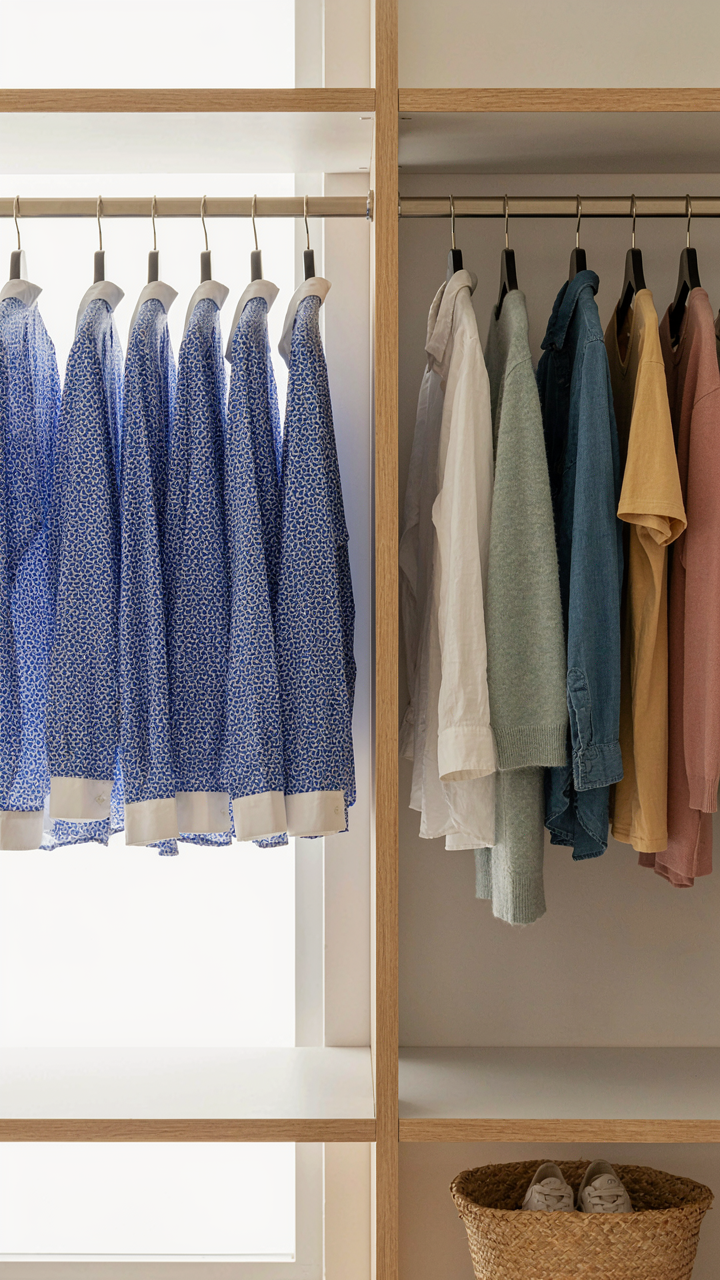
Organize By Context, Not Category
You want your closet to feel organized so you feel in control. That’s not the real win. The real mechanism is decision velocity. When you group clothes by context instead of type, you eliminate the filtering step your brain has to do before getting dressed.
Most people sort by garment type: all pants together, all shirts together. This creates friction. You still have to mentally match pieces across sections. Instead, group by the actual scenario where you wear them. Work outfits in one zone. Weekend casual in another. Formal events elsewhere. Athletic wear separate. This mirrors how you actually move through your life.
Use Contrast To Cut Selection Time
Retail design borrowed from visual hierarchy, a principle stating that contrast directs attention. Apply this to your closet layout. Use physical space, color blocking, or shelf positioning to make each context zone instantly recognizable without thinking.
Place your most-worn context at eye level. Use matching hangers within each zone to create visual boundaries between categories. If you wear five work outfits on rotation, hang them as a unified block in one color family. Your brain registers this as a single decision unit, not five separate choices. This isn’t decoration. It’s a protocol that cuts decision time from minutes to seconds each morning.
Deconstructing The “Wardrobe Section” Myth: Focus On Utility Clusters

Group By Context, Not Category
You want to believe that organizing by “tops” and “bottoms” works because it feels systematic. The real mechanism is friction. Every time you shop, you’re solving a problem: what do I wear to this specific situation? Not “what shirt do I need.” The organizing system that matches your actual decision-making cuts friction and prevents duplicate purchases.
Think of wardrobe clusters like inventory systems in manufacturing. Manufacturers don’t organize by material type; they organize by production line. Your production line is your life context. A work cluster contains items that function together for professional environments. A casual weekend cluster contains pieces that pair naturally. Weekend wear doesn’t cross into business wear by accident; it clusters by where you spend time and what those environments require.
Accessories Must Anchor The Cluster
Accessories aren’t optional finishing touches. They’re the connective tissue that makes a cluster cohesive or broken. Most people buy accessories separately, then wonder why outfits feel disjointed. The mechanism is specificity. A belt or bag designed for one context doesn’t work in another without creating visual noise.
When you build a cluster, the accessories dictate compatibility before you buy anything else. A professional cluster needs a specific bag, shoe, and belt that work together. A casual cluster needs different pieces entirely. Buy accessories first, then build clothing around them. This reverses the typical order and forces you to think about actual outfit math instead of collecting random pieces that theoretically could work together.
The Inner Sanctum: Wardrobe Internal Designs For Peak Performance

Flexible Storage That Actually Scales
You want this section to make you feel organized, like you’ve unlocked some secret system that will finally fix your closet chaos. What actually matters: storage that changes when your body, lifestyle, or climate does. Most people buy a fixed closet system, then outgrow it or hate it within two years. The mechanism is flexibility. Adjustable shelving and drawer dividers let you reconfigure without replacing everything. This isn’t about aesthetics. It’s about not wasting money on infrastructure that locks you into one wardrobe shape forever.
Start with modular shelving that uses adjustable brackets or removable pegs. Drawer dividers should come in variable widths, not fixed segments. This setup costs slightly more upfront but saves you hundreds when your needs shift. Measure your actual clothes volume now, then add thirty percent buffer space. When you shop with a list, you’re adding pieces incrementally. Your storage system needs to absorb those additions without collapsing into chaos. The action: audit your current storage, identify three fixed elements that limit you, and replace them with adjustable alternatives within ninety days.
Vertical Leverage Eliminates Dead Space
Hanging solutions aren’t decorative. They’re density math applied to walls. Economics borrows the concept of leverage from physics: you apply force at a distance to move something heavy with minimal effort. In wardrobe terms, vertical leverage means storing more pieces in the same footprint by going up instead of out. Most closets waste the space between your eye line and the ceiling. Double hanging rods, cascading hooks, and tiered hangers turn that dead zone into active storage. The result isn’t just more capacity. It’s faster visibility and retrieval.
Install double rods for shirts and pants you wear frequently. Use the upper rod for seasonal pieces or items worn less often. Cascading hooks hold multiple items on one hook point without tangles, which only works if items share similar weight. Tiered hangers hang four to six pieces per hook, ideal for basics that stack well. This vertical arrangement works because your brain processes what you see first, and vertical space puts more options in your immediate line of sight when you reach for something. The protocol: map your closet height, install secondary hanging solutions in the top third, then organize by frequency of use from eye level downward.
The Closet Design Dimensions Conundrum: Optimize For Your Workflow

Fit Your Space To Your Body, Not The Reverse
You want your closet to feel spacious and organized because you believe it signals control over your life. The real mechanism is friction. Every extra step between decision and execution drains willpower you need elsewhere. Your closet dimensions must compress the distance between your body type, your daily routine, and the clothes you actually wear.
Start by measuring your shoulder width, inseam, and torso length. These numbers dictate which hangers, shelves, and storage depths prevent bunching, creasing, or difficult access. A person with broad shoulders needs wider hangers and deeper hanging space. Someone under five-foot-six wastes shelf height storing folded items at eye level. Most people ignore this and buy generic storage solutions, then blame themselves for clutter. The math is simple: align your storage architecture to your anthropometry, not to what fits the closet dimensions.
Speed Of Access Defeats Perfect Organization
Information theory calls this “retrieval cost.” Every second spent hunting for a shirt is a cognitive tax that compounds throughout your week. Design your closet so the clothes you wear seventy percent of the time occupy the thirty percent of space closest to your hand.
Organize by frequency, not by category or color. The items you reach for in the dark deserve prime real estate, front and center. This means your daily uniform pieces hang at shoulder height with nothing in front of them. Secondary pieces go behind or below. Your brain doesn’t need visual perfection; it needs rapid execution. When you can grab what you need in under three seconds without thinking, your closet design is working.
Your Wardrobe Isn’t A Collection Of Garments; It’s The Visible Output Of Your Decision-making Framework

Stop treating your closet like a museum of maybes. Every piece you own is a referendum on who you are right now. Shopping with a list forces you to make decisions before emotion hijacks you in the store. Pull up your list on your phone today and actually stick to it once. You’ll realize your taste isn’t broken. Your discipline was.