

The Illusion Of Abundance: Why More Clothes Mean Fewer Options
Decision Fatigue Kills Your Outfit Game
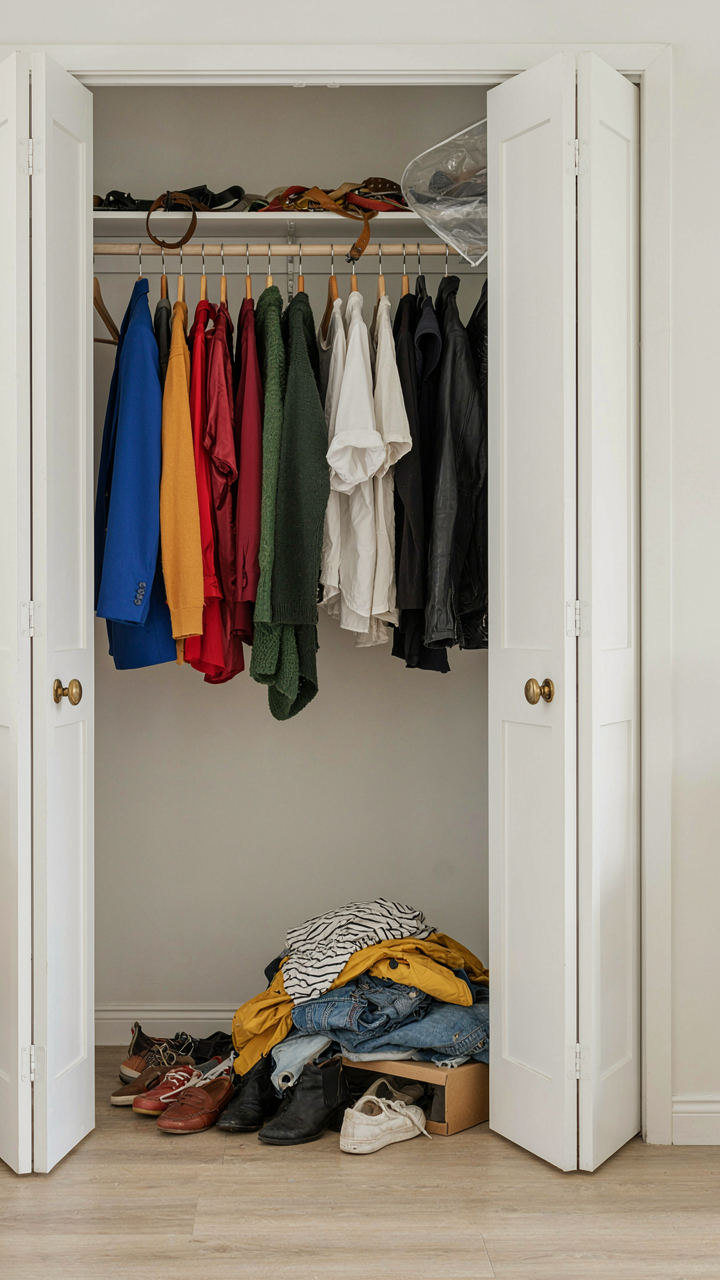
You think more options mean more freedom. They don’t. The real problem is that every piece you own becomes a decision tax you pay before leaving the house. Economists call this the paradox of choice, and it maps directly onto your closet: more items create exponentially more combinations to mentally sort through, which paralyzes you into picking the safe default instead of anything deliberate.
When you own fifty pieces, your brain doesn’t celebrate possibility. It gets stuck in evaluation mode. You stand in front of the mirror longer. You second-guess yourself more. You end up wearing the same five items anyway because they’re the only ones your exhausted brain can commit to. The clothes you bought to increase options actually decreased them by making every morning a cognitive load you didn’t need.
The Real Price Of Clutter

The common advice says clutter wastes money. That’s surface level. Clutter wastes three things that matter more: the time you spend searching for what fits the occasion, the money you keep spending because you can’t see what you already own, and the mental space you lose to low-level anxiety about having too much. Each unworn piece is a small failure sitting in your closet, reminding you of a buying mistake you made.
Every garment you keep but don’t wear is a friction point between you and getting dressed. It takes up real estate. It creates visual noise that makes it harder to see your actual favorites. You spend energy managing inventory instead of making outfits. The solution isn’t buying more. It’s subtracting ruthlessly until every piece earns its space by either fitting well, serving a clear function, or playing with something else you own.

The Curatorial Imperative: Becoming Your Own Fashion Architect

Define Your Personal Uniform
You want this to work because you’re tired of standing in front of a full closet feeling like you have nothing to wear—and you’re right to be tired of it. The mechanism is simple: a personal uniform isn’t a trend-following capsule. It’s a decision framework you build once, then stop rebuilding. It’s the outfit DNA that repeats because it works for your life, body, and actual taste, not because a fashion blogger said it would.
A uniform means you pick the silhouettes, proportions, and color relationships that flatter you consistently. Jeans and a blazer repeated 200 times beats 40 different tops you tolerate. The uniform solves the daily decision tax. You’re not curating outfits every morning—you’re permuting a known formula that already works. This is why people who actually dress well seem to wear the same thing constantly. They’re not lazy. They’re efficient.
Identify Core Aesthetic, Eliminate Incongruent Items
Incongruent pieces don’t make your closet flexible—they make it a graveyard. You own five jackets but only two pair with anything else, so you’re down to two jackets in practice. That’s waste dressed as options. Your core aesthetic is the visual language that ties pieces together: the proportion style, material preferences, silhouette DNA. If your core is minimalist tailoring, a bohemian floral print doesn’t add outfits. It breaks the system.
Elimination is the actual edit. Pull every piece that doesn’t speak the same visual language as your uniform. Not because it’s ugly. Because it refuses to combine with what works. The pieces that remain are currency—each one trades into multiple outfits because they all understand each other. This is architecture, not accumulation. Your closet becomes a functional structure where every piece serves the equation of getting dressed.
The “Wardrobe Matrix” Protocol: Interlocking Components
Color Palette As The Operating System
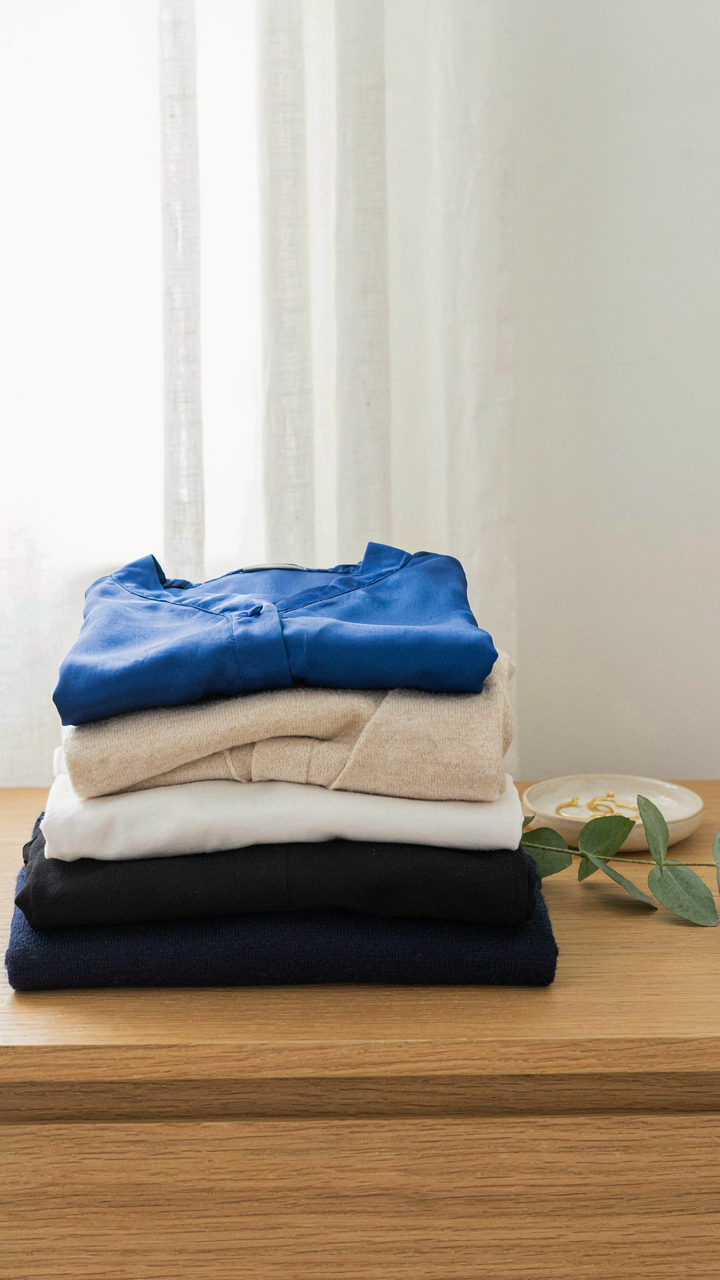
You want permission to buy less and look intentional. Here’s the mechanism: a fixed color palette eliminates decision friction and forces every piece to work with everything else. This isn’t aesthetic theory. It’s constraint-based design. When you own only navy, black, white, cream, and one accent color, every top pairs with every bottom without thought. No orphaned pieces. No mental load. The palette becomes your filter.
Most advice says pick colors you like. That’s useless. Pick colors that already exist in your closet and match your skin tone. Then buy only within that range. Neutral bases anchor the system. One accent color provides visual variety without requiring new pieces. This creates what designers call a cohesive collection, which is really just clothes that talk to each other instead of competing for attention.
Layering As The Multiplication Engine
Military strategists call this force multiplication: using fewer resources to generate disproportionate output. Layering does this for outfits. A base layer, mid layer, and outer layer aren’t three separate looks. They’re variables in an equation. Change one layer and you change the entire visual impression. One t-shirt becomes five different outfits by swapping cardigans, jackets, or overshirts over it.
The common advice is “just layer.” That misses the mechanism. You need pieces that scale in weight and visual density. A thin merino wool base works under heavy sweaters in winter and alone in spring. Structured blazers layer over t-shirts and dresses. Unstructured overshirts work over everything without adding bulk. Each layer should serve double duty: standalone piece and supporting role. This stacking system means fewer total items generate exponentially more combinations.
Investment, Not Spending: The Economics Of Quality

Cost Per Wear Collapses The Real Price
You’re scared you’ll waste money on clothes that sit unworn. That fear is correct, but it’s pointing at the wrong target. Economics calls this unit cost analysis. Apply it to your wardrobe: divide the price of a piece by the number of times you wear it. A $200 jacket worn twice costs $100 per wear. A $80 shirt worn 150 times costs 53 cents per wear. The sticker price is a distraction from the actual math.
Most people reverse-engineer this backwards. They buy cheap items to feel safe, then wear them rarely because they fall apart or clash with everything. They’ve optimized for initial spend, not total cost. The mechanism is simple: a $15 shirt that wears out after 10 wears costs $1.50 per wear plus replacement time. A $60 shirt that survives 200 wears costs 30 cents per wear and stays useful. The expensive piece wins on pure economics.
Durability Builds Outfit Flexibility
Timeless pieces compound. Buy something that doesn’t date, and it stays combinable for years. Dated items trap you: a trendy cut that looked sharp three years ago now signals you stopped paying attention. You can’t build outfits around something that screams 2021. Fabrics matter here. Natural fibers like cotton, wool, and linen age predictably and improve with wear. Synthetic blends often thin and pill within months.
Construction determines how long a piece actually lasts. Double stitching, reinforced seams, and quality fasteners mean a garment survives washing and movement. A well-made neutral piece becomes an asset you can pair with new items for years. Each year it stays relevant, its per-wear cost drops further. You’re not buying clothes. You’re buying future outfit combinations that don’t exist yet.
The 80/20 Rule Of Dressing: Maximizing Impact, Minimizing Effort

Identify Your Actual Uniform
You’re hoping that owning more stuff will solve your indecision problem. It won’t. Economics calls this the Pareto Principle: 20% of inputs generate 80% of outputs. In your closet, this means 20% of your clothes generate 80% of the outfits you actually wear. The rest sit untouched because they don’t fit your body, your lifestyle, or the person you’ve actually become.
Track what you wear for two weeks. Document every outfit. Pay attention to which pieces appear repeatedly and which collect dust. You’ll spot the pattern immediately: five to seven core items doing the heavy lifting. The jacket you reach for three times a week. The jeans that work with everything. The shoes that solve most problems. These pieces aren’t special because they’re expensive or trendy. They’re special because they fit your actual life and body.
Eliminate Everything Else Without Hesitation
The common advice here is wrong. Experts tell you to keep clothes that “spark joy” or that you “might wear someday.” That’s how closets stay bloated. The real mechanism is constraint. The fewer options you have, the more you actually use what remains.
Remove the 80% that produces nothing. This isn’t minimalism for its own sake. This is ruthless optimization. Keep only pieces that solve a specific problem: weather, occasion, body type, lifestyle. If a shirt doesn’t pair with at least three other items you own, it’s dead weight. If pants require special shoes or a specific top to work, they’re inefficient. The goal is a closet where every piece works with multiple others, creating actual combinations instead of one-off outfits.
Beyond The Hype: The True Minimalist Wardrobe

Capsule Wardrobe Misses The Point
You want permission to feel smart about owning less. That’s the real draw of the capsule wardrobe trend. But the framework is incomplete because it treats clothing like a math problem instead of a system of constraints. A capsule solves for aesthetics and color coordination. It never addresses the actual mechanism that generates outfits: layering depth and functional overlap across different contexts.
The capsule wardrobe became popular in the 1980s as a reaction against excess, but it locked people into a designer-driven fantasy where ten pieces somehow create thirty outfits through “mixing and matching.” That math only works if every piece fits multiple scenarios. Most capsule advice skips this part entirely and just shows you Instagram photos of neutral tones arranged nicely.
Utility Stacks Outfit Count Better Than Color Theory
Borrowed from systems engineering, redundancy with purpose means each garment serves multiple functions across different outfit contexts, not just looking good next to other pieces. A charcoal merino wool long-sleeve works as a base layer, a standalone shirt, or a mid-layer under a jacket. It functions in five different temperature ranges and three different occasion types. That’s leverage.
The mistake most people make is prioritizing cohesion over functionality. They buy pieces that coordinate visually but can’t actually layer together or transition between contexts. A 200-dollar designer sweater that only works in one season with one type of bottom creates zero additional outfits. A 60-dollar merino piece that works as sleepwear, gym clothes, casual wear, and layering base creates fifteen. Start with what each piece does, not how it looks standing alone.
The “Workwear Capsule” Myth: Versatility For Every Arena

Professional Clothes That Work Everywhere
You want permission to dress well without the guilt of buying separate wardrobes for different parts of your life. Here’s the mechanism: most people treat work and casual as binary categories when they’re actually a spectrum. The real move is selecting pieces that don’t signal “I’m at work” or “I’m relaxing”—they signal competence and intention regardless of context.
Traditional workwear fails because it announces itself. A blazer screams formality. A graphic tee screams leisure. Instead, pick fabrics and cuts that exist in the middle. Wool trousers in neutral tones work in a boardroom and at dinner. A linen shirt transitions from office to weekend without changing. The constraint is material quality and fit precision, not category labels. You’re building a professional baseline that never looks out of place, then layering casual pieces on top when the setting demands it.
The Fabric Rule For Moving Between Spaces
Fabrics carry invisible rank signals that most people miss entirely. Cotton blends, merino wool, and linen read as intentional in any setting because they suggest care about durability and comfort, not just aesthetics. Synthetic fabrics with excessive sheen or cheap knits scream either “corporate uniform” or “I didn’t think about this,” which limits your outfit flexibility across contexts.
Select two to three neutral fabrics in your capsule and commit to them. Merino wool for layering pieces because it regulates temperature and won’t wrinkle in a car or office chair. Structured cotton for basics that won’t sag after eight hours or weekend wear. Linen for seasonal pieces that look expensive but feel casual. The fabric becomes your invisible infrastructure—it does the work so your outfit choices stay open, not locked into a single arena.
The Psychological Warfare Of Accessories: Strategic Impact

How Accessories Multiply Your System
You want proof that your wardrobe works without buying more. That’s the real fear here—that you’ve already spent money and still can’t dress. Cybernetics teaches us about leverage through feedback loops. Accessories are your feedback multiplier: they create exponential outfit variation from a fixed base system. A belt, scarf, or pair of shoes isn’t decoration. It’s a variable that compounds across every piece you own.
Most fashion advice treats accessories as afterthoughts. Wrong. They’re the control mechanism. One scarf changes a summer dress into three distinct outfits by altering color dominance, visual weight, and perceived formality. Your core pieces stay the same. The accessory shifts the entire system’s output. This is why a ten-piece wardrobe with strategic accessories produces more combinations than a thirty-piece wardrobe with none.
One Change, Complete Transformation
Small shifts create disproportionate perceptual impact. This isn’t opinion. It’s how the eye processes visual hierarchy. Accessories control three things simultaneously: color blocking, line direction, and material contrast. When you change one, you change all three. A black dress becomes evening-ready with a metallic bag. The same dress reads casual with a canvas tote and white sneakers. The dress didn’t change. Everything else did.
The mechanism is specificity through subtraction. When you have fewer base pieces, every accessory decision becomes intentional rather than reflexive. Your brain registers the deliberateness. It reads as curated instead of random. A gold watch paired with a leather belt signals consistency. That consistency creates the illusion of a larger wardrobe because the eye perceives planned variation instead of chaos. Store accessories separately from your clothing, arrange by color, and rotate them on a monthly basis to keep selection fresh without purchasing.
The Art Of Deception: Mastering Outfit Perception

Texture And Silhouette Create Distinction
You want people to think you own more than you do. The real mechanism: your brain separates outfits by surface properties, not by item count. Texture and silhouette bypass recognition because they change how light hits fabric and how your body reads in space. A cotton sweater and a wool sweater worn with identical bottoms register as different outfits, even though the formula is identical.
The mistake people make is treating all repeats as failure. They aren’t. A denim shirt over a t-shirt looks visually distinct from that same t-shirt under a linen overshirt. The silhouette differs. The surface changes. Your eye doesn’t catalog “I saw a shirt twice” – it processes shape and texture first. Layer a ribbed knit over a smooth base. Swap matte trousers for structured wool. These aren’t wardrobe additions. They’re multipliers.
Repeatable Outfit Formulas
The common advice here is worthless: “mix and match pieces.” That’s too vague to act on. Formulas work because they remove decision friction and create constraint – which forces coherence. You build three to five repeatable structures: blazer over fitted base with tailored bottom, oversized top with cropped bottom, fitted knit with high-waisted trouser, layered basics with jacket. Each formula becomes a container.
- Top Plus Bottom Plus Outerwear: The simplest frame. One base layer, one bottom, one outer piece. Swap any single element and the outfit shifts visually and functionally, multiplying combinations from a small piece count.
- Monochrome Tonal Stacking: Build outfits within the same color family but different depths. Charcoal sweater, black trouser, grey overshirt read as one cohesive outfit even though you’re cycling through pieces differently each time.
- Statement Piece Plus Neutral Anchors: Repeatable formula where one item (patterned shirt, textured knit, colored trouser) carries the outfit while three other basics remain interchangeable. Reduces decision load while feeling intentional.
- Contrast Through Proportions: Oversized top with fitted bottom, or vice versa. This formula stays constant but swapping pieces within the size categories creates new silhouettes without new items.
- Layering Ratio Structure: Define your layers as base, mid, outer. Keep ratios consistent (fitted base, loose mid, structured outer) but rotate fabrics and colors. The skeleton stays the same, perception shifts entirely.
Once you’ve defined your formulas, stop shopping for individual pieces and shop to fill formula slots. This is where the multiplication happens. You’re not building a wardrobe. You’re building systems, and systems scale with fewer inputs.
Future Proofing Your Style: A Sustainable Approach

Build Clothes That Last
You want permission to stop shopping. That’s the real driver here. The mechanism is simple: garments fail because of poor construction or material choice, not time. Repair extends life. A $120 shirt with reinforced seams outlasts five $30 shirts because the maker invested in stress points—collar bands, armholes, button attachment. Inspect before buying. Feel the seams. Check if they’re sewn twice. Look at how the collar is attached to the body. Cheap construction shows immediately.
The math favors durability over replacement. A $200 jacket you wear for eight years costs $25 per year. A $60 jacket you replace every two years costs $30 per year. That calculation flips when you add repairs. A torn seam costs $15 to stitch. A broken zipper costs $30 to replace. Most people don’t repair because they don’t know it’s possible or they’ve normalized trash consumption. Learn basic seam repair or build a relationship with a tailor. It’s the difference between a wardrobe and a temporary rental.
Style That Evolves Without Replacement
The common advice says “invest in classics and they never go out of style.” Wrong. Your style doesn’t stay frozen. What you wore at 22 won’t fit your life at 35. The real mechanism is adaptability within constraint, borrowed from systems design: a robust system survives change through flexibility, not rigidity. Build core pieces that work across multiple aesthetics, then swap complementary items as your direction shifts.
A navy wool sweater works in minimalist, streetwear, and workwear contexts. Swap the jeans below it. Swap the shoes. The sweater stays. Your taste moves. Your silhouettes evolve. Your color preferences shift. Those changes don’t require a full wardrobe replacement if your foundation pieces have inherent flexibility. Identify which items in your current rotation feel future-proof because they’ve already bridged multiple phases of your taste. Those teach you what to buy next. When you select new pieces, ask whether they narrow your options or expand them. If a piece only works with one outfit, you’re not making more outfits.
The Real Obstacle Isn’t Your Wardrobe; It’s Your Impulse To Complicate What Should Be Simple

You don’t need more clothes. You need to stop treating your closet like a puzzle that requires solving. Pick five pieces you actually wear. Combine them today. That’s it. The friction you feel isn’t scarcity, it’s decision fatigue you created by keeping garbage around. Stop shopping for outfits and start shopping for pieces that work with everything else. Your wardrobe doesn’t fail you. Your willingness to keep things simple does.