
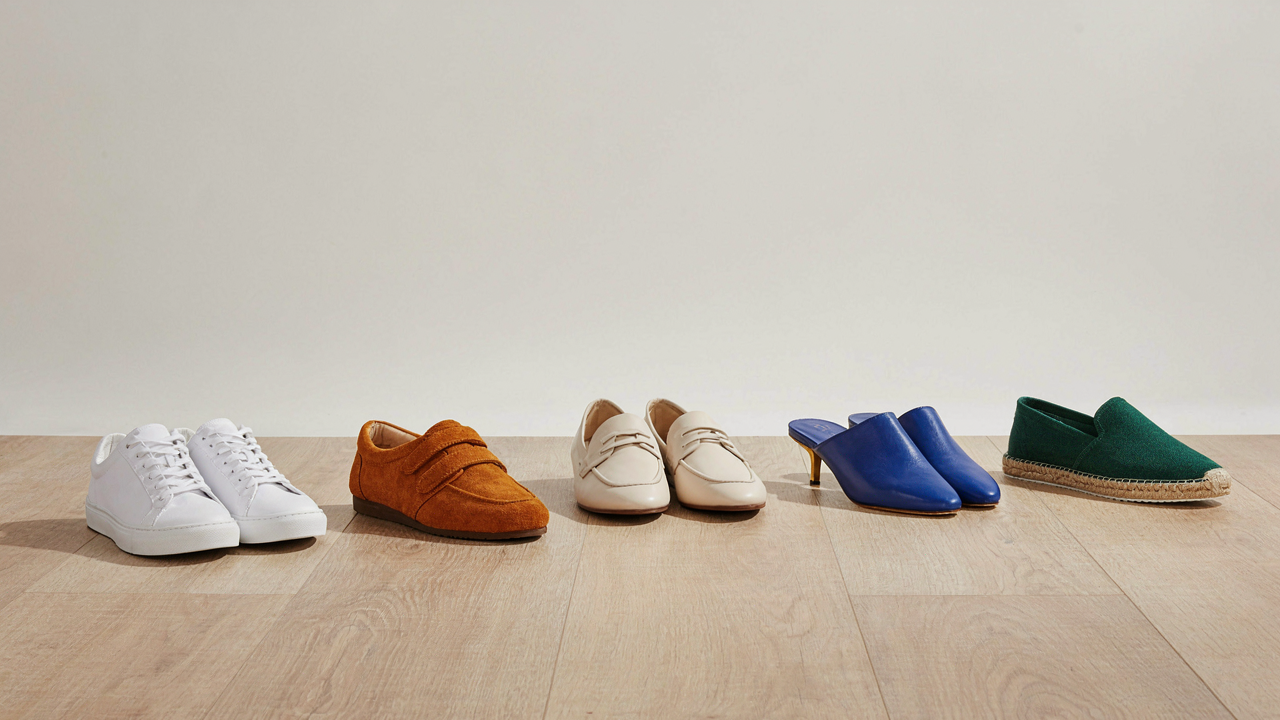
The Illusion Of Choice: Why More Shoes Mean Less Style

More Options Paralyze You Into Invisibility
You want a closet that makes you look intentional, but you’re hoping quantity will do the work for you. It won’t. Economics calls this the paradox of choice, and it applies directly to shoes: beyond a critical threshold, more options decrease decision quality and increase decision time. Most women own between 15 and 30 pairs of shoes. They wear five of them.
The problem isn’t that you lack choices. It’s that unlimited choices destroy the psychology of selection. Your brain treats each new pair as a fresh variable to weigh against existing ones. This compounds. By pair ten, you’re no longer picking the right shoe for the day—you’re managing a system. By pair twenty, you’ve stopped trying. You grab whatever’s visible and call it done.
Fatigue Kills The Outfit Before You Leave

Decision fatigue is real neurology, not motivational theory. Every choice consumes a finite resource: cognitive energy. You spend it on shoes before breakfast and you have less for work, for writing, for thinking clearly. The common advice says “buy what you love.” That’s incomplete. You need to buy what you love that also works with everything else you own. That specificity is what kills the fatigue.
A minimalist shoe collection forces constraint early. Instead of choosing between 20 pairs each morning, you choose between three to five. That decision takes seconds. Your brain stays fresh for decisions that matter. You know which shoes work because you’ve already done the integration work once, during the buying phase, not every single day. This is why people with smaller closets appear more pulled together—they actually are, neurologically speaking.

The Core Four Protocol: Your Essential Minimalist Shoe Collection

What Versatile Actually Means
You want permission to buy fewer shoes without feeling like you’re sacrificing options. That’s the real reason this matters. Here’s the mechanism: versatility isn’t about a shoe doing everything. It’s about a shoe solving the highest percentage of your actual wear occasions with zero compromise on fit or function.
Most advice says “neutral colors work everywhere.” That’s incomplete. True versatility operates like load balancing in systems engineering. One shoe shouldn’t carry the weight of five. Instead, each piece in your collection handles a distinct load while sharing enough overlap that you’re not buying redundancy. The white sneaker and the black loafer don’t compete. They own separate contexts but share the same closet real estate efficiently.
Where Each Shoe Actually Works
You need shoes that handle everyday movement, formal occasions, active pursuits, and seasonal shifts. These aren’t arbitrary categories. They represent the contexts where footwear changes your outfit or function fundamentally.
- Everyday neutral sneaker: Canvas, leather, or knit upper in white or cream. Worn 40-60% of the time across casual outfits, errands, and low-stakes social contexts. Must have arch support and durability for daily impact.
- Structured flat or loafer: Leather in black or dark brown. Handles business casual, dinners, and workplaces where sneakers signal the wrong message. Pairs with jeans or dresses without transition friction.
- Active shoe with cushioning: Running shoe, court shoe, or cross-trainer in black or white. Dedicated to workouts, walks, or high-movement days. Separating this prevents your everyday sneaker from breaking down prematurely.
- Seasonal transition piece: Leather sandal, mule, or boot depending on your climate. Worn during temperature shifts when your core three rotate out. Adds one functional pivot without multiplying your total count.
- Optional fifth: Dress shoe or statement piece only if your life demands it regularly. If you attend formal events monthly, it earns space. If twice a year, rent or borrow instead.
The protocol is simple: wear each shoe until it shows real wear, then replace that category only. Never buy a shoe because it’s pretty. Buy it because it solves a documented gap in your current rotation.
Beyond Trends: Curating Timeless Shoes, Not Fleeting Fads

What Actually Lasts
You want permission to stop wondering if you’re buying the right thing. The real mechanism at work here is material degradation and design permanence. A shoe either solves a structural problem or it doesn’t. The problem minimalism solves is foot mechanics. A flat sole, clean geometry, and quality leather don’t age out because they match no aesthetic. They age out when the materials fail.
The styles that stick around share one trait: they emerged from function, not fashion cycles. The ballet flat predates trend culture by decades. The leather loafer solved a real dressing problem. The plain white sneaker filled a genuine gap between formal and casual. These shoes persist because they answer a need that doesn’t change with seasons. When you reverse-engineer why a style exists, you cut through the noise of what’s supposed to matter.
The Math Of Replacement
Common advice says “invest in quality.” That’s incomplete. Economics calls this opportunity cost: what you lose by choosing one option over another. Every dollar spent on a shoe that trends out is a dollar that doesn’t go toward something that won’t. Every month you wear a trendy piece is a month closer to abandoning it.
The actual cost isn’t the price tag. It’s the invisible tax of mental load and closet replacement cycles. A woman chasing fast fashion trends replaces shoes every 18 months. A woman with timeless minimalist pieces replaces shoes every 5-7 years. That’s three replacement cycles versus one. Three decisions. Three shopping sessions. Three moments of doubt about what works. The mechanism is compound friction: small choices accumulate into wasted decisions that steal your attention and your money.
The Antifragile Footwear Strategy: Built To Last, Not Break

Systems Thinking Applied To Sole Construction
You want to believe a shoe will last forever if you just buy the right brand. Engineering teaches us that durability comes from redundancy, not perfection. A minimalist shoe collection applies this principle through constraint: fewer shoes means each absorbs more stress, so each must handle repeated load cycles without failure. The sole matters most because it’s the only contact point between your foot and ground impact. A shoe designed for 500 miles of wear will fail at mile 401 if the midsole compresses unevenly or if the upper separates from the base.
The real mechanism is material selection under stress. Quality minimalist shoes use leather uppers that actually tighten with wear instead of stretching into uselessness. The midsole either holds its compression or doesn’t, and you’ll know within twenty miles. Glue bonds matter more than people admit. The best construction stitches the upper to the sole, then glues it, then stitches again. This triple-lock approach survives the thousands of micro-flexes your foot creates during normal walking. Test this yourself: wear a shoe for fifty miles on varied terrain, then inspect the seams.
Leather Quality Determines Replacement Cycles
Not all leather performs the same way, and marketing obscures the difference. Full-grain leather develops character and actually strengthens with age because the tannins cure deeper. Top-grain leather looks uniform longer but breaks down faster at stress points because the protective outer layer is sanded away. When you have five shoes instead of thirty, you need leather that adapts to your foot rather than degrading.
The investment calculation inverts what most people think. A minimalist shoe collection forces you to repair rather than replace because rotation isn’t an option. Resoling costs thirty to sixty dollars and extends life by twelve to twenty months. Replacing a forty-dollar fast-fashion shoe makes no sense at that math. Buy shoes with stitched soles from the start, even if the upfront cost doubles. The real expense happens when you treat each shoe as disposable instead of a tool that compounds value through maintenance.
The 80/20 Rule Of Shoe Collection: Maximize Wear, Minimize Waste
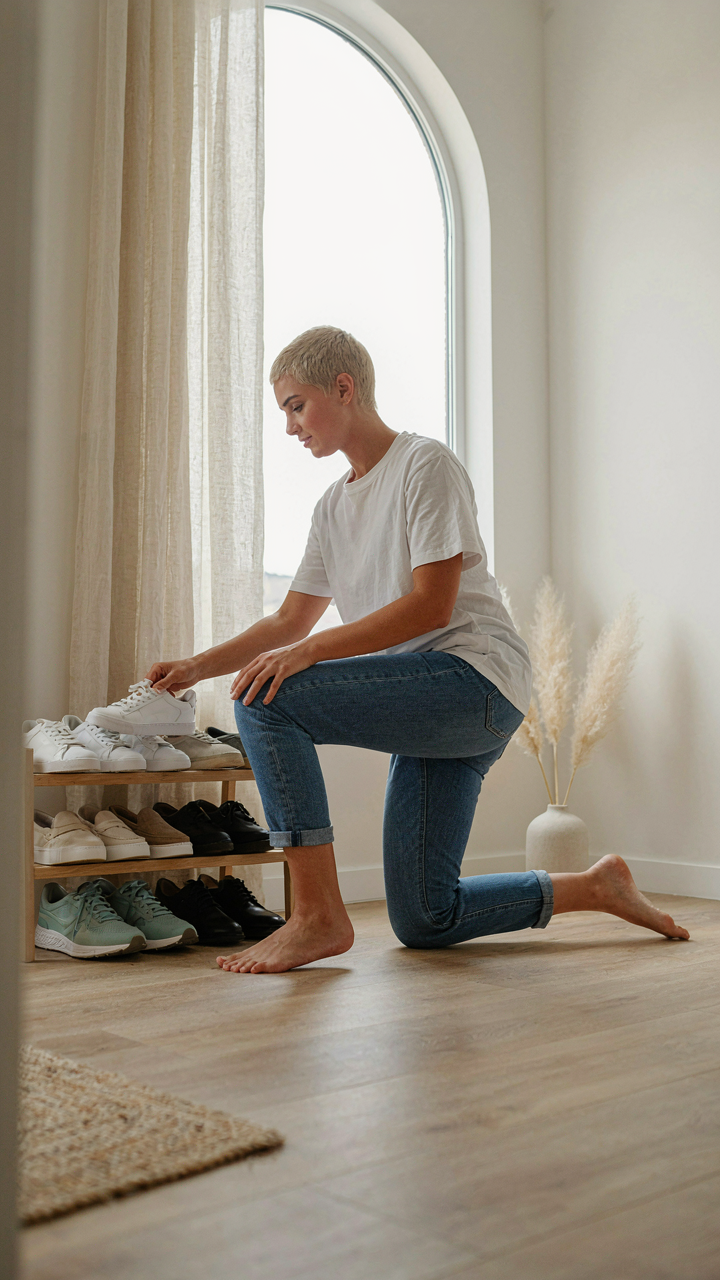
What Actually Gets Worn
You think you need variety. You don’t. You need the shoes that solve problems you actually face, not hypothetical ones you invented to justify the purchase. Economics calls this the Pareto Principle: 80% of your outfit satisfaction comes from 20% of your shoes. That 20% are the ones you reach for without thinking.
Most collections fail because they’re built on aspiration, not behavior. A minimalist shoe collection works backward. Identify the three to five shoes you’ve already worn most in the past year. That’s your baseline. Those shoes exist because they solve real friction in your life: commute comfort, weather protection, social acceptability at specific venues. Everything else is overhead.
Shoes That Earn Their Space
High-frequency shoes aren’t pretty or trendy. They’re reliable. A white leather sneaker worn twice weekly beats a statement heel worn three times yearly. Track actual wear patterns for two weeks. Note which shoes you choose when comfort matters and when appearance matters. The intersection reveals what minimalism actually means for your life, not the Instagram version.
The mechanism is simple: a shoe earns its place through repeated selection under real conditions. If you haven’t worn it in six weeks, it’s not filling a need. It’s filling a fantasy. A minimalist collection contains only shoes that solve documented problems. Replace or remove anything that doesn’t.
The Capsule Wardrobe Integration: Shoe Capsule Synergy For Minimal Fashion
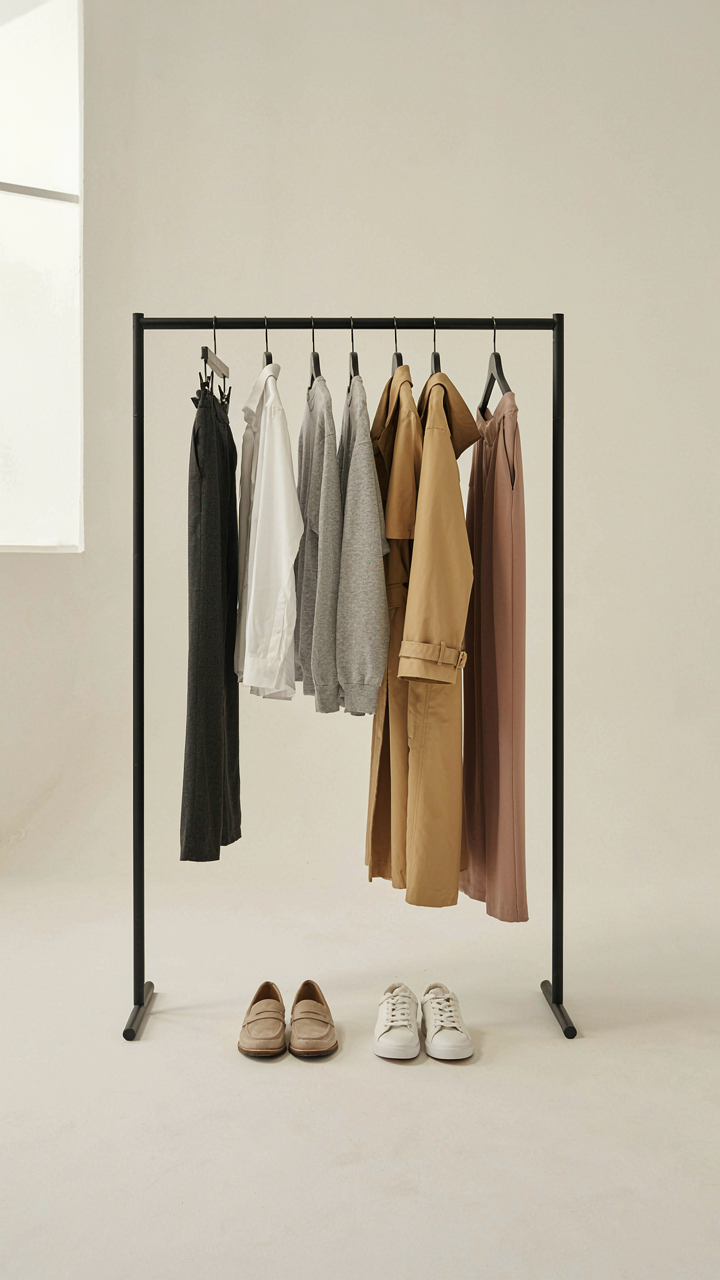
Matching Your Shoes To Your Clothes
You want proof that you’re “intentional” without actually thinking about getting dressed. The real mechanism here borrows from supply chain logistics: constraint breeds efficiency. When your shoe collection aligns with your existing apparel, you eliminate decision friction at the source. Each shoe becomes a connector, not a standalone choice. A neutral leather flat pairs with business casual and weekend denim. A simple white sneaker bridges casual and athleisure. Boots work across seasons without recontexting your entire wardrobe. The constraint forces coherence.
This is not about owning fewer shoes. It’s about owning shoes that stack against what already hangs in your closet. Most women own shoes that work with nothing. Shoes designed for a specific outfit they wore twice. Start by naming your actual daily uniform: the silhouettes, colors, and fabrics you actually wear. Then buy shoes that extend that range, not contradict it. A minimalist shoe collection succeeds when each pair solves three outfit problems, not one.
Building A Visual Through Line
Your personal aesthetic either reads as deliberate or accidental. There is no middle ground. Minimalism without visual consistency reads as deprivation, not intention. The through line comes from repeating one element across all shoes: material, silhouette, or color story. Some women anchor on natural leather in warm neutrals. Others commit to clean lines and monochromatic palettes. Some build around a single shape, like the slip on or the ballet flat, in varied materials. The mechanism is recognition. People recognize patterns before they recognize individual items. Your shoes become a system, not a collection.
Choose your visual anchor now. It determines every future purchase. If you select warm leather as your anchor, reject synthetic materials and cool tones permanently. If you select minimalist silhouettes, eliminate decorative details and hardware. This is not restriction. It’s clarity. Every shoe you buy after this moment either strengthens your through line or weakens it. The decision framework becomes mechanical. Does this shoe match my system? Yes or no. That’s the entire evaluation.
The Shoe Audit: Deciding What Stays, What Goes, And Why

How Mission Creep Kills Your Closet
You’re hoping a framework will make this feel less arbitrary, less like you’re wasting money on shoes that sit unworn. That’s the real anxiety here. Military strategy uses the term “mission creep” to describe scope expanding beyond original intent. Your shoe collection does the exact same thing. You buy a neutral for work, then a neutral for casual, then a neutral “just in case,” until neutrals colonize your closet and nothing gets worn because nothing stands out as the obvious choice.
The mechanism is this: each shoe justifies itself with a new micro-scenario you invented. One pair for office meetings, one for office casual, one for networking events. The scenarios multiply faster than you wear shoes. Stop treating your collection like it needs to cover every possible day. It doesn’t. Military units cut mission creep by establishing clear constraints before action starts. You do this by defining the actual activities you do, not the activities you might do someday, then assigning shoes to only those activities.
Redundancy Is The Real Enemy
The common advice says “keep what you love.” Worthless. You probably love twelve pairs for legitimate reasons, but love doesn’t make redundancy disappear. Two cognac leather flats that differ only by heel height are redundancy. Two black ankle boots with different toe shapes are redundancy. The distinction feels meaningful while shopping. It evaporates in real life. You wear one, the other collects dust as a backup that never gets needed.
Identify which shoes actually get cycled into rotation over a three-month period, then pull everything else. Don’t ask if you’d wear the other pairs. Ask which specific moment in your actual week requires that shoe. If you can’t name the moment, it goes. The shoes that remain become your working collection. These are the ones you clean, condition, and rotate to extend their lifespan. This constraint forces intentionality instead of accumulation.
Maintenance Mastery: Preserving Your Minimalist Shoe Investment

The Daily Reset Habit
You care about this section because you’re afraid of wasting money on shoes that fall apart in six months. Here’s what actually determines longevity: the reset. Think of shoe decay like entropy in thermodynamics—disorder compounds unless you reverse it consistently. One reset cycle per week stops the damage accumulation that kills minimalist shoes faster than heavy use ever could.
The reset is simple. Remove insoles and let them air separately for 24 hours. Wipe the upper with a dry cloth to remove salt, dirt, and sweat residue. Stuff the toe box with newspaper or a shoe tree to absorb moisture and maintain shape. This takes five minutes and extends the life of most minimalist shoes by 40 to 60 percent compared to shoes stored wet or compressed. Do this every Sunday without exception.
Protecting What You Built
Material degradation follows predictable patterns based on fiber type and exposure. Leather weakens from sweat and salt. Canvas breaks down from moisture and UV light. Rubber compounds oxidize when exposed to heat and oxygen. Each material demands different protection because each fails differently. The common advice—”just condition leather occasionally”—misses the real mechanism: prevention beats treatment every time.
For leather minimalists, condition every three months with a thin coat of neutral cream, not oil. Oil attracts dirt and accelerates breakdown. For canvas or synthetic uppers, apply a hydrophobic treatment before first wear and reapply every six months. Store all shoes in a cool, dry place away from direct sunlight. Consistent prevention prevents expensive repairs that minimalist shoes rarely justify economically.
Beyond The Shoe: Cultivating A Minimalist Shoe Style Mindset

The Real Cost Of Visual Noise
You want this section because you’re afraid a small closet signals deprivation rather than intention. The mechanism is simple: decision fatigue depletes the same cognitive resource you use for work, relationships, and actual problems. Neuroscience confirms this. Every morning you stand in front of ten shoes instead of five, you burn mental energy on a non-decision. That energy doesn’t regenerate. It compounds across days until you’re depleted before lunch. A minimalist shoe collection isn’t about aesthetics. It’s about reclaiming bandwidth.
The psychology works backward too. When you own fewer options, you stop experiencing choice as a burden. You wear what you have without friction. That friction removal rewires how you approach decisions in general. You become faster at selecting what matters and rejecting what doesn’t. This isn’t motivation. This isn’t discipline. This is mechanics. Your brain adapts to the environment you build. Build an environment of five pairs instead of twenty, and your decision-making sharpens by default.
Discipline Transfers Like Currency
Shoe selection teaches constraint thinking, a principle from economics where limited resources force better allocation. Every shoe you don’t buy is a choice to invest that capital in something with higher return. Most people never make this connection conscious. They treat shoes as isolated from everything else. They don’t. The discipline required to reject an impulse buy at the mall is identical to the discipline required to say no to a mediocre project at work. It’s the same muscle. You develop it in one domain and it strengthens everywhere.
The real payoff emerges over months. You notice you’re faster at identifying what you actually need versus what marketing convinced you to want. You stop filling gaps with purchases. You stop mistaking acquisition for progress. This transfers directly to time management, relationship boundaries, and work priorities. Once you’ve trained yourself to see a shoe collection as a system with costs and benefits, you start seeing your entire life that way. That shift alone compounds into tangible results. Start here: for thirty days, document every shoe purchase impulse you reject and what you did with the time or money instead.
Your Cluttered Closet Isn’t A Shoe Problem; It’s A Symptom Of Indecision. Master Decision-making, And Your Collection Reflects It

Most women own shoes they hate wearing. They bought them for reasons that no longer exist. The real move isn’t acquiring fewer shoes. It’s deciding what you actually want to wear, then buying only that. Start today: pick one shoe you genuinely love. Wear it for a week straight. Notice how clarity feels. Everything else you own reveals itself as noise. Your closet doesn’t need less. Your life needs direction.