

The Myth Of The Perfect Tuck: Why Generic Advice Fails

Common Tuck Mistakes: Understanding The Sloppy Outcome
You want to look intentional. That’s the real reason you’re reading this. The sloppy tuck happens because people treat tucking like a binary choice instead of understanding the actual mechanism at play: volume distribution. Most tutorials show you where to tuck, not why the tuck bunches or rolls or creates weird fabric knots at your sides.
The standard mistakes repeat because people follow surface-level steps without diagnosing their specific failure. Fabric bunching at the sides means you’re creating excess material faster than you’re anchoring it. Rolling waistbands happen when you tuck too much fabric too tightly without accounting for the shirt’s natural drape. These aren’t character flaws. They’re math problems with wrong variables plugged in.
Body Shape Vs. Shirt Fabric: The Ignored Variables

Biomechanics teaches us about load distribution and force points. Tucking works the same way: your body shape is the frame, and the shirt fabric is the load. Different torso widths, hip-to-waist ratios, and stomach profiles require different tuck depths and anchor points. A shirt fabric with natural weight sits differently than a crisp cotton that fights your body.
The industry consensus skips this entirely. It tells you to do a full tuck, a half tuck, or a French tuck without asking what your actual shape demands. A broader torso needs shallower tucks to avoid excess fabric bunching at the side seams. Thinner frames need fuller tucks or the shirt will untuck by lunch. Heavier fabrics hold their shape longer and tolerate aggressive tucking. Lightweight shirts need gentler anchor points or they’ll creep up. Match the tuck style to your body’s geometry and the fabric’s weight, not to what looks good on someone else’s frame.

The Kinematic Tuck: Engineering Your Shirt’s Fall

Leverage In Fabric: A Physics Perspective On Shirt Drape
You care about this because a sloppy tuck reads as careless, and careless reads as low status. Here’s what actually matters: physics calls it leverage—the mechanical advantage you gain by positioning your force at the right point. With a shirt tuck, leverage means understanding where fabric wants to move, then controlling that movement. Most people fight their shirt instead of working with it.
Fabric has weight. Weight creates momentum. When you bunch a shirt at your waist without strategy, you’re fighting gravity and compression simultaneously. The real mechanism is this: grab the shirt at the side seams, not the center. Side seams are your fulcrum. Pull upward from there, and the fabric naturally folds into parallel lines rather than chaotic bunching. The shirt wants to stack vertically. Your job is to let it, then secure that stack. One clean pull beats three desperate adjustments.
Tension And Release: Minimizing Bulk With Minimal Effort
Everyone talks about tucking “tight.” That’s incomplete. Tight is not the goal—controlled release is. You create tension in the fabric by pulling it up and anchoring it at specific points, then you strategically release portions of it so the shirt sits flat without creating a ring of compressed material around your waist.
Start with a full tuck into your waistband. Now release about two inches of fabric from the front center. This small release eliminates the hard ridge that makes you look blocky. The tension you maintain at the sides and back keeps everything stable while that small release around your stomach breaks the visual line. Tuck only what needs tucking. Let the rest of the shirt breathe within the waistband itself, moving slightly with your body instead of fighting it constantly.
The Half Tuck Heresy: Intentional Dishevelment For Casual Power

When To Break The Rules
You want to look like you’re not trying. That’s the real reason you’re reading this. The mechanism is simple: a half-tuck signals control through restraint. In semiotics, this is called “negative space”—the power of what you deliberately leave undone. A fully tucked shirt broadcasts compliance. A half-tuck broadcasts intention. You’re choosing which rules apply to you.
The half-tuck works because it breaks symmetry without breaking credibility. It flatters the torso by anchoring fabric without the rigidity of a complete tuck. It’s most effective with relaxed fabrics—linen, cotton blends, heavier knits—that naturally want to drape. Structured or thin materials look accidental rather than deliberate, which kills the effect.
The Mechanics Of Intentional Sloppiness
Everyone misses this: most half-tucks fail because they’re actually just untucked shirts. The difference is grip and position. You tuck only the front center section—roughly four to six inches of fabric—directly into your waistband at the sternum. You leave both sides free. The tuck must sit tight enough that it doesn’t slip during movement. Loose fabric that shifts reads as a mistake.
Start by tucking only the front panel of the shirt into your pants or skirt at the center point. Use your fingers to create a small fold against your body before securing it. The sides should remain completely untucked and fall naturally. This works best with high-waisted bottoms that give you actual structure to anchor the fabric. Low-rise or mid-rise bottoms make the half-tuck collapse throughout the day.
How To Tuck A Shirt For Mens Business Casual Outfits: The Precision Fold

Dress Shirt Architecture: Foundation For A Crisp Tuck
You want this section because you’re afraid a loose tuck will undermine your authority in a room where you’re trying to project competence. The mechanism is simple: fabric weight and cut determine whether a tuck holds or fails. Most dress shirts designed for business wear use cotton or cotton blends with enough body to maintain structure without constant adjustment. The shirt’s side seams, yoke placement, and tail length are engineered variables that either work with your tuck or work against it.
A quality business casual shirt has a tail that reaches mid-hip when untucked, typically 2 to 3 inches longer than casual shirts. The side seams run straight down without excessive taper, which means fabric stays where you place it instead of riding up. Cotton-heavy blends (80 percent cotton minimum) resist wrinkles better than synthetics and hold a tuck for 8+ hours without bunching. Buy shirts that fit your actual torso, not your chest size, or no tuck technique will save you.
Military Tuck: Achieving Razor Sharp Lines
The military tuck borrows from logistics: the principle of load distribution. Instead of pushing all fabric straight down into your waistband, you create zones of control that distribute fabric weight evenly, preventing bunching and maintaining clean lines throughout the day.
- Front center tuck: Pinch fabric at your sternum, fold it straight down into your pants without twisting, creating one vertical crease from chest to waistband.
- Side panel fold: Grab excess fabric at your hip, fold it inward at a 45-degree angle toward your back, then tuck it down so the fold sits against your side seam.
- Back wedge: Gather remaining back fabric and fold it horizontally at your waistband before tucking, preventing the back from untucking as you move or bend.
- Anchor point: Tuck your shirt into your underwear first, then into your pants, which doubles the friction and keeps everything locked in place for the full day.
- Tension check: With your shirt tucked, raise your arms overhead and bend forward to test if fabric pulls free; if it does, you need a tighter initial tuck.
The military tuck works because it eliminates slack. Most people bunch fabric and push it down, leaving wrinkles and loose spots that come untucked by 10 AM. The precision version requires you to fold deliberately at each zone, then use waistband tension to hold everything. Tuck your shirt while standing, not sitting, so gravity works with your positioning rather than against it.
Shirt Hacks: The Art Of The Undershirt Anchor

The Fabric That Holds Its Ground
You care about this because a shirt that rides up destroys your entire look in real time, and you can’t control it once you’re moving. The real mechanism here borrows from textiles engineering: grip coefficient. A shirt doesn’t stay tucked because of willpower or technique alone. It stays tucked because the fabric gripping your skin creates enough friction to resist the forces working against it.
Cotton blends grip better than pure cotton. Synthetic blends like cotton-polyester mixes add tension and reduce slippage. Weight matters too—heavier fabrics hold position longer than thin ones. A shirt that’s too loose at the waist becomes a losing battle no matter what you do. The fit has to be snug enough at the sides and back that gravity and movement can’t dislodge it.
Locking In Before Movement Starts
Everyone says “tuck it tight.” That’s incomplete advice. The real problem is that most people tuck once and assume it’s done. You’re actually establishing a base layer of tension that needs reinforcement at specific points.
Start the tuck at the back center, working from spine outward to each hip. This creates a load-bearing anchor. Fold fabric tightly—no loose pockets of shirt in your waistband. Once the back is locked, move to the sides, folding the side seams inward so they don’t create bulk at your hips. Front tuck comes last, and it should be military-tight: grab excess fabric at the side seams and fold it back before tucking. The tuck holds only if every quadrant is competing for the same waistband real estate.
Different Types Of Shirt Tucks: Adapting To Outerwear

Layering With Jackets: Maintaining The Tucked Aesthetic
You care about this because a jacket ruins your tuck in seconds if you don’t understand the mechanics of compression and weight distribution. Think of jackets like applied physics: mass creates pressure, and pressure either secures your tuck or collapses it. A structured blazer compresses the shirt differently than a soft bomber. The tuck survives compression only if you anchor it low enough and tight enough to resist the jacket’s downward force on fabric.
The common advice to “just tuck before you button the jacket” is incomplete. You need to tuck deeper than normal, pulling the shirt tail lower into your waistband so the jacket’s weight doesn’t expose untucked fabric at the hem. Thicker jackets with rigid shoulders add downward pressure that pushes your shirt up and out. A full front tuck works best under structured outerwear because it locks the shirt in place rather than relying on a fragile side-tuck that shifts under load.
Sweater And Cardigan Interplay: Seamless Transitions
Sweaters and cardigans operate on a different principle than jackets: they drape instead of compress. This changes everything about how your tuck functions. A sweater creates friction against the shirt but no structural pressure, so your tuck can sit higher than it would under a jacket. The tuck here isn’t about fighting external force. It’s about preventing the shirt from sliding up inside the sweater as you move.
Tuck your shirt fully into your pants, then pull the front panel down and out of the waistband just enough to break the sweater’s hem by half an inch. This visual break signals intentionality and prevents the sweater from swallowing your tuck entirely. When you layer a cardigan open over this setup, the shirt’s tuck stays visible and controlled without fighting against heavy fabric. The mechanism is pure geometry: shorter visible shirt tail plus lightweight fabric equals a tuck that reads clean without requiring constant adjustment.
Guys Fashion Casual: The Un Tucked Power Play

Fabric Weight And Length: When Untucked Works
You want the untucked look to signal you’re above the rules without actually breaking them. Here’s the mechanism: in physics, drag increases with surface area. An untucked shirt creates visual drag—excess fabric pooling at your hips—that either grounds you or collapses the entire silhouette. Lightweight fabrics dissipate that drag. Heavy fabrics concentrate it. A 5.5-ounce cotton tee untucked reads clean. A 7-ounce oxford untucked reads sloppy. Length matters equally. Shirt length hits your hip or sits two inches below it. Anything longer than your hip by more than three inches will bunch and wrinkle when untucked, killing the intentional effect.
The common advice is “just wear whatever.” That’s incomplete. You need to measure from shoulder seam to hem before buying. Brands vary wildly. A medium from one label might sit at your hip. A medium from another might hit mid-thigh. Untucked only works when length is deliberate. Try the shirt on. If it covers more than a quarter of your zipper when standing straight, it’s too long for the untucked play. Choose that length first, then choose fabric weight second.
Intentional Sloppiness: Projecting Effortless Confidence
Effortless is a lie. It requires more precision than formal tucking because every wrinkle reads as either calculated or careless, and the gap between them is perception only. The real move is controlling which wrinkles appear and where they appear. Untucked doesn’t mean unwrinkled. It means wrinkles that look like they happened naturally while you moved, not while you stored the shirt in a ball. Tuck the shirt once out of the dryer. Hang it immediately. Wear it within days. Fresh wrinkles from wear beat old wrinkles from storage.
The second layer is positioning. Don’t just pull it out of your pants everywhere. Leave the back tucked or half-tucked at the waistband. This anchors the fabric and prevents the shirt from riding up or settling awkwardly at your sides. The front comes out fully. This creates asymmetry, which reads as intentional rather than accidental. Your hands stay visible. Your movement isn’t restricted. The shirt moves with you instead of against you. That’s the mechanism: controlled asymmetry that looks natural because it lets your body dictate the wrinkles, not static positioning.
Men Fashion Casual Shirts: Beyond The Traditional Tuck
The French Tuck: Subtle Elegance For Modern Men
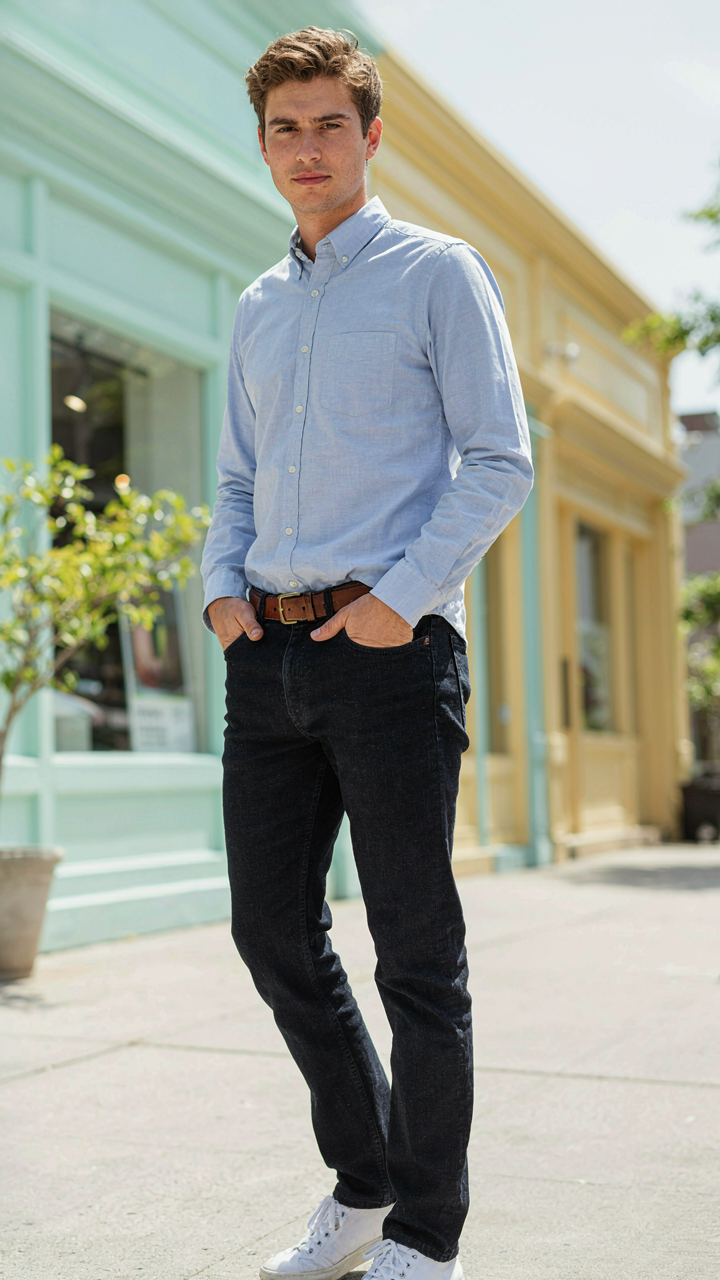
You’re reading this because you want to look intentional without looking like you tried. The French tuck works through selective volume management: you tuck only the front center of your shirt, leaving the sides and back untucked. This creates a visual anchor at the torso while maintaining the relaxed proportions casual wear demands. The mechanism is simple geometry—the tucked portion shortens your visual midsection while the drape of untucked fabric at your sides adds width without bulk.
The French tuck emerged from workwear practicality before becoming a style signal. Laborers tucked front panels to prevent fabric from catching on tools. Fashion absorbed this because it solves a real problem: standard untucked shirts on most body types create shapelessness, while full tucks feel formal. The French tuck splits the difference.
- Dress shirts with casual fabrics: Oxford cloth and linen French tuck cleanly without the formality a full tuck creates. The texture signals deliberate styling rather than accident.
- Camp collar shirts: Bowling shirts and Cuban styles benefit most from this tuck because they have enough volume to drape properly on the sides while the front stays anchored.
- Oversized cuts: Larger proportions require the French tuck to avoid looking sloppy. Full tucks bunch fabric at the waistband; partial tucks distribute volume evenly.
- Short sleeve shirts: Three-quarter sleeves and short sleeves expose more torso, making front-tuck placement more visible and therefore more intentional-looking than untucked alternatives.
- Patterned or textured pieces: Leaving fabric untucked on the sides lets patterns continue unbroken, creating visual continuity that a full tuck would disrupt.
Execute the French tuck by pinching the center front of your shirt at the sternum, pulling it down into your waistband two inches, then releasing. The fold should sit centered. Adjust the depth based on your shirt length: longer shirts need deeper tucks, shorter ones stay shallow. Your belt should be visible or implied by the tuck line itself.
Experimenting With Asymmetry: Personal Style Breakthroughs
Most casual dressers avoid asymmetry because consensus says “balance is always right.” That consensus is wrong. Asymmetry signals you made an active choice rather than defaulted to convention. One-sided tucks, diagonal tucks, or tucking only one layer of a multi-textured shirt creates tension that reads as confidence, not mistake.
Asymmetrical tucking requires understanding your body’s natural proportions first. If one shoulder sits higher or one side of your torso appears larger, an asymmetrical tuck can optically correct or deliberately exaggerate that difference depending on your intent. Tuck the side that needs visual weight reduction deeper, leaving the other side looser or untucked entirely. This isn’t decoration—it’s structural dressing. The action is specific: identify the asymmetry you own, then mirror or counter it with your tuck placement to shape how others perceive your frame.
The Real Obstacle Isn’t The Tuck; It’s Your Inability To Command Attention Without It

Most people learn to tuck a shirt and think they’ve solved something. They haven’t. A perfect tuck means nothing if you carry yourself like you’re apologizing for existing. The real game is presence. The shirt just follows. Pick one tuck style today and stop second-guessing yourself. Confidence looks better than any technique ever will.