

The Illusion Of “Appropriate”: Why Most Blazer Advice Fails

What Generic Style Guides Actually Do
You want permission to look professional without thinking too hard about it. That’s the real reason you’re reading this. Generic guides fail because they treat the blazer as a neutral container instead of a signal system. They tell you “pair with tailored trousers” or “add a silk cami” without asking what message you’re actually sending, to whom, and why it matters for your specific situation.
The mechanism is simple: consensus advice skips the diagnosis. It assumes all blazer wearers have the same goal, same body type, same workplace culture, and same social position. They don’t. A blazer functions differently for a partner at a law firm than for a freelancer in tech. The fit, color, material, and styling cascade change based on what you’re actually trying to accomplish, not what a template says you should do.
The Blazer As Signal, Not Costume

Think of blazer strategy the way a biologist approaches adaptation: form follows function. The blazer you choose isn’t a style choice—it’s a behavioral signal. Most women treat it as a costume they put on when “dressing up,” then strip off. That’s backward. The blazer either works as a uniform that establishes authority and consistency in your space, or it reads as performative and creates distance between you and credibility.
The difference matters operationally. A uniform blazer stays in rotation. It anchors your weekly outfit architecture. You buy fewer pieces but wear them more deliberately. A performative blazer gets one or two wears before it feels exhausted. To make the blazer work, stop asking “Is this appropriate?” and start asking “Does this establish the role I’m claiming in this room?” Your answer determines everything downstream—the tailoring, the silhouette, the fabric weight, the styling protocol.

The “Gravitas” Protocol: Deploying The Timeless Blazer

Cut And Fabric: The Non Negotiable Foundation
You want people to take you seriously without saying a word. The mechanism is simple: fabric weight and cut determine whether a blazer reads as intentional or desperate. Cheap fabric moves wrong on your body. It clings, bunches, and betrays the whole outfit. Structure comes from weight, not from how tight you make it. A quality blazer holds its shape through the day because the cloth itself has integrity.
Natural fibers dominate here for a reason. Wool, linen, and silk blends maintain shape better than synthetics. The fibers have memory. They bounce back. A 100 percent wool or wool-blend blazer in the 8 to 12 ounce range handles repeated wear without degrading. Cotton blends work for summer, but they wrinkle faster and don’t project the same authority. Cut matters equally. Shoulders should sit flat without puckering. The button point should hit at your natural waist, not below it. Armholes tight enough to move freely but not so tight they pull fabric across the back.
The Core Blazer Rotation
Most advice stops at “get a black blazer.” That’s incomplete. You need three distinct pieces doing different work. Start with a structured wool blazer in navy or charcoal. This is your workhorse. It pairs with everything and reads professional across industries. Next, add a neutral blazer in cream, camel, or gray that can layer over patterns without fighting for attention. Finally, choose one in a deeper jewel tone or muted earth tone—burgundy, forest green, rust—that signals you understand proportion and color, not just convention.
The rotation solves a real problem: one blazer in rotation wears out faster. Rotation extends the life of each piece by distributing wear. Alternate them across weeks. This prevents the fabric from breaking down in high-stress zones like shoulder seams and button holes. Build collection depth slowly. You don’t need six blazers. Three high-quality options in rotation beats owning ten mediocre ones. When you pick each piece, verify the seams are finished cleanly, the lining isn’t bunching, and the weight of the fabric matches the season you plan to wear it.
Beyond Black: The Strategic Power Of An Outfit With Brown Blazer

Warmth Without Surrender
You want people to trust you but not fear you. That’s why brown blazer outfits matter more than the standard black recommendation. Brown reads as approachable where black reads as authority, and most women in professional settings need both signals at once. The mechanism is simple: brown reflects the natural world. It’s less confrontational, which means people relax around it and actually listen to what you say instead of reacting to the power signal you’re sending.
Brown blazers work in warm tones because they don’t fight your skin. A camel or chocolate brown paired with cream, ivory, or warm neutrals creates visual coherence instead of contrast. The outfit doesn’t make people work to understand it. Wear this combination in client meetings, presentations where you need buy-in, or any setting where being perceived as capable and human matters more than being perceived as in charge.
The Pairing Math Everyone Gets Wrong
Standard advice says brown goes with cream and calls it done. That’s incomplete. Brown blazer outfits actually follow contrast principles borrowed from visual design, where the rule is: anchor with one neutral, then create a secondary focal point with fabric texture or cut, not color repetition. Most women pair brown with beige pants and wonder why the outfit feels flat.
The real move is this: keep the base neutral but vary the weight or finish. Pair a brown wool blazer with tailored cream trousers in cotton or linen, then add visual interest through shoe choice or a structured bag. A cognac leather shoe or caramel suede adds depth without clashing. For weekends, brown blazer with dark denim and a crisp white tee works because white creates separation. The outfit lives on contrast, not color matching.
The “Cognitive Load” Principle: Business Professional With Jeans

Why Your Brain Hates Decision Making At 7am
You’re worried you’ll look unprofessional. That’s the real concern here. But the actual problem is simpler: your brain has finite decision-making capacity each day, and you’re burning it on outfit choices that don’t matter. Cybernetics calls this “constraint optimization.” In blazer outfit construction, the constraint is cognitive load—every variable you eliminate before you get dressed is bandwidth you keep for work that generates money. The mechanism is direct: fewer decisions equal fewer failure points.
The blazer plus jeans combination works because it collapses a multi-variable problem into a fixed formula. You’re not choosing between three dress codes anymore. The blazer signals authority and structure. The jeans signal you’re not performing subservience. Together they read as competent without trying. Your brain recognizes this pairing as “solved” and stops processing it. You’ve turned a daily recurring decision into an automatic protocol.
The Three Pairings That Hold
Dark indigo or black jeans with a structured blazer eliminate the mental work of “does this read as work appropriate.” The contrast is visual noise reduction. Skip the uncertainty. Dark denim paired with a tailored blazer in navy, charcoal, or black creates a baseline that works in almost every professional context. The pattern repeats because it’s not trendy—it’s mechanically sound. Your attention goes to the one variable that matters: the blazer fit.
White or cream jeans demand a blazer with weight and definition. Pale bottoms need dark tops to prevent a fragmented silhouette. A structured blazer in jewel tones, camel, or deep gray anchors the outfit and signals intention rather than accident. Neutral ground allows the blazer to function as the primary visual anchor. The formula doesn’t require matching—it requires contrast ratios that your eye processes as coherent. Repeat this structure until dressing becomes invisible.
Deconstructing Blazer Outfits For Women Business Casual
The Tension Between Formality And Access
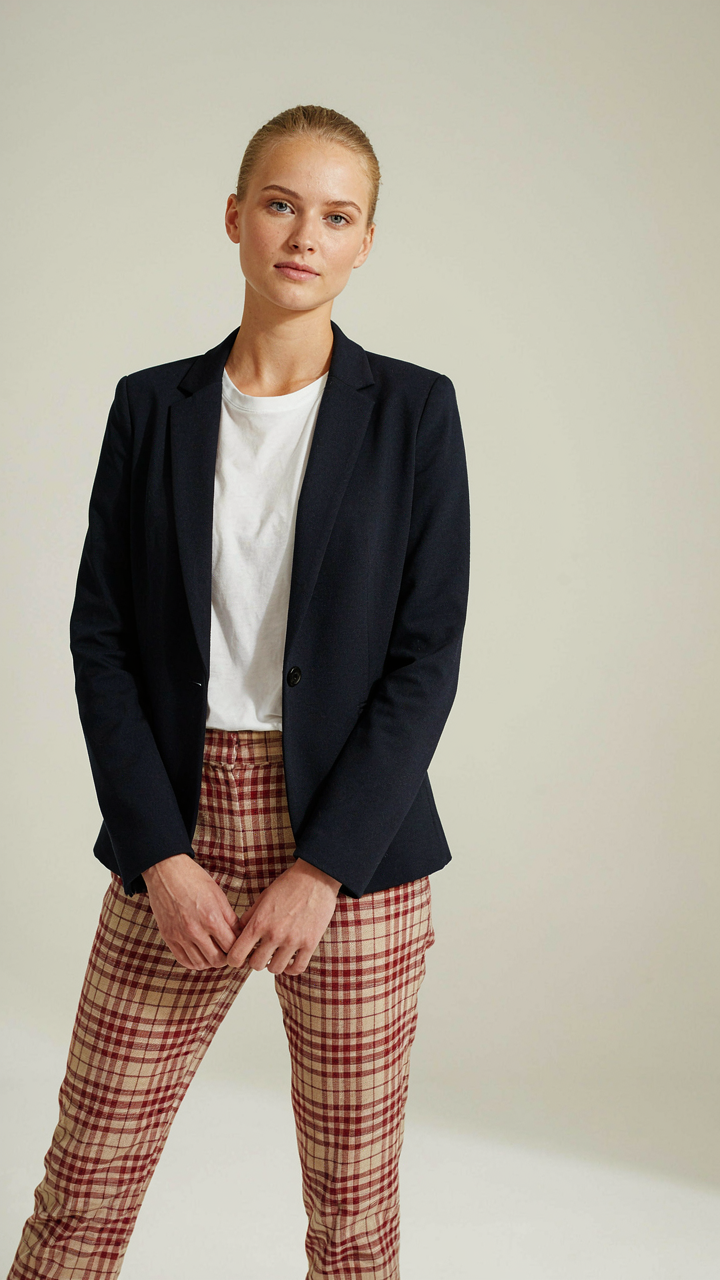
You’re worried people will judge you as either trying too hard or not trying hard enough. That’s the real problem. Business casual lives in the gap between “I respect this environment” and “I’m not a robot.” The mechanism is calibration: a blazer signals structure, but the pieces underneath determine whether you read as rigid or grounded. Most women choose wrong because they treat the blazer as the entire outfit instead of treating it as a single tool that needs supporting context.
The mistake everyone makes is pairing a blazer with pieces that match its formality level. That creates uniformity, which reads as stiff. You need friction. Wear a structured blazer over a t-shirt that breathes. Wear tailored trousers with a blazer but break the line with white sneakers or flat loafers instead of heels. The blazer anchors the outfit; everything else negotiates with it. That negotiation is what keeps you human and credible at the same time.
Fabric And Fit As Silent Communicators
Fabric weight and weave control how formal your blazer reads before anyone processes whether you’re wearing it. A wool blazer with a tight weave broadcasts structure and tradition. A linen blend or cotton blend reads as approachable without losing authority. The fit mechanism works like leverage in physics: the closer the blazer sits to your body without pulling, the more contemporary and intentional you appear. Oversized blazers, common in recent years, actually undermine business casual because they signal either borrowed-from-menswear rebellion or carelessness about fit.
Choose blazers with darts at the back and seaming through the torso. These details absorb excess fabric at key points, creating definition without tightness. Length matters tactically: the hem should hit at your hip bone or slightly below, never mid-thigh. A blazer that’s too long reads as borrowed; too short reads as costume. Sleeve length ends at your wrist bone with a half-inch of shirt cuff visible beneath. This fraction of an inch is what separates “someone who knows” from “someone who guessed.” Get blazers tailored to these exact points before you wear them anywhere professional.
Smart Casual Outfits With Jeans: The Underrated Power Play

Texture And Fit Create The Actual Formality Signal
You want jeans to work with a blazer because you’re terrified of looking overdressed or underdressed, and you think the blazer solves that. It doesn’t. The blazer just amplifies whatever signal your jeans already send. Borrow from industrial design: in product hierarchies, contrast defines function. A rigid, structured blazer paired with loose or distressed denim creates visual discord that reads as careless. A fitted blazer with high-rise, flat-front jeans in dark indigo creates coherence. The mechanism is simple: formality lives in proportion and surface uniformity, not in fabric type.
The texture rule matters more than most people acknowledge. A raw denim or heavily faded jean fights against a tailored wool or linen blazer. The blazer says “controlled.” The jean says “worn in.” Pick one story. Dark wash, minimal texture, and a straight or tapered leg work because they don’t distract from the blazer’s structure. If your jeans have visible seaming, distressing, or pilling, the blazer’s authority erodes. Your eye lands on the damage instead of the silhouette. Match the surface refinement: polished blazer pairs with polished denim.
Permission To Break The Rule Actually Exists
The “no jeans at work” rule is outdated fiction, and pretending it still applies costs you credibility. Most modern workplaces have already moved past this. The real constraint is context, not fabric. A financial services firm or law office still expects dressier signals. A tech company, creative agency, or hybrid role has already normalized jeans. The difference is whether jeans signal respect for the environment or indifference to it. A structured blazer in navy or charcoal over dark jeans reads as intentional everywhere. A blazer over distressed or light-wash jeans reads as you didn’t think it through.
The mechanism for wearing jeans with confidence is simple: know your room’s actual dress code, not the one written on the handbook. Observe what senior people wear. If they wear jeans, you have clearance. If they don’t, adapt accordingly. A blazer doesn’t override context. It communicates that you’ve chosen your appearance deliberately. Wear jeans with a blazer only when you can defend the choice by pointing to actual precedent in your space. This isn’t about permission slips. It’s about reading signals accurately and matching them.
The “Versatility” Fallacy: How To Actually Use Women Blazer With Jeans

Elevating Denim Without Looking Confused
You want permission to wear jeans to places that matter. That’s the real ask here. The mechanism is contrast ratio. Design uses it to separate elements visually—think black text on white paper versus gray on beige. A blazer works with jeans because it creates a visual break. The blazer sits at the top, reads as structured and intentional, while jeans remain casual below. The eye lands on the blazer first. That’s the entire game.
The fit matters more than the price. A blazer that hits at your hip or slightly below, with shoulders that sit on your actual shoulder, automatically elevates standard jeans because the proportions say “intentional.” Oversized or cropped blazers muddy the message. Pair this with dark denim or black denim—not light wash, not distressed—and you’ve built the contrast needed to make casual read as curated.
- Structured blazers in neutral colors: Navy, black, camel, or charcoal create visual hierarchy and don’t compete with denim for attention in a crowded space.
- Tailored fit through the shoulders: Blazers that slope naturally signal intention and polish, whereas ill-fitting shoulders make the entire outfit look accidental.
- Dark or black denim: Lighter washes reduce contrast with most blazers and flatten the elevated effect you’re trying to build.
- Straight or slim leg jeans: Wide legs or extreme silhouettes distract from the blazer and break the visual line that says “professional casual.”
- Monochromatic tones top to bottom: Staying within the same color family (navy blazer, dark jeans, dark shoes) extends visual length and reads more intentional than mixing competing colors.
The second layer is footwear. Loafers, flats, or pointed-toe heels anchor the outfit in intentionality. Sneakers, even white ones, reset the message back to casual and undo the blazer’s work. The blazer only reads elevated when everything beneath it follows the same visual logic.
What Actually Bridges Casual And Professional
Stop thinking about “closing the gap” as if casual and professional are supposed to be enemies. Economics calls this market positioning—the blazer is your price anchor. It tells the room which shelf you’re on. Jeans keep you approachable. The tension between them isn’t a problem to solve. It’s the entire point.
The real move is repetition in your accessories. Wear the same bag style twice a week with blazer-and-jeans outfits. Use the same watch, the same shoes, or the same jewelry pairing consistently. Repetition signals authority. It says you didn’t scramble this together. People with actual stakes in their appearance build patterns, not randomness. The blazer stops being a costume and starts being a uniform element when your accessories stay consistent.
Jewelry acts as a decoder. Gold or silver worn intentionally—matching metal across pieces—signals refinement. Mismatched metals or excessive pieces read as unsure. Keep it to two zones: wrist and neck, or wrist and ears. One statement piece maximum. This restraint makes casual denim look deliberate instead of accidental, because it says you know what matters.
Outfits For Professional Women: Beyond The Boardroom

The Authority Translation Problem
You want the blazer to work everywhere because you’re tired of maintaining separate wardrobes for different parts of your life. Here’s the mechanism: a blazer reads as authority only when the rest of your outfit signals you belong in that specific context. The fabric weight, fit, and pairing don’t change, but their effect does based on what surrounds them. Wear a structured blazer with tailored trousers and you’re in a boardroom. Wear the same blazer with dark jeans and you’re either underdressed or intentionally breaking a code. Context collapse is real.
The mistake most women make is assuming a quality blazer solves the problem alone. It doesn’t. A blazer is a signal amplifier, not a translator. You still need to read the room and adjust the supporting pieces. The blazer’s job is to make authority visible. Your job is to ensure that authority aligns with what people expect in that setting. This means you’re not shopping for one blazer that works everywhere. You’re shopping for one blazer that works in the places where you can afford to be slightly overdressed without friction.
Client Meetings And Strategic Presence
Most advice here is garbage. People tell you “dress for the job you want” as if intention matters more than perception. It doesn’t. What matters is whether the person across the table perceives you as someone worth their time before you speak. A blazer creates that perception through contrast. In a room of casual dress, it signals preparation. In a room of formal dress, it signals baseline competence. The blazer is the uniform that says you take this seriously.
Client meetings demand a blazer that fits at the shoulders and has a finished hem. Skip the trendy cuts. Go for classic construction. Pair it with a plain blouse in white, cream, or light blue. Avoid patterns that distract. Your shoes should be closed-toe leather in black, navy, or neutral brown. The entire outfit should say “I handle details” without requiring a single word from you. At networking events, the blazer operates differently. It becomes permission to stand alone in a room. You’re not just a person. You’re a person with structure, which people interpret as purpose.
The “Signature” System: Crafting Unique Outfit Blazers

Stop Copying What Works For Someone Else
You want permission to dress like someone successful because you think their aesthetic will transfer their credibility to you. It won’t. The mechanism is recognition, not mimicry. Your brain spots a blazer style and anchors it to a specific person or context. When you wear the same thing, you trigger that same association in others’ minds. You become a copy, not an authority. A signature blazer system works because it’s built on your constraints, your body, and your actual life, not borrowed from someone else’s Instagram.
Build your style around three fixed variables: your workplace dress code, your body’s proportions, and the occasions you actually attend. If you work in tech, your blazer system differs fundamentally from someone in finance or consulting. If you’re 5’2″, a knee-length blazer that works on a 5’9″ person will overwhelm your frame. Your signature emerges from solving your specific problem, not from aesthetic ideals. This is why generic “blazer outfit inspiration” fails. It skips the diagnostic work.
Quality Compounding Over Trend Cycling
This is simple economics: a blazer worn 200 times across three years costs you less per wear than one worn 12 times before it goes to the back of the closet. Better fabrics hold shape longer. Better construction withstands dry cleaning and movement without pilling, seam slippage, or collar roll. You’re not paying for luxury. You’re paying for durability that makes the math work. A thirty-dollar blazer that lasts a season costs more per wear than a two-hundred-dollar blazer that lasts five years.
Start with one neutral blazer in wool or a wool blend in navy, charcoal, or black. Wear it until you know its limits. This teaches you what actually breaks in your life: do you need stronger buttons, reinforced seams, or a different shoulder structure? Once you understand your real requirements, upgrade to a better version of that same blazer. You’re not collecting pieces. You’re iterating on one core tool until it becomes automatic.
The Blazer As A Social Architect: Building Perceptions

Fit And Structure Shape How People Read You
You want to know if a blazer will make you look more competent or authoritative, and the real answer is simpler than you think: fit is a signal processor. Your brain reads structure the way physics reads boundaries. A blazer that actually fits your shoulders sends one message. One that drowns you sends another. There is no middle ground where people assume you “just like loose clothes.”
- Shoulder seam placement: The seam must sit where your shoulder ends, not past it or before it. Misalignment reads as either costume play or careless grooming, both damage credibility instantly.
- Chest room: Tight enough that you can button it without pulling fabric, loose enough to move your arms fully. Strain across the chest triggers the same brain region that flags physical threat.
- Sleeve length: Ends at your wrist bone, not covering your hand or leaving gap at your wrist. Arms that disappear or overshoot read as either submissive or sloppy.
- Torso length: Should hit at your hip or slightly below, never bunching at the waist or hitting mid-thigh. Length determines whether you appear grounded or adrift.
- Lapel width: Proportional to your shoulder width and face shape, not trend-chasing. Oversized or tiny lapels on the wrong frame create visual discord the viewer feels before they think it.
The mechanism is visual weight distribution. A fitted blazer centers attention on your face and communicates that you understand proportion. People unconsciously interpret fit as intentionality. Intentionality reads as control.
Color And Pattern As Outcome Engineers
Stop treating color choice as aesthetic preference. Color and pattern are outcome technologies. A neutral blazer in a professional setting doesn’t make you blend in—it makes you invisible enough that people focus on what you say, not what you wear. A patterned or saturated blazer makes you unmissable but requires you to own that visibility fully or it backfires.
Navy, charcoal, and black blazers work across contexts because they don’t compete for attention. They establish a baseline. Burgundy, forest green, or camel shift the interaction—people notice first, then listen. Use pattern (herringbone, subtle checks, small weaves) to add dimension without chaos. Solid colors give you control of the room’s focus. Patterns give you presence at the cost of flexibility. Choose based on what the situation demands from you, not on what feels safe.
Your Biggest Obstacle Isn’t The Outfit; It’s Your Inability To See Clothing As Leverage
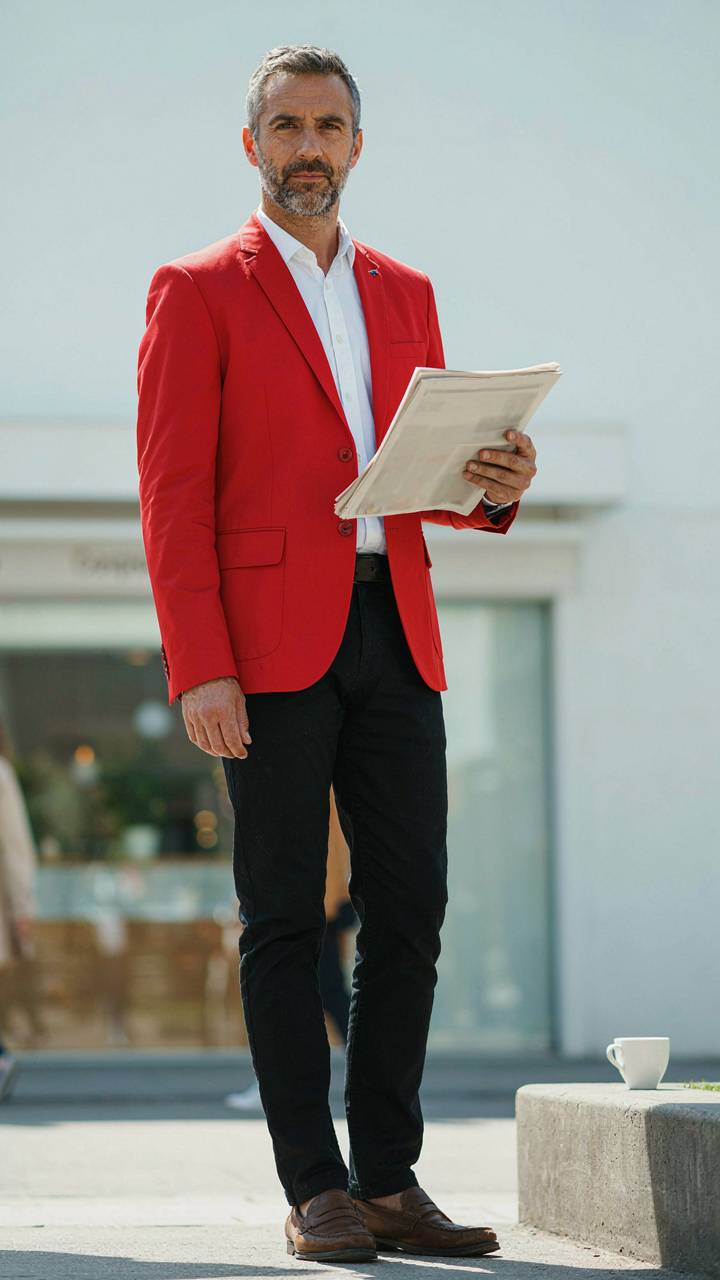
You don’t need more blazers. You need to stop treating them like decoration and start treating them like currency. Every blazer you own is a tool for commanding attention, reshaping how people perceive you, and moving through rooms with intent. Most women buy blazers and never wear them because they haven’t connected the dots between what they wear and what doors open. Stop waiting for the perfect outfit. Grab one blazer today, wear it somewhere that matters, and notice how differently people treat you. Clothing isn’t self-expression. It’s negotiation.