

The Linen Anomaly: Why Wrinkles Are Your Advantage, Not A Flaw
Stop Treating Wrinkles Like Failure
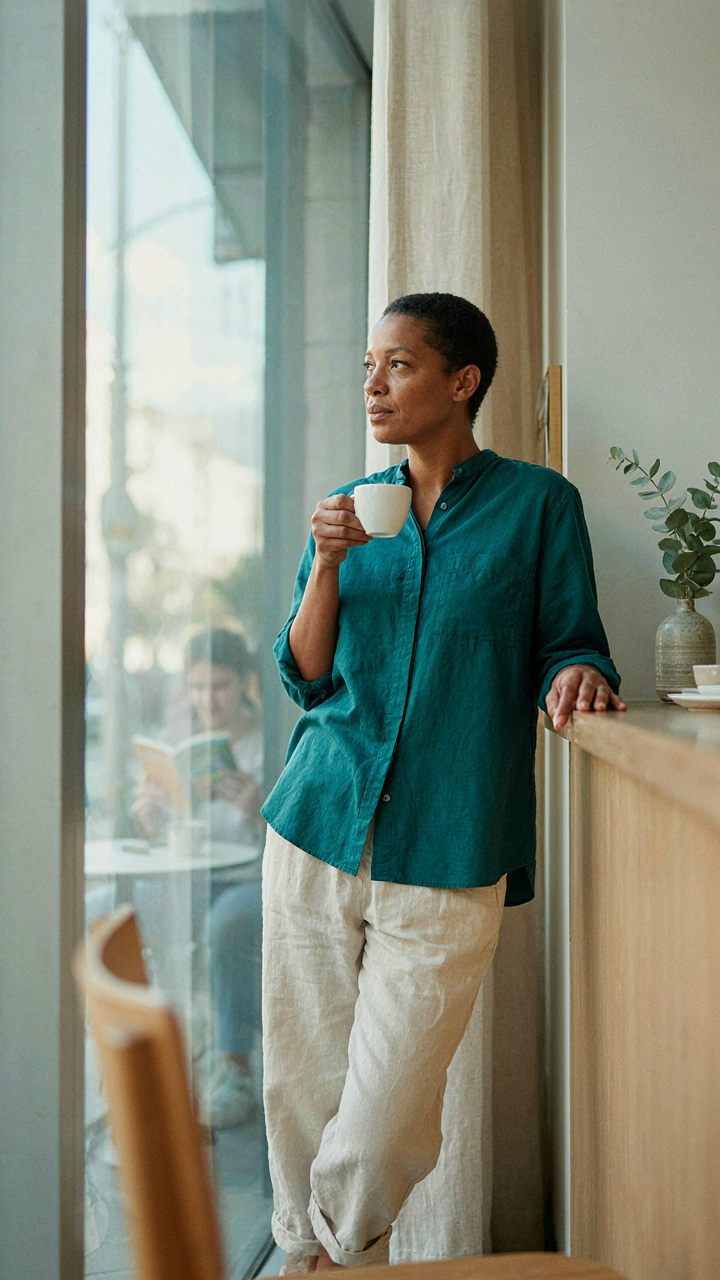
You’re afraid wrinkled linen makes you look sloppy, and that fear drives the entire ironing industry’s marketing. Here’s the mechanism: linen’s cellulose fibers absorb moisture and shift shape constantly. This isn’t a defect. It’s the material’s actual behavior. Fighting it wastes energy. Accepting it builds the outfit.
Wrinkles in linen function like noise in communication theory: they signal authenticity because they’re hard to fake consistently. A perfectly pressed linen pant reads as either over-processed or synthetic. Natural texture creates credibility. The outfit works because it stops fighting physics.
The Lived In Edge

Wrinkled linen reads as intentional restraint, not negligence. The distinction matters tactically. When you wear linen with visible creases, you’re signaling you chose fabric function over appearance management. This builds status differently than perfection does: through effortlessness rather than effort. The wrinkles become evidence of real wear, not poor maintenance.
Wrinkles are the linen pants outfit’s built-in differentiator. Other fabrics hide their nature; linen announces it. This honesty pairs with warm-weather dressing because both demand acceptance of what bodies actually do: move, sweat, crease. Stop ironing and start dressing with your material’s actual properties. The outfit improves the moment you stop fighting the fiber.

Beyond Boho: Elevating Your Womens Linen Pants Outfit For Impact

Structure Over Softness
You want permission to look intentional instead of like you grabbed what was clean. The mechanism is contrast: linen’s inherent looseness needs a visual counterweight, not an echo. A structured top creates what graphic designers call positive and negative space. Your linen pants outfit stops reading as “I’m comfortable” and starts reading as “I made a choice.”
Pair linen with tailored blazers, fitted turtlenecks, or crisp button-ups. The structured piece anchors the outfit’s visual weight at the top, making relaxed linen read as deliberate rather than default. Avoid pairing linen with equally loose tops. That combination reads as a shape with no definition. The contrast is what elevates the entire outfit from casual to composed.
Restraint In Metal And Hide
Most people overcomplicate accessories and dilute their linen pants outfit with noise. Your metals should match in finish: all warm gold, all cool silver, or all matte. One quality leather piece—a belt or bag—grounds the look. Linen’s texture already demands visual attention, so accessories should recede, not compete.
Skip layered necklaces or mixed metal finishes. A single metal cuff or structured leather crossbody works. Keep the color story tight: black, cognac, or natural leather pair cleanly with linen neutrals. Accessories exist to punctuate the outfit, not decorate it. Choose one statement piece maximum, then use metal and leather as structural connectors between your top and bottom.
The White Linen Pants Outfit Protocol: Avoiding Predictability

Texture Stacking Without The Resort Cliché
You want people to see sophistication, not a vacation catalog photo. Here’s what actually works: the mechanism is contrast through material density. Linen is loose and porous by design, so pairing it with structured fabrics creates visual tension that reads as intentional rather than thrown together. Cotton poplin, silk, raw denim, or even wool crepe all work. The key is not matching weight to weight. Light linen demands one heavier or crisper element to anchor the outfit.
Start with a natural linen pant in cream or stone. Layer a linen shirt in the same tone if you want cohesion, but add a structured overshirt in contrasting material. A raw linen canvas jacket works. So does a cotton twill overshirt in a muted olive or charcoal. The palette stays restrained—avoid more than three colors. Texture does the work that color normally would. Finish with a subtle knit in linen blend if layering feels necessary for the season or setting.
Shoes That Signal Intention
The common advice is “wear sandals or boat shoes with linen.” That’s incomplete and lazy. It locks you into leisure-wear territory when linen pants actually function across contexts. Think like a stylist using visual editing: footwear either completes the outfit’s narrative or contradicts it. You control which.
White leather low-tops or minimal leather sneakers ground a linen outfit in intentionality. They say “this works anywhere” instead of “I dressed for the beach.” Leather loafers in cognac or oxblood work the same way. Even oxford cloth shoes in neutral tones create formality that white linen pants can’t touch alone. Sandals are acceptable only when deliberately paired with relaxed textures and muted tones—otherwise they default to tourist wear. Swap the footwear, shift the entire read of the outfit.
The “Linen Look” Deception: Real Fabric Vs. Impostors

How To Spot Real Linen Before You Buy
You’re afraid you’ll spend money on something that looks cheap after one wash. Here’s the mechanism: real linen comes from flax plant fibers and has a specific cellular structure that creates visible slubs—those irregular thick spots in the weave. Retailers exploit this by selling linen blends or cotton-linen hybrids labeled vaguely as “linen-inspired,” banking on the fact that most people won’t check the fiber content tag before checkout.
The tag is the only source of truth. Pure linen reads 100% linen. Anything else—linen-cotton blend, linen-viscose blend—will behave differently when wet, wrinkled, and worn. Blends wrinkle less, which sounds good until you realize linen’s wrinkle profile is actually its selling point for warm-weather wear. You’re paying linen prices for fabric that fights its own purpose. Check the tag. If it doesn’t say 100% or at least 95% linen, you’re buying a compromise masquerading as the real thing.
Weight Changes Everything About How It Works
In textile physics, weight determines drape—the way fabric falls against your body and its ability to move air. Linen comes in three weight categories: lightweight (under 150 grams per square meter), medium (150-250 gsm), and heavy (over 250 gsm). Most linen pants for warm days use lightweight or medium weight because heavy linen stiffens and traps heat rather than dispersing it.
Lightweight linen drapes like it’s barely there but wrinkles aggressively and shows every movement. Medium-weight linen is the practical middle ground—it wrinkles without looking disheveled, holds its shape through a day, and moves air effectively. Heavy linen looks structured but becomes a liability in heat. Touch the fabric before buying. Run your fingers across the weave. If it feels papery or stiff, it’s too heavy for warm weather, regardless of what the label promises about breathability.
Tops For Linen Pants Women: The Inverse Pyramid Principle

Restraint Beats Decoration Every Time
You’re worried a simple top will make you look boring. The mechanism is economic: scarcity of effort creates perceived value. In fashion, this translates to the law of diminishing returns. Every design element you add competes for attention. Linen pants already dominate the outfit through texture and drape. A fitted linen shirt, white tank, or plain tee doesn’t fight for dominance—it establishes hierarchy. The simpler the top, the more your linen pants become the statement. Brands charge premium prices for basics because consumers associate restraint with quality and intentionality.
A plain white button-up over linen pants reads expensive. A graphic tee under linen pants reads cheap. The math is brutally simple. One piece that respects the linen’s natural texture will always outperform three pieces competing for visual weight. Strip away the notion that more details equal more style. The opposite is true in warm-weather dressing. Your top’s job is to disappear, not perform.
The Curated Capsule Approach
Scarcity principle operates here: limited options force intentional selection. Instead of a closet full of tops, you own five pieces that actually work with linen. A cream linen shirt. A natural cotton tank. A lightweight striped tee. A butter-colored silk camisole. One oversized linen button-up in a neutral. Each piece feels rare because you use it repeatedly and it matters. Repetition with intention signals taste more than variety ever will.
This strategy flips the typical advice that more options equal better style. It doesn’t. More options create decision fatigue and poor combinations. When your top inventory matches your linen pants inventory, every pairing works. You’ll reach for the cream linen shirt because it’s the only cream option. That consistency builds a recognizable aesthetic. Wear the same five tops with your linen pants for thirty days and watch the outfit lock into place.
Beach Living Outfits Refined: Coastal Without The Cliché

From Sand To Table In One Outfit
You want the social proof of looking effortlessly put-together across two different environments without changing clothes, because that signals actual competence, not vacation mode. The mechanism is constraint-based dressing: linen pants work this transition because linen’s natural texture reads as intentional in both casual and formal settings. Most people fail here by treating beach and dinner as separate outfit problems. They’re not. They’re one problem solved by choosing neutral linen, proper fit, and complementary layers.
The specific play is fit-first, then fabric-second. Linen pants that skim your leg without clinging or ballooning work equally at a beach bar and a restaurant. Pair them with a structured short-sleeve shirt in white or cream that you can wear untucked over sand or tucked for formality. Add a lightweight overshirt in linen or cotton that transitions both contexts. The progression requires nothing expensive or trend-dependent, just deliberate piece selection. Here’s what actually works:
- White linen pants with a structured taper: Creates visual authority without formality, reads refined in both settings, requires no rolling or adjustment between environments.
- Cream or ivory short-sleeve button-up: Neutral enough to layer under a jacket, casual enough for beachside casual, doesn’t require ironing obsessively after salt water exposure.
- Lightweight linen or cotton overshirt in natural tones: Acts as your formality toggle, worn open over dinner, tied at waist for beach, moves between contexts without looking overdressed.
- Minimal accessories: A canvas belt or no belt, leather sandals that transition to a restaurant floor, one watch or none, keeps visual weight neutral across both scenes.
- Neutral undergarments: Visible tank or t-shirt under your shirt should match your linen color, prevents color blocking that signals costume-like transitions.
The real constraint is consistency. Don’t choose a vibrant linen pant color for beach then expect a muted overshirt to bridge dinner. Linen’s wrinkled texture already signals casual. Your color story has to do the work of formality. Stick to warm neutrals across all pieces, and the outfit reads coherent everywhere.
Colors Beyond The Navy Trap
Most coastal outfit advice defaults to navy, white, and stripes because these colors are safe and require no decision-making on the dresser’s part. That’s precisely why they fail to register. Naval historians know the principle: standardization wins battles but destroys distinction. Your outfit needs distinction within the constraint of warmth-appropriate color. The real palette lives in earth-based neutrals that linen actually showcases: warm sand, weathered stone, olive, warm gray, and terracotta. These colors don’t compete with linen’s texture; they complement it.
The mechanism is material-color fit. Linen is a vegetable fiber with natural variation in weave density. It photographs and appears differently depending on undertone. A warm sand linen pant doesn’t read generic the way navy does because sand tones are uncommon in casual wear. Add a shirt in weathered sage or warm taupe, and you’ve built a cohesive palette that signals intentional choice, not guidebook compliance. This works because warm undertones make linen glow instead of go flat. Your overshirt in a subtle olive or warm gray repeats the earth-tone story without adding visual noise. The coherence itself becomes the signal.
The Lightweight Summer Outfits Illusion: It Is Not Just About Coolness

Airflow Over Thread Count
You want people to assume you’re comfortable because you look effortless, but comfort isn’t aesthetic. Linen’s real function comes from physics: the fabric creates convective cooling through air circulation, not because it’s thin. The weave structure itself matters more than weight. Loose weaves allow moving air to contact skin directly, dissipating heat faster than dense fabrics do. A heavy linen with an open weave outperforms a lightweight cotton with tight construction every time. Most people buy based on how linen looks, not how its structure performs.
The mechanism is simple: airflow needs a path. Linen’s naturally irregular fibers create that path without effort. When you wear a linen pants outfit, you’re relying on capillary action and air gaps between fibers to move moisture away from skin and let evaporative cooling happen. Fit matters here too. Loose silhouettes accelerate this process. Tight linen pants trap air and defeat the whole advantage. The goal isn’t just breathability, it’s active heat management through deliberate construction.
Layering For Sun And Variability
The advice to “dress light” in summer is incomplete. Real strategy requires protection from UVA and UVB radiation while managing temperature swings from morning cold to afternoon heat. Linen pants alone don’t shield you. You need a second layer that moves. A lightweight linen shirt worn open over a fitted tank creates an insulating barrier against direct sun without trapping body heat underneath. The air channel between layers functions like a ventilation system.
Build your linen pants outfit for temperature variance, not static conditions. Start with moisture-wicking base layers that pull sweat away from skin, add your linen pants, then add an overshirt you can remove or roll up as conditions shift. This isn’t layering for style, it’s layering for environmental adaptation. The specific sequence matters: moisture management first, then the linen shell, then sun protection on top. This stacking prevents the sweaty, uncomfortable collapse that happens when you wear one heavy piece.
Mode Inspo: Curating Your Unique Linen Aesthetic

Build A Personal Uniform Instead
You want permission to stop thinking about what to wear. That’s the real reason you’re reading this. The mechanism is simple: constraint reduces decision fatigue and increases actual style coherence. A personal uniform means you repeat core pieces—linen pants in one or two colors, three shirts that work with them, one shoe type. This isn’t lazy. It’s the opposite. It forces you to understand what actually works on your body instead of chasing trends that dissolve in two seasons. Start by identifying your base linen pant: natural, olive, or navy. Then build outfits around that single anchor. You’ll notice combinations that repeat because they’re efficient, not boring.
The common advice says “express yourself through variety.” That’s wrong for most people. Variety without strategy creates decision paralysis and wardrobes full of pieces that don’t talk to each other. Your uniform becomes a filter that makes getting dressed automatic. You spend zero mental energy on combinations. You spend all of it on presence and work. When you wear the same linen pants three times a week with different tops, people notice the top, not that you’re repeating pants. They notice you, not your clothes. That’s the entire point. Track which combinations you actually reach for over three weeks. Those aren’t coincidences. Build your uniform around those three to four outfits.
Kill Outfits That Contradict You
The outfit that looks objectively good but doesn’t feel right when you wear it is the one you need to eliminate first. This isn’t about taste. It’s about alignment between the image you’re projecting and the person you actually are. If you wear a linen pants outfit that reads as “aspirational you” instead of “actual you,” you’ll abandon it eventually and waste the money. The cognitive dissonance is real. You move differently, speak differently, even stand differently in clothes that don’t match your operating system. Identify one linen outfit right now that feels this way. Don’t wear it again. Redirect that piece into another combination or let it go.
Most advice on wardrobe building ignores this because it’s uncomfortable to admit some outfits make you feel like an impostor. But that feeling is data. Your body knows when you’re performing versus existing. A natural linen pant outfit that forces you into a social role you don’t occupy fails regardless of how well it photographs. The mechanism is simple: clothes reinforce identity or they create friction. Test each linen outfit in a real environment for one full day. If you’re thinking about how you look more than three times, it contradicts who you are. Replace it with something that requires zero self-monitoring.
Stop Chasing Trends. Your True Obstacle Is Believing Style Must Be Complicated

The linen pants outfit works because it abandons complexity, not because it chases it. You’re stuck believing that looking good requires constant research, multiple pieces, and perfect coordination. It doesn’t. Buy one pair of linen pants that fits your body today. Wear it with a shirt you already own. Notice how simple becomes powerful when you stop overthinking. Style isn’t hard. Your brain is just lazy and wants permission to make it easy.