
The Myth Of “Saving Money”: Why Fast Fashion Costs You More

What You Actually Pay Per Wear
You think you’re saving money because the price tag says $15. That’s the lie you want to believe. Economics calls this “total cost of ownership,” and fast fashion exploits your refusal to calculate it. A $15 shirt that falls apart after five wears costs $3 per wear. A $60 shirt that lasts two years of regular rotation costs $0.12 per wear. Fast fashion companies know you won’t do this math, so they price the transaction to feel painless while the actual cost per use remains invisible.
The math compounds when you factor in replacement frequency. Most fast fashion purchases enter your closet and exit within a year. You buy the same shirt in three colors because the first one stretched. You replace jeans because the seams split. You accumulate inventory because nothing lasts long enough to become a reliable staple. This isn’t budget shopping. It’s a subscription model disguised as affordability.
The Extraction Hidden In Disposal

Throwing away clothes costs you twice: once at purchase, once at disposal. When a garment fails, you replace it. When you replace it, you buy another replacement. Fast fashion banks on this cycle. A garment designed to fail in six months forces you into perpetual buying mode. The industry manufactures artificial scarcity by making items unwearable, not by running out of stock. You’re not saving money on the cheap piece. You’re hemorrhaging money on the system built around it.
Most people donate or trash worn-out fast fashion items. Donation centers reject pieces that are too damaged. Landfills absorb what doesn’t sell. You see this as getting rid of clutter, not as a financial loss. But that loss is real. Every discarded piece represents capital you spent that generated zero value. Build a wardrobe of pieces designed to last three to five years, and you stop funding the replacement treadmill. Stop buying based on price. Start buying based on wear-per-dollar, and fast fashion becomes objectively expensive.

Beyond Trends: Cultivating Your Anti Fast Fashion Aesthetic

Style Anchors, Not Trend Chasing
You want permission to stop feeling behind. The real mechanism here is identity debt: every trend you chase is a claim you make on who you are, and you pay it back in money and mental space when it dies. Borrow frameworks from psychology instead. Your personal style is a signal system. It communicates who you are without needing external validation every season.
Most people confuse personal style with mood boarding. They collect images they like and buy pieces that match them. This creates a wardrobe with no spine. Real style is the intersection of three fixed points: what flatters your body, what you actually wear repeatedly, and what aligns with your daily life. When you anchor to these three points instead of seasonal hype, you stop needing new clothes to feel coherent.
The Foundation Pieces Strategy
Timeless wardrobe advice is hollow because it ignores economics: you build foundation pieces by tracking what you reach for under pressure. When you’re rushing, stressed, or tired, what do you grab? That piece is doing work. Buy more versions of it in different colors or fabrics. Cotton t-shirts that fit your shoulder width. Jeans in the exact rise and taper you actually wear. A blazer or overshirt that layers over what you own.
The second move is proportional repetition. Three to five neutral base colors that work with your skin tone, worn in rotation across your entire wardrobe. This sounds restrictive until you realize you’re eliminating mental friction. You wake up and reach for pieces that already coordinate. You add one patterned or textured piece per outfit if you want contrast. This system compounds. After six months, you own sixty wearable outfit combinations with forty pieces instead of two hundred pieces you half-wear. Buy pieces only when you replace something worn out.
The 3 Step Wardrobe Detox: Stop Fast Fashion Overconsumption

The Brutal Purge: Eliminate Impulse Buys
You want permission to keep the stuff you bought but never wore, so you don’t have to admit you wasted money. Here’s the mechanism: fast fashion works because it exploits sunk cost fallacy. You’ve already paid. Holding onto unworn pieces doesn’t recover that loss, it compounds it by taking up physical and mental space, making you believe you need more to fill actual gaps. The purge isn’t about minimalism. It’s about removing the evidence that kept you trapped in the cycle.
Go through everything you own and separate three piles: worn regularly (past three months), worn occasionally, and never worn. Be ruthless with the third pile. Sell it, donate it, or trash it. The speed matters more than the method. You’re not going to wear that blazer in six months. You’re not going to “grow into” those jeans. The sooner these items leave your space, the sooner your brain stops using them as justification for buying more.
Strategic Gaps: What You Actually Need
Inventory theory from operations management teaches the concept of “stockout cost” versus “holding cost.” In your wardrobe, holding cost is high (mental load, decision fatigue, space) and stockout cost is low (you can wear something twice before laundry). Most people overestimate how many pieces they need because they conflate “what I might wear” with “what I’ll actually wear.”
Map your real life for two weeks. Note what you actually wear, not what you think you should wear. You’ll find you repeat five to seven core outfits. Build your replacement strategy around those pieces only. Buy one quality white shirt instead of seven cheap ones. One pair of jeans that fits instead of four that almost fit. One cardigan in a neutral color. The gaps you feel aren’t real gaps. They’re phantom needs your brain invented to justify shopping.
Investment Pieces: Quality Over Quantity Protocol
What Actually Makes Fabric Last
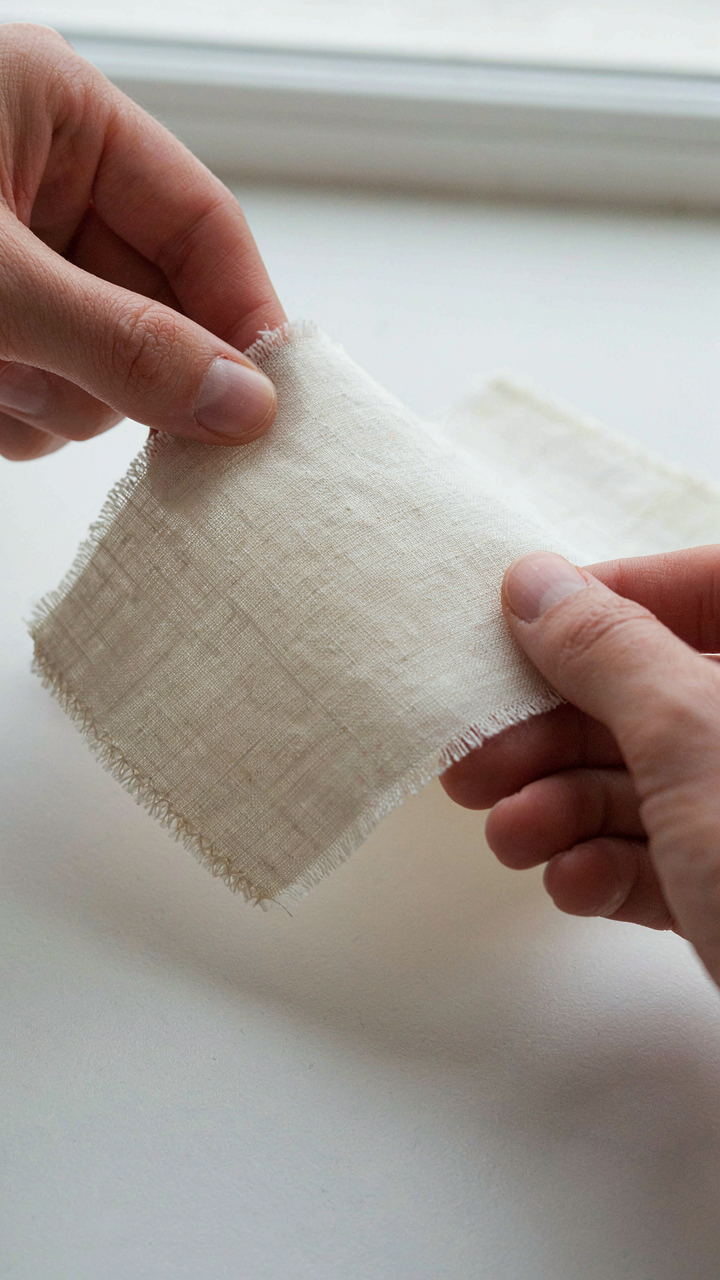
You want to believe buying expensive means buying smart. The real mechanism is material science, not price tag. Natural fibers like wool, linen, and cotton have structural integrity fast fashion abandons. Synthetic blends break down because petroleum-based polymers degrade under repeated washing and UV exposure. The weave density and thread count determine longevity more than brand prestige.
Examine fabric weight and weave tightness by touch. Hold the garment to light and check density. Durable pieces resist pilling, maintain shape after thirty washes, and show controlled fading rather than color loss. Check seams for reinforcement stitching and finished edges. Brands cutting corners on construction won’t hold investment pieces accountable anyway.
The Actual Cost Formula
Economics teaches marginal utility, the declining satisfaction from each additional unit. Apply this to clothing: a ten-dollar shirt worn twice costs five dollars per wear, while a hundred-dollar shirt worn fifty times costs two dollars per wear. Most people calculate wrong by ignoring the wear variable entirely and fixating on purchase price alone.
Find your baseline wear threshold by tracking actual usage. Document how many times you realistically wear different garment types. A blazer worn weekly for two years delivers better value than a trend piece worn three times. This shifts purchasing from emotion-driven picks to acquisition that matches your actual life patterns and wardrobe gaps.
The “Scarcity Mindset” Fallacy Of Fast Fashion

When Fear Drives The Cart
You care about this because you’re worried you’ll miss out. That’s the real mechanism fast fashion exploits: scarcity triggers purchase behavior faster than logic ever will. Economics calls this loss aversion, and fast fashion weaponizes it by rotating inventory every two weeks. Your brain treats a limited-time item as genuinely rare, even though the industry produces it in millions. The stores signal scarcity through “only a few left” labels and flash sales, but the real scarcity is manufactured theater designed to short-circuit your decision-making.
The psychological trick works because your brain evolved in actual scarcity. When resources were genuinely limited, speed mattered. Fast fashion hijacks that ancient survival response and redirects it toward polyester blouses you’ll forget about in three months. The moment you understand this mechanism, the urgency evaporates. You stop believing the scarcity is real because it isn’t. The inventory refreshes weekly because demand is engineered, not organic. Once you see the pattern, the emotional pressure loses its grip.
Abundance In A Smaller Closet
Counterintuitive advice says buy more to feel secure. That’s backwards. Actual security comes from owning fewer, better items you genuinely wear. A twenty-piece capsule wardrobe creates more outfit combinations than a bloated closet of impulse purchases. You wear only 20 percent of what you own anyway, so the other 80 percent is just psychological deadweight creating the illusion of choice while actually limiting it.
The shift happens when you stop measuring wealth by quantity and start measuring it by utility. Five quality pieces you wear consistently generate more value than fifty pieces gathering dust. This isn’t minimalism as aesthetic philosophy. It’s economics: you spend less money, make faster decisions, and actually use what you own. Start by tracking what you actually wear for one month. Then build backward from that data. The constraint forces intentionality. You buy only what fits your real life, not the imaginary life fast fashion sells you.
Alternatives To Fast Fashion: The Intelligent Consumer’s Playbook

Where Old Clothes Become Currency
You want permission to feel smart about your choices. That’s the real thing. Secondhand and vintage markets work because they flip the status game. Wearing a piece from 1975 signals curation, not just consumption. The mechanism is simple: scarcity plus history equals perceived value. A $8 vintage Levi’s 501 from a thrift store carries more weight socially than a $60 new pair from a mall brand because it required actual hunting.
- Thrift stores and consignment shops: Local and chain operations like Goodwill, Salvation Army, and independent consignment shops stock inventory from donations and direct seller arrangements. Prices run 70-90% below retail. Quality varies by location and timing.
- Online secondhand platforms: Depop, Vinted, Grailed, and Vestiaire Collective connect sellers directly to buyers. You access global inventory and specific sizing. Shipping costs reduce margins, so factor that into your math.
- Vintage-specific retailers: Dealers specializing in era-specific clothing (1950s, 1980s, workwear) curate and authenticate pieces. Prices run higher than thrift but lower than new designer. You pay for verification and selection work.
- Estate sales and auctions: Liquidation of personal collections happens weekly in most cities. Early arrival wins. You find volume at cost, but no returns and no guarantees on condition.
- Ethical brands with transparent supply chains: Companies like Patagonia, Everlane, and Reformation publish factory locations and labor standards. They cost 2-3x fast fashion but retain quality across seasons, meaning lower replacement frequency.
The math breaks simple: one $120 ethical piece worn 200 times costs $0.60 per wear. A $15 fast fashion piece worn 8 times costs $1.88 per wear. Longevity is the actual product, not the initial price tag.
Fix It Before You Discard It
Repair is not nostalgia. It’s inventory management. A torn seam, a missing button, or worn elastic stops most people from wearing clothes they already own. This is waste by design, not accident. The garment industry benefits when you discard functional pieces. Sewing a button takes twelve minutes and costs nothing. A tailor charges $15-40 for a hem or seam repair. That same garment now lasts another season or two.
Repurposing extends life without skill. Turn a worn t-shirt into a rag or gym towel. Cut jeans into shorts. Dye faded pieces back into use. These moves require no expertise and zero money. The real shift is mental: treating clothes as systems to maintain rather than disposable units. Build a basic repair kit. One needle, thread, scissors, and safety pins solve 80% of damage. When you own the tools, the friction of repair drops to zero, and you actually do it.
The Signaling Game: Why Avoiding Fast Fashion Elevates You

Status Through Conscious Consumption, Not Trends
You want people to know you’re above the churn. Here’s the mechanism: in economics, this is called signaling theory. A signal is costly to fake. When you quit fast fashion, you’re sending a signal that’s expensive to counterfeit because it requires actual restraint, knowledge, and a willingness to wear the same piece multiple times. Fast fashion is the opposite. It’s cheap noise. Anyone with money can buy the trend. Nobody notices the tenth identical shirt in a season. They notice when you wear one shirt for three years and it still looks intentional.
The person who owns six quality pieces that rotate will always outrank the person who owns sixty disposable ones. Not because quality is inherently superior, but because consistency signals control. You’ve made a choice and stuck to it. You’re not chasing validation through novelty. That restraint communicates more wealth and taste than any single garment can. It’s the difference between someone who shops and someone who owns.
Authenticity As The Ultimate Social Currency
The common advice here is dead: “just be yourself.” That’s not the mechanism. Authenticity isn’t being true to some inner self. It’s being consistent with your stated values. The moment you claim to care about quality or ethics but fill your closet with disposable garbage, you create cognitive dissonance in others. People sense the lie instantly. They may not name it, but they feel it.
When you actually quit fast fashion, your wardrobe becomes a living document of your real priorities. That document is readable. People trust what they can verify. You stop performing through purchases and start communicating through consistency. Wear the same ten pieces in rotation. Let someone see them age and repair. That’s your proof. Your closet becomes your reputation, not your apology.
The “Second Law Of Thermodynamics” Of Your Closet

Chaos From Unchecked Accumulation
You want to believe your closet is just full. It isn’t. It’s a physical manifestation of decision avoidance. Thermodynamics teaches us that closed systems move toward disorder unless energy is applied to maintain order. Your closet operates the same way. Fast fashion accelerates entropy by design: cheap production costs make buying frictionless, so you accumulate without elimination. Each new piece increases disorder exponentially. You don’t have a storage problem. You have an intake problem masquerading as one.
The math is simple but brutal. Add ten items monthly without removing anything, and your closet hits critical chaos within two years. Brands engineered this specifically. They price items low enough that replacing feels cheaper than organizing. Zara ships 500 million pieces annually for a reason. The business model depends on your closet becoming unmanageable so you can’t see what you own, so you buy again. Quit fast fashion means you first reverse the accumulation mechanism itself.
Design For Order, Not Reaction
The standard advice is to declutter and then shop better. That’s backward. You’re treating the symptom instead of building a system. Systems thinking demands you design inputs before they become outputs. A closed loop works only when the entry point constrains flow. Decide your maximum closet capacity first. Then set a removal protocol that matches every addition. One in, one out. Not aspirational. Automatic.
This isn’t minimalism rhetoric. It’s operational architecture. Your closet needs rules that function without willpower. If you buy a new sweater, something leaves that day. Not next week. Not when you remember. That same day. The friction of the removal ritual should equal the friction of the purchase decision. Right now, buying takes five minutes and removing takes months. Reverse that asymmetry by attaching removal to the moment of acquisition, making both trades visible and equal.
Fast Fashion Vs Slow Fashion: The Discipline Of Delayed Gratification

The Impulse You’re Actually Fighting
You want permission to feel normal while everyone else floods their closet weekly. That’s the real friction. But here’s the mechanism: fast fashion trains your brain through variable reward schedules borrowed from behavioral psychology. Each new drop triggers dopamine spikes. Your nervous system doesn’t distinguish between need and novelty. The discipline isn’t about willpower. It’s about rewiring what triggers the reward response in the first place by extending the time between desire and acquisition.
The shift from fast to slow fashion requires you to recognize that patience itself becomes the new reward. When you space out purchases across months, you build anticipation. That anticipation becomes the dopamine hit instead of the transaction itself. You’re not depriving yourself. You’re trading shallow, repeated hits for deeper, rarer ones. The craving weakens not through resistance but through habit change.
Building A Vision Before You Buy Anything
Everyone says “know your style.” That’s useless without a mechanism. The real work is defining your uniform across three categories: base layers you wear constantly, pieces that layer on top, and accent items that shift seasonally. Write this down. Specify colors, fabrics, and cuts. Then stop shopping for a month. During that month, wear only what aligns with this framework. You’ll immediately see what you actually reach for versus what you bought for fantasy versions of yourself.
Once that month ends, you evaluate. Did you crave anything specific? Buy that one piece. Nothing else. The next purchase happens only when you’ve worn your current wardrobe through enough rotations to know exactly what gap exists. This removes the “just browsing” trap. You shop with coordinates, not feelings. The discipline creates clarity that makes every purchase feel intentional instead of compulsive.
Patience As A Practical System
Intention without structure fails. Create a list of pieces you need and assign each one a three-month window before purchase. When you spot something that fits your list, don’t buy it immediately. Screenshot it. Add it to a document with the date. Come back to it two weeks later. If you still want it and it’s still available, wait one more week. If you buy it after that deliberate cycle, you’ve filtered out ninety percent of impulse buys. The ones that survive the waiting period are the ones your actual life requires.
This approach aligns with how craftspeople source materials. They don’t panic-buy fabric. They plan a collection months ahead, source deliberately, and let quality pieces age into relevance. You apply the same logic to your closet. The wait transforms shopping from entertainment into acquisition. You’ll spend less money on better pieces because you’ve eliminated the friction that fast fashion exploits: immediacy.
Your Personal Fast Fashion Poster: Redefining “New”

When Renewal Becomes The Standard
You want permission to feel like you’re not settling. Here’s the mechanism: your brain treats “new” as a binary state because retailers trained it that way. They needed you to confuse novelty with value. The real play is reframing newness as a process, not a purchase. Renewed, repaired, and restyled items are objectively new to your wardrobe. They’re new to the garment’s lifecycle. The difference between fast fashion and this approach isn’t deprivation. It’s specificity. You’re training yourself to see transformation instead of transactions.
A worn jacket becomes new when a tailor adjusts the fit. A faded shirt becomes new when you dye it a different color. These aren’t compromises. They’re acts of intentionality that create emotional investment absent from buying off-the-rack. The durability of natural fibers like wool, cotton, and linen makes them viable candidates for this work. Synthetic fabrics typically don’t accept dye well or withstand alteration. Your personal fast fashion poster documents these transformations. Photograph the before state. Document the repair or alteration. Date it. Over time, you’ll see a visual record of ownership replacing consumption.
The Unrestricted Potential Of Creative Reuse
Design movements from the 1970s punk scene forward built entire aesthetics on constraint logic: you take limited resources and weaponize creativity to make them matter. That’s the exact principle operating in creative reuse. The mythology says you need more pieces. The fact is you need more combinations. A white t-shirt worn under a sleeveless dress becomes an entirely different outfit than worn alone. Layering, tucking, cuffing, belting, and knotting multiply your effective inventory without adding garments. This isn’t styling hack content. It’s mathematical multiplication of utility.
Start documenting your pieces as systems rather than individuals. A sweater isn’t a sweater. It’s a layer that pairs with fifteen other items you already own. Your constraint becomes your advantage. When you can’t buy your way out of boredom, you develop the skill to remix. After thirty days of intentional reuse combinations, the concept of “nothing to wear” disappears. You stop scrolling for new pieces and start photographing your own combinations. You become the source of newness instead of the consumer of it.
Your Fear Of Being Seen As Out Of Style Is The Real Overconsumption Driving Your Choices

You’re not buying clothes because you need them. You’re buying them because you’re terrified of being invisible. That fear rewires your brain to see a closet full of options as emptiness. Stop checking what influencers wore yesterday. Open your closet today and wear the same thing three days this week. You’ll realize nobody notices. The only person judging your outfit is the person inside your head.