
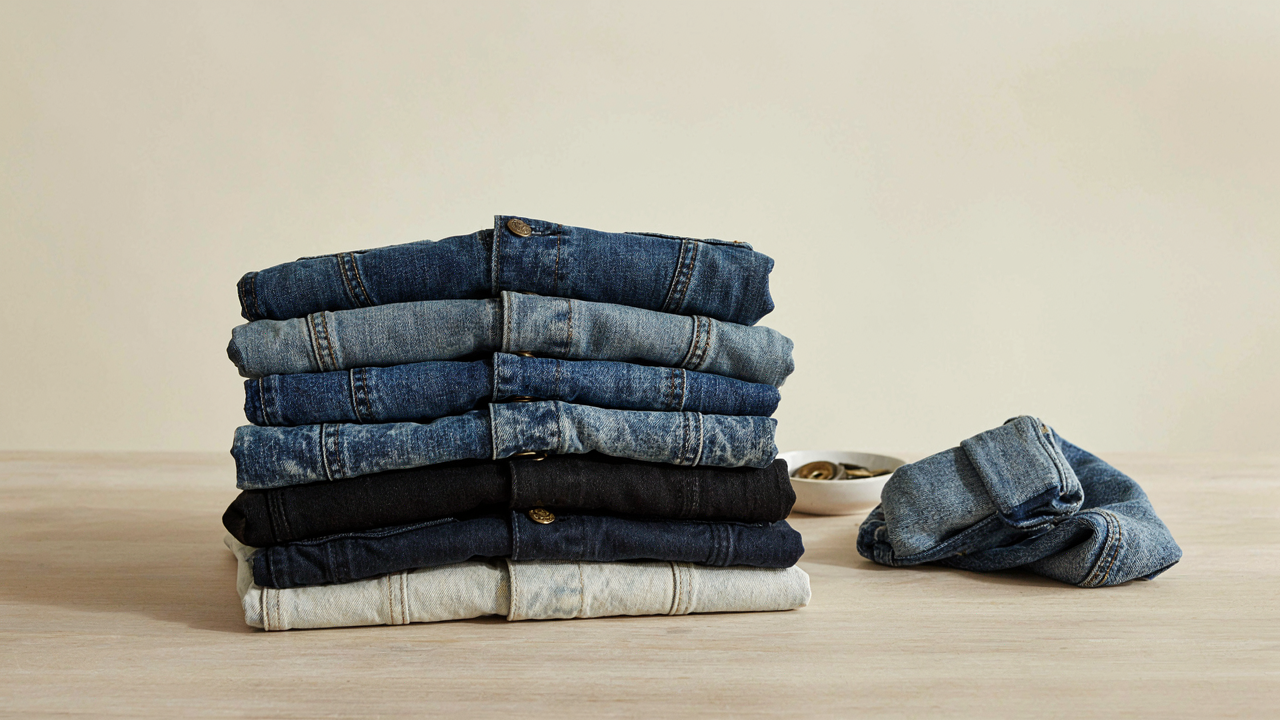
The Vintage Jean Jacket Fallacy: Beyond Basic Styling
Why Standard Advice Misses The Point
You want to know how to wear a thrifted denim jacket without looking like everyone else. That’s status anxiety dressed up as a style question. Here’s the mechanism: generic styling advice treats vintage denim like a blank canvas, when it’s actually a constraint with built-in character. The jacket already has a point of view. Your job isn’t to soften it or neutralize it. Your job is to recognize what it’s already saying and build around that instead of against it.
Most guides tell you to pair thrifted denim with “classic basics” or “timeless pieces.” This fails because it ignores the core reality: a worn-in vintage jacket has visual weight and personality that demands intention. If you treat it like a neutral layer, you create cognitive dissonance. The jacket screams authenticity while your outfit whispers nothing. The gap between those two signals is what makes people look like they’re trying too hard without knowing why.
The Architecture Of Aged Denim

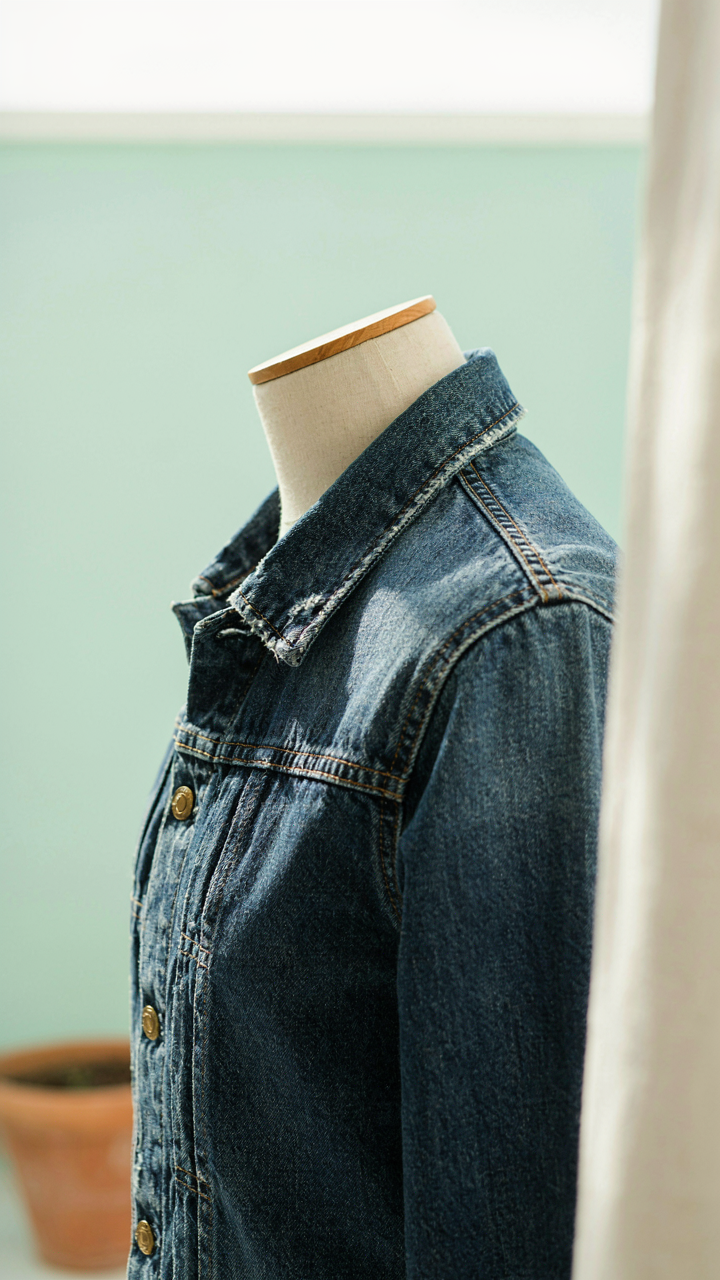
Vintage denim operates by a principle borrowed from material science called stress concentration. Think of it like this: the fabric hasn’t degraded uniformly. Wear patterns, fading, and hardware aging create visual nodes of interest that demand compositional balance. You can’t ignore these focal points without your entire outfit falling flat.
A thrifted jacket that’s been worn carries information in its seams, pocket corners, and collar edges. Fading follows the body’s actual movement patterns, not some designer’s idea of them. This creates an honest aesthetic that cheap distressing can’t replicate. When you wear it, you’re inheriting that history. The outfit works only when your other pieces acknowledge this weight instead of pretending the jacket is just another layer. This means intentional color choices, silhouette contrast, or textural opposition, not safe defaults.

Deconstructing The Oversized Jean Jacket Outfit
How Volume Actually Works On Your Frame
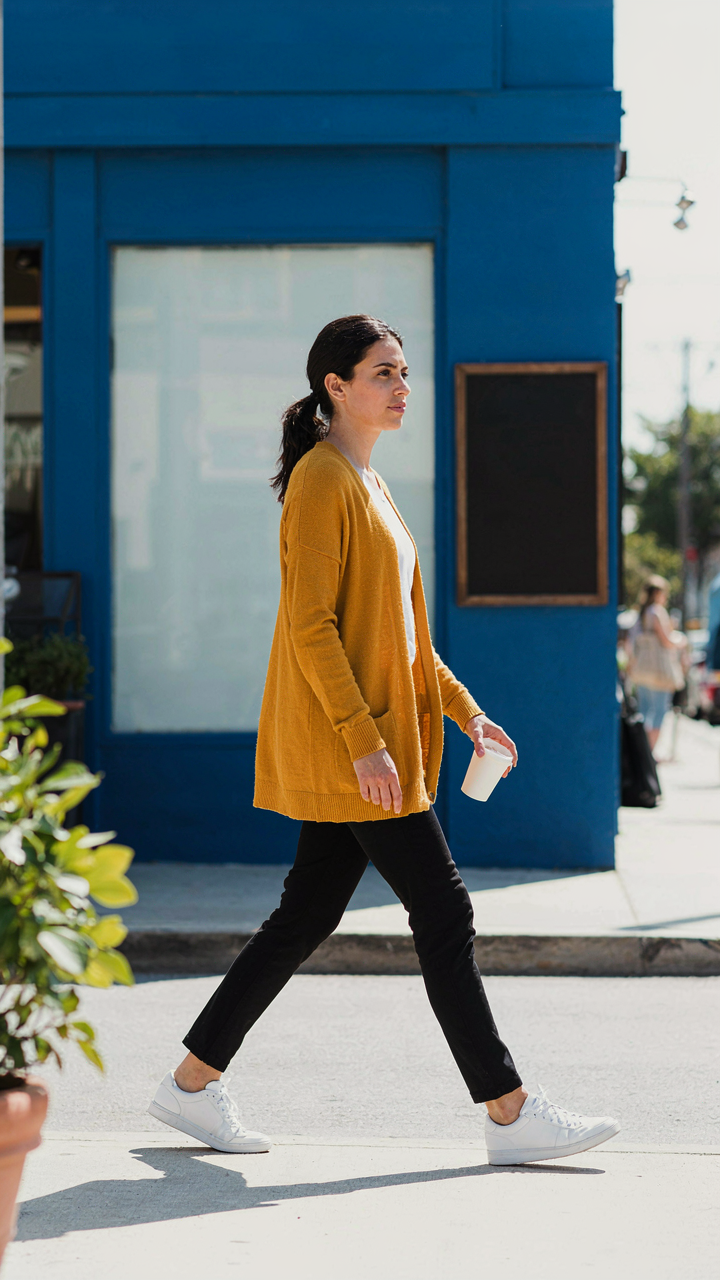
You want the oversized jacket to read as intentional rather than cheap, which is really just fear dressed up as a styling question. The mechanism here is borrowed from fashion proportion theory: a garment occupies space relative to your body’s actual dimensions, and the viewer’s eye fills the negative space with an assumption. Wear an oversized denim jacket with fitted bottoms, and your brain registers control. Wear it over loose everything, and you disappear into fabric.
The jacket’s weight matters more than its size alone. Raw denim or rigid selvedge holds shape and reads as deliberate structure. Worn or soft denim collapses into folds and reads as sloppy. Pair an oversized jacket with straight-leg or tapered jeans in a contrasting wash, or with fitted trousers. The taper below anchors the volume above. Skip the matching wash entirely—this is where most people botch it.
Tension Creates The Outfit
Everyone says contrast is good, then stops explaining why, which leaves you guessing. Contrast works because your eye needs a visual handhold when proportions shift. Denim jacket over a fitted silhouette below creates immediate readable structure. But there’s a secondary move most people miss: color temperature contrast.
A warm-toned, faded indigo jacket over cool neutrals below (black, charcoal, olive) creates tension that reads as intentional rather than accidental. Or reverse it: a dark indigo jacket over warm tones like cream, tan, or rust. The jacket doesn’t just sit there—it dialogues with what’s beneath it. Wear a light wash jacket with light wash jeans and you’ve created visual noise with no payoff. Wear that light jacket over black trousers or dark denim and suddenly there’s a reason the eye stays there.
The Adaptability Matrix: Jean Jacket Outfits For Women

Layering Through Seasons Without Looking Confused
You want one piece that signals competence across weather changes. That’s the real motive here. A thrifted denim jacket operates like thermal regulation in biology: it traps or releases heat through strategic layering, not by changing itself. Spring requires a tank or thin long-sleeve underneath. Summer pairs with nothing or a white tee. Fall demands a hoodie or sweater beneath. Winter needs a heavier base layer plus the jacket as your mid-layer, not your outer shell.
The mistake most people make is treating the denim as a standalone seasonal piece. It isn’t. The jacket stays the same. What changes is what lives underneath and whether you add an outer layer on top. A thrifted denim jacket with authentic fading or a worn hem actually performs better here than new denim because the fabric has already softened and moves with layering changes without bunching. Measure your torso length, then choose pieces that don’t create bulk where the jacket ends around your hips.
Casual To Formal Span With One Jacket
A single thrifted denim jacket compresses the distance between a coffee run and a client meeting. Wear it over a white button-up with tailored trousers and you’re functional professional. Switch to a band tee and black jeans and you’re off-duty. The key isn’t the jacket transforming itself. It’s the base layer and bottoms doing the work while the denim stays neutral. A light wash reads differently than a dark indigo, but both perform this range if the fit is right.
Most advice says to match your jacket to your mood or occasion. Wrong. Match your jacket to your body shape and wear duration, then build outfits around it. A slightly oversized vintage Levi’s works for everyone because it accommodates different physiques and layers without looking sloppy. Fit the jacket once. Then rotate what goes under and next to it based on context. This eliminates decision fatigue and keeps you from owning five jackets to do one job.
The Denim Jacket Fits: An Unconventional Guide
How Fit Changes Your Social Signal
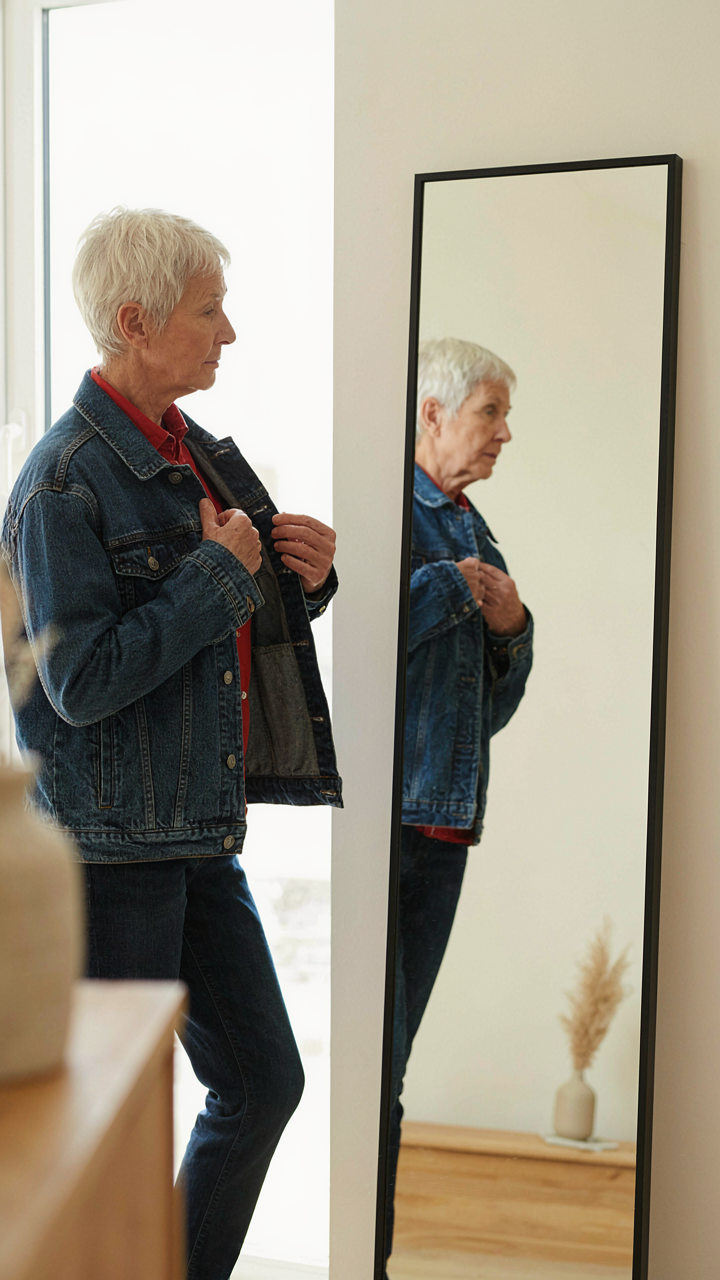
You care about this section because you’re afraid a badly fitting jacket will broadcast that you don’t know what you’re doing. Here’s the mechanism: fit operates like signal theory in economics. Your jacket sends a compressed message about competence before you speak. A thrifted denim jacket with poor proportions reads as either vintage laziness or thrift store accident, not intentional styling. The gap between how the jacket actually fits and how you perceive it fitting is where most people fail. You see yourself in the mirror through ego. Strangers see the shoulder seam, the sleeve length, the torso width.
Most advice says “just find what feels comfortable.” Wrong. Comfort is how the jacket feels on your body. Fit is how it looks on your frame. These are different problems. A thrifted jacket often comes with unpredictable construction because vintage denim varies by era and brand. The armhole depth, the rise, the taper all shift between decades. You need reference points, not feelings. Measure the shoulders against jackets that fit you now. Check where the sleeve breaks on your wrist. Notice if the jacket pulls or gaps at the button closure. These are verifiable data points.
Your Body First, Trend Second
Ignoring current trends actually requires more work than following them, which is why most people don’t do it. You have to understand your own proportions first, then match them against available inventory. A thrifted denim jacket from the 1990s cut for a smaller frame won’t suddenly work because oversized is “in.” The math doesn’t change. If your shoulders are narrow, an oversized jacket swallows your upper body and adds visual weight without adding visual structure. Conversely, if you carry width, a tight vintage jacket creates strain lines that read as discomfort, not style.
The real move is mapping your proportions against the jacket’s construction, not against what Instagram shows. Measure your shoulder width across the back. Find where the jacket’s shoulder seam naturally lands. If it extends past your bone, the jacket is oversized relative to your frame. If it sits two inches inside, you’re swimming in it. A well-proportioned fit on your specific body makes every other styling choice easier. Cheap fabrics look acceptable in proper proportions. Poor proportions make expensive fabrics look wrong. Start by standing in front of a mirror and identifying where your jacket’s seams should hit: shoulder to collarbone, sleeve to wrist bone, hem to hip. These are your non-negotiable reference points.
Winterizing Your Thrifted Denim Jacket Outfit

The Layering System That Actually Works
You want to wear the jacket without freezing. That’s the real conversation here. But most people layer wrong—they stack bulk instead of engineering insulation. Think of thermodynamics: heat transfer happens through conduction, and your job is creating dead air space without adding thickness that kills your silhouette. A thrifted denim jacket is already your outer shell. The mechanism is what goes underneath and how tight or loose it sits against your skin.
Start with a fitted long-sleeve base layer in merino wool or synthetic blend. Merino regulates temperature and doesn’t create bulk. Then add a mid-layer—fleece, lightweight knit, or a thin sweater—that traps air without compressing under the denim. The denim jacket itself adds almost no insulation, so the layers beneath do the work. Wear the jacket slightly loose over the mid-layer, not tight. Tight cuts off air circulation and defeats the system. This method keeps you warm without looking padded.
Mixing Textures For Depth And Retention
Texture matters for cold weather more than most realize. Smooth fabrics slide against each other and create friction that causes heat loss. Rough textures catch and hold warm air. When you pair your thrifted denim with a chunky knit, a corduroy shirt, or a wool sweater, you’re not just adding visual interest—you’re building micro-pockets of insulation. The surface area of those fibers traps body heat more efficiently than smooth cotton.
Pair your jacket with turtlenecks, cable-knit sweaters, or textured flannel. Avoid slick synthetics as your base layer under the denim. Add a scarf in wool or knit that sits loose around your neck—this is where you lose the most heat. The combination of denim’s rigid weave with softer, textured layers underneath creates both warmth and intentional visual hierarchy. Button the jacket partially or leave it open to show the texture beneath. This reads as styled, not as you trying to stay warm.
The 3 Part Counter Culture Protocol For Jean Jacket Styling

Find Your Stylistic Scarcity
You want permission to dress differently without looking like you’re trying. That’s the real motive. Here’s the mechanism: in economics, scarcity creates value. Your thrifted denim jacket outfit gains power not from following trends but from occupying a gap in your immediate market—your office, your social circle, your city. Most people wear what’s abundant. A 1990s Levi’s trucker with a specific wash, paired against current uniform thinking, becomes rare by default. Identify what nobody around you is wearing, then own it completely.
The gap exists because trend-following centralizes taste. Everyone watches the same fashion accounts and buys from the same three retailers. A thrifted piece sidesteps that. Your job is to notice what’s invisible in your environment—not what’s invisible globally. A vintage Lee jacket works differently in Portland than in Miami. Scout your actual surroundings. Map the void. That becomes your positioning.
Weaponize The Rejection Of Consensus
Fashion advice says to “blend in with your personal style.” That’s incomplete. The real move is choosing what the consensus explicitly rejects, then styling it with confidence. Thrifted denim jackets spent years dismissed as cheap or dated by mainstream fashion. That rejection is your asset, not a liability. When you wear something the algorithm doesn’t promote, you signal independence from the machine that’s conditioning everyone else’s choices.
Don’t pair your thrifted jacket using current Instagram formulas. That defeats the purpose. Instead, break one rule of contemporary outfit logic. Oversized denim with tailored trousers. Vintage Lee with minimalist sneakers. Weathered Wrangler with structured pieces. The friction between eras creates visual authority. You’re not following a trend cycle—you’re operating outside it. That’s the actual counter-culture move.
Summer Jean Jacket Outfit Ideas: Defying Expectations

Layering Without The Heat Trap
You want to look intentional in summer without admitting you’re scared of looking underdressed. The mechanism is simple: a denim jacket in summer works only when it functions as a visual anchor, not insulation. Thrifted denim jackets from the 1980s and 1990s tend toward lighter indigo washes and thinner 11-12 ounce denim, which breathes better than modern raw denim. This is your advantage.
- White linen shirt under open denim: Linen’s loose weave lets air move. Keep the jacket unbuttoned and pushed off one shoulder to maximize ventilation while maintaining the silhouette.
- Tank top plus lightweight overshirt: Layer a sleeveless base with a thin button-up under the jacket. Remove the overshirt mid-day; the jacket stays as a design statement alone.
- Cropped tee with high-waisted shorts: Exposes midriff and ankle, cutting perceived bulk. The jacket frames without adding visual weight to your core temperature zones.
- Oversized camp collar shirt: Unbutton everything. The collar creates separation from your neck, and the open weave of a true camp shirt allows circulation even under denim.
- Sleeveless dress with jean jacket open: A-line or slip dresses worn with the jacket completely unbuttoned give you coverage without constriction. Pure geometry, no wasted fabric.
The goal isn’t to wear the jacket closed in July. It’s to position it as the structural element that ties an otherwise scattered outfit together. Think of it as load-bearing design, not insulation. Wear it open 90 percent of the time.
The Breathability Principle
Forget the myth that denim jackets trap heat uniformly. Heat retention depends on three factors: fabric weight, weave density, and air gap between layers. A vintage jacket with a looser weave and lighter weight performs differently than a modern reproduction. Thrifted Levi’s 551s and 505s from the 1990s sit in the 11-13 ounce range, compared to raw selvedge that runs 14-16 ounces. The difference is measurable in how quickly moisture evaporates.
The second principle is separation. Air movement happens when fabric doesn’t sit flat against skin. Wear a tucked tank top instead of a fitted tee, or use a loose button-up as a spacer layer. Don’t wear the jacket directly over a t-shirt in summer. The contact point creates a microclimate. Instead, introduce intentional space and let convection do the work. Wear the jacket open whenever temperature permits.
Denim Jacket Outfit Women: Beyond Feminine Norms

The Uniform Trap
You want permission to dress outside the lane you’ve been assigned. The real mechanism is that gendered styling exists because it’s a classification system that requires no thought from retailers or consumers. Denim jackets became coded feminine through marketing, not material. A 1980s Levi’s ad showing a woman in the same cut as a man’s jacket created the illusion of difference. The fabric, weight, and construction stayed identical. What changed was the styling narrative around it.
Wearing a thrifted denim jacket outside gendered templates requires removing the styling cues that signal compliance. Pair an oversized vintage jacket with structured trousers instead of skinny jeans. Swap fitted basics for loose linen shirts underneath. Layer it over workwear silhouettes, not delicate layering pieces. The jacket itself is neutral. The context you build around it determines whether it reads as a style choice or a deviation from expectation.
The Power In Proportion
Androgynous dressing borrows from fashion’s principle of contrast: opposing silhouettes create visual tension that reads as intentionality. A boxy thrifted jacket paired with slim bottoms works. An oversized jacket with wide-leg pants works differently. The mechanism isn’t about avoiding femininity or masculinity. It’s about controlling how much visual information the eye processes. Worn correctly, a thrifted denim jacket becomes the anchor point, not the accessory. Everything else recedes.
The power move is in the fit deliberation. Most people grab a thrifted jacket and pair it with whatever fits. Instead, choose pieces that actively conflict with the jacket’s proportions. If the jacket is cropped and fitted, wear longer, looser pieces below. If it’s oversized and long, taper everything underneath. This creates coherence through opposition, not matching. The outfit signals control, not accident. Wear the jacket open, always. A closed jacket reads as casual covering. An open jacket reads as a statement piece you’re deliberate about.
Spring Awakening: The Jean Jacket Outfit Reinvention
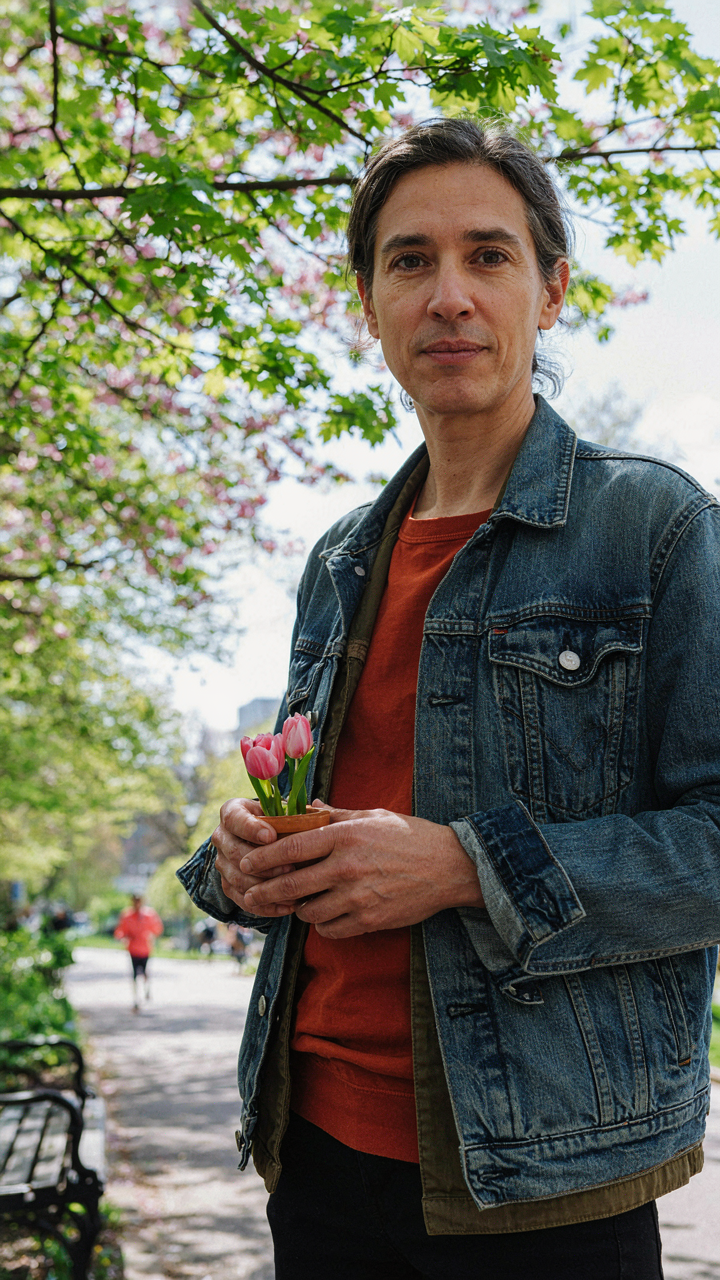
Weight Without Bulk
You’re worried spring outfits will make you look thin or unmade. The real mechanism: layering isn’t about adding pieces, it’s about managing fabric density. A thrifted denim jacket keeps its structure through temperature swaps because cotton holds shape. You’re not “transitioning to light layers”—you’re swapping out insulation while keeping your anchor piece static.
The denim jacket becomes your constant. Underneath, you drop the thermal base layer for a standard tee or linen shirt. The jacket’s weight compensates for what you removed. This works because denim’s rigid fiber structure doesn’t compress like wool or synthetic blends do. Your silhouette stays defined even when the base layer thins. The fit stays intentional instead of collapsing.
Saturation Strategy For Season Shifts
Color theory borrowed from painting has a term called value—the lightness or darkness of a color independent of its hue. A thrifted denim jacket’s indigo value rarely changes, but everything around it can. Spring demands a strategic shift in what sits next to that indigo, not a complete wardrobe overhaul.
Most advice says “wear pastels in spring.” Wrong. Pastels desaturate your denim jacket and flatten the whole outfit. Instead, use high-saturation complementary colors: rust, deep olive, burnt orange. These colors read “seasonal” without washing out the jacket’s depth. Pair the jacket with a saturated base layer and neutral bottoms. This locks the outfit into spring through color contrast, not by chasing trendy shade names.
Your Fear Of Not Belonging Is What Actually Limits Your Style
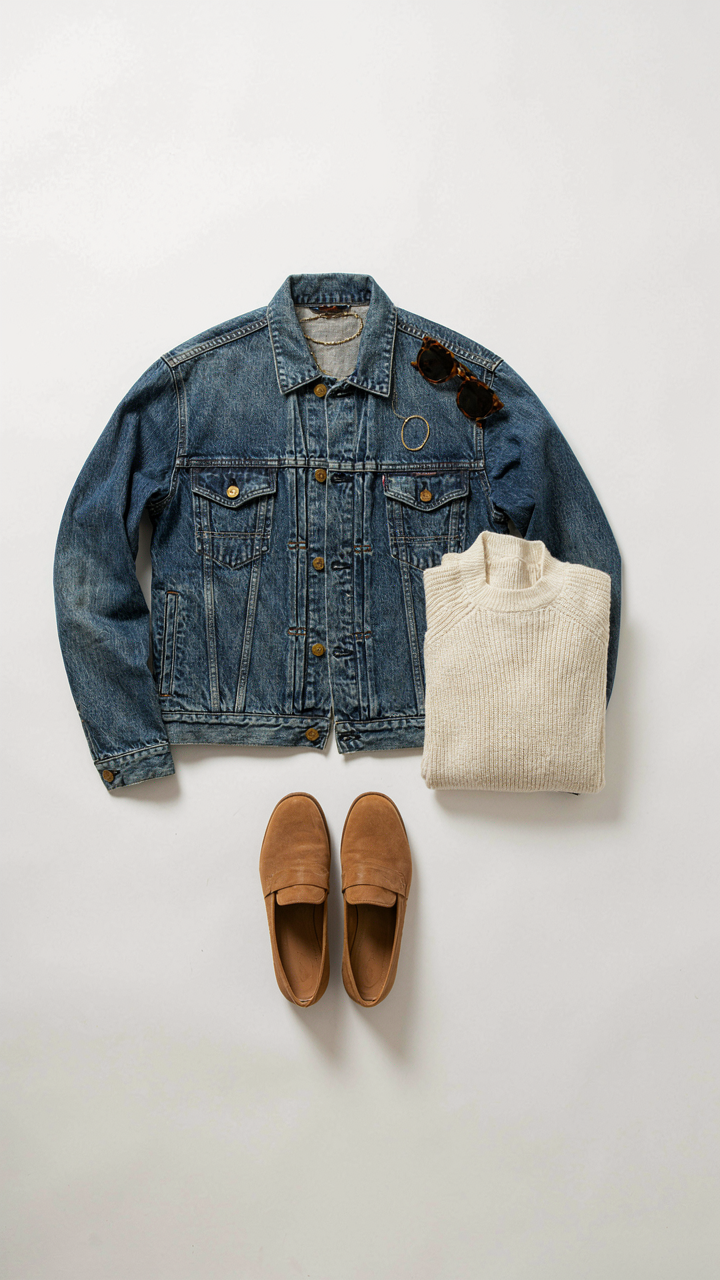
You think a thrifted denim jacket outfit needs permission from fashion gatekeepers. It doesn’t. The only rule that matters is whether you’d wear it alone in a room with no one watching. Most people fail this test. They dress for an imaginary jury instead of their actual life. Stop asking if an outfit works. Start asking if it’s honest. Go to your closet right now and put on the one piece you’ve been too nervous to style. That discomfort you feel isn’t doubt, it’s the edge where real style begins.