

The Cognitive Dissonance Of Comfort: Work From Home Outfits

The Mental Shift From Lounge To Labor
You’re afraid that dressing down signals you don’t take work seriously. The real mechanism is this: your brain treats clothing as a behavioral contract. When you wear loungewear, your nervous system downregulates. When you wear structured pieces, it upregulates. This isn’t psychology theater. Neuroscience calls this “enclothed cognition”—your attire literally changes how your prefrontal cortex processes task difficulty and focus demands. The gap between comfort and labor isn’t about judgment from others; it’s about your own neural state.
Most remote workers skip this entirely and just wear what feels good. That’s a mistake. You don’t need formal wear, but you need a deliberate transition. A collared shirt, structured trousers, or a blazer signals to your brain that work mode is active. The clothes don’t make you perform better through magic. They make you perform better because your nervous system recognizes the context shift. Your peers on video calls notice this too, but not because they’re scrutinizing you—they notice because confidence and focus are visible states.
When Comfort Becomes Your Liability

Everyone says “wear what makes you feel good.” That advice collapses the moment you’re on a video call where perception matters. Comfort without structure reads as a lack of investment. A hoodie and sweatpants might feel good, but they activate a casual-mode baseline in your brain. Worse, they signal to the camera that you didn’t consider the interaction worthy of preparation.
The mechanism here is impression formation. People make stability judgments in milliseconds. Your outfit contributes to whether they perceive you as someone who shows up intentionally or someone who tolerated the call. You don’t need to perform professionalism through costume. You need to communicate that you recognize the context. A fitted tee paired with a structured blazer solves this—you get comfort in the torso with signal in the silhouette. Wear pieces that fit your frame without excess fabric. Loose clothing reads as half-engaged. Fitted clothing reads as present.

The Perception Action Loop: Elevated Work From Home Outfit

Dress For The Role You’re Performing
You want people to take you seriously without leaving your house. That’s the real reason you’re reading this. Here’s what actually happens: psychology calls this “enclothed cognition”—the idea that what you wear shifts how your brain processes information. Wear a blazer, and your prefrontal cortex doesn’t just feel sharper. It performs sharper. You think differently. The outfit isn’t decoration. It’s a cognitive input.
Most advice says “dress professionally” and stops there. That misses the mechanism entirely. The outfit works because it creates a gap between your home state and your work state. Your brain recognizes the signal and switches modes. Sweatpants keep you in default mode. A structured jacket, even over a t-shirt, tells your nervous system that performance is happening now. The specifics matter less than the deliberateness. You chose the outfit instead of defaulting to comfort.
Visual Consistency Anchors Your Output
Status anxiety makes people obsess over matching their coworkers’ wardrobes. Stop. What matters isn’t fitting in. It’s creating a repeatable visual trigger that your brain associates with focus. Military units understood this for centuries. The uniform wasn’t about looking identical. It was about signaling readiness. Your work from home outfit serves the same function. When you wear the same structured pieces repeatedly, your body learns to activate the same mental state.
The consistency does the work, not the expense. A solid-color Oxford shirt, dark trousers, and one good sweater worn in rotation creates stronger cognitive anchoring than buying six different trendy items. Your camera sees the same composed frame every call. Your brain rehearses the same professional mode every time you dress. After three weeks of repetition, the outfit becomes a protocol. You put it on, and execution mode activates automatically. That’s the mechanism. Wear the same thing, and you perform the same way.
The Asymmetric Advantage: Home Office Outfits Women

The Camera Sees Only Half Your Body
You care about this because looking competent on video calls directly affects how people perceive your work, and you’re right to obsess about it. The mechanism is simple: cameras frame you from the chest up, which means your outfit composition splits into two entirely different value equations. The bottom half is pure waste if nobody sees it. The top half is your entire visual argument.
This asymmetry is borrowed from theater lighting design, where directional focus determines what the audience actually processes. Your webcam is a spotlight with a frame boundary. Everything below that boundary might as well not exist. Most women dress their entire body for work from home and waste resources on invisible real estate. The correct move is to build your outfit budget around what the lens captures.
The Waist Up Investment Strategy
Stop buying matching sets. The advice to “dress fully even though you’re home” ignores the economic reality of camera framing and wastes your money on invisible clothing. Your spend should concentrate exclusively on the top half because that is your only broadcast surface.
A structured blazer, quality knit, or fitted top in a solid color or subtle pattern photographs well on video and signals competence immediately. Fabric matters more than price. Natural fibers like cotton blends and wool hold their shape on camera better than synthetics. Invest in pieces that don’t wrinkle in two minutes under artificial light. Texture reads as dimension on screen, so avoid completely flat materials. Below the waist, wear whatever keeps you comfortable and functional since the camera line cuts off at your lap.
The Signal Theory Wardrobe: Elegant Work From Home Outfits
What Your Clothes Actually Communicate
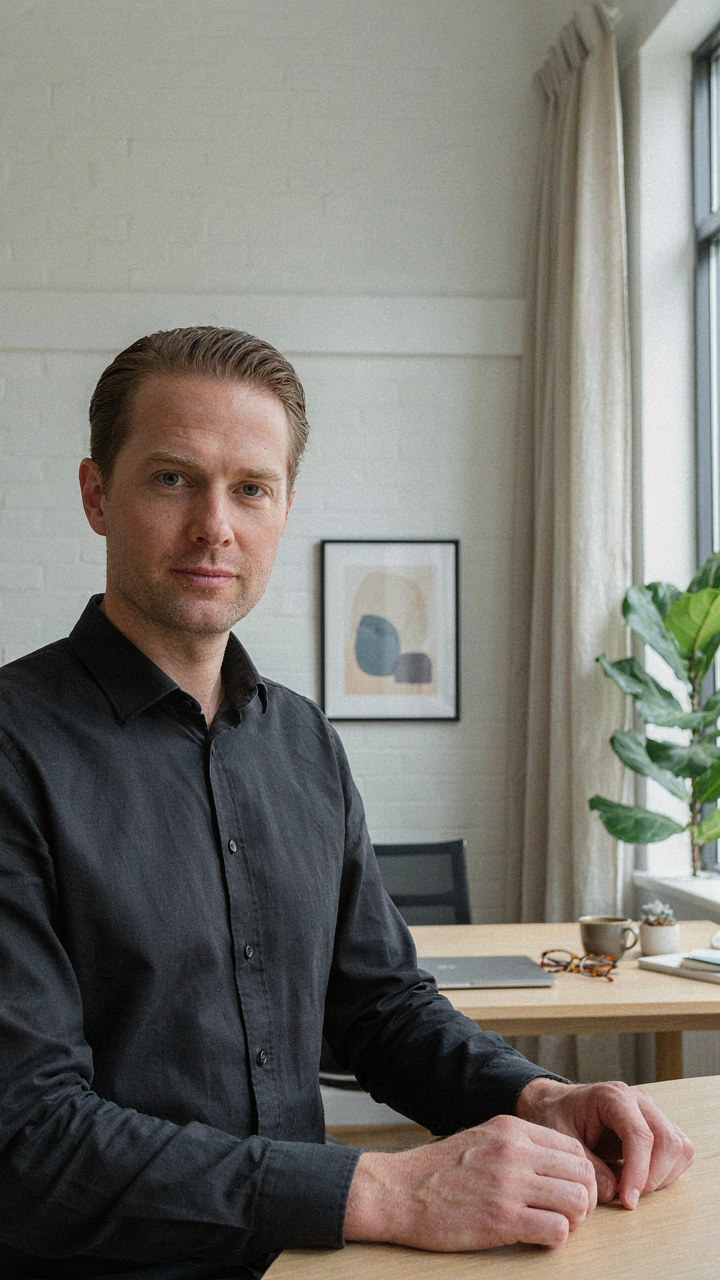
You care about this because people judge competence in 500 milliseconds, and video calls compress that judgment further. Economics has a term for this: signaling. In signaling theory, an actor sends a costly message to reduce uncertainty in the observer’s mind. Your outfit is that message. The camera doesn’t see your work ethic or intelligence. It sees fabric, fit, and maintenance. Those three variables determine whether the viewer registers you as someone who has their life ordered or someone half-present.
The mechanism works because humans evolved to read status and capability through appearance before language existed. Video calls strip away context: your home, your desk setup, your voice tone in person. Clothing fills that void. A wrinkled t-shirt signals you didn’t consider the interaction important enough to prepare. A structured blazer signals the opposite. The observer doesn’t consciously think this through. Their nervous system processes it before thought arrives.
Quality Signals Attention To The Interaction
Most work from home advice gets this wrong. It says wear “business casual” or “keep it professional.” Useless. The real variable is signal strength: how clearly does your outfit communicate that you take the moment seriously. High-quality signals use three mechanics: natural fiber, clean construction, and intentional fit.
Natural fibers like cotton, linen, wool, and silk hold shape better than synthetics and age visibly in a way that reads as “maintained” rather than “cheap.” Construction means no loose threads, no pilling, no seams pulling apart. Fit means the garment was either tailored to your body or chosen to align with your proportions from the start. Each of these costs time or money. That cost is the signal. A observer sees quality and reads: this person invested in how they show up. When you sit on a video call in a cotton shirt with clean seams and proper shoulder alignment, you’ve already won the first exchange.
The Minimalist Uniform Protocol: Working From Home

Build Your Five Piece Foundation
You want to look intentional on camera without thinking about it. That’s the real motive here, and it works because constraint forces quality. A minimalist uniform means five core pieces that combine into ten to fifteen acceptable combinations. You’re not building a wardrobe. You’re building a system.
Start with one neutral base layer in a neutral tone: charcoal, navy, or olive. Add two complementary tops that work over or under that base. Include one structured blazer or overshirt that reads “professional” on video without feeling costume-like. Finish with one pair of pants or skirt that sits on camera well. That’s your uniform. Everything else is noise.
Decision Fatigue Is Cognitive Real Estate
Neuroscience calls it ego depletion. Every morning decision you make burns mental resources you need for actual work. The mechanism is simple: limited willpower, multiple choices, suboptimal picks by day’s end. A preset outfit eliminates this tax entirely. You decide once, then execute the same choice every morning. Your brain stays sharp for problems that matter.
- Neutral Base Colors: Black, navy, charcoal, or olive work across all skin tones and photograph consistently under different lighting conditions without shifting tone.
- Structured Tops: Solid knits or Oxford shirts hold shape on camera better than loose fabric, which reads as unfocused and creates visual noise during video calls.
- The Blazer Rule: One tailored layer transforms any basic outfit from casual to credible. Choose unstructured wool or cotton blend that drapes instead of boxes your shoulders.
- Fabric Weight Matters: Heavier knits and woven cotton sit still on camera. Thin jersey moves, catches light awkwardly, and reads as lower effort than it actually is.
- Fit Trumps Brand: A $40 shirt that fits your shoulders correctly outperforms a $200 designer piece tailored for someone else’s frame. Get basics tailored to your actual proportions.
The payoff is not just time saved. It’s mental bandwidth freed. When you remove the daily choice, you stop second-guessing yourself before meetings. You show up consistent and calm because your appearance is already settled. Pick your five pieces, commit to the rotation, and redirect that decision energy toward work that compounds.
Beyond The Fabric: Lighting And Background Impact

Your Lighting Determines Your Face More Than Your Clothes Do
You want people to think you’re competent and put-together, so you focus on the outfit. Wrong priority. Lighting is a physics problem, and in video calls, light direction functions as your face’s contrast ratio. A camera sensor captures reflected light, not reality. Flat, overhead lighting washes out your features and makes any outfit look cheap. Side or three-point lighting sculpts your face, creating definition that makes even basic clothing read as intentional.
Position your key light source to the side of your camera at a 45-degree angle, slightly above eye level. This creates shadow and dimension on your face, making you appear more alert and present. The outfit matters less when people see a sharp, well-lit face. Without this setup, your $200 blazer competes with a blown-out, featureless face. Most remote workers skip this entirely and wonder why they don’t command attention on calls.
Visual Noise Steals Attention From Your Presence
Your background isn’t decoration. It’s real estate that either supports your credibility or erodes it. The Gestalt principle of figure-ground states that viewers separate focal points from surroundings. Your face is the figure. Everything behind you is ground. When the ground is chaotic, the viewer’s eye fragments, reducing focus on you and your outfit.
A cluttered background forces cognitive load on the viewer. They process the mess instead of processing your message. Books stacked randomly, cables visible, multiple monitors, personal items scattered across shelves—these communicate lack of control. A clean, simple background (solid wall, minimal desk, one intentional element like a plant or painting) channels all attention to your face and clothing. Test this: record yourself with and without background clutter visible. You’ll notice your perceived professionalism shifts measurably.
The ‘Second Skin’ Principle: Cute Work From Home Outfits
Fabric Choice As Cognitive Load
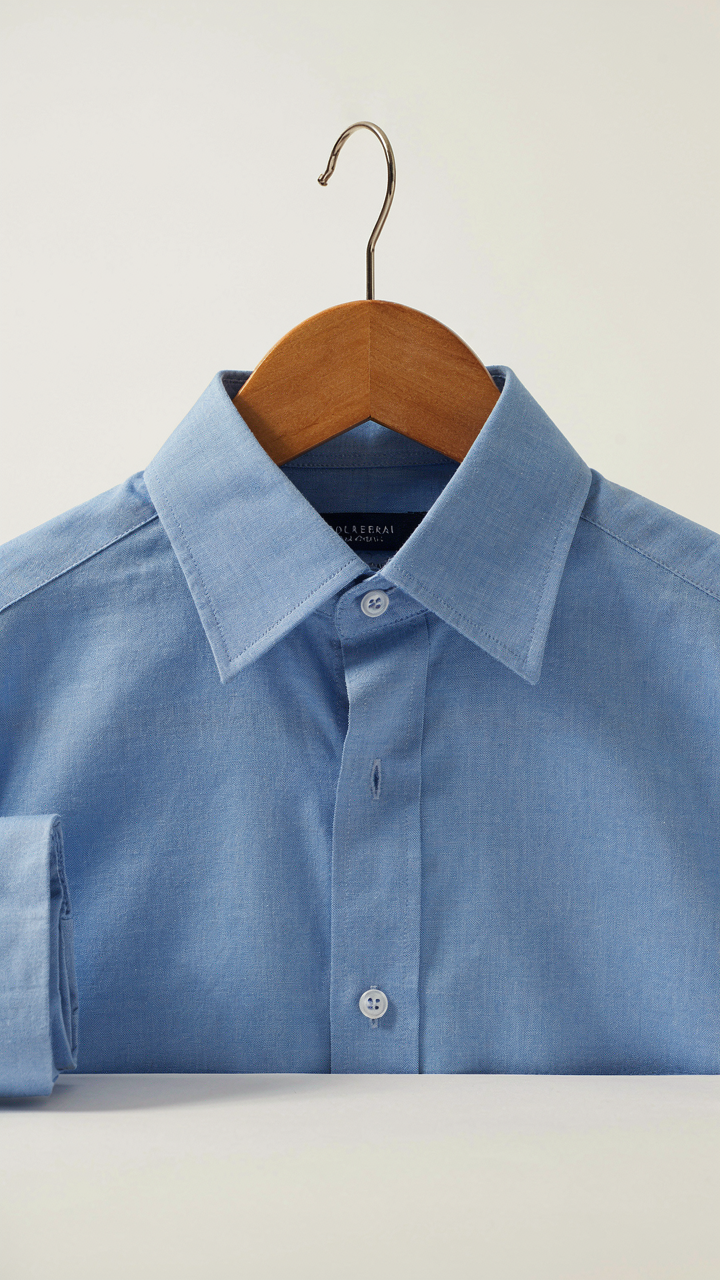
You want people to notice your outfit instead of noticing you’re distracted. That’s the real reason this matters. Fabric choice is industrial design applied to your body: the material either reduces friction between you and sustained focus, or it creates it. Polyester blends that cling, wrinkle visibly on camera, or require constant adjustment pull your attention into your clothes instead of your work. Cotton and linen-blend pieces sit flat, hold their shape through a four-hour workday, and let your brain forget you’re wearing anything at all.
Video calls amplify fabric behavior. A shirt that reads as slightly rumpled in person looks deliberately disheveled on screen. Matte finishes photograph cleaner than glossy synthetics. Tight weaves—think oxford cloth or chambray—maintain definition under webcam compression, while loose knits break apart into pixel noise. The mechanism is simple: choose fabrics that demand zero maintenance during work hours. If you’re mentally auditing how your sleeve looks, you’re not fully present in the call.
Weight And Pressure Distribution
Tactile comfort isn’t luxury. It’s the neuroscience of sustained attention. Your body’s pressure receptors send constant signals to your brain about fit, temperature, and restriction. Loose clothing that hangs creates background noise. Clothes that fit properly—snug but not compressed—create what your nervous system reads as stability. A structured blazer or a well-fitted knit top that hugs without strangling keeps those signals consistent and quiet.
Heavy fabrics concentrate pressure more evenly than thin ones. A wool-blend cardigan distributes weight across your shoulders and chest in ways that light cotton never does. This isn’t comfort theater. It’s the difference between your body spending energy on micro-adjustments versus staying still. Pick pieces that weigh enough to feel intentional on your frame but light enough that you forget you’re wearing them after thirty minutes. That’s when focus happens.
The Cost Of Casual: Work From Home Outfit

When Comfort Becomes A Liability
You’re worried this matters less than it does. Here’s the mechanism: your brain treats clothing as context. Wear pajamas and your nervous system treats the workday as recovery time. Wear structured clothes and your prefrontal cortex engages differently. This isn’t motivation or mindset. It’s neurobiology. Neuroscience research shows clothing activates what researchers call “enclothed cognition”—your attire literally changes how your cognitive load distributes. Casual wear doesn’t sharpen focus. It dissolves it.
The damage compounds across hours. A day in sweatpants doesn’t cost you one hour of productivity. It costs you compounding friction in attention, decision quality, and presence on calls. You start checking your phone earlier. You break focus faster. Your camera presence becomes noticeably flatter because your body language reflects internal permission to coast. People sense this through the screen. Most never name it, but they notice you’re somewhere else mentally.
Intention Over Image
The real work isn’t looking polished. It’s building a behavioral boundary between “rest mode” and “work mode.” You already know this works because you’ve experienced it accidentally: every time you’ve worked in an environment outside your home, you dressed differently and performed differently. You didn’t think your way into that performance. Your clothing made the choice for you.
Start with one non-negotiable: wear a structured top on every call. Not because it looks better on video. Because it changes your posture, breathing, and how you carry your voice. Your shoulders don’t collapse. Your diaphragm expands. Your words land with more authority. The mechanism is mechanical, not psychological. Your body adjusts to the garment, and your cognition follows. This single decision eliminates the drift.
The Real Obstacle Isn’t Your Wardrobe; It’s Your Commitment To Owning Your Internal State, Regardless Of External Gaze
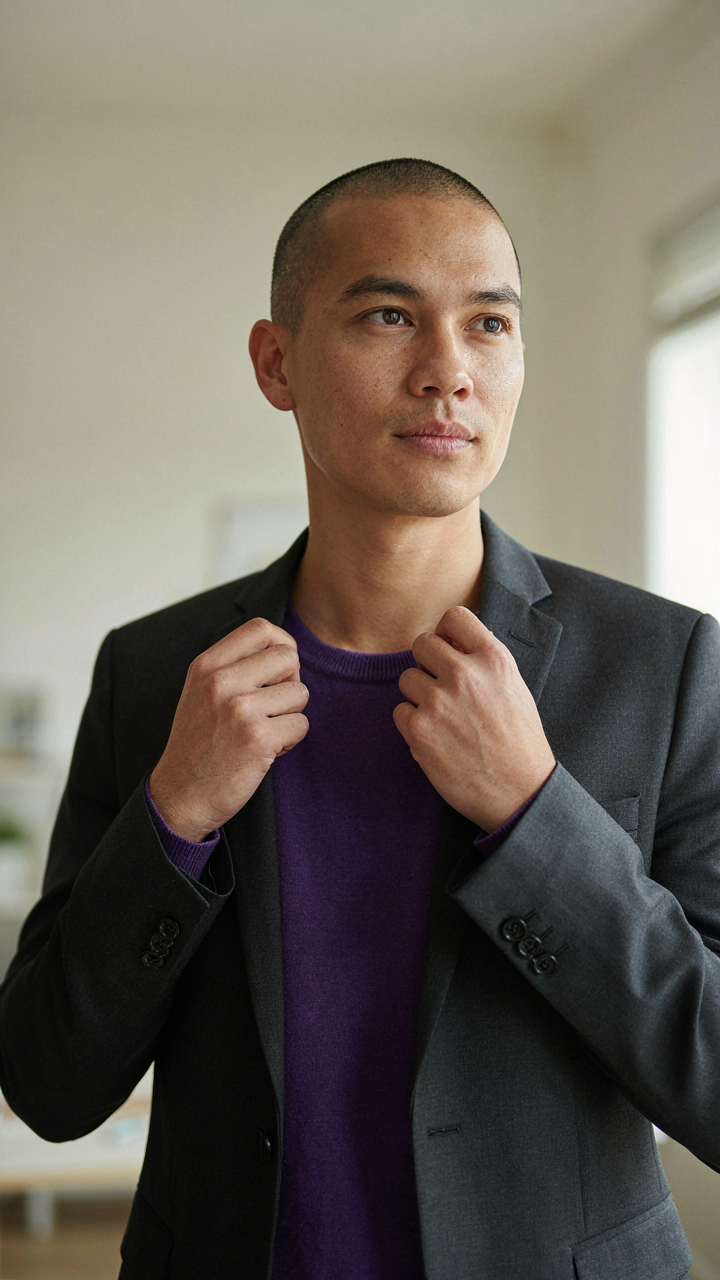
People dress well on camera because they’ve decided their presence matters. Not because of fabric or fit. You’re either someone who shows up intentionally or someone who shows up by accident. Pick one outfit today that makes you feel like you belong in the room. Wear it tomorrow. The clothes don’t build confidence. Repetition and conviction do. You can’t fake presence, but you can practice it until it becomes real.