

The Unspoken Code: Why The Tennis Skirt Signals More Than Style

Athleisure Is A Lie You’re Buying
You care about this because you want permission to dress well without the effort of actually trying. That’s the real sell. Athleisure isn’t a clothing category—it’s a psychological escape hatch, borrowed from economics: the concept of arbitrage, where you exploit a gap between two markets. The tennis skirt operates exactly there, between “I’m serious about fitness” and “I didn’t get dressed,” extracting status from both without committing to either. Most advice tells you athleisure is about comfort. Wrong. It’s about plausible deniability.
The tennis skirt became athleisure currency because it carries historical weight from actual sport, not because it’s comfortable. Tennis players wore these skirts for range of motion and visibility during play. When the skirt moved off court into everyday wear, it kept its legitimacy—the built-in shorts, the structured cut, the performance fabric. You’re not buying comfort. You’re buying the assumption that you might have somewhere important to be, or that you just came from somewhere disciplined. The mechanism is simple: wear something designed for performance, and you inherit performance’s credibility without performing.
The Tell Is In The Details

Intentionality shows through specificity, not through trend-stacking. Most people wearing tennis skirts are mixing them wrong, which erases the whole signal. They pair them with oversized everything—oversized blazers, oversized tees, oversized sunglasses—trying to look casual. That’s the opposite of intentional. It reads as trying to hide. A tennis skirt outfit that works uses precise proportions: fitted or semi-fitted top, matching or neutral socks, singular bold piece if any. The person who knows what they’re doing doesn’t add; they subtract.
The real difference between someone following a trend and someone who understands a tennis skirt outfit is this: subtle cues of intentionality show up in how the proportions interact, not in how many pieces you layer. Choose your top’s fit first. If the skirt is fitted, your top either matches that tension or contrasts it cleanly. Socks matter more than most people admit—they either complete the line or break it. When you outfit a tennis skirt, commit to a silhouette and edit everything else to support it. Don’t add options; add clarity.

The Minimalist’s Playbook: Curating Your Core Tennis Skirt Outfit Casual

Build Your Base Without The Noise
You want permission to own fewer things without feeling like you’re settling. The real mechanism is constraint. In economics, binding constraints force efficiency—you stop chasing options and start building systems. A tennis skirt outfit works the same way. You pick three to four core skirts in neutral fabrics, then anchor everything else to them. This isn’t limitation. It’s leverage.
Start with a white or cream pleated tennis skirt in a technical blend. Add a solid black or navy option. One in a muted tone like sage or tan. These three pieces become your operating system. Pair each with plain tees, fitted tanks, or basic sweaters in white, black, or gray. The interchangeability compounds. You’re not buying more. You’re multiplying output with fewer inputs.
Neutral Palettes That Actually Travel
Most advice says “stick to neutrals.” That’s incomplete. You need to understand which neutrals work together without creating dead zones in your closet. White, cream, and off-white fight each other visually and functionally. Pick one light neutral and commit. Pair it with one dark neutral and one mid-tone.
If you choose cream as your light base, use charcoal or true black as your dark anchor, then add either olive, taupe, or warm gray as your mid-tone. These three create a closed system. Every piece talks to every other piece without strain. A cream tennis skirt works with a charcoal sweater and taupe sneakers. The charcoal skirt works with a cream sweater and the same sneakers. The rotation is automatic. You stop thinking about combinations and start getting dressed.
Beyond Preppy: Repurposing For The Vintage Athleisure Aesthetic

Mixing Old Sportswear With Modern Basics
You’re reading this because you want permission to break the preppy mold without looking like you’re trying too hard. The real mechanism at work here is constraint-based design: vintage sportswear pieces force specificity by their very nature. A 1980s Adidas track jacket or a deadstock tennis warmup from the 90s has actual construction details that prevent blandness. You can’t add those pieces to a tennis skirt outfit and disappear into the crowd, which is exactly why they work.
Vintage athletic pieces carry built-in visual weight that contemporary basics lack. A worn Lacoste warm-up top or vintage Fila windbreaker paired with a tennis skirt creates immediate texture contrast. The fraying seams, dated color blocking, and specific cut of old sportswear anchor the entire look in a real moment in time. This prevents the outfit from reading as a costume or a Pinterest recreation. Source genuine vintage items from archives, not reproductions: the manufacturing imperfections matter.
Structured Layering Without The Preppy Uniform
Layering strategy borrowed from systems thinking reveals a key principle: each layer must reduce overall system instability, not add noise to it. A tennis skirt outfit risks looking flat when you stack pieces randomly. Instead, use layering to create visual tension between periods. Wear a fitted 70s-era ribbed turtleneck under a sleeveless tennis dress, then add an oversized 90s windbreaker that intentionally mismatches the proportions below.
The defiance works because the pieces don’t apologize for their era differences. A cropped tank top worn under a vintage slip skirt, then layered with a structured blazer from a different decade, signals deliberate choice rather than confusion. Each layer should have a clear visual job: anchor, contrast, or break. Remove any piece and the outfit destabilizes. That’s how you know the layering is functional, not decorative.
The Utility Protocol: From Court To Concrete With Any Tennis Skirt Outfit

Build Your Base In Modular Pieces
You want permission to wear a tennis skirt without looking like you’re trying too hard, which really means you’re afraid of looking frivolous. The mechanism is modularity, borrowed from military logistics: break your outfit into independent components that swap without cascading failures. A tennis skirt outfit works across contexts because each piece serves a standalone function before it serves the aesthetic. The skirt itself is the non-negotiable anchor. Everything else attaches strategically, not decoratively. This is why a tennis skirt beats a regular skirt for everyday wear: the design already implies function, which gives you permission to wear it anywhere without explanation.
The modularity principle means you never outfit-plan around the skirt. You plan around the footwear and top tier first, then slot the skirt in as a variable that stabilizes the whole thing. A white crew-neck tee plus white sneakers plus a navy tennis skirt is one loadout. Swap the tee for a fitted long-sleeve and the sneakers for loafers, and the same skirt becomes a different outfit entirely. The skirt doesn’t change. Your utility layers do. This is how you build a tennis skirt outfit wardrobe that doesn’t require constant purchasing: you’re not collecting skirts, you’re collecting tops and shoes that work with the same foundational pieces.
Stack Your Layers For Maximum Flexibility
Fashion operates on game theory: each visible element signals something about intentionality, and observers calculate your outfit’s coherence based on that signal-to-effort ratio. Most people get this backwards. They add layers to look “put together,” when really you add layers to signal you can operate across multiple contexts without resetting your entire look. A tennis skirt outfit gains flexibility through layering because each layer compresses or expands the formality and occasion-appropriateness of the piece underneath without replacing it. The skirt stays constant. The context shifts.
A fitted tank under a linen overshirt, paired with a white tennis skirt and slides, reads completely different from the same skirt worn with just the tank and leather sneakers, even though the base is identical. You’re not building multiple outfits. You’re building a single outfit with removable elements that adjust its operating range. This is why a structured overshirt or a fitted cardigan matters more than a third skirt in your rotation. One additional layer piece expands the viable contexts for every bottom you own. The protocol: invest in tops and outerwear that work as standalone pieces and as modular coverage over your core tennis skirt outfits.
The White Pleated Skirt Outfit: Dispelling The Fragility Myth

Keep White Looking White Without Obsession
You’re worried white reads as fragile and high-maintenance, which tanks it from “everyday” to “occasion only.” That’s the real block. Here’s the mechanism: white shows dirt faster than other colors, but the solution isn’t babying the garment. It’s choosing fabrics that resist staining chemically rather than relying on spotless behavior. Performance fabrics engineered for athletic wear use tighter weaves and finishes that repel moisture and oils at the fiber level. Cotton blends with synthetic fibers outperform pure cotton. Wash white tennis skirts in cool water, not hot, which sets stains. Stain-release treatments applied before washing handle most everyday contact without degradation.
The real issue isn’t keeping white pristine. It’s accepting minor discoloration as normal and knowing which stains actually matter. Grass marks, light soil, and sweat rings fade with proper laundering. Coffee and wine need immediate treatment but don’t destroy the garment. Optical brighteners in detergent restore white between washes without bleach, which degrades pleats and fibers over time. Treat white tennis skirts as workwear, not museum pieces. Rotate between two or three and wash after four to five wears. This simple protocol removes the anxiety that makes people abandon white pieces entirely.
Pleated Construction For Real Life
Tennis skirts use pleats as a structural tool, not decoration, which means the fabric choice determines whether pleats survive wearing and washing or collapse into wrinkles. Polyester-dominant blends hold pleats better than cotton because the synthetic fibers resist relaxation under humidity and body heat. Nylon-polyester combinations perform even better, especially in heavier weights above 200 GSM. The pleat retention depends on heat-setting during manufacturing, a process that permanently locks the fold. Lower-quality skirts skip this step or underdo it, which is why cheap versions flatten after one wash.
Choose skirts with a polyester content of at least 60 percent if longevity matters. Check the care tag for “permanent press” or “heat-set pleats” language as confirmation the manufacturer invested in retention. Rayon-blend skirts feel better but won’t hold structure in daily rotation. When washing, turn the skirt inside out and use a gentle cycle in cool water. Skip the dryer entirely. Hang-dry or lay flat, which costs nothing and preserves pleats far longer than heat exposure. This single protocol extends the life of white pleated tennis skirts by years.
Summer Advantage: The Tennis Skirt Outfit Summer Blueprint

Breathable Fabrics And Strategic Ventilation
You’re worried the outfit won’t actually work in heat—that you’ll sweat through it and look worse than wearing regular clothes. The real mechanism is vapor transmission rate, borrowed from materials science. Fabrics with high VTR move moisture away from skin faster than your body can produce it, which keeps you dry and regulates temperature. Most people buy “breathable” without checking actual fiber composition.
- Nylon blend (85% nylon, 15% spandex): Standard tennis skirt material. Wicks sweat efficiently and dries fast. Holds shape through movement and repeated washing without degrading.
- Polyester microfiber: Traps less moisture than nylon but offers softer hand feel. Works for casual wear when heat isn’t extreme. Cheaper than premium nylon blends.
- Cotton-poly hybrid (65% polyester, 35% cotton): Adds comfort and breathability for lower-intensity wear. Cotton content increases wrinkle tendency and slows dry time compared to pure synthetics.
- Mesh panel inserts: Strategic placement under pleats or at side seams accelerates airflow. Look for skirts where mesh panels align with sweat zones, not decorative placement.
- Moisture-wicking liner shorts: Built-in compression shorts prevent chafing and move sweat faster than skirt fabric alone. Quality liners use the same synthetic blend as the skirt itself.
Weight matters more than brand claims. A proper summer tennis skirt outfit weighs under 2.5 ounces per square yard. Check product specs—if weight isn’t listed, the brand doesn’t engineer for heat. Pick up two options side by side and feel the difference. The lighter one wins every time in real summer conditions.
Footwear Pairings For Function And Form
Shoes either support the outfit’s athletic foundation or they undermine it. Generic sneakers or flat sandals break the line and signal confusion about what you’re wearing. The tennis skirt outfit works because it presents a single visual story: intentional, functional, controlled.
White leather court shoes (Adidas Stan Smiths, New Balance 574 leather, or original court styles) anchor the outfit without competing for attention. They connect directly to tennis heritage, so they read as informed choice rather than default. If you want color, choose one that matches either the skirt or your top, never a third accent color. Minimal sneakers in white, black, or gray preserve the outfit’s clean proportions and won’t clash with the skirt’s pleating or movement. Avoid chunky dad-style sneakers, which dilute the precision the skirt communicates. If you wear anything other than court shoes or minimal sneakers, you’re adding complexity that defeats why the tennis skirt outfit works in the first place.
The Blue Pleated Tennis Skirt Outfit: Leveraging Color For Impact

Why Blue Works Before You Wear It
You want blue because it signals something you can’t buy outright: trustworthiness without effort. This isn’t mysticism. Color psychology operates like currency in social exchange. Blue occupies the safest bandwidth in the spectrum—it triggers neither alarm nor dismissal. When you pair a blue pleated tennis skirt with neutral tops, you’re deploying a principle from economics: the anchor. Blue becomes your reference point. Everything else reads as intentional rather than accidental. The mechanism is simple: blue normalizes the outfit, which means your actual styling choices become visible instead of the color doing defensive work.
The competence signal matters more than the calm one. Calm is what blue does passively. Competence is what you extract by keeping the rest restrained. A blue pleated skirt with a white or cream shirt, minimal jewelry, and structured shoes doesn’t whisper composure—it demonstrates you understand proportion and restraint. This combination works in professional settings, casual Friday environments, and anywhere the baseline expectation is “someone who has their attention on something other than being noticed.” Blue pleated tennis skirts have appeared in corporate and preppy contexts for decades because the color removes friction from the wearer’s credibility.
Strategic Color Blocking Without The Noise
Most advice on color blocking treats it like decoration. It isn’t. Color blocking is contrast management. You’re controlling where the eye lands and what conclusion it draws. With a blue pleated tennis skirt as your anchor, your blocking options narrow productively. Pair the skirt with a crisp white or off-white top that matches the underskirt lining or trim. This creates visual continuity rather than collision. The pleats become the texture interest. The color contrast becomes the structure.
The real protocol: keep your top value close to your skirt’s value, then break the monotony through fabric weight or cut, not color addition. A lightweight white linen shirt over a structured blue pleated skirt creates dimensional interest without chromatic chaos. Your feet should read as either a neutral anchor or a subtle echo of the top—white sneakers, cream leather shoes, or navy slip-ons all work because they complete the vertical line rather than interrupt it. This is how you build authority through restraint: you make every element confirm the others instead of competing.
Beyond 2026: Mastering Preppy Style For Enduring Relevance
Invest In Silhouettes That Don’t Expire
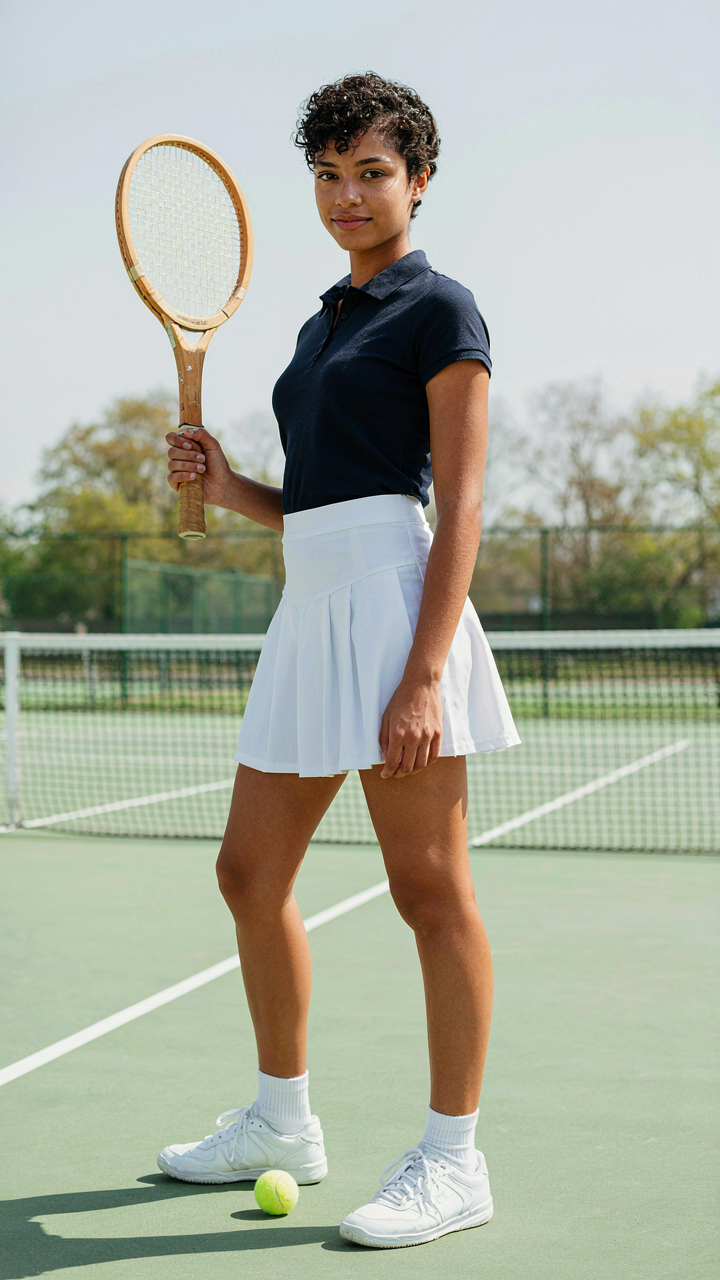
You’re afraid this trend will age you out. Here’s what actually happens: trends vanish, but silhouettes persist. The tennis skirt outfit works because the A-line skirt, high waistline, and fitted top are structural patterns that recycle every fifteen to twenty years. They’re not dependent on fabric color, logo placement, or seasonal mood. The preppy skeleton stays constant while surface details shift. A-line skirts with a two to four inch inseam, mid-rise waistbands, and form-fitting tops define the category. These don’t change because they solve a real problem: they balance proportions across body types without requiring constant adjustment.
Buying for endurance means rejecting the impulse to chase micro-trends. A well-cut tennis skirt in white, navy, or black remains functional across decades because it pairs with almost any top you own. Skip heavily branded pieces or skirts cut with exaggerated silhouettes that won’t read as classic in five years. The mechanism is simple: simpler construction survives longer. When you remove decorative elements and focus on fit and fabric, the piece becomes invisible enough to reappear naturally when the aesthetic cycles back.
The Math Of Fabric Durability
Economics teaches sunk cost fallacy: people overvalue items they’ve already paid for. Reverse this with fabric. A fifty dollar skirt made from thin polyester blends fails after twenty wears. A one hundred twenty dollar skirt from dense cotton-blend or performance fabric lasts eighty wears before fading noticeably. That’s two dollars per wear versus one dollar fifty cents per wear. The cheaper skirt feels like a win until month three. Fabric quality determines how many wash cycles a skirt survives without pilling, color loss, or waistband degradation.
High-performance fabrics used in actual tennis wear contain polyester, nylon, or spandex blends specifically engineered for movement and recovery. These maintain shape through repeated washing and wearing. Natural fibers like pure cotton soften and weaken faster without the structural support of synthetic blends. When shopping, prioritize skirts labeled with moisture-wicking properties or stretch recovery. Check the tag: if spandex content sits between five and eight percent, the skirt will hold its shape. If it’s zero to two percent, expect waistband collapse within two seasons. Test the fabric by pinching it: quality material snaps back immediately.
The Real Obstacle To Everyday Style Isn’t Your Wardrobe; It’s Your Inability To See Clothing As A Dynamic System Of Leverage

Most people treat a tennis skirt outfit like a fixed puzzle. You find the “right” combination and repeat it. That’s backwards. A tennis skirt only works when you treat it as a tool that shifts meaning depending on what you pair it with. Swap the top. Change the shoes. Layer differently. The skirt becomes five outfits, not one. Stop asking what matches. Start asking what you’re trying to communicate today. Open your closet right now and pick one piece you own. Rebuild it three different ways before tomorrow. Your style doesn’t need more clothes. It needs your actual attention.