

The Deconstruction Protocol: Exposing Your Current Closet Chaos

Pull Everything Out And Count It
You want to believe your closet is already organized. It isn’t. Most people own between 60 and 150 pieces they never see, which means they’re invisible assets bleeding money. The mechanism is simple: what you don’t see, you don’t wear, so you buy replacements. A full inventory forces the confrontation you’ve been avoiding.
Take one category at a time. Dump all shirts on a bed. Count them. Write the number down. Do this for pants, jackets, underwear, shoes, accessories. You’re not decluttering yet. You’re collecting data. The number will shock you because repetition and depth are two different problems, and most closets have both.
Separate What You Wear From What You Hope To Wear

This is where borrowed frameworks from economics help. Think of sunk cost fallacy as your closet’s enemy. You bought that blazer three years ago intending to wear it to networking events. You haven’t. You won’t. The item doesn’t fit your actual life, and keeping it is not loyalty to your past self, it’s delusion about your future self.
Wear from what you wear. Take the pile of items you counted and split them into two stacks: pieces you’ve worn in the last six months, and pieces you haven’t. Be aggressive. If you wore it once and felt awkward the entire time, it goes in the second stack. The first stack is your actual wardrobe. Everything else is costume.

Why Your “Essentials” Are Usually Overrated (And Overbought)

The Trap Of Universal Basics
You want a list because lists feel safe. They promise that if you just buy the right ten items, the decision-making stops. But the mechanism is backwards: most “essential” lists exist because they sell to the widest possible audience, not because they solve your actual life. A white button-up shirt is essential for an office worker. It’s dead weight for someone who never leaves their home office. The consensus recommendation doesn’t account for your specific friction points. It accounts for statistical averages.
Fashion retailers and lifestyle media built their entire model on selling the same essentials to everyone. They created a false universal standard so they could manufacture in bulk and distribute globally. Your job isn’t to collect essentials. Your job is to identify which basics actually map to your days, your body, and your social contexts. That’s the only metric that matters.
Your Uniform Becomes Your Competitive Edge
Economics has a concept called “opportunity cost.” Every dollar spent on something is a dollar you can’t spend on something else. More relevant: every minute deciding what to wear is a minute you don’t spend on work that moves you forward. Build your capsule around a personal uniform, not a collection of interchangeable pieces. A uniform is a fixed set of combinations you rotate. It removes daily choice friction.
Steve Jobs wore the same black turtleneck and jeans every day. He wasn’t making a fashion statement. He was solving a decision problem. You apply the same logic to capsule building by choosing silhouettes, colors, and textures that repeat within your wardrobe instead of branching outward. Pick three neutral base colors that actually exist in your life, not in theory. Then commit to one fit style per garment category. When every shirt fits the same way on your body, mixing and matching becomes automatic. You don’t think about it anymore.
The Wardrobe Elimination Formula: A Practical Purge

Make The Three Decisions
You’re avoiding this section because you know purging means confronting how much money you wasted on clothes you don’t wear. The mechanism that stops most people isn’t indecision—it’s the lack of a binary system. You need one decision matrix with three paths, not vague feelings about what to keep.
Every piece gets sorted into wear, repair, or discard. Wear means it fits now, looks intentional on you, and you’d reach for it within two weeks. Repair means the item has real potential but needs tailoring, a zipper replaced, or a stain treated—and you’ll actually do that work within 30 days. Everything else gets discarded. No donation limbo. No “maybe later.”
The Three Second Rule That Actually Works
Most advice says if you don’t love it, get rid of it. That’s useless because love is subjective and changes with mood. Pull an item from the closet and wear it for three seconds. Your body knows before your mind does. If you feel resistance, hesitation, or that urge to change your mind, it goes. If you move into it without friction, it stays.
The three-second rule cuts through rationalization. Your nervous system responds faster than your justification engine. You’ll sense fit problems, color clashes, or fit your lifestyle before you construct reasons to keep something. This is how you stop the slow bleed of dead inventory. Run every piece through this filter once. Done.
The Systems Thinking Method: Wardrobe As A Network
Feedback Loops That Actually Work
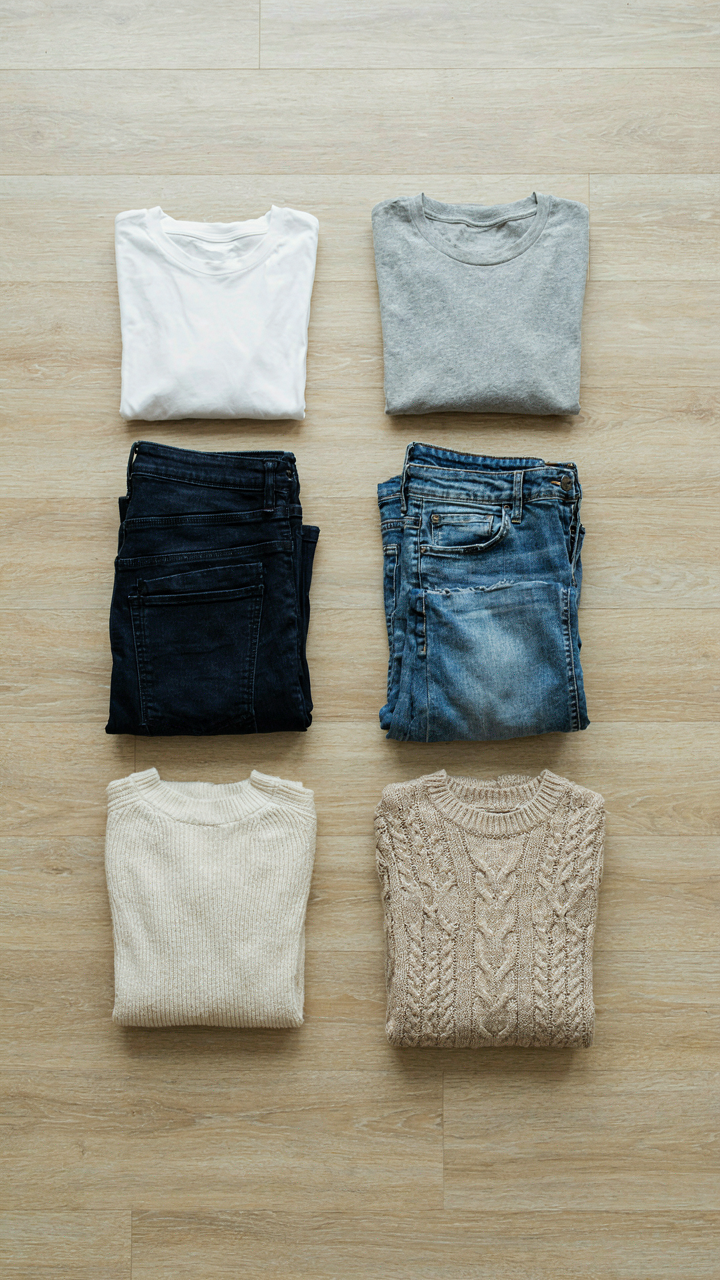
You want to believe a capsule wardrobe saves time. Really you’re afraid of making a visible mistake in what you wear. The mechanism is feedback: cybernetics calls it a negative feedback loop, where output gets measured against desired state and corrects itself. Your closet works the same way. Wear a combination. Notice what happened. Adjust the next day. This loop breaks when you keep too many items because noise drowns the signal.
Track outfit combinations for two weeks by photographing them or noting them. Write down which pieces you reached for repeatedly and which stayed untouched. This data isn’t motivational. It’s operational. You’re not building discipline. You’re identifying which items actually serve your life versus which ones you bought for an imagined version of yourself. The feedback reveals pattern. Pattern reveals what stays and what goes.
Constraint Creates Combination
The common advice says fewer clothes mean fewer outfits. Wrong. Fewer clothes mean more outfit combinations because you stop relying on single-piece solutions and start layering strategic pieces instead. This is emergence: a property that appears in systems when constraints force components to interact. Add a fifth neutral base layer to four existing pieces and you don’t create five more outfits. You create exponentially more because every new piece now combines with every existing piece differently.
Fewer items force better material choices and silhouette alignment because poor matches become impossible to hide. When you own eight solid neutral tops and four bottoms, every top works with every bottom by necessity. You stop shopping for novelty and start shopping for compatibility. This is the opposite of traditional wardrobing advice. Start with your current closet, remove everything that doesn’t coordinate with at least three other pieces already owned, and you’ll see the math work itself out in real time.
Elevated Basics: Not About Price, But Intentionality

What Elevated Actually Means For You
You want permission to buy expensive things and have it feel intentional instead of wasteful. Here’s the actual mechanism: elevated basics are pieces that solve a specific problem in your life better than cheaper alternatives, not pieces that cost more because of a brand name. Borrowed from economics, this is about comparative advantage—each item must outperform its cheaper equivalent in your actual context, not in theory or on a runway.
Most people confuse elevated with expensive. They’re not the same. An elevated basic is a white cotton t-shirt that fits your shoulders correctly, doesn’t pill after five washes, and works with eighty percent of your other pieces. A expensive basic is a white cotton t-shirt with a designer label that does none of those things better. The difference isn’t the price tag. It’s whether the item solves a real friction point in your existing wardrobe.
Spotting Real Quality In Your Closet
Pull out three pieces you actually wear repeatedly. Don’t think about how much they cost. Look at the seams, the fabric weight, how the collar holds its shape after washing. Real quality leaves evidence. Thread tension should be even and tight. Fabric should feel substantial but not rigid. Buttons should be sewn with multiple anchor points, not one or two threads.
The cheap tell is always in the details nobody sees. Check the inside of seams—are they finished or raw? Does the zipper glide smoothly or catch? Does the hem start coming loose after one month? If a piece passes these tests across multiple wears and washes, it’s elevated for your context. If it fails them in three months, it’s expensive but not quality. Use this as your filter for what stays and what gets replaced.
The Capsule Wardrobe Checklist: Your Personal Audit

Organize By Life Function, Not Category
You want permission to throw things out without feeling wasteful. Here’s the real mechanism: most people organize closets by clothing type (shirts, pants, jackets) instead of by the actual contexts where they wear them. This creates invisible duplicates and makes gaps obvious only when you’re already late. Inventory like a military quartermaster inventories supply lines. You categorize by mission, not by inventory type. Your missions are work, casual social, formal events, exercise, sleep. This reframe exposes what actually gets worn versus what sits behind what you actually wear.
Start a new document or spreadsheet. Write down every context you dress for in a typical month. Not aspirational contexts. Not “someday I’ll go hiking.” Real ones. Next to each context, list what you currently own that works there. Be specific: “gray wool blazer” not “blazer.” This audit reveals patterns instantly. You’ll notice you own five things for one context and nothing for another. You’ll see repeats you didn’t know you had. You’ll spot the items that bridge multiple contexts, which are the ones worth keeping.
Find Gaps Without Creating Waste
The common advice here is backward. Most capsule guides tell you to identify what’s missing, then buy to fill gaps. That creates the exact problem you’re trying to solve: buying things because you think you should, not because you need them. Look for gaps in what you actually wear, not in theoretical outfit combinations. There’s a difference. A gap is something you reach for that doesn’t exist. It’s the third time this month you wished you had black trousers for work but wore the wrong thing instead.
Document your last 30 days of dressing. Note what you grabbed most often, what you never touched, and what you compromised on. The compromises are your gaps. The never-touched items are candidates to remove. This creates a checklist grounded in behavior, not aesthetic theory. You’re not building an imaginary wardrobe. You’re editing the one you already own, keeping only pieces that serve actual functions you perform repeatedly. Once you finish this audit, you move to acquisition with precision instead of hope.
Beyond Trends: Cultivating A Timeless Aesthetic

Identify Your Core Style Principles
You want proof that your taste is real and permanent, not borrowed or temporary. Here’s the mechanism: your core style principles are the constraints that make decisions faster, not slower. Without them, you’re choosing from infinite options every morning. With them, you’re filtering noise.
Start by examining what you actually wear repeatedly from your current closet. Not what you think you should wear. Not aspirational pieces collecting dust. The five to seven items you reach for when nothing else matters. These pieces reveal pattern. They show silhouette preference, color palette, fabric weight, and formality level. Write down what those pieces have in common. That’s your actual aesthetic, not the one you imagined.
Resist The Fast Fashion Cycle
The real advice on timelessness is incomplete: most guides tell you to buy quality basics and ignore trends. That misses the actual mechanism. Borrow from economics here. In fast fashion cycles, you experience what’s called velocity depreciation. Your clothes lose perceived value not because they wear out, but because novelty dies fast. The moment a trend peaks, you subconsciously reject the piece.
To resist this, you need to identify which trends are structural and which are cyclical. Structural trends reflect genuine shifts in how bodies move and work. Think the rise of athleisure during remote work adoption. Cyclical trends are pure noise: hem lengths, specific color seasons, branded logos. Here’s the filter you apply to any piece already in your closet or considering adding:
- Functional Need: Does this piece solve a real problem in your life right now? Not next year. Not for a hypothetical event. Does your current life require it?
- Silhouette Longevity: Does the cut remain visually neutral across five-year spans? Oversized or fitted shapes weather better than extreme proportions that announce their era.
- Color Permanence: Is this a color that appears consistently across multiple seasons and years? Avoid colors that spike then vanish like hot pink waves or neon accents.
- Fabric Integrity: Does the material age gracefully or deteriorate visibly? Natural fibers like wool and cotton develop character. Synthetic blends often pill and fade unpredictably.
- Emotional Neutrality: Can you wear this piece without feeling self-conscious in five years? If you’re already questioning it, the piece is trend-dependent, not timeless.
The timeless piece survives because it solves a basic human need without announcing when it was purchased. Wear your capsule with this single filter applied: if the piece would confuse someone about what decade it’s from, it’s already aging out.
Your Personal Capsule Wardrobe Plan: The Actionable Blueprint

Start Small, Then Expand
You want this section to work because you’re afraid you’ll fail and waste money again. The real mechanism is momentum: small wins compound into sustained behavior change faster than willpower alone. Most people try to overhaul their entire closet at once, hit friction immediately, and quit.
Start with one category. Pick the piece you wear most often: jeans, white tees, neutral pants, whatever. Audit what you own in that category. Keep the three items that actually fit and feel good. Donate or sell the rest. This takes one hour and removes decision fatigue immediately. Repeat this for one new category every two weeks. The velocity of small wins trains your brain to keep going.
Refinement Over Completion
Treating your capsule like a finished product is the trap everyone falls into. The real model comes from engineering: iterative design. Each cycle reveals what doesn’t work, and you adjust. Your capsule isn’t built once. It’s permanently in beta.
After wearing your capsule for four weeks, document what you actually reach for. Document what sits untouched. Be honest about fit, color, and comfort. If a piece doesn’t get worn, it’s not working. Remove it. Add one replacement piece that serves the same function better. This four-week evaluation cycle prevents you from keeping dead weight based on what you thought you’d wear. Repeat every season or when you notice the same frustration recurring.
Your True Obstacle Isn’t Your Closet, It’s Your Inability To Ruthlessly Edit What No Longer Serves Your Current Self

Most people fail to start a capsule wardrobe because they can’t let go of who they were. That shirt from three years ago? You’re not wearing it. Those jeans that fit differently now? Stop pretending. Open your closet today and remove one item you haven’t touched in a month. Just one. Watch how uncomfortable that feels. That discomfort is the actual work. Everything else follows. Your wardrobe reflects who you’ve become, not who you used to be.