Introduction
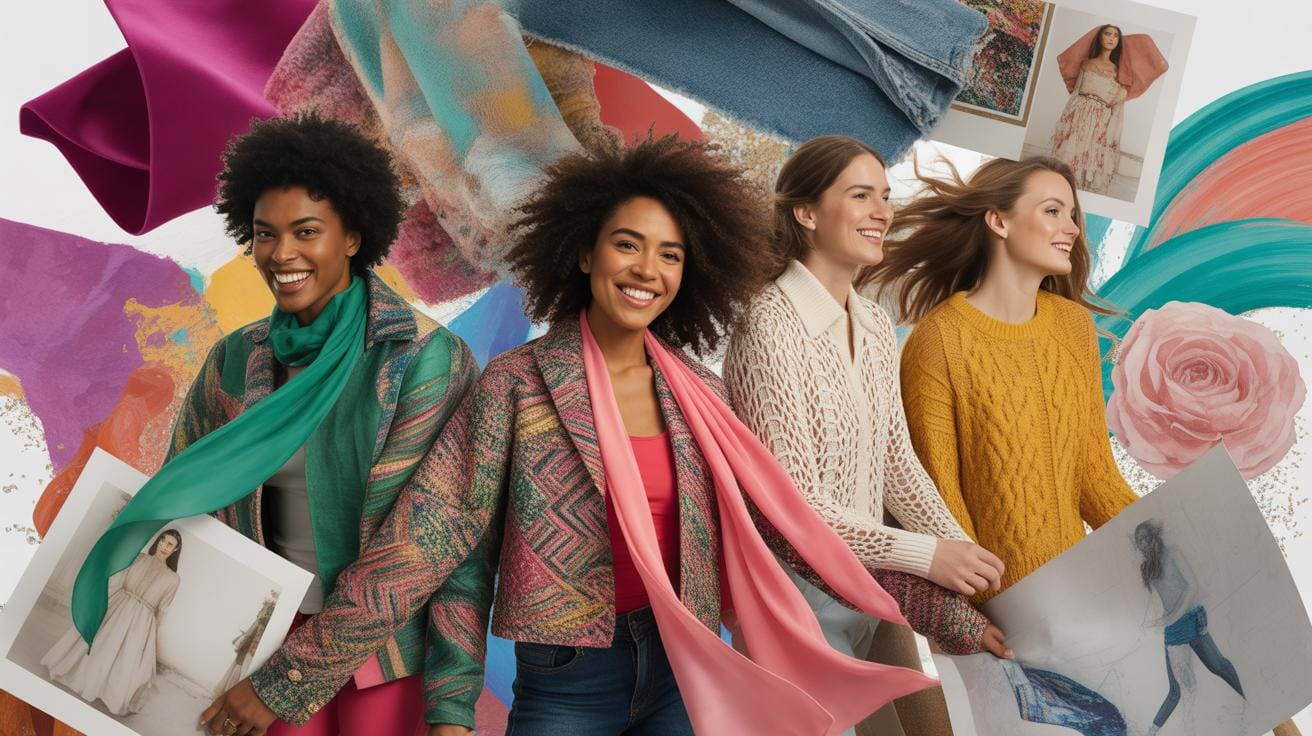
Fashion collage combines art and style by assembling different images, fabrics, and designs to create unique visual statements. This creative process allows you to express your fashion tastes and inspirations in a dynamic and engaging way. It blends various elements of fashion, such as colors, textures, and themes, into one cohesive piece.
In this article, you will learn what fashion collage is, why it matters for expressing creativity, and how to start your own collage art. You’ll also find practical tips, examples, and a clear process for making fashion collages that stand out.
Basics Of Fashion Collage Art
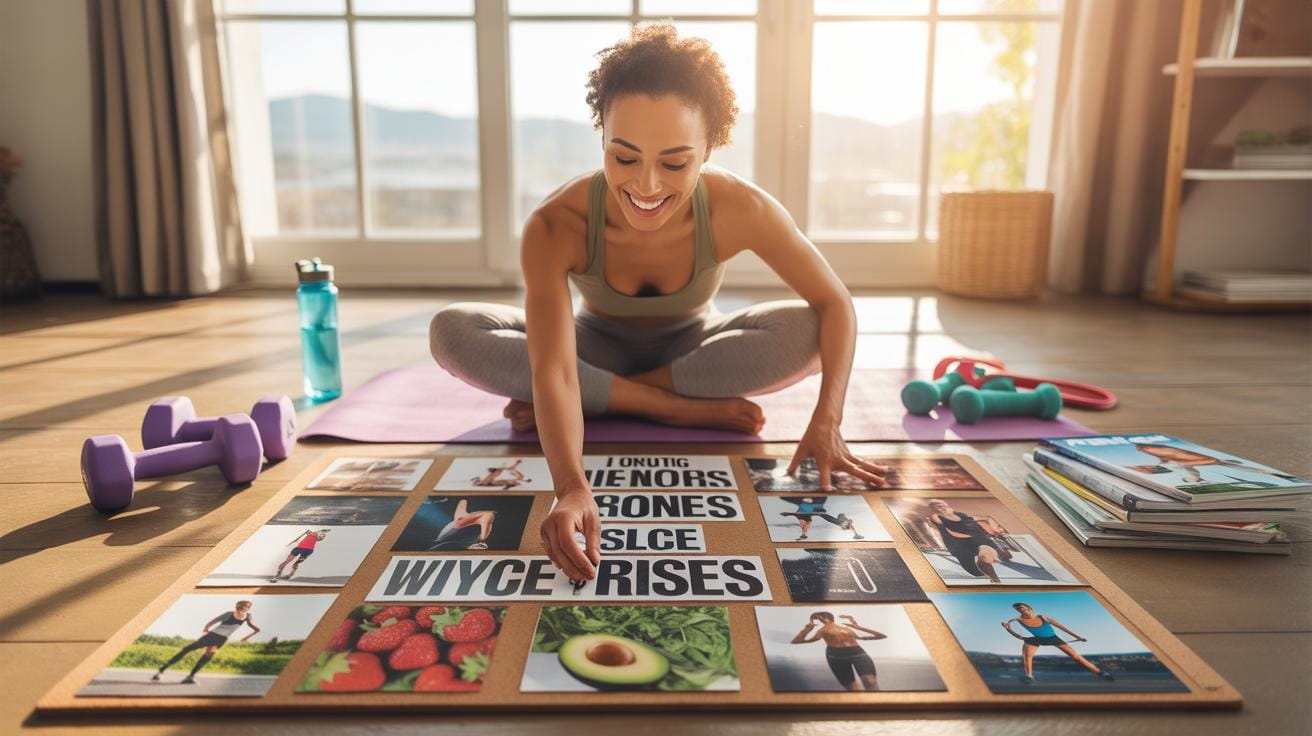
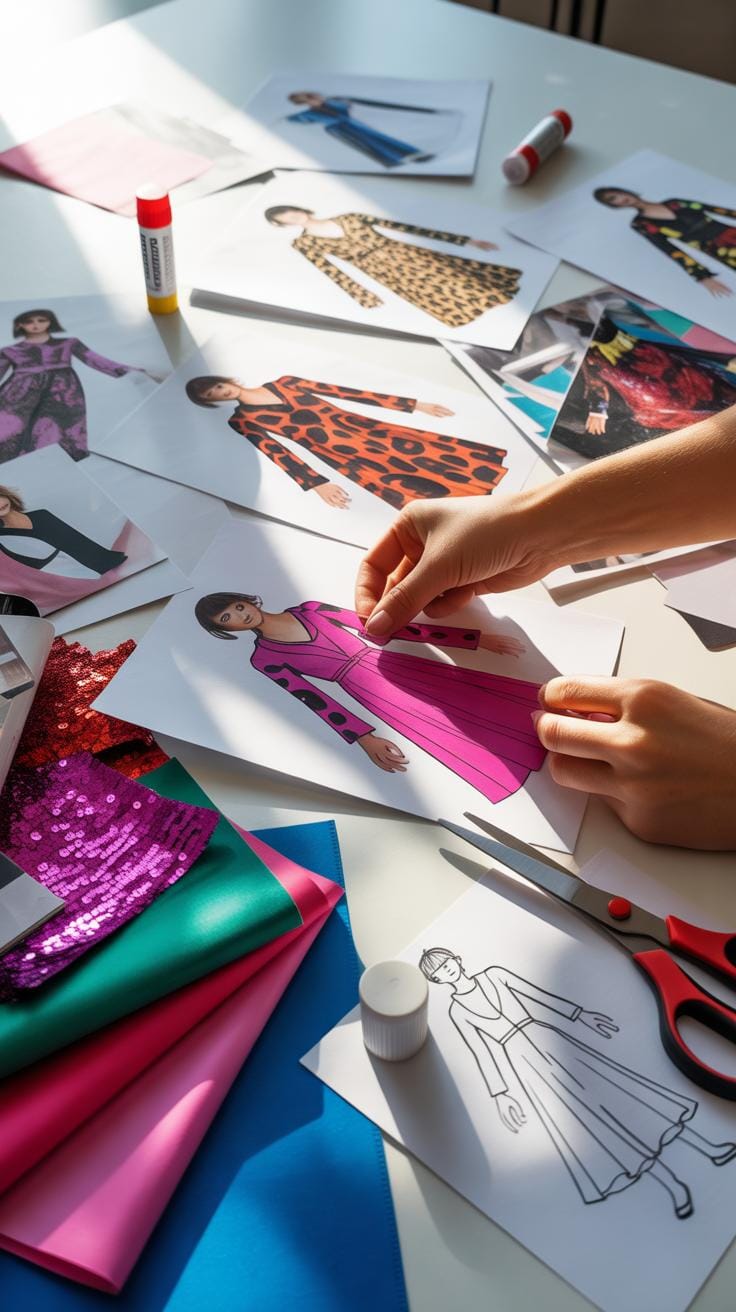
Fashion collage art is a visual and creative technique that brings together different images and materials to make one artistic piece. It often involves cutting out pictures from magazines, newspapers, or fabric samples, then layering and arranging them to express unique fashion ideas. This art form highlights style through unexpected combinations and textures, letting you play with color, pattern, and composition all at once.
Visually, fashion collages can be bold or subtle, minimalist or extravagant depending on the creator’s intent. It’s about more than just assembling; it’s creating a mood, a vibe that reflects fashion perspectives. You might find a collage that mixes vintage fabrics with modern streetwear visuals or contrasts soft pastels against sharp geometric shapes. These pieces allow fashion to become a tangible, flexible expression that’s as much about artistic interpretation as clothes themselves.
How Fashion Collage Transforms Style
Making fashion collages has a way of reshaping how people see their own style. By putting together disparate elements, you begin to understand what really draws you in—be it shapes, colors, or themes. It’s like trying on ideas without having to fit into any garment first. This process can highlight fashion tastes you hadn’t fully noticed or give you confidence to mix styles that seemed incompatible before.
Collage also impacts broader fashion trends. When designers or stylists experiment this way, they often spark new combinations that catch on. So, your personal collection of cutouts and scraps might actually be connected to wider movements—though you wouldn’t always expect it at first. It’s not just an art project; it’s a way to communicate and even influence fashion conversations.
Tools Needed To Start Fashion Collage
Starting a fashion collage project doesn’t require fancy gear. Here are essentials to have on hand:
- Magazines or printed fashion images – the source of your visual elements.
- Scissors – for cutting out the pictures precisely.
- Glue or adhesive – to stick pieces on your background securely.
- Background paper or board – a surface to build your collage on.
- Optional digital tools – apps for digital layering and editing can expand possibilities.
You might find it easiest to begin by gathering an assortment of old magazines, catalogs, or fashion books. Organize your images by theme or color to save time later. It’s surprising how comforting it feels to sort through pictures—like preparing a creative buffet. And don’t hesitate to mix traditional and digital methods, especially if you want to experiment with scale or layering effects beyond what’s possible by hand.
Step By Step Fashion Collage Process
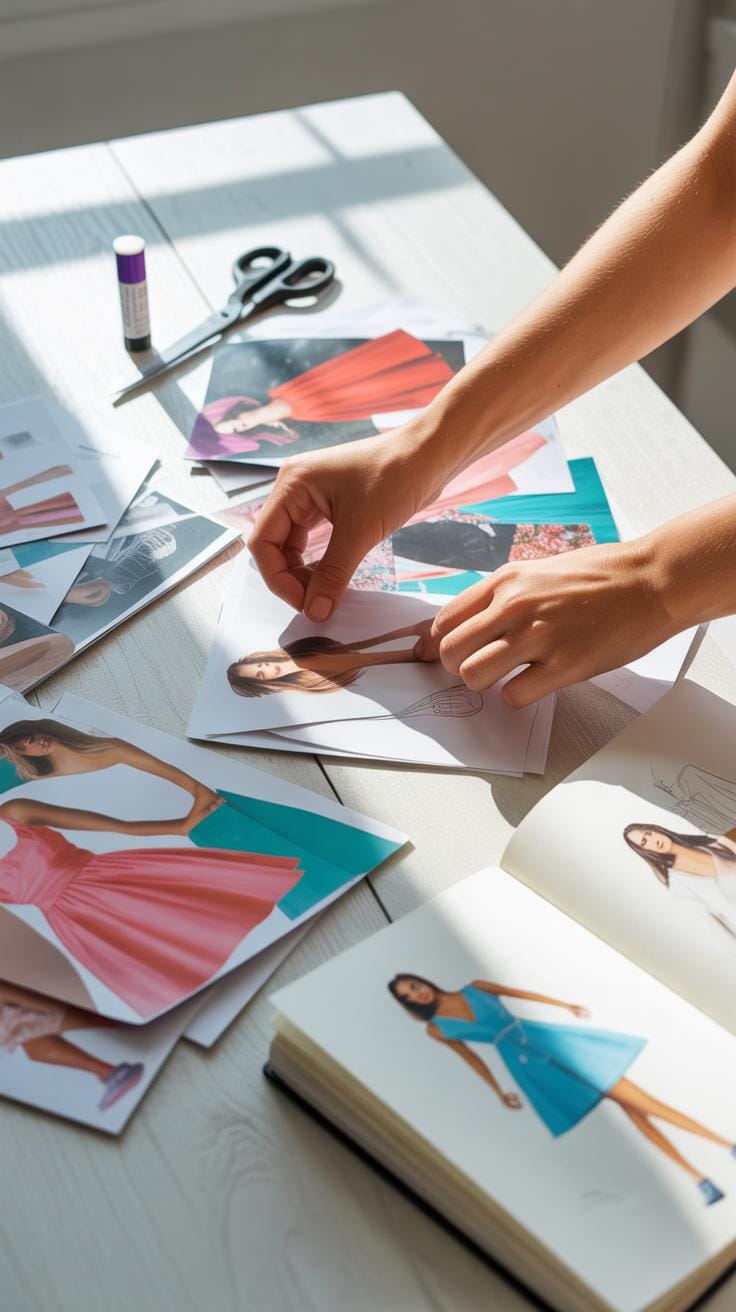
Making a fashion collage starts with choosing a theme. This theme should reflect a style or mood you want to express. It could be anything from vintage glamour to streetwear, spring florals to minimalistic monochrome. Picking a clear concept helps guide your image choices and keeps the collage cohesive. For example, deciding on a “retro summertime” vibe could lead you to choose bold colors, sunglasses, and sun hats.
Next comes selecting images. These can come from magazines, online prints, or your own photos. Look for pieces that speak to your theme and bring variety in texture, color, and shape. Don’t just pick beautiful pictures—think about how they connect and tell a story together.
Once you have enough images, lay them out before gluing or fixing anything. Try different arrangements to find a balanced composition. Layering is key; overlapping images will add depth. Place larger pieces as anchors, then fill gaps with smaller details or textured elements like fabric swatches or paper.
Finally, step back and review the collage as a whole. Adjust anything that feels off—maybe an image is too dominating or a section looks empty. When satisfied, secure everything permanently. This stage might seem straightforward, but the little tweaks really finish the piece. Your final collage should reflect your chosen theme clearly and invite closer inspection.
Choosing Themes For Your Collage
Choosing a theme might seem easy, but it’s worth some thought. The theme sets the mood and style, so it guides your entire work. Ask yourself: what story do I want to tell? What fashion trend or season am I drawn to? Themes can be as simple as “fall coziness” or as specific as “futuristic streetwear.” Each theme pushes you to pick images that fit or contrast, creating interest.
Common fashion themes include:
- Seasonal vibes like spring florals or winter layers
- Style eras such as 70s disco or 90s grunge
- Color stories focusing on monochrome or bold contrasts
- Texture contrasts mixing smooth silks with rough denim
- Occasion-based themes like festival wear or office fashion
Having a clear theme also makes image selection more focused. Instead of random scraps, you start seeing connections and feel motivated to hunt for pieces that fit.
Arranging Images And Textures
Layering images and textures is part science, part intuition. You want a balanced collage, but not a perfectly symmetrical one—that can be dull. Start by placing your largest, most eye-catching image. Think of it as the focal point. Then, add medium-sized images around it to guide the viewer’s eye across the composition.
Textures add another dimension, breaking flatness. Try mixing shiny magazine cutouts with torn fabric or crumpled paper. Don’t be afraid to overlap or tuck some images partly under others. This overlap creates depth and makes the collage dynamic.
Space matters too. Don’t overcrowd; let some areas breathe. Negative space can highlight interesting details. If you feel stuck, try moving pieces back and forth until it looks “right,” even if you can’t say exactly why.
Fashion Collage Inspiration Sources
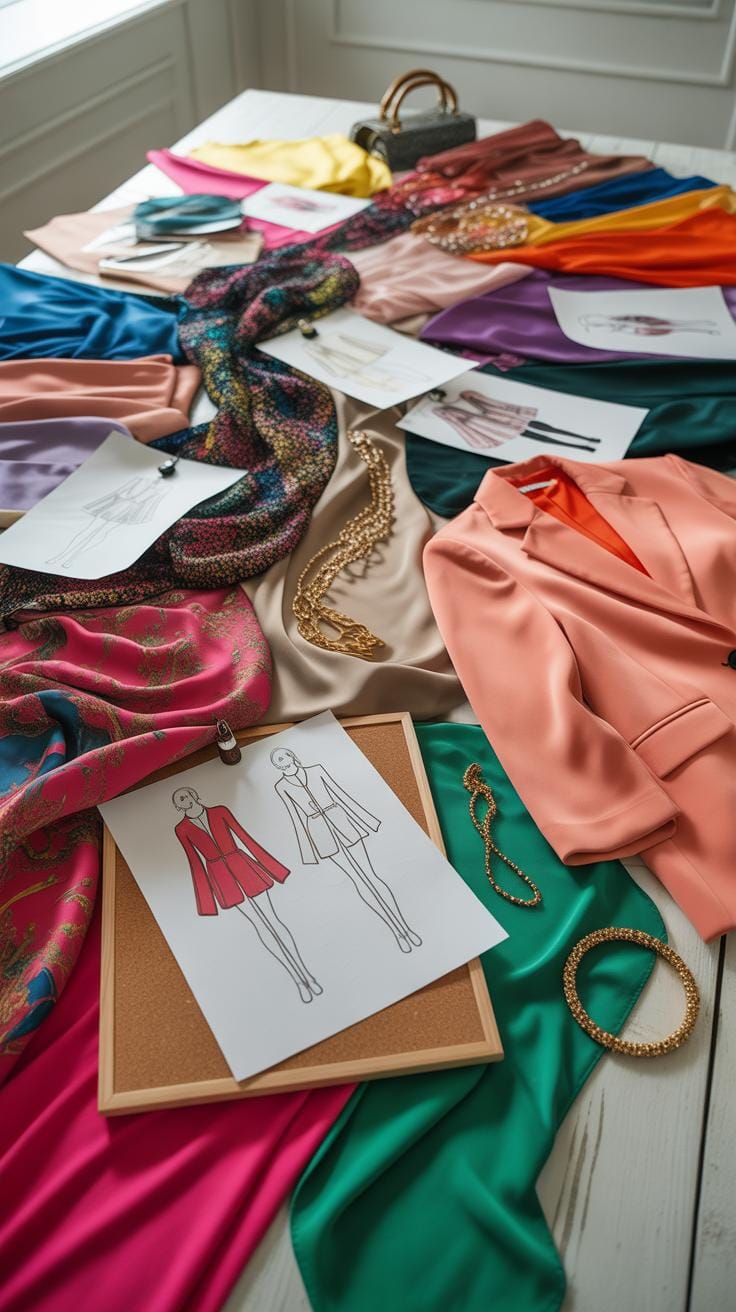
Fashion collage draws its vitality from fresh and diverse sources. When seeking inspiration, you might find yourself turning to a range of materials — think runway photos, vintage collections, or even the spontaneity of everyday life. Each source offers something different; perhaps runway photos convey movement and cutting-edge trends, while vintage collections add a nostalgic texture that can contrast with modernity.
Magazines often hold a trove of varied imagery, coming from different seasons and designers in one place. You can flip through, picking out shapes, colors, or themes that speak to you. Maybe one spread captures a mood or an attitude that you want to translate into your art.
Social media is another rich vein, with platforms like Instagram and Pinterest offering both curated and raw glimpses into fashion worldwide. The beauty is you get to see real-time trends alongside personal interpretations by influencers and designers. It’s almost like a continuous, global mood board. And don’t forget everyday life; sometimes a fabric pattern on a passerby or a color arrangement in window displays can spark ideas that feel genuinely your own.
Using Magazines And Catalogs
Magazines and catalogs aren’t just old-school print; they’re like mini fashion archives. They offer a variety of photographs, layouts, and styles consolidated conveniently. You can easily cut out different elements, mix and match them, and build something unique. What I find fascinating is how you might pick up on subtle details — a neckline shape or an unexpected color pairing — that get overlooked when you’re just scrolling online.
Catalogs, particularly from specific brands or seasons, also highlight current trends and timeless classics. They let you focus on clothes in context, often styled in a way that tells a story or expresses a lifestyle. For collage artists, that context can be a goldmine for building narrative layers or contrasting moods.
Digital Inspiration From Social Media
Digital platforms revolutionize how you gather inspiration for fashion collages. Instagram, Pinterest, and fashion blogs put an immense variety of images at your fingertips. You can search specific keywords or follow hashtags to zero in on particular styles or themes. What’s intriguing is the blend of professional editorials with street fashion snaps—sometimes the most inspiring images come from everyday people rather than the runway.
Moreover, digital tools make it easy to save and organize your finds into collections or boards, which is pretty handy when you’re working on a collage project over time. But, it can also be overwhelming. With so much content, finding something that truly speaks to your creative vision might take patience and experimentation.
Common Mistakes To Avoid In Fashion Collage
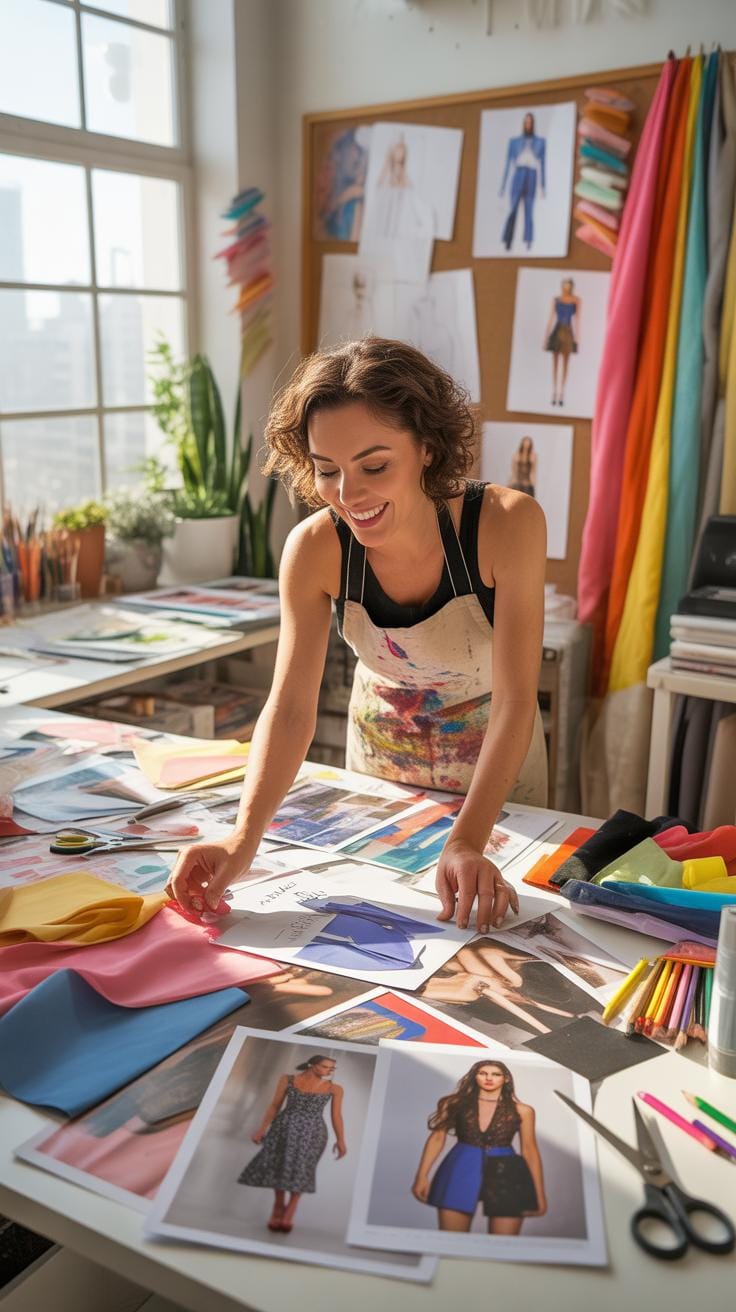
If you’re new to fashion collage, it’s easy to get caught up in adding every interesting piece you find. But too many elements can make your work feel cluttered and chaotic. The eye doesn’t know where to rest, which defeats the purpose of a clear visual message. Instead, try to pick just a few central themes or pieces and let them breathe. Think of it less like filling space and more like making choices about what really matters.
Color is another tricky area. Mismatched or clashing colors can break the cohesion of your collage and distract rather than attract. On the other hand, sticking to a consistent color scheme helps your artwork feel harmonious and intentional. Sometimes, this takes trial and error. Maybe start by picking one dominant color and build around it with complementary tones. Or use neutral tones to balance bolder pops of color. This helps keep your collage unified instead of visually scrambling.
So, what happens if you end up with chaos or color confusion? Well, the simplest fix is to step back and edit ruthlessly. Removing elements that don’t fit or adjusting the color focus might feel frustrating, but it often makes your vision clearer. Do you find it hard to narrow down your choices? Try asking yourself which pieces really tell the story you want to share. This can guide you away from overcrowding and mismatched colors into something more effective—even if it’s a bit slower going at first.
Comparing Physical And Digital Collage Methods
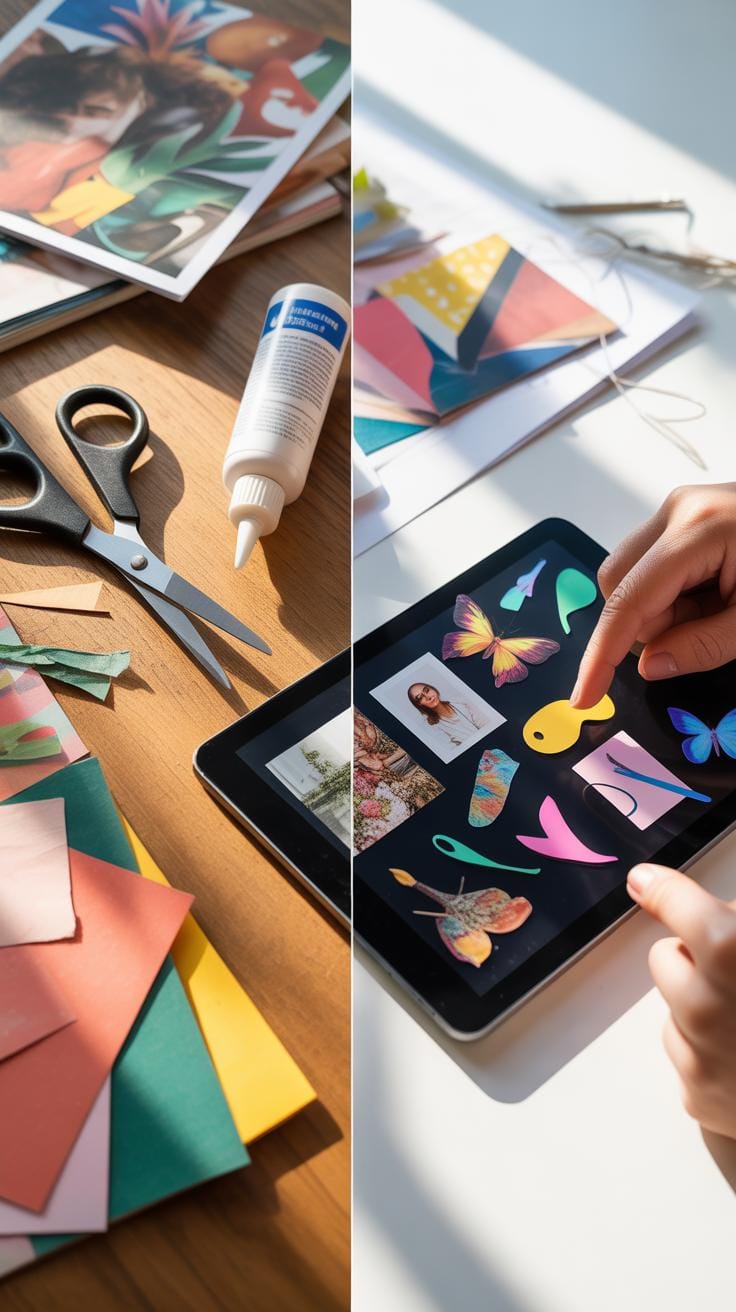
Advantages Of Physical Collage Making
Working with actual paper, glue, and scissors brings a different kind of satisfaction. The tactile aspect — feeling textures, cutting edges, arranging layers by hand — creates a sensory experience that screens just can’t match. You might find yourself more engaged, more impulsive, even inspired in unexpected ways. Sometimes, a torn edge or a smudged glue spot adds character, something that perfection on a digital canvas rarely offers.
That said, physical collage can be messy. It takes space, time, and patience. Mistakes feel more permanent, requiring patience to fix or accept. Yet, the slow and deliberate nature of it may deepen your connection to the work. And you get this little sense of accomplishment from piling up scraps and seeing them transform into something new. It’s not just about the final image, but the hands-on process that might spark ideas you wouldn’t think of otherwise.
Benefits Of Digital Collage Tools
Digital platforms, on the other hand, give you freedom to experiment without fear. Undo buttons, layers, and infinite resizing let you tweak endlessly. It can be quicker to test combinations, adjust colors, or swap out elements. Sharing your creations online or saving multiple versions feels seamless. For those who want to work on the go or archive work efficiently, digital tools check many boxes.
Still, the screen sometimes puts a distance between you and the art. It’s easy to lose track of the messy, intuitive sparks. But the versatility is hard to deny: you can import images from anywhere, apply filters, and combine photos with drawings effortlessly. So, maybe the best approach is not choosing one but mixing both, playing to the strengths of each method to push your fashion collage forward.
Showcasing Your Fashion Collage Work
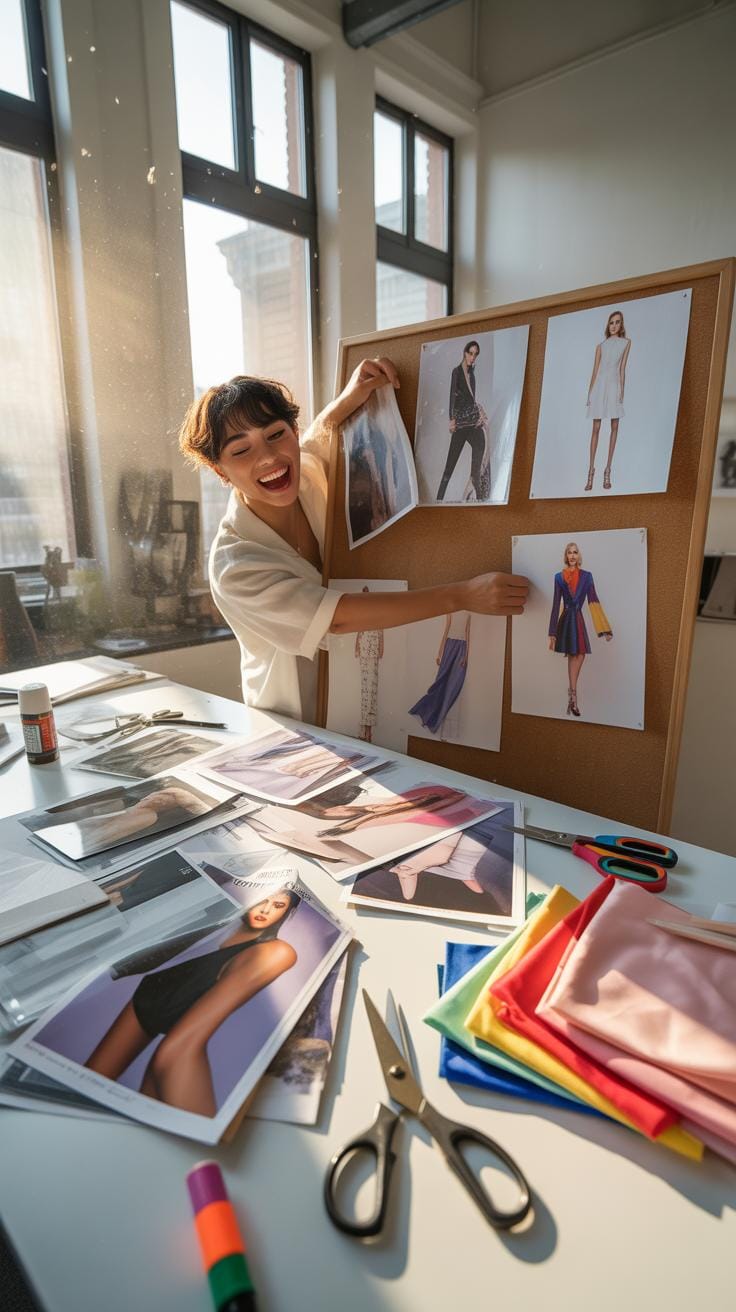
Sharing your fashion collages can feel tricky at first, but finding the right platforms makes a big difference. Galleries offer a focused space where people come to appreciate art seriously. Setting up in local galleries or pop-up exhibitions can attract viewers who might not browse online. But don’t count out social media — platforms like Instagram or Pinterest are very visual and can reach large, diverse audiences quickly.
Think about consistency when sharing on social media. Regular posts with high-quality images and stories behind each collage can build interest over time. Also, organizing your work into a dedicated online portfolio helps centralize your creations. It gives potential clients or collaborators an easy way to explore your style and projects without scrolling endlessly.
Fashion shows are another route to display your work. It’s unusual but worth considering—collages can inspire physical pieces or be part of event décor. Joining these shows can connect you with fashion insiders and art lovers alike.
Creating An Online Portfolio
Building an online portfolio might seem daunting, but it’s mostly about clear presentation. Start with platforms like Behance or a simple website builder like Wix or Squarespace. Choose a clean layout where your collages take center stage. Avoid overcrowding your pages; visitors should grasp your style immediately.
Include descriptions explaining your inspiration and process — it’s a subtle way of inviting connection without sounding overly technical. Regularly update your portfolio as you create new works. This ongoing freshness encourages visitors to return and track your evolution as an artist. Remember, the goal is to make access and navigation as straightforward as possible.
Joining Local Art And Fashion Events
Participating in community events can feel intimidating, but these spaces are great for meeting other creatives and potential buyers. Keep an eye on local art fairs, fashion markets, or gallery openings where you might showcase your collages. Even volunteering to help with events can open doors and build your network.
Approaching event organizers with a clear proposal of what you can contribute helps. Whether it’s a small exhibit table or contributing pieces for a group show, getting your work seen in real life adds a tactile dimension that online sharing lacks. These experiences often lead to collaborations or commissions, which can be surprisingly rewarding.
Fashion Collage As A Design Tool
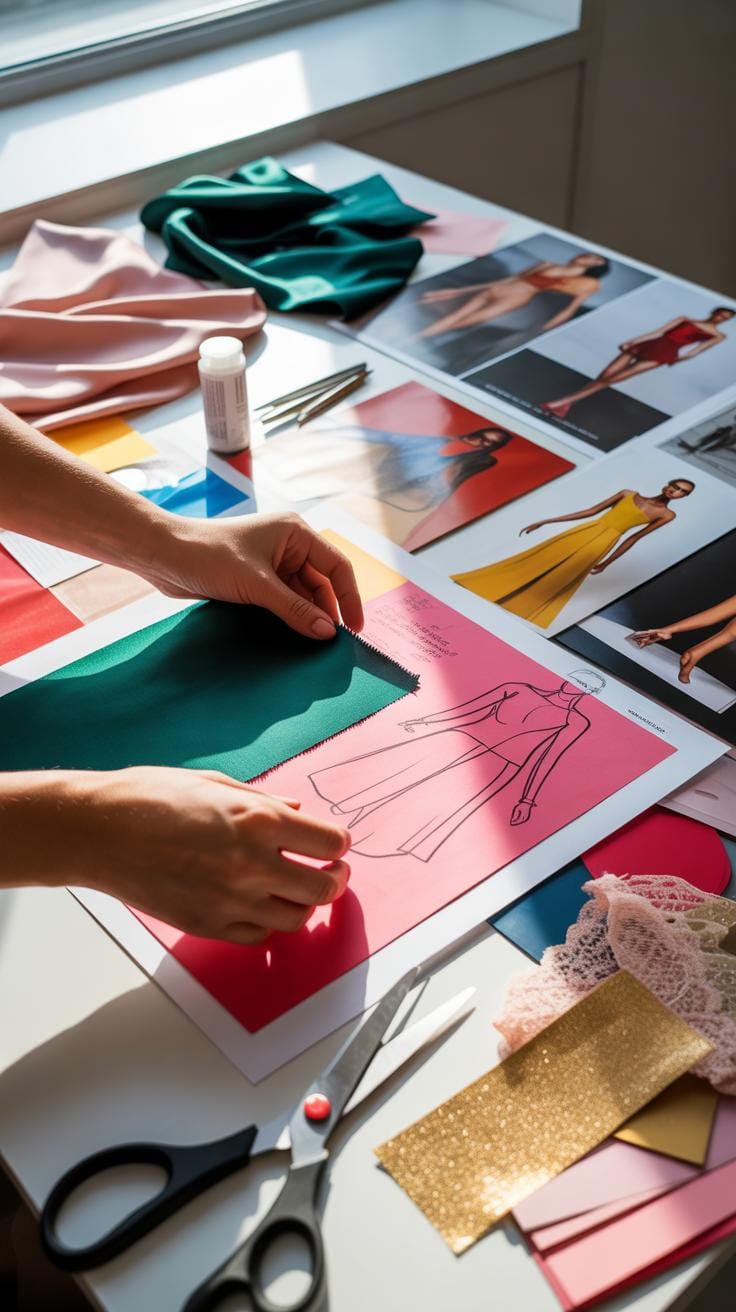
Fashion collages serve as a powerful design tool, helping designers plan and shape collections in a hands-on way. By assembling varied elements—fabric swatches, sketches, photographs—they can experiment with mixing styles and themes before starting production. This approach allows for trial and error without costly samples. It’s almost like visual brainstorming. You get to see immediately how different textures, colors, and patterns interact. Sometimes the combination is surprising, pushing your design in directions you hadn’t initially imagined.
Collages also help clarify ideas when sharing with teams or clients. You communicate concepts much more clearly than verbally describing them. When everyone sees a well-crafted collage, misunderstandings drop drastically. It’s a tangible representation of the vision, which makes collaboration smoother and feedback more focused.
Using Collage To Visualize Collections
Organizing pieces in a collage gives designers a preview of the collection’s overall look. Placing individual garments, accessories, or motifs side by side reveals how the elements work as a group. You might realize a color palette needs adjustment or a texture clashes.
This process enables stepping back and observing the mood and flow of the collection. Does it feel cohesive or disjointed? Is there balance between bold and subtle elements? Previewing in this way before producing anything physical saves time and resources. It’s almost a rehearsal, showing all parts on one flat surface.
Collaborating With Teams Using Collage
Collages bolster communication among designers, clients, and production teams by providing a shared point of reference. Everyone can see and respond to ideas, making discussions more concrete. Instead of abstract descriptions, team members engage with the same visual story.
Feedback becomes more actionable. If a client dislikes a fabric choice, they can pinpoint it directly within the collage. Designers can adjust instantly, avoiding confusion and lengthy email threads. This method keeps collaboration dynamic and responsive throughout the design process.
Fashion Collage Examples That Inspire
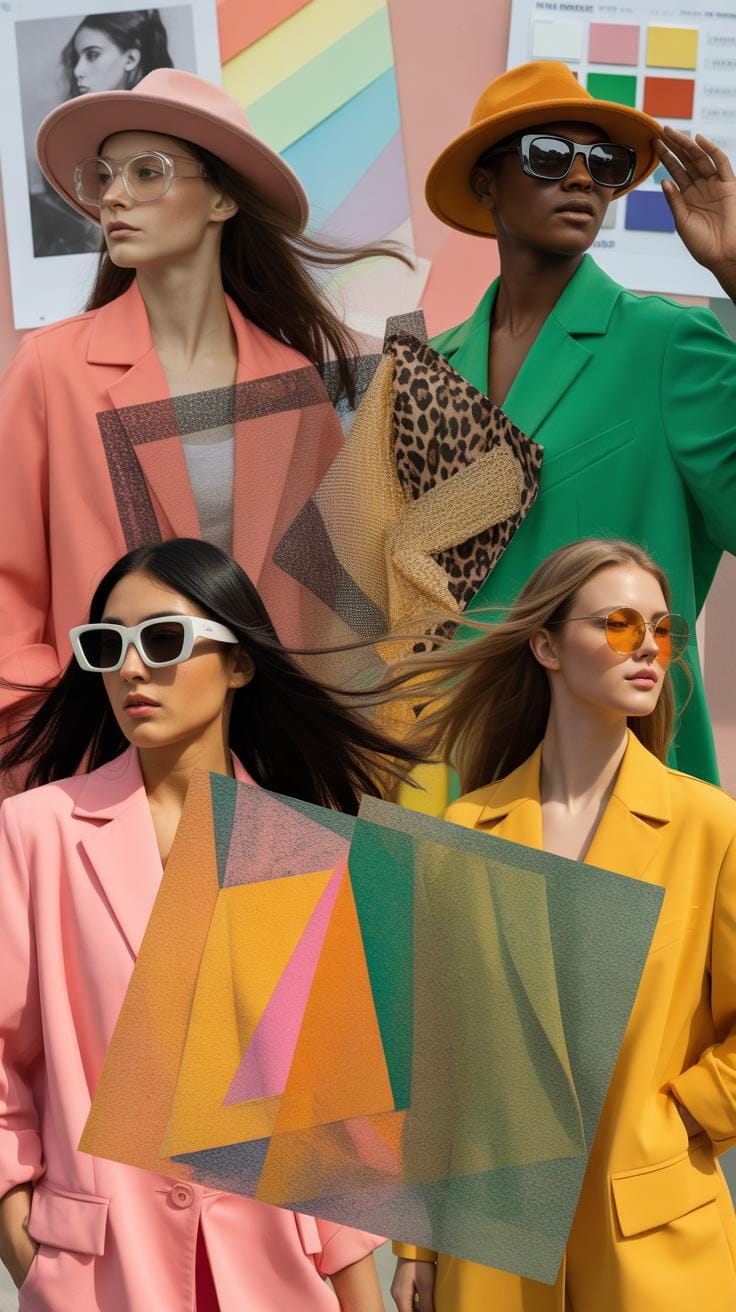
Fashion collage has been a playground for expression and innovation. Look at the work of artists like Richard Hamilton in the mid-20th century. His collages combined bits of advertisements, magazine clippings, and fabric, layering cultural references into one impactful visual narrative. What makes such work effective is how it captures the zeitgeist without explicitly stating it—like a subtle conversation between fashion and society.
Historic fashion collages often stand out because they move beyond simple pasting. Picasso and Braque’s contributions to collage brought a fresh approach, merging painting and texture, influencing fashion designers to reinterpret fabric and form. You might find it interesting that these early modernist collages challenged traditional aesthetics, nudging designers to rethink silhouette and material.
Today, designers like Collier Schorr and projects such as the Fashionary’s mixed-media initiatives push boundaries further. They don’t just assemble images; they layer narratives, combining photography, textiles, and sketches to explore identity and culture. Sometimes it’s less about coherence and more a fragmented story that allows room for personal interpretation. These modern experiments remind you that fashion collage remains a vibrant dialogue between past and present, material and imagination.
Conclusions
Fashion collage is a simple yet powerful way to communicate your style and creative ideas. By combining different elements, you can create original artwork that captures your fashion sense. This method encourages experimentation and helps you refine your aesthetic.
Use the techniques and steps we discussed to try your own fashion collage. Whether you want to explore styles, plan outfits, or create art, collage offers a flexible and fun approach. Keep practicing, and your designs will become more expressive and impactful.