

The Pre Swap Purge: Culling Your Closet For Maximum Value

The Only Criteria That Matter
You’re doing this because you want to walk out with better stuff than you brought, and you’re terrified you’ll end up with someone’s trash. The real mechanism at work here is supply and demand within a bounded market. You control supply by being ruthless about what you contribute. Worn elastic, stains, missing buttons, and clothes that don’t fit are dead weight. They dilute the pool and signal low standards to everyone else. Remove anything you wouldn’t actually wear again or anything that shows visible damage. If you hesitate on a piece, it’s already a no. The swap succeeds only when every item has genuine residual value. Your pile reflects your credibility in that room.
Condition matters more than fashion trend. A well-maintained cotton button-up from five years ago outperforms a trendy piece with pilling or stretched seams. Inspect every garment under natural light before the swap. Look for hidden flaws: loose seams, discoloration, odors, fit issues. Remove anything that requires the recipient to make repairs or excuses. The smaller your pile of truly good pieces, the higher the perceived quality of everything you bring.
The Valuation Reality Nobody States

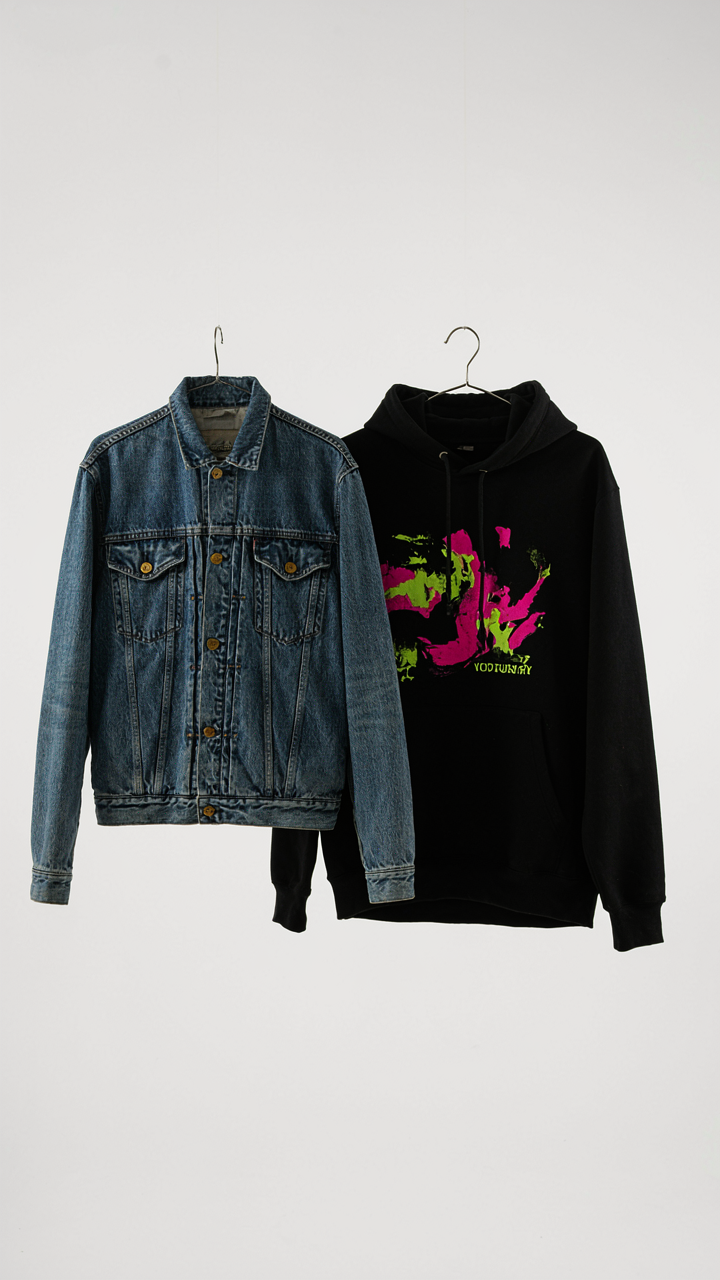
Most people approach this backwards: they assume the items they paid the most for will draw interest. That’s not how it works. What actually moves at a swap depends on fit, condition, and whether it solves an immediate problem for someone in the room. A vintage raw denim jacket in perfect condition will generate more genuine interest than a designer piece that’s three sizes too small. Use this framework from retail merchandising: perceived utility times current condition equals trade value. An item’s original price is irrelevant once it leaves the store.
Walk through your candidates and ask one question per piece: would someone in this specific group actually want this right now? Not someday, not hypothetically. Now. If the answer requires explanation or rationalization, mark it for removal. Consider the age, wear pattern, and whether similar items already exist in your regular rotation. Items that feel dated or hyperspecific to a moment in your life will sit untouched. Bring pieces that function as problem solvers or genuine upgrades to someone’s existing wardrobe. That’s the only valuation metric that predicts movement.

Clothing Swap Party Invitation: Engineering An Exclusive Experience

The Scarcity Mechanism
You want people to think your swap is worth showing up to, which means you’re afraid of hosting something that feels like a clearance rack. The mechanism here is borrowed from economics: artificial scarcity drives perceived value. Limit your invite to 8 to 12 people maximum. This isn’t about being exclusive for status points. It’s about creating an actual constraint that makes the exchange functional. More people means more chaos, slower rotations, and lower-quality matches between what someone brings and what they actually want.
Send invites two to three weeks ahead, not the day before. Early timing signals intentionality and gives people space to curate what they bring instead of grabbing random items from their closet. State the exact date, duration (two hours is standard), location, and the core rule: bring clean, wearable items in good condition. One sentence about sizing diversity helps too. People need to know they’re not walking into a gathering of size-two clothing nobody else can wear.
Screening For Viable Exchange
Most advice says “invite people with similar style.” That’s incomplete. What actually matters is diversity of size, body type, and general aesthetic—the opposite of homogeneity. A swap where everyone wears the same silhouettes and colors produces dead inventory that nobody takes home. You need one person who gravitates toward oversized basics, one toward structured pieces, one toward vintage cuts, and one toward current trends. This creates actual trading paths instead of leftovers.
Before confirming attendees, ask one qualifying question: what’s one item you’re bringing and why are you letting it go? Their answer reveals whether they understand the premise. Someone saying “it doesn’t fit anymore” or “I never wear it” is committed. Someone saying “I just have too much stuff” might show up with five questionable pieces they’re not actually ready to release. Screen for intent, not just enthusiasm. Send a confirmation text 48 hours before with the address and a reminder that items should arrive in a bag they can carry home full.
The Clothes Swap Logistics Protocol: Operationalizing Fairness

Check In And Tagging System Development
You want a system that feels effortless so nobody leaves feeling robbed. The real mechanism here is information asymmetry: whoever controls the tagging system controls perceived value. Borrow from retail inventory management, where each SKU receives a unique identifier. Each piece gets tagged with its owner’s name and a simple condition code before hitting the floor. This prevents disputes later and kills the psychological friction that derails swaps.
The tag should list owner name, size, and condition only. Nothing else. No brand names, no “vintage find” storytelling, no justification. Strip away the narrative because it biases the picker. When someone sees “like new” versus “worn twice,” they make decisions based on data, not emotion. Attach tags to seams or interior labels with a safety pin or small sticker. Make removal clean so the new owner doesn’t inherit your organizational system.
Staggered Entry And Timed Browsing Mechanics
Everyone arriving at once triggers a land grab. Economic scarcity drives this behavior: limited supply creates panic buying. Stagger entry in waves of three to four people every eight minutes. Give each wave ten to twelve minutes to browse before the next group enters. This spreads demand across the full inventory window instead of collapsing it into thirty seconds of chaos. The slower burn prevents the perception of missing out, which is what actually kills the swap experience.
Set a hard timer visible to all participants. When time ends, you make your selections or you wait for round two. Run two or three complete cycles if inventory allows. Participants who arrive late don’t get penalized because they cycle through fresh pools. The staggered model also solves the real problem: it removes the social pressure to grab fast. People browse deliberately instead of reactively, which means actual matches happen instead of just rescues.
Beyond Hangers: Curating The Clothing Swap Party Aesthetic

The Room As A Sales Floor
You want people to feel like they’re shopping at a curated boutique instead of digging through your basement. That’s the real fear. The mechanism is retail psychology: environment determines perceived value. A garment hanging in poor light on a wire hanger reads as disposable. The same piece under intentional lighting on a wooden hanger reads as considered. This isn’t about aesthetics for their own sake. It’s about controlling the transaction’s psychology from the moment guests walk in.
Lighting is the lever. Warm overhead lights wash out color and make fabric look flat. Use layered lighting: clip lamps or uplighting to create zones, avoid fluorescent overhead, position spotlights on racks. Mirrors amplify perceived space and let people visualize items on their body. Mirrors also create the illusion of inventory depth. Background music at conversational volume keeps energy moving without forcing interaction. The room temperature matters too. Too cold and people rush through. Around 68-70 degrees keeps people lingering and trying things on longer.
Display Architecture Over Randomness
Most advice says to organize by size or color. That’s incomplete. Retail stores organize by story and price tier first, then category. A clothing swap party needs the same structure. Hang items by garment type in separate zones: tops here, bottoms there, outerwear in the corner. Within each zone, arrange by color gradient or style cohesion. This gives the eye a path instead of visual chaos.
Use consistent hangers and spacing. Crowded racks signal low value and create decision paralysis. Space items two inches apart minimum. Fold items that work folded (sweaters, structured jackets) on tables at waist height rather than hanging everything. Tables create a different shopping mood than racks. Set up a “featured picks” table with standout pieces from each participant placed slightly forward and well-lit. This anchors the room with perceived scarcity. Assign someone to straighten hangers and refold items every thirty minutes. Disorder compounds as the event progresses. One person managing display maintenance keeps perceived value stable through the entire swap.
The Swap Party Arbitration Framework: Resolving Conflict
The Tier System That Stops Resentment Before It Starts
You’re worried someone will feel cheated and the whole thing collapses into awkwardness. That fear is real, and it reveals the actual problem: without a stated resolution framework, people make trades based on invisible valuations, then spend weeks second-guessing themselves. Game theory calls this an information asymmetry problem. In a clothing swap, it’s when one person thinks a vintage Levi’s 501 equals a mall-brand hoodie, and someone else disagrees.
The solution is a three-tier system announced before anyone swaps. Tier one: individuals settle disputes directly within 24 hours of the swap using a simple question—”Can you explain why you valued that trade?”—which usually surfaces misalignment and either resolves it or moves it forward. Tier two: if unresolved, a neutral third party (ideally someone who didn’t swap) reviews the two items side by side and makes a binding call based on condition, rarity, and market resale value. Tier three exists only if someone wants to reverse a swap, which returns both items to original owners with no explanation required. Resentment dies when people know the rules before they play.
Scoring Items To Remove Opinion From The Room
The common advice here is garbage: just go by “how much you like it.” That’s how swaps fail. You need a scoring system that strips personal preference out of the valuation and replaces it with observable data points. Condition matters most: a stain, hole, or fading changes what something is worth in actual resale. Rarity matters second: basics everyone owns have low swap value, but a specific vintage cut or hard-to-find label justifies a more valuable ask. Size matters third because fewer people can wear it.
Before the swap, assign items a score of one to five based on condition plus rarity plus wearability by your specific group. A fair trade happens when both people’s scores roughly match, or when someone with a lower-scored item trades it plus cash or an accessory to balance. Never let someone anchor a trade by saying “I love this piece so much.” That’s emotion, not mechanism. Enforce scoring silently by having everyone pre-label their items before the swap begins, then pair trades against those visible numbers.
Monetizing Leftovers: The Post Swap Strategy

Where Unsold Inventory Actually Moves
You’re hoping the leftovers vanish so you don’t feel like you wasted time sorting through garbage. Here’s the mechanism: resale platforms work because they’ve solved the friction problem your friends just created. You don’t have to find individual buyers. The platform handles matching, pricing, and logistics.
Depop, Poshmark, and Vinted operate on commission models between 10-20%. List items within 48 hours while swap momentum is still fresh. Photos matter more than descriptions on these platforms. Bundle similar pieces to reduce shipping costs and increase conversion rates. Price 30-40% below original retail, not below what items sold for at the swap.
The Real Choice Between Keeping Or Clearing
Donation versus consignment isn’t a moral question dressed up as logistics. It’s a tax optimization versus cash-now trade-off. Consignment shops take 40-60% commission and hold inventory for 60-90 days. You get money only when items sell. Donation gives you a tax write-off now and clears space immediately.
The mechanism comes from economics: consignment is debt on your time and space. You carry the holding cost. Donation is a one-time event. If the items won’t sell on resale platforms and you don’t itemize deductions, donate directly to local nonprofits and document everything. This ends the swap cycle cleanly.
Clothing Swap Ideas: From Niche To Necessity

When Theme Becomes The Filter
You want permission to run a swap that feels exclusive without looking elitist. The mechanism is simple: constraint creates value. When you narrow the swap to a specific category—vintage denim, workwear, formal wear—you solve the friction problem. People show up knowing exactly what to bring and what they’ll find. No one wastes time sorting through irrelevant pieces. The swap becomes an event people seek out, not just an excuse to declutter.
Themed swaps also attract the right participants. A denim-focused swap pulls people who actually care about fit, weight, and fabric history. They bring better pieces. They trade seriously. The conversation depth shifts entirely. You’re no longer managing a garage pile; you’re hosting a community built on shared taste. Start here: choose one category your friend group actually discusses offline. That’s your theme.
Beyond Clothing: The Expansion Trap
Most people think swaps end with garments, then awkwardly add accessories as an afterthought. Wrong. The real move is recognizing that swaps work because they reduce buyer’s remorse and create friction-free discovery. Economics calls this “search cost reduction.” A clothing swap party reduces search costs for clothes. Extend that principle outward, and the format works for anything with two properties: moderate replacement cost and subjective value variation.
Books, records, and vintage home goods swap the same way. A friend trades a novel they finished; another gets a book they’d never buy solo. No money changes hands. Both win. The key is keeping categories separate—don’t mix clothing with vinyl records in one event. Run themed swaps for each category, or host a multi-category event with distinct zones. People need to know what surface they’re shopping from. Set up sections clearly. Label them. Move people through intentionally, or let them anchor to one zone. The protocol matters more than mixing everything together.
The Feedback Loop: Iterating Your Clothing Swap For Domination

Measure What Actually Happened
You want to run another swap because the first one felt good, not because you know what worked. The mechanism here is simple: feedback loops require data, not vibes. Collect specific metrics immediately after the event while behavior is fresh. You’re not doing this to feel productive. You’re doing it to eliminate guesswork from the next iteration.
- Attendance rate vs. invites sent: Track how many people you invited and how many showed. This tells you if your messaging, timing, or social proof needs adjustment for round two.
- Items brought per person: Count total pieces donated. Low numbers mean people didn’t understand the format or didn’t prioritize it. High variance means some guests didn’t take the swap seriously.
- Items taken per person: Measure what left with attendees. If items pile up at the end, your size range or quality bar was off. If nothing remains, you need more inventory.
- Satisfaction on specific friction points: Ask one question per friction point you observed. Don’t ask how they “felt.” Ask if the checkout process was clear or if sizing confusion happened.
- Net new attendees: Distinguish first-timers from repeats. New blood signals word-of-mouth worked. All repeats signal you’re just recycling the same group.
The data tells you which lever to pull next. Most hosts skip this step and wonder why round two feels identical to round one. You’ll have a document. You’ll know exactly what changed attendance, what killed momentum, and what your regulars actually want to see modified.
Tighten The Rules Based On What Broke
Everyone says “keep it fun and loose.” That’s how swaps devolve into chaos where people leave empty-handed or with garbage. Rules aren’t arbitrary constraints. Rules are the operating system that determines whether people feel respected or ripped off.
Look at what caused friction in round one. Were people confused about sizing categories? Tighten the size bands. Did people sneak premium items into the wrong pile? Add a pre-swap sorting step or a verification process. Did attendees ghost their items mid-event? Require everything on the table upfront, not staggered arrivals. The rule isn’t the prison. The rule is the guarantee that everyone’s time gets respected equally. Document the specific problem before you write the rule, then make the rule address that exact problem, not some theoretical worst case.
Clothing Swap Invitation: Architecting Future Scarcity

The Tier System That Actually Works
You want people to feel like they’re part of something exclusive, not just attending a garage sale. The mechanism is scarcity pricing from economics: limit access by date or capacity tier, and you signal that the event has value worth protecting. Create three tiers based on RSVP timing, not money. Early responders get first pick of items and confirmed attendance. Standard tier joins mid-window. Last-minute tier shows up if space exists. The psychological effect is immediate: responding fast becomes proof of status within your social circle.
Send invitations ten to fourteen days before the event. This window is tight enough to create urgency but wide enough for scheduling conflicts to resolve. Include the tier framework in the invitation itself. State exactly when each tier closes. Make the first tier close in three days. Make attendees choose between acting fast and losing position. This isn’t manipulation. It’s honest signaling that the event fills up, which it will if you’ve built real demand.
The Mechanism Behind Stated Capacity
Most advice tells you to “create buzz” or “build excitement,” which is useless instruction. What works is communicating a hard capacity number and showing it filling up in real time. Borrow from the scarcity principle in behavioral psychology: when people see limited slots, they perceive the event as more valuable and respond faster. State your capacity in the invitation itself. Example: “20 swaps maximum per event.” Then, send one follow-up message at fifty percent capacity, another at seventy-five percent. This creates urgency without manipulation. People make decisions based on information, and showing them the slots closing forces the decision to the present instead of indefinite delay.
The practical protocol is this: track RSVPs manually or use a simple form with capacity limits enabled. When you hit fifty percent attendance, send a message to nonresponders. Don’t ask them to come. Just state: “Half the slots are taken. If you’re interested, confirm by Friday.” This is direct, honest, and converts hesitant invitees into committed attendees. The swap happens on time with full participation because people acted on real scarcity, not vague enthusiasm.
The Only Thing Holding Back Your Wardrobe Is Your Inability To Set Clear Rules And Enforce Them

Most clothing swap parties fail because hosts treat them like casual hangouts instead of structured exchanges. You need friction. Set a minimum item count, enforce a quality standard, and make the trade-off explicit. People respect boundaries. Send your first invite today with three non-negotiable rules attached. The difference between a closet refresh and a clothes graveyard is whether you’re willing to say no.