

The 30 Dollar Illusion: Why “Cheap” Is A Mindset, Not A Price

Expensive Doesn’t Signal Quality The Way You Think
You care about this because you’re afraid cheap means you’ll look cheap. That fear drives the mechanism everyone misses: price and quality operate on different axes in fashion. A $200 blazer isn’t objectively better constructed than a $25 one from a competent brand. Both follow the same sewing patterns, use similar fabrics in their respective markets, and experience identical wear patterns. The $200 blazer carries a brand markup and retail margin. The $25 one skips that tax. Neither says anything true about durability or fit.
Material fiber content matters far more than the price tag. Cotton is cotton. Polyester blends behave predictably. A seam is a seam. What separates a $25 piece from a $60 piece in the same category is usually marketing spend, store rent, and profit margin stacked on top of each other, not hidden engineering. Your brain conflates price with worth because retailers trained it to. Reject that conflation and you immediately eliminate the psychological barrier to building a real capsule wardrobe on a budget.
The True Cost Calculus Fast Fashion Hides

Economics teaches sunk cost fallacy: you keep spending because you’ve already spent before. Fast fashion weaponizes this. You buy ten $15 shirts because they’re “cheap,” wear three of them, and discard seven within a year. Your actual cost per wear climbs to $50 per shirt. Meanwhile, a single $28 shirt you wear twice weekly for two years costs $0.27 per wear. Fast fashion doesn’t save money. It creates the illusion of savings while draining your wallet faster than thoughtful purchases ever could.
The mechanism works like this: low friction plus perceived low stakes equals high volume purchases. You buy more when you feel less guilt. You keep less when quality degrades fast. Thoughtful buys under $30 require one constraint fast fashion doesn’t tolerate: you must wear what you own. This single protocol destroys fast fashion’s business model and builds your actual wealth. Before you buy anything under $30, ask one question: will I wear this at least fifty times? If not, the price doesn’t matter. You can’t afford it.

Beyond Trends: Cultivating Your Personal Style Algorithm
Identify What Actually Works On Your Body
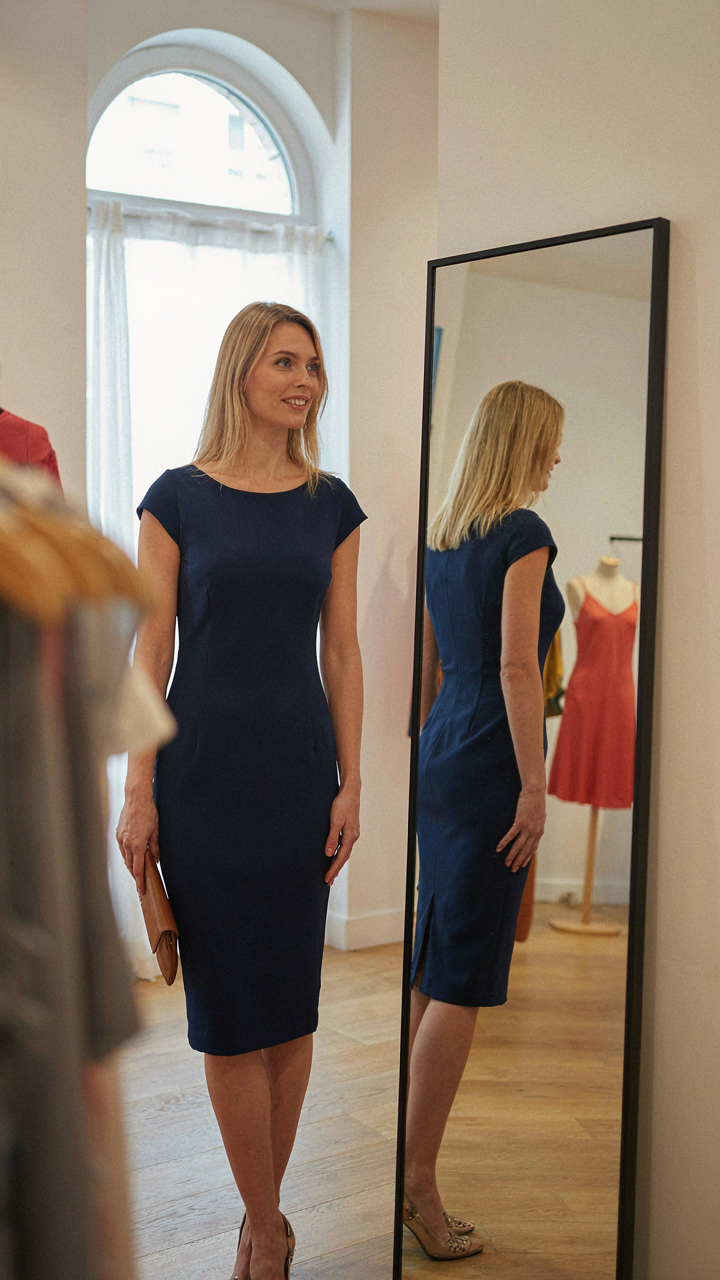
You want to believe your style is unique, but you’re really afraid of looking wrong. Here’s the mechanism: most people chase aesthetic categories without mapping them to their actual physical reality. Your body type, coloring, and proportions create constraints. Work within them instead of against them. A $25 piece that fits your frame correctly outperforms a $200 piece that fights your proportions. Start by identifying which silhouettes, necklines, and sleeve lengths you naturally gravitate toward when you feel confident. These aren’t random. They’re solving a geometry problem your body has presented.
Document three outfits where you felt genuinely comfortable, not just acceptable. Note the cut, the fit point, the fabric drape. Build a reference file. When you shop under thirty dollars, you cannot afford trial and error. You need a decision filter already in place. Use economics terminology here: you’re establishing your “production specifications.” Everything you add to your capsule must meet those specs or it creates friction in your system. The moment you know that all your jeans sit at the same rise or that you only wear crew necks, shopping becomes algorithmic instead of emotional.
Reject Trend Cycles, Not Fashion Itself
The common advice here is weak: “just wear classics and ignore trends.” Wrong. The real answer is understanding which trends are trend cycles and which are style evolutions. Trend cycles are manufactured urgency designed to obsolete your closet every season. They operate on a three-to-six-month replacement schedule. Style evolutions stick because they solve actual problems or reflect genuine cultural shifts. The difference matters on a budget because you have zero margin for waste.
Observe what people around you actually wore five years ago versus today. Not runway fashion. Real people. You’ll notice some shifts were real, others were noise. Wide-leg jeans returned because they’re more comfortable and flattering than the skinny jean extreme. That’s an evolution. Micro-pleated skirts peaked in 2022 then vanished because they solved no real problem and required constant maintenance. That’s a cycle. Your capsule under thirty dollars absorbs evolutions and ignores cycles. When you spot something you love, ask yourself one question: will this piece work for me in three years if zero other clothing changes? If the answer is no, it’s a cycle. Skip it.
The “Core Four” Protocol: Foundational Pieces Under 30
What Actually Builds A Capsule
You want permission to skip the guilt. Everyone else is buying trash and you’re worried you’ll look poor if you don’t have enough. The mechanism is simple: a capsule works because constraint forces intentionality. In economics, this is called opportunity cost. You pick white jeans because you can’t afford ten pairs of pants, so each one must work with everything. This limitation is the actual feature, not the bug. Most people dilute their wardrobes with pieces that work with nothing, creating the illusion of choice while shrinking their usable combinations.
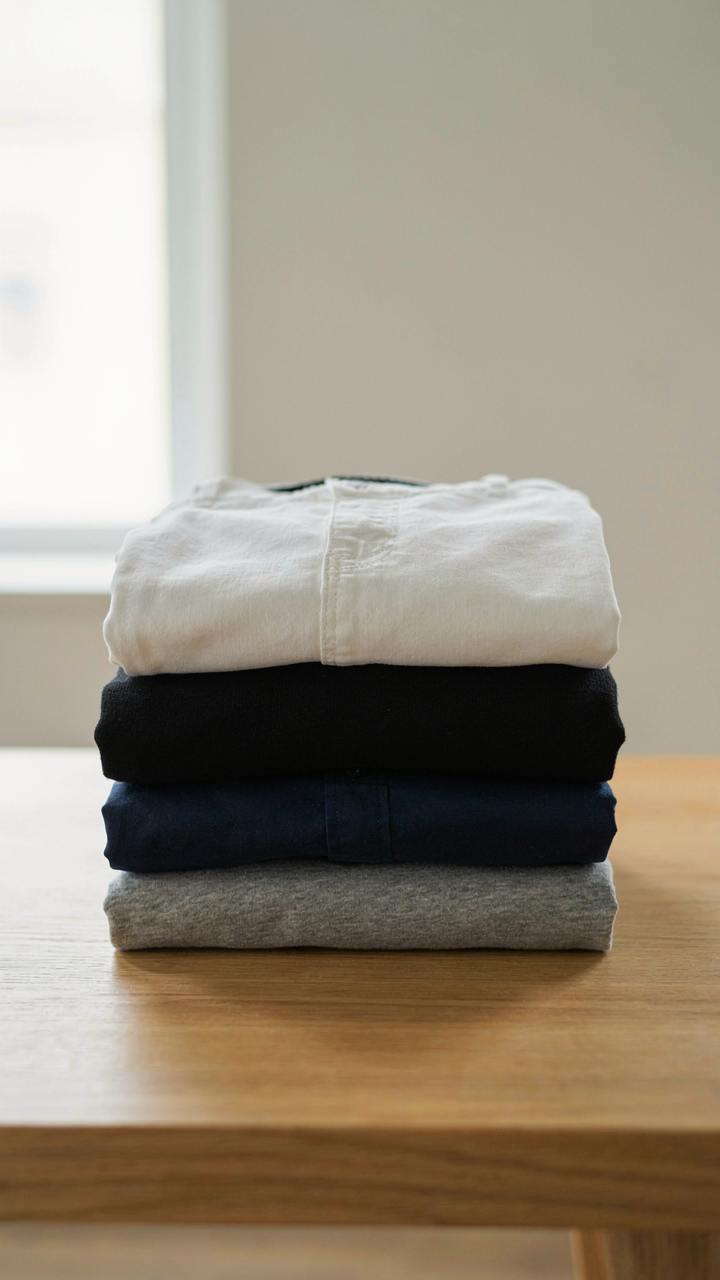
The “Core Four” means four foundational items that anchor every outfit you’ll build. These aren’t aspirational. They’re non-negotiable basics that move between seasons and styles without strain. White or cream, black, navy, and gray. These four neutrals create the mathematical foundation. Every other piece you buy for the next year works because it speaks to at least two of these four. You’re not building a wardrobe. You’re building a system that refuses to let you fail.
Finding Real Staples At Real Prices
Generic advice tells you to find “quality basics.” That’s lazy. Quality means different things depending on use. A white t-shirt worn four times a week needs different fiber content than one worn twice monthly. The real question is durability-per-wear, not durability alone. Budget retailers like Uniqlo, Everlane, and Gap consistently deliver 40-wash staples in this price range because they prioritize construction over material cost. They use simpler seams, lighter hardware, and faster production, which actually works in your favor for basics. You’re not overpaying for fabric weight you don’t need.
Thrift stores and outlet sections of department stores are where the real arbitrage happens, but only if you’re specific. Look for end-of-season overstock from mid-tier brands, not clearance from fast fashion. Banana Republic Factory, J.Crew Factory, and ASOS Design basics hit under 30 regularly and carry enough structure to justify repeat wearing. The protocol is simple: buy one item, wear it for two weeks, and only add more if the seams hold and the fit remains stable after washing. This eliminates buyer’s remorse and prevents your budget from fragmenting across untested pieces.
Neutral Colour Palette: The Commander’s Advantage
Why Neutrals Win Before You Get Dressed
You want people to remember what you said, not what you wore. That’s the real driver here, and neutral colors make it happen. Military strategists call this “signal-to-noise ratio”—your outfit becomes the noise, your presence becomes the signal. When you wear black, white, gray, navy, or beige, you strip away the distraction. Research in organizational psychology shows that neutral palettes trigger perception of competence and intentionality. People unconsciously read it as “this person knows what they’re doing.”
The mechanism is simple: contrast draws attention. Bright colors demand processing power from the viewer’s brain. Neutrals recede. This matters on a budget because every dollar you spend should multiply your options, not lock you into one outfit per piece. A $20 black sweater works with twelve different bottoms. A $25 cream blouse pairs with six pants and three skirts. Neutrals are the compounding interest of capsule building.
Mixing Hues That Actually Multiply
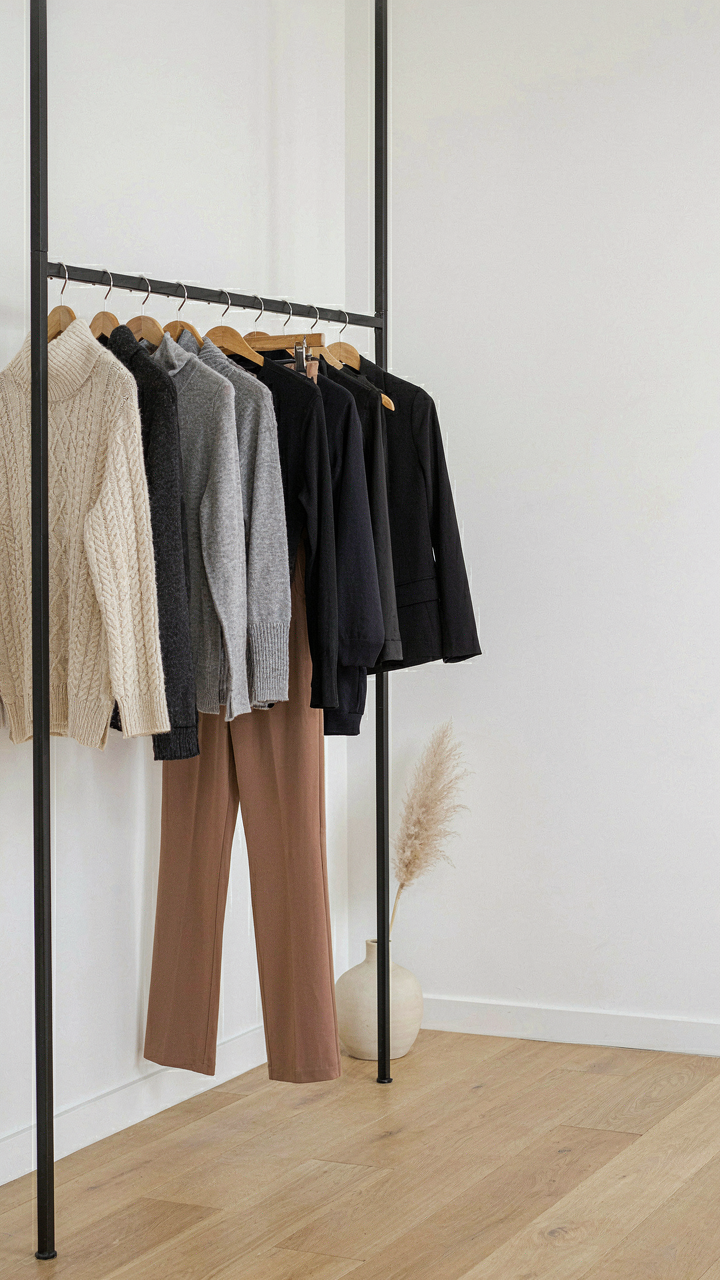
Most advice says to pick one neutral and stick with it. That’s incomplete. You need a primary neutral, a secondary neutral, and an accent neutral—three colors that talk to each other without fighting. Black, white, and gray work. Navy, cream, and taupe work. Charcoal, beige, and white work. The rule is simple: each neutral should sit at a different depth on the value scale (light, medium, dark).
When you own pieces across these three depths, every combination creates visual coherence without looking like an accident. A $18 dark gray sweater plus $22 cream pants plus $28 black flats is one outfit. Swap the sweater for navy, same pants and shoes, it’s a different outfit. You’re not buying new pieces—you’re unlocking combinations that already exist in your closet. This is why neutrals let you build a thirty-piece capsule instead of needing sixty. The math compounds fast when colors cooperate.
Mix N Match Mastery: The Systems Engineering Approach

Designing For Interchangeability
You want to feel like you have infinite outfit options without owning infinite clothes. That’s the real motive here. Cybernetics teaches us that redundancy creates resilience. In a capsule wardrobe, this means building pieces as interchangeable modules where each item connects to at least three others. A neutral base layer doesn’t just pair with one top. It pairs with five. This multiplier effect is what separates a cluttered closet from a functional one.
The mechanism is simple: choose base colors that already exist together in nature and daily life. Charcoal with navy. Cream with tan. Black with olive. Not because fashion dictates it, but because your eye recognizes these combinations instantly, which means you’ll actually wear them. Then add one accent piece per color family. One burgundy sweater. One forest green shirt. These aren’t random. They’re load-bearing walls in your outfit architecture. Each piece under thirty dollars becomes exponentially more valuable the more it touches other pieces in your collection.
Planning Outfits Before You Buy
Most people reverse this. They buy a shirt, then hunt for pants that work with it. That’s reactive and wasteful. Pre-computation means deciding outfit scenarios first, then buying pieces that solve those scenarios. Write down five situations you dress for weekly: work, gym, errands, one casual social event, one slightly dressier event. Now work backward. What does each scenario actually need. Not what fashion magazines say it needs. What your specific life demands.
This method kills impulse purchases because you’re building toward a destination, not wandering. A plain white button-up under thirty dollars isn’t a gamble if you’ve already mapped it into three different outfits. You know it works before your money leaves your pocket. The action step: create a simple table. Scenarios down the left. Across the top, the pieces you already own. Fill the grid with outfit combinations. If a new piece under thirty dollars fills three empty cells, buy it. If it fills one, don’t.
The Accent Multiplier: Elevating Outfits With Smart Accessories

Where Your Budget Actually Goes
You want permission to skip the basics and jump to the fun stuff. That’s the real reason you’re reading this. But here’s the mechanism: accessories operate like leverage in physics. You apply concentrated force at specific points to move the entire system. A ten-dollar belt doesn’t just add to an outfit. It reframes a plain shirt and jeans into a deliberate choice. The common advice says “invest in basics first.” That’s incomplete. You do need basics. But basics alone look unfinished. Accessories signal intentionality. They’re the difference between wearing clothes and wearing an outfit.
Most people allocate their budget wrong. They spread money evenly across categories and end up with nothing that lands. Instead, you identify which accessories actually change how an outfit reads, then concentrate your sub-thirty-dollar budget there. A solid watch under twenty dollars replaces five mediocre pieces. A leather belt under fifteen dollars fixes proportions on three different outfits. You’re not buying more. You’re buying efficiency. The math is simple: fewer accessories that work beat more accessories that don’t. Start by spending on pieces that touch your silhouette. Belt, watch, bag, shoes. Skip the trendy jewelry drawer.
The Layering Principle
Basic pieces multiply in value when stacked with intention. A gray t-shirt costs eight dollars. Alone, it reads as filler. Add a four-dollar thrifted vest over it, a six-dollar belt at the waist, and seven-dollar white sneakers, and you’ve built a complete visual idea for twenty-five dollars. None of those pieces did the work alone. The combination did. This is why “one piece, one outfit” advice fails on a budget. You need pieces that repeat and recombine. Accessories are the connective tissue that makes repetition invisible.
The hidden advantage of accessory-first thinking is that it forces you to choose basics that actually coordinate. You buy a gray shirt because it works with the brown belt you already have. You buy navy pants because they match the watch you found. Your basics stop being random and start being a system. This reverse-engineering of your wardrobe eliminates dead inventory. When you build accessories first, you’ve already defined which basic colors will move through your entire outfit rotation.
Seasonal Fashion: Adapting, Not Overhauling, Your Minimalist Wardrobe

Layering As Your Operating System
You want to believe seasonal fashion means buying new things. It doesn’t. The real mechanism is thermal resistance: fabric weight and structure trap air to regulate body temperature. A capsule wardrobe on a budget works because three to four base layers in different weights do the job of twenty pieces. You’re not replacing your wardrobe with seasons. You’re changing what sits on top of what you already own.
A fitted long-sleeve tee under a button-up under a cardigan covers fall through early spring. Swap the cardigan for a linen overshirt in summer. Same base tees. Same structure. Different weight on the outside. Cheap doesn’t mean thin. Look for cotton blends with slight weight and natural fibers that breathe or insulate depending on weave density. Thrift stores stock old sweaters and cardigans built to last under thirty dollars. The key is choosing pieces that layer without adding bulk at closures or shoulders.
Building Bridges Between Seasons
The common advice says buy transitional pieces. That’s lazy thinking. Real transitions happen through strategic substitution of single items while keeping the system intact. A linen shirt at fifteen dollars works in high summer. In spring and fall, layer it under a lightweight sweater. In winter, wear it under a heavier knit with a jacket. One piece serves four seasons because you changed what surrounds it, not because the piece changed.
Buy your off-season pieces in their own season when prices drop. A wool sweater costs less in May. A linen shirt costs less in September. Plan six months ahead and hit clearance racks. Cotton cardigans, button-ups in neutral tones, and basic knits under thirty dollars are common finds. When you integrate them based on temperature need rather than calendar month, you eliminate the pressure to buy new items. The protocol is simple: identify the gap between seasons, find the single piece that closes it, buy it off-season at discount, and lock it into your rotation.
Wardrobe Planning: The Intelligence Gathering Phase
What Actually Works In Your Closet
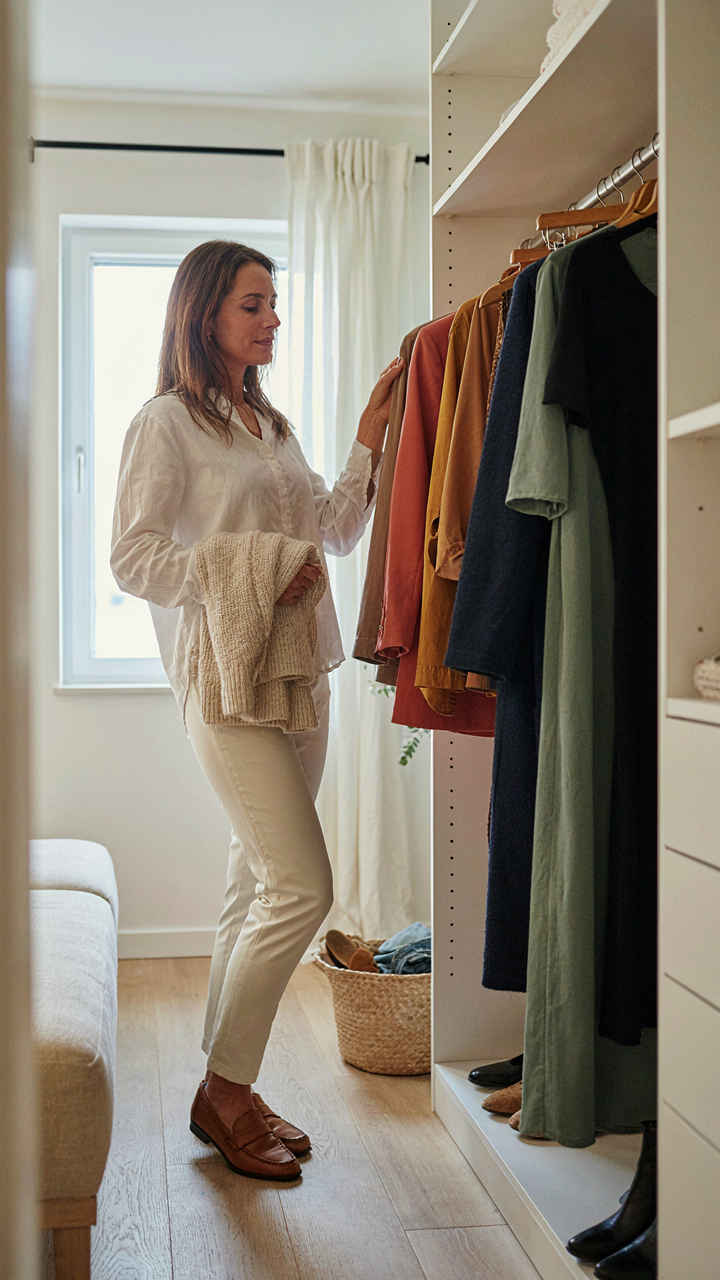
You want permission to buy new clothes without feeling guilty about waste. Here’s the mechanism: most people don’t know what they own because they’ve never forced themselves to look. Audit means inventory. Pull everything out. Lay it flat. The pieces you reach for without thinking are your signal. They fit your body, your schedule, and your actual life. The pieces collecting dust are your noise. Don’t donate them yet. Note the pattern instead.
The pattern tells you what works. Maybe you own five unworn blazers because you imagined a corporate self that never materialized. Maybe you have three pairs of dark jeans you wear constantly because they disappear into any outfit. The expensive mistake wasn’t buying the blazers. It was buying them without data. Your current wardrobe is your personal design research. Use it that way.
Where The Holes Actually Are
Most advice says identify gaps by looking at your lifestyle. That’s incomplete. The real work is identifying gaps you can fill for under thirty dollars without creating new problems. This borrows from inventory management in supply chain logistics: you order based on velocity and cost of shortage, not on theoretical need. Fast-moving items at low cost get priority. Slow-moving items get nothing.
Map your actual wearing patterns first. Track what you reach for most in the season you’re building for. If you wear four sweaters and two t-shirts per week in fall, that’s your velocity. Now list what you’re missing that would extend those pieces without duplicating. A neutral cardigan. A specific shade of base layer. Socks that don’t fall down. Write down the price threshold simultaneously. Anything over thirty dollars doesn’t make the list yet. This discipline prevents you from buying the wrong thing at any price.
Smart Casual Capsule Wardrobe Women: The Unspoken Code

The Context Shift Problem
You want to look competent in both boardrooms and coffee shops because you’re tired of feeling like you’re performing two different versions of yourself. The real mechanism is fabric weight and cut proportion. Heavy fabrics read formal. Light fabrics read casual. Medium-weight natural fibers worn with intentional gaps between pieces let you toggle contexts without changing clothes.
Smart casual isn’t a compromise outfit. It’s a density strategy borrowed from information design where you control what gets visual emphasis. A structured blazer under 30 dollars signals professionalism. Pair it with an unstructured linen tee and you’ve traded authority for approachability without buying two wardrobes. The math works because you’re controlling silhouette, not color or brand.
Presence Without The Stiffness
Confidence in dress code gray zones comes from knowing your garment performs multiple jobs simultaneously. One piece should never do only one thing. A cream cotton button-up works over t-shirts, under sweaters, untucked with jeans, or half-tucked with trousers. That’s four distinct contexts from a single under-30-dollar piece.
Rigid formality kills smart casual. Most advice tells you to add a blazer and call it professional. Wrong. Formality lives in fabric tension, not layers. Choose wrinkle-prone linens and soft cottons that bend to your frame. Pair them with straight-leg or tapered bottoms that graze rather than grip. The silhouette stays readable across settings because the fabric itself refuses to perform rigidity.
Beyond The Hype: Building A Wardrobe That Works For You

Stop Following Someone Else’s Blueprint
You want permission to ignore the rules because you’re secretly afraid your taste doesn’t matter. Here’s the mechanism: prescriptive capsule lists work for the person who wrote them, not you. They’re optimized for their body, their climate, their job, their actual life. The moment you treat someone else’s list as gospel, you’ve outsourced the one decision that determines whether you’ll wear what you buy. A capsule wardrobe fails when it’s built on borrowed preferences instead of observed patterns in how you actually dress.
The real work is reverse engineering your own closet. Wear the same ten pieces for a week and track what you reach for. Notice what gets skipped. That friction reveals the gap between what you think you like and what you genuinely wear. Build from there. Under thirty dollars per piece, you can afford to experiment without the sunk cost fallacy forcing you to justify a bad purchase. Your capsule becomes a living document, not a static manifesto someone posted online.
Time And Money Compound In The Same Direction
Economics calls this opportunity cost: every dollar and hour spent on a bad wardrobe choice is a dollar and hour you can’t spend elsewhere. Capsule wardrobes on a budget win here because they eliminate the hidden tax of decision fatigue. You stop standing in front of your closet paralyzed by options. You stop impulse buying pieces that seemed good in the moment but clash with everything else. You stop rewearing the same three outfits because the other thirty pieces don’t work together.
The math compounds over a year. Fewer pieces mean fewer laundry cycles, lower replacement costs, and zero wasted spending on items you wore twice. Mental clarity follows. You know exactly what you own, what works, and what gaps remain. This clarity becomes a filter: you stop browsing, start hunting. That shift from passive consuming to active selecting is where thirty dollar budgets actually win. Your next purchase solves a real problem instead of creating the illusion of choice.
The Obstacle Isn’t Your Budget; It’s Your Addiction To Endless, Thoughtless Consumption
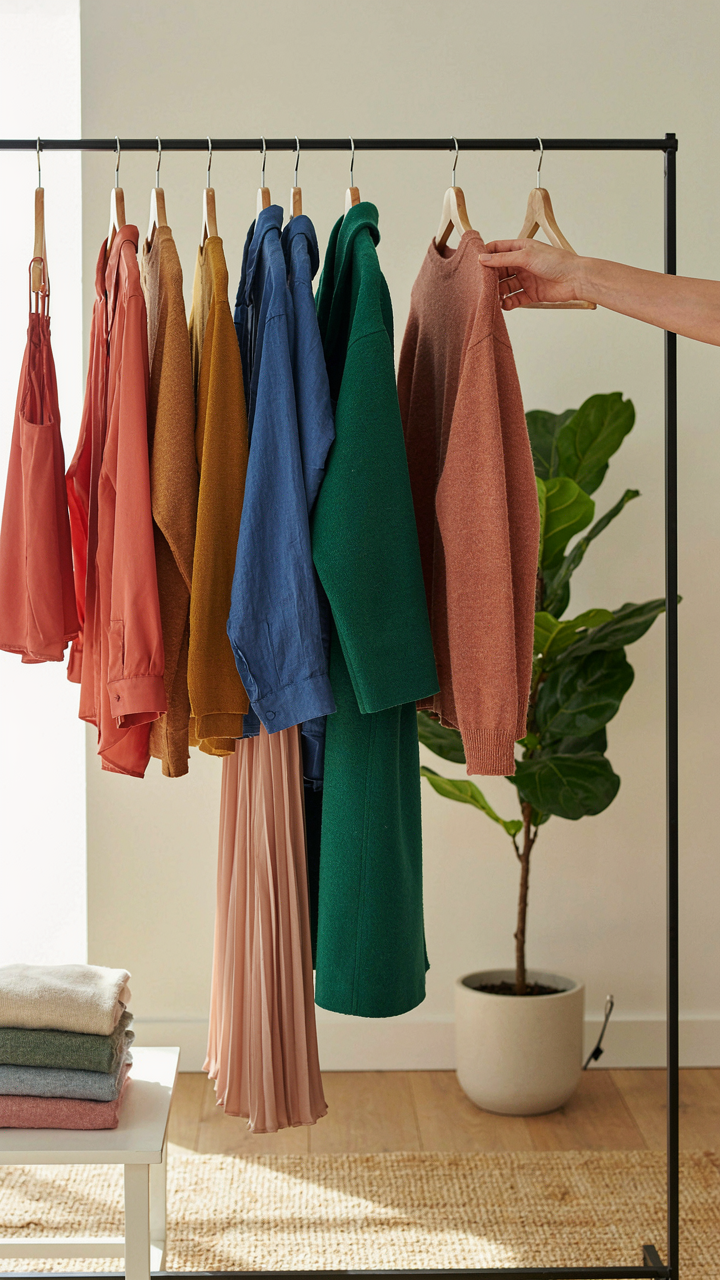
You don’t need $30 pieces. You need to stop buying things you don’t need. A capsule wardrobe forces you to confront this. Every item must earn its place. Every purchase becomes intentional. Stop scrolling. Stop comparing. Go to your closet right now and pull out five pieces you actually wear. Build around those. That’s your starting point. That’s your real capsule. The budget was never the problem. Your attention was.