

Beyond Poses: The Unscripted Urban Photoshoot

The Moment Before The Moment
You want candid shots because you think they’ll make you look effortless. They will. But the real mechanism is that candid moments reveal decision-making under pressure, and decision-making under pressure is what separates people who have taste from people who follow it. When the camera isn’t pointed at you, your body chooses what it actually believes looks good. That choice is honest.
The difference between a forced smile and a genuine expression isn’t emotional. It’s muscular. Forced smiles engage the zygomatic major muscle only. Real smiles fire the orbicularis oculi around the eyes. Cameras catch the difference instantly. To capture actual candid moments, you need a shooter who understands framing without announcing it. Position yourself in a location with natural lines—a storefront edge, a corner shadow, a street angle—then let the photographer work while you move through that space as if alone. This trains your body to settle into its default stance, which is always stronger than anything you can manufacture.
Friction Makes The Photograph

Everyone says embrace imperfections. That’s incomplete advice. What you actually need is productive friction. Friction between elements creates visual weight and makes the frame memorable. A wrinkled collar against a tailored jacket. Scuffed leather shoes with pristine trousers. Wind-disrupted hair against an intentional outfit. These aren’t mistakes to hide.
The mechanism here comes from contrast. Your eye moves toward disruption because disruption signals information. A perfectly composed outfit with zero friction reads as costume. A street style photograph that shows one element slightly off reads as choice. Shoot in conditions that introduce friction naturally. Windy streets. Wet pavement that catches light. Shadows that cut across fabric. Let the environment do half the work. When you review the shots, the ones where something disrupts the expected symmetry will consistently outperform the polished ones on engagement and credibility.

The Wardrobe Anomaly: Outfits For Street Portraiture

Texture And Silhouette Over Logo Placement
You want people to think you have taste instead of just money. That’s the real reason this matters. The mechanism is simple: the camera reads dimension before it reads labels. Fabric weight, weave density, and how cloth drapes create visual information that registers instantly. A wrinkled linen shirt photographs differently than pristine cotton. Oversized wool reads as intentional. Fitted synthetic reads as cheap. Silhouette—the outline your body makes inside the garment—controls whether you look static or dynamic in the frame.
Brands designed their logos to work at arm’s length, in a store. They disappear at ten feet, which is exactly where a street style photographer stands. This is why minimal branding dominates the genre. Texture and fit survive compression into a two-dimensional image. A well-cut vintage blazer with visible seaming beats a logo-heavy designer piece every time because it gives the photographer geometry to work with.
Mismatched Elements Create The Stop
Contrast works like cognitive dissonance in marketing: your eye catches the inconsistency and refuses to look away. Pair a structured trench coat with beat-up sneakers. Wear a silk slip dress over a heavy knit sweater. Mix fabric weights that shouldn’t exist together. The brain registers violation of expectation before it registers anything else. This is why coordinated, color-matched outfits vanish in street photography. They confirm what the viewer expects. Unexpected pairings demand attention.
The formula is surgical: one element must be high-polish, one must be rough. One should signal one era, the other should signal a different one. A 1990s slip dress paired with 2010s workwear. A tailored jacket with distressed denim. This isn’t about being weird for attention. It’s about creating enough visual friction that your frame gets stopped and held, not scrolled past. The photographer captures this tension best when you stand still and let the opposing textures and proportions do the work.
Location Alchemy: Creative Street Photography Backdrops
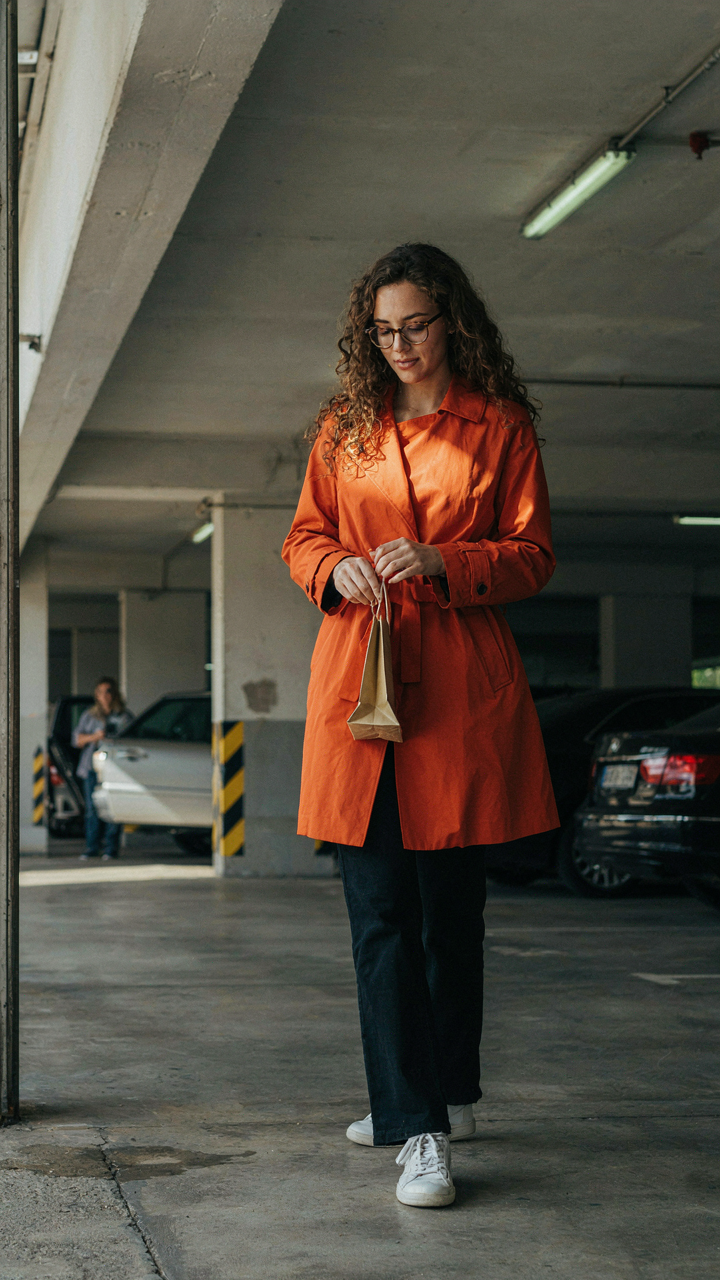
Corners Nobody Notices Become Your Studio
You want your outfit to matter. That requires a backdrop that doesn’t compete with it. Most photographers waste time hunting “aesthetic” locations. They miss the mechanism: contrast. A blank wall behind a styled outfit functions like a frame. The location doesn’t need to be famous. It needs to isolate your subject from visual noise. Parking garage ramps, weathered storefronts, brutalist concrete—these work because they subtract, not add.
The real move is scouting locations for negative space, not positive scenery. Walk your neighborhood and spot walls that photograph clean. Look for surfaces that hold light uniformly. Avoid cluttered backgrounds with competing colors or signage. The best street style shoots happen in places that seem boring until you frame them. Test your location at the exact time you plan to shoot. Lighting changes everything, and you need predictability.
Contrast Between Shadow And Light
Borrowing from cinematography, the principle of “three-point lighting” translates directly to street style: key light, fill light, shadow. You need directional light that models your outfit, not flat brightness that erases dimension. Most advice says “shoot in golden hour.” That’s incomplete. Golden hour helps, but the real leverage is intentional shadow placement. Position your subject so strong light hits one side while shadow defines the other. This creates depth. The outfit reads as three-dimensional, not flat.
Shoot during hours when sun creates hard shadows—early morning or late afternoon. Position yourself so the subject’s face lands in shadow while the outfit catches direct light, or vice versa. This separation makes the clothing legible and dramatic without needing filters. Scout your location beforehand to see how shadows fall at your intended time. Move your subject to intersect light and shadow at specific angles. Nail the light geometry, and the outfit sells itself.
The Attention Economy: Fotos Street Style Worth Stealing

Why Your Eye Stops Moving
You want these photos to convert followers into something that matters to you, which means understanding why the human visual system actually pauses. The mechanism is contrast. Your brain stops processing when it detects a break in pattern, not when something looks expensive or carefully styled. A street style photoshoot succeeds when it creates visual friction against its environment, not against aesthetic rules.
Most street style advice focuses on color theory or outfit composition. Wrong angle. The real leverage point is environmental mismatch. Your subject’s visual weight, texture, or silhouette must register as unexpected within its context. A monochromatic outfit in a visually dense urban setting wins because it subtracts information at the moment everything else adds it. This is why the same outfit reads differently on different streets.
Shock And Awe Framing
Military strategy uses shock and awe to collapse resistance through concentrated force on a single point. Apply this to composition: don’t distribute visual interest evenly across the frame. Stack contrast, scale, and positioning into one dominant area. The viewer’s eye should have no choice but to land there first, then stay.
Traditional street style photography spreads the subject throughout the frame like they’re one element among many. That’s flatness masquerading as authenticity. Instead, compress the subject’s visual weight into a tight focal plane while letting the background fall soft or recede entirely. Use foreground scale to push depth. Position the subject slightly off-center, but closer to the camera than the environment suggests it should be. This forces the frame to organize around one unmissable point. The photoshoot becomes a directed experience, not a casual documentation.
Movement Dynamics: Urban Poses That Aren’t Stiff

Harness Kinetic Energy In Every Frame
You want your photos to look alive because dead poses broadcast that you don’t know what you’re doing. Here’s the mechanism: kinetic energy in photography comes from physics, and in street style, you’re borrowing momentum to make stillness look like a captured moment rather than a held position. The model isn’t posing. She’s mid-action, mid-transition, mid-thought. Her weight shifts toward one leg. Her shoulders angle away from the camera. Her arms have purpose, not placement.
The common advice is to tell models to walk toward the camera or look over their shoulder. That’s backwards. Instead, photograph them already walking past you, mid-stride, mid-turn. Capture the frame where their body is naturally asymmetrical. A model walking has different weight distribution than a model standing. That’s the difference between your feed and everyone else’s.
Guide Models Through Natural Fluid Transitions
Stop asking models to “hold” poses. Fluid motion means continuous movement, not frozen endpoints. Direct them through a sequence instead: walk here, turn there, adjust your jacket mid-step. You shoot while the movement happens, not after it stops. The best frame lives between positions, when the body hasn’t settled into anything static yet.
This is about rhythm, not placement. Tell your model to walk the same path three times and shoot each pass. The third pass usually wins because she’s stopped thinking about posture and started thinking about direction. Her body relaxes. Her chin naturally finds better angles. Her gaze becomes genuine instead of conscious. Shoot continuously during these transitions, not single frames of posed moments.
The Unseen Narrative: Street Photography Fashion Storytelling

Mood Without Words
You want people to feel something from a still image without you explaining it. That’s the real game here. Most street style shoots fail because they’re just outfits on bodies. The mechanism is borrowed from cinematography: every frame needs emotional subtext. A tilted shoulder, a downward gaze, hands positioned in pockets versus at sides, the distance between your subject and the background—these are your emotional vocabulary. You’re not smiling for the camera. You’re creating tension, introspection, or defiance through posture and spatial relationships.
The clothes are secondary. The narrative lives in the relationship between the person, their environment, and how their body occupies that space. Tension between a structured outfit and a slouched posture reads as irony. Confidence reads as a straight spine with relaxed shoulders. The specific garment barely registers if the emotional layer is weak. Shoot for the feeling first. The outfit just channels it.
The Details That Echo Forward
Forget the advice about “letting the story unfold naturally.” That’s code for hoping randomness saves you. Real storytelling works backward. You plant a detail in the first frame that echoes through the series. A cigarette in one shot, the same hand gesture in another. A specific fabric texture that appears again in a different context. A color palette that ties outfits together across unrelated looks. These aren’t accidents. They’re the visual threads that make people scroll and pause instead of scroll past.
The cumulative effect is what sticks in memory. A single image is forgotten in seconds. A series with visual callbacks builds recognition. The detail you repeat becomes the signature. When a viewer sees that element again, they’re already invested in the narrative arc. This is why location scouts matter—not for the photogenic background, but for the props and architectural elements that anchor your repeated motifs. Pick one object or color or gesture. Make it appear three times across your shoot series.
Light Manipulation: Street Shoot Photography Women Masterclass
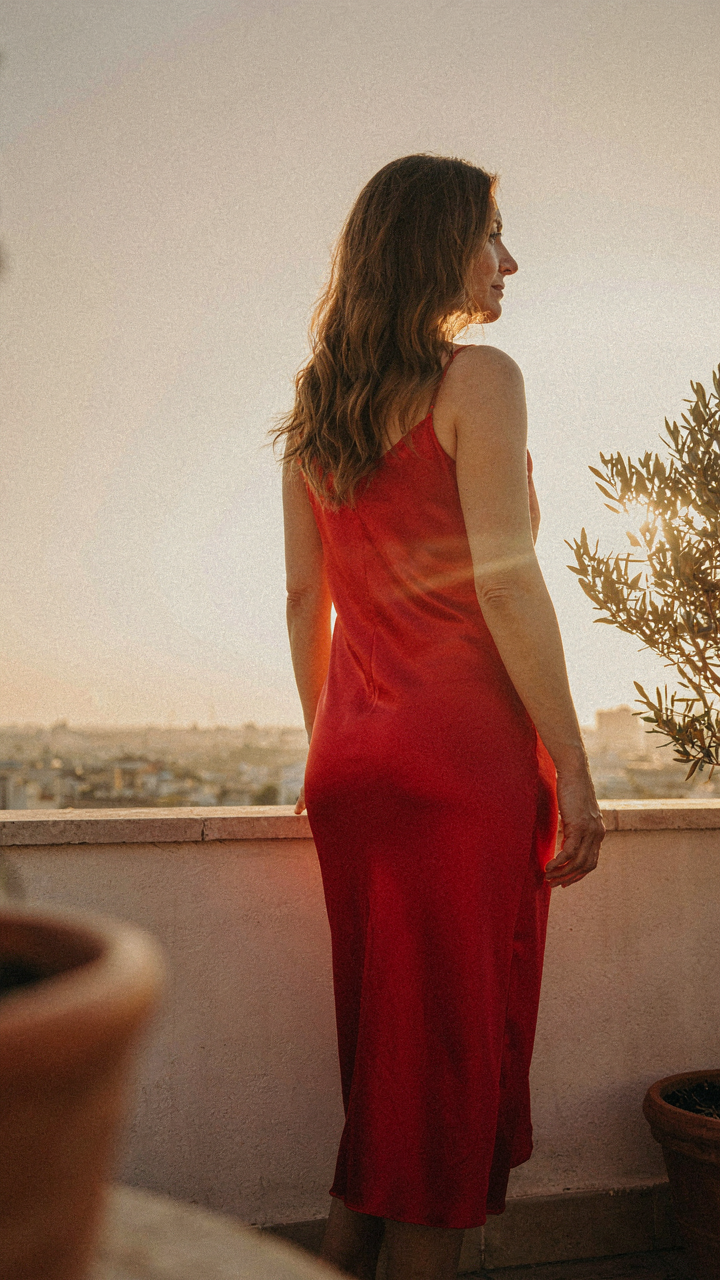
Position Your Subject Against The Light Source
You want people to think you know what you’re doing. The real mechanism is that light sculpts. In portrait and fashion photography, side lighting and backlighting reveal texture, shape, and dimension that flat frontal light erases. Position your subject so the sun hits them at 45 degrees or from behind. This creates separation between the subject and the background, defines cheekbones, and makes fabric texture visible instead of flat.
The common advice says “shoot during golden hour.” That’s incomplete. Golden hour is one tool, but directional control matters more than time of day. A woman backlit by harsh midday sun with her face in open shade reads sharper than someone front-lit during golden hour. Meter for the face, let the background blow out if needed. The face is the anchor. Everything else serves it.
Capture Light Bouncing Off Urban Surfaces
Reflections aren’t accidents to avoid. They’re compositional tools. Cities have glass storefronts, metal railings, wet pavement, and building facades that bounce light back into shadow areas. A reflection can fill in face shadows without a reflector, add visual depth to a frame, or create a second frame within your shot. Scout locations with reflective surfaces and position your subject to use them intentionally.
Lens flare gets dismissed as amateurish, but it works when placed strategically. Shoot into the light source so it grazes the edge of your frame or sits just outside it. The flare should complement the mood and the outfit, not dominate it. A subtle flare on a metallic fabric or jewelry feels intentional. Excessive flare looks sloppy. The difference is placement and restraint during both shooting and editing.
The Street High Fashion Protocol: Elevating The Everyday

Break The Obvious Combinations
You’re hoping this section teaches you how to look expensive without spending money. That’s not what happens here. The actual mechanism comes from constraint theory: limits force novelty. Fashion operates the same way. Typical street style exhausts itself because it follows predictable pairings. You see the same formulas repeated: blazer with jeans, vintage tee with tailored pants. These combinations work but they don’t arrest attention because they’ve been normalized.
Real elevation happens when you deliberately violate category expectations. This means pairing pieces that serve opposite functions or come from conflicting eras. A haute couture silhouette paired with workwear materials. A 1990s minimalist cut layered under maximalist textures. The tension between elements is what reads as intentional, not accidental thrifting.
- Formal Structure With Utility Fabric: Tailored jacket cut in raw denim or workwear canvas instead of wool. The precision silhouette contrasts sharply with industrial material, creating deliberate friction.
- Oversized Tailoring With Fitted Basics: Take an architectural oversized coat or shirt and layer it over slim, body-conscious pieces underneath. Scale mismatch signals control, not confusion.
- Luxury Proportions In Cheap Fabrics: High-end silhouettes executed in synthetic or basic cotton force viewers to focus on cut, not price point. This reveals your actual design literacy.
- Vintage Pieces With Contemporary Fit: Source vintage garments and have them tailored to current proportions. You get historical depth without looking dated or costume-like.
- Opposing Color Temperature: Warm neutrals paired with cool metallics or jewel tones. The chromatic dissonance reads as sophisticated, not accidental color-blindness.
The camera catches this tension immediately. Algorithmic feeds reward visual novelty because it stops scrolling. Your photoshoot needs garments that create that momentary pause, which comes from strategic incompatibility, not from spending more money.
The Luxury Thrift Inversion
The common advice here is predictable: “Mix designer with thrift finds.” That’s vague marketing language. What actually matters is price-to-visual-impact ratio and material literacy. A five-dollar vintage leather jacket commands more camera presence than a two-thousand-dollar basic sweater in merino wool. The thrift piece wins because of historical weight and patina, not because thrift is inherently superior.
The real protocol: thrift for standout pieces that photograph with texture and history, then anchor them with expensive basics that appear invisible but cost appropriately. A perfectly fitted pair of tailored trousers from a quality contemporary brand paired with a 1970s Halston-era blouse sourced from a vintage dealer. The expensive item does the supporting work. The thrift piece gets the visual real estate. This inversion is what separates intentional curation from random combination. Shoot close enough that material quality and weave become apparent, then pull back wide enough that silhouette and proportion tell the story.
Gear Mythology: What You Actually Need For Urban Photoshoot Ideas

The One Thing That Actually Matters
You want permission to buy expensive gear because it feels like progress. Here’s the mechanism: constraint forces creativity. A phone camera and one fixed lens teach you composition faster than switching between six lenses ever will. The limitation becomes the teacher. Street style works because subjects move, light changes, and you adapt. You don’t need a full kit. You need obsession with one focal length until you stop thinking about the camera.
Most photographers confuse gear with skill. A better camera doesn’t fix bad framing or weak light reading. What matters is shooting the same street corner in different conditions until you understand how shadows fall at different times. Your constraint is your advantage. Simplicity removes the excuse of “I just need the right equipment.” You’re left with only your eye.
The Lens Decision That Changes Everything
Optical design determines what story you tell. Think like an architect: focal length is load-bearing. A 35mm lens renders the world closer to human perspective. A 50mm compresses space and isolates subjects. An 85mm turns backgrounds into blur and pulls subjects from context. Street style requires you to choose one and live with it. Your entire visual language forms around that decision.
The camera body is secondary. A used Sony A6000 or Canon 5D from five years ago captures excellent street images. What kills your work is switching lenses every shoot. Consistency in optics means your eye trains to see through one frame. You develop instinct about distance, composition, and subject placement. That instinct is worth more than the latest camera. Buy the lens first. The body follows.
The Only Obstacle To Impactful Street Style Is Your Fear Of Genuine Expression, Not Location

Every photographer waits for the perfect backdrop. The perfect light. The perfect outfit. They’re all waiting for permission to start. Stop waiting. Shoot today in whatever you’re wearing right now, in whatever location surrounds you. The gap between amateur and compelling isn’t equipment or geography—it’s the willingness to look like yourself on camera. Your weirdness is your only competitive advantage, so stop hiding it behind excuses about logistics.