

The Myth Of Effortless Style: Why Your Workout Fits Are Failing You

Everyone Else Is Just Guessing Too
You want to look intentional when you work out because you know someone is watching, and being watched matters more than you’ll admit. The real mechanism is simple: most people buy activewear pieces in isolation, then wonder why they don’t look cohesive. They treat matching workout sets like an accident instead of a deliberate system. Your brain registers this mismatch instantly, even if you can’t name why the fit feels off. Mismatched pieces broadcast indecision.
A matching workout set isn’t about matching colors or brands. It’s about visual consistency through fabric weight, silhouette language, and proportion logic. When your leggings, sports bra, and jacket speak the same design dialect, your body reads as intentional. Generic advice tells you to “find your personal style,” which is useless. The real work is understanding how garment construction creates coherence or chaos in the eye.
The Friction Of Dissonance

Mismatched activewear creates cognitive load on the viewer. Borrowed from design theory, this is visual contrast without hierarchy, where elements compete instead of support each other. A high-waist legging with a cropped tank and an oversized puffer jacket don’t talk to each other. Your eye doesn’t know where to land. This friction costs you credibility because it signals you assembled the outfit instead of understanding it.
The hidden cost isn’t aesthetic. It’s time. You stand in front of the mirror longer when pieces don’t coordinate. You buy more replacements chasing cohesion. You second-guess the fit because nothing anchors your confidence to a clear system. The solution is reverse engineering a matching set: choose one anchor piece with specific proportions and fabric weight, then build around it so every layer reinforces the same visual logic.

The Cognitive Load Protocol: Optimize Your Workout Sets For Decision Free Training
Strip The Choice Architecture
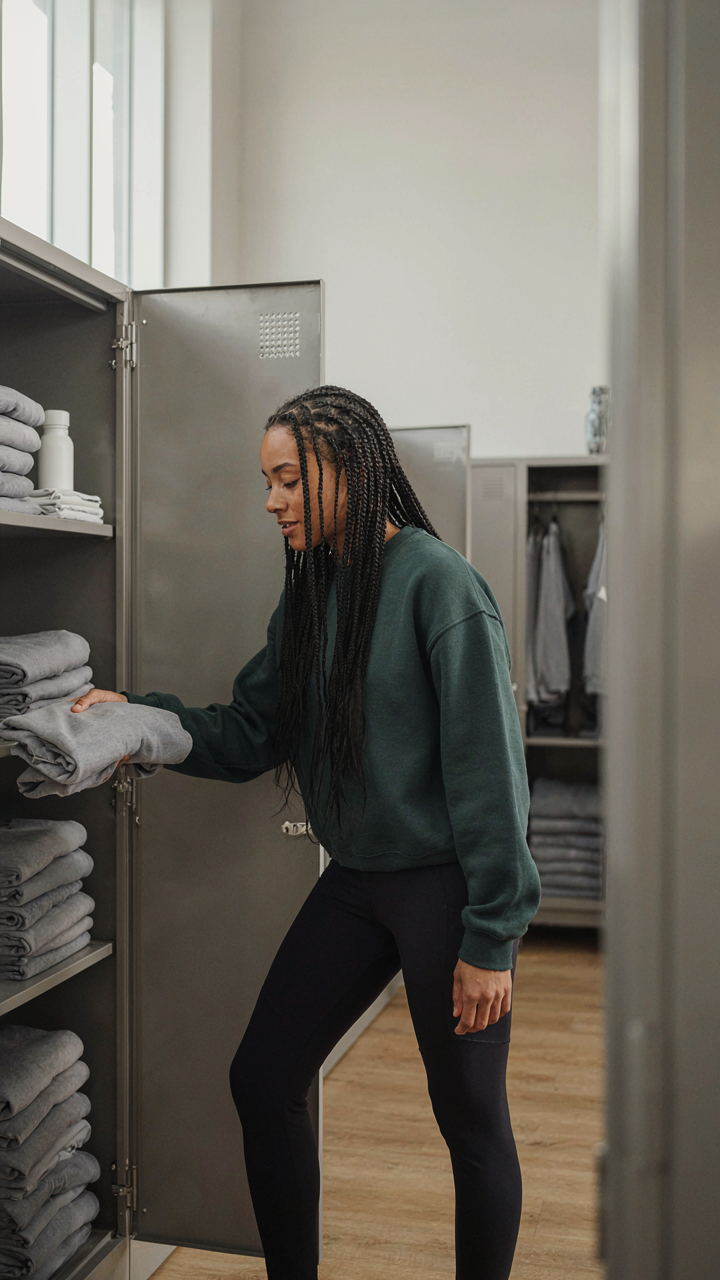
You’re buying matching workout sets because you want to look intentional without thinking about it. Here’s the mechanism: every decision you make before training burns mental energy you need for actual performance. This is decision fatigue, borrowed from behavioral economics, where each choice depletes the same resource pool. A matching set eliminates one entire decision node from your morning.
The conventional advice says to “pick what makes you feel confident.” That’s useless. Confidence is the output, not the input. The input is removing friction. When your top matches your bottom by design, you’re not choosing between combinations at 6 AM. You’re executing a system. Your brain stays intact for the workout itself, not spent on whether the shorts pair with the tank.
Uniformity As Cognitive Real Estate
Most people think uniform gear is about looking the part. Wrong angle. Uniformity is a performance hack that borrows from military logistics: standardization reduces decision cycles in high-stress environments. A matching set does the same thing. You’re not thinking about whether colors coordinate mid-rep. That mental real estate stays available for load management, form cues, or intensity.
When your entire outfit is pre-matched, you’ve essentially built a uniform. Navy compression tights match navy sports bra. Charcoal shorts match charcoal tank. The brain recognizes this as a closed system. You dress without deliberation. This frees actual attention for the training variables that move the needle: progressive overload, rep quality, recovery. Buy sets, not pieces.
Fabric As Function: Beyond The “Cute” Activewear Set
Material Science Dictates Performance, Not Trends
You care about this section because you’re worried a matching workout set will fail you mid-workout and destroy the entire aesthetic you spent money building. Here’s what actually matters: apply thermodynamics to fabric selection. Cotton absorbs moisture and holds it against skin, creating drag and heat retention. Synthetic blends like polyester and nylon wick sweat away from the body, maintaining temperature stability during movement. The fabric engineers who designed performance textiles weren’t thinking about Instagram—they were solving a mechanical problem. Your set’s fabric choice determines whether you stay dry or get heavier as you work out.
Most activewear marketing inverts this. Brands lead with color and cut, then mention fabric as an afterthought. The fabric is the entire product. Nylon blends resist degradation from chlorine and salt water. Spandex maintains elasticity across repeated stretching without losing shape after 50 washes. Four-way stretch fabrics move with your body instead of against it. Pick the fabric first based on your actual activity—swimming, running, strength training, yoga—then find the matching set in that material. The look follows the mechanics.
Investment Pieces Beat Disposable Sets
Durability compounds. A matching workout set from a brand that uses quality thread count and flat-lock seams costs more upfront but maintains its shape for two years minimum. Cheap sets pill after fifteen washes and lose their stretch within six months. The math is simple: a set at 80 dollars lasting six months costs 13 dollars per month. A set at 120 dollars lasting two years costs five dollars per month. Fast fashion activewear is engineered to degrade so you replace it annually.
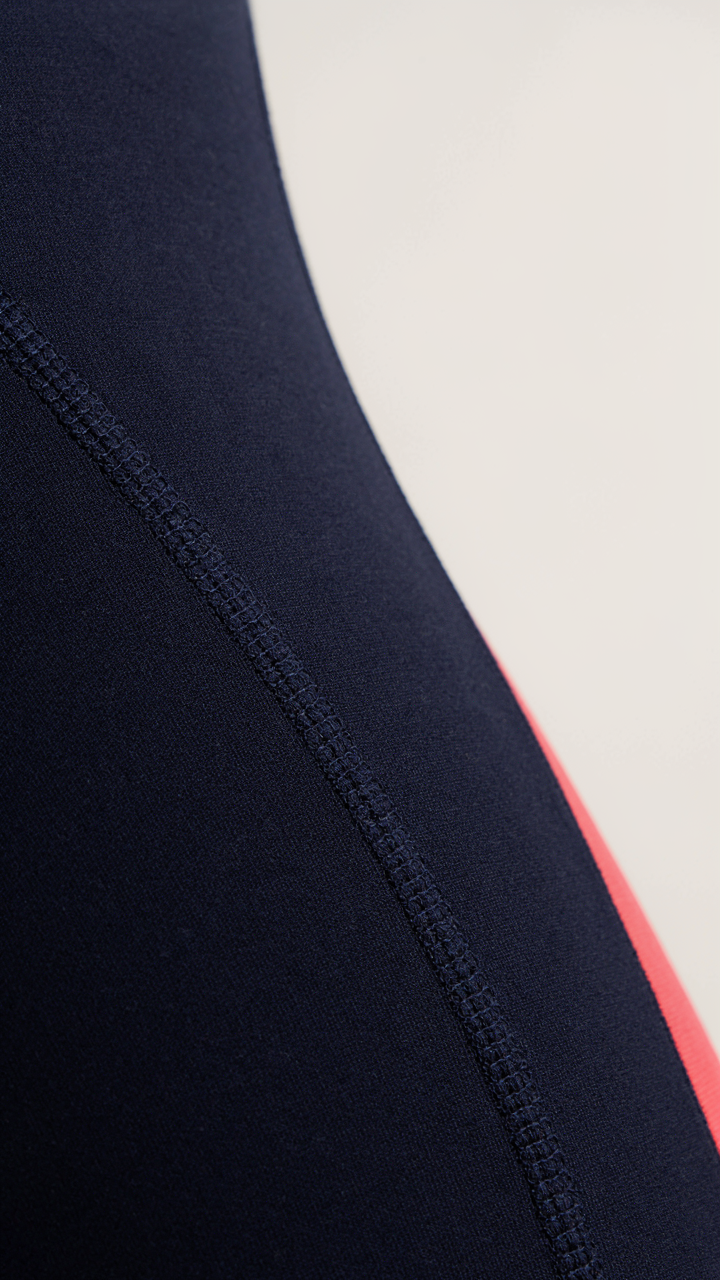
Seam construction is the tell. Overlocked seams flatten and hold under stress. Single-needle stitching fails. Check the inside of any set before buying—if seams bunch or unravel under slight pressure, that set dies in three months. Heavy-duty waistbands with reinforced elastic don’t roll or lose compression. Investing in construction standards means your matching set performs consistently across 100 plus wears without degradation.
The Anti Trend Playbook: Building Your Core Work Out Sets

Stop Guessing What Your Body Actually Needs
You want a matching workout set because you think it signals discipline. The real mechanism is simpler: most people buy based on what exists, not what works. You’re solving the wrong problem if you start with aesthetics. Movement patterns determine everything. Your body performs the same functions whether you’re running, lifting, or cycling. Start there. Identify which movement pattern you actually do 80 percent of the time, then build backward to the set.
Matching sets sell because they remove decision friction. The industry counts on you buying a full collection before testing a single piece. This wastes money and closet space. One sport dominates your training week. Track your workouts for two weeks and count reps and sessions by category. That data tells you which set you need first. Everything else is vanity spending.
The Uniform Principle Of Serious Training
Military logistics uses the concept of standardization to reduce cognitive load during execution. Apply this to your matching set: consistency in fit and material reduces friction during actual training. You’re not building a wardrobe. You’re building a system. Every piece must perform the same function in the same conditions. Cotton absorbs sweat and dries slowly. Synthetic blends wick and dry fast. Choose one material family and stick to it across top, bottom, and base layers.
Most people own seven random pieces from seven brands. This creates problems: fit varies, performance varies, durability varies. Build instead with two complete sets of matching pieces you can rotate and wash. This covers your training schedule while one set dries. Your selection criteria should be one: does this perform in the specific environment where I train? Not how it looks in the mirror. Not the brand name. Pure performance fit for your actual movement context.
Matching Gym Set: The Biofeedback Loop Of Confidence

Visual Consistency Rewires Your Nervous System
You want to believe a matching workout set makes you look put-together. The real reason you care is that you’re running on low confidence and hoping clothes solve it. They don’t, but visual consistency does trigger a measurable neurological shift. When your workout set matches—colors aligned, proportions coherent, no visual conflict—your brain processes fewer decisions. That freed cognitive load redirects toward performance. You’re not distracted by internal friction anymore.
Neuroscience calls this “cognitive offloading.” The matching set acts as an external organizer for your attention. Your nervous system categorizes matching elements as intentional rather than accidental. This distinction matters physiologically. When you perceive yourself as intentional, your posture shifts, your breathing deepens, and your parasympathetic nervous system activates slightly. You’re calmer and more focused simultaneously. This isn’t psychology. This is how attention allocation works in the brain.
Self Perception Becomes Input To Your System
Cybernetics describes feedback loops where a system’s output becomes input that shapes future output. Your body operates exactly this way. When you wear a matching workout set, you send your nervous system a signal: “This person is organized.” Your nervous system then adjusts muscle recruitment, movement quality, and work capacity based on that input. You literally perform better because you moved the dial on self-perception first.
The common advice is to “dress for the role you want.” That’s incomplete. The mechanism is colder than motivation. Your proprioceptive system—the one tracking body position and movement—receives confirmation signals from matching visual input. When everything aligns externally, your internal motor patterns tighten. You move with more economy. You don’t waste neurological resources managing conflicting visual data. To lock this in: choose one color scheme per session, repeat it three times weekly, and track actual performance metrics—weight moved, reps completed, recovery quality. The set becomes a protocol input, not decoration.
Pilates Outfit & Pilates Clothes: Precision In Movement, Precision In Attire

Fabric Selection For Controlled Movement
You want to look composed during pilates because you’re aware people watch you, and awareness during exercise feels like progress. The real mechanism: pilates demands micro-adjustments in positioning, and loose or slippery fabric betrays every compensation your body makes. Nylon blends with at least 15-20% spandex work because they move with your body, not against it. Cotton alone fails here—it absorbs sweat and loses its shape mid-session, forcing you to readjust constantly.
The fabric’s job is invisible. It should vanish. High-waisted leggings in four-way stretch prevent the constant downward creep that disrupts your alignment during mat work or reformer sessions. Tops need equal precision: racerback designs keep straps in place during prone work, and fitted materials let your instructor see your spine position without guesswork. Buy once you’ve done ten sessions—not before, not based on brand hype.
Eliminating Distractions During Practice
Most advice about workout clothes misses the point. You don’t dress for pilates to look good—you dress to remove variables that steal your focus from the work itself. Physics calls this “friction”: the more objects resisting each other, the more energy you waste. Your matching workout set should eliminate that friction between intention and execution.
Avoid anything with loose ties, drawstrings, or metal hardware that moves independently. Side pockets distract because you notice the weight shift. High necklines that gap or thin straps that slip create a feedback loop of correction that has nothing to do with your actual form. A matched set—coordinated top and bottom in compatible fabrics—removes decision-making mid-class and keeps your nervous system focused on what matters: the contraction pattern.
The Set Active Fallacy: Why Brand Worship Kills Authenticity

Marketing Makes You Feel Broken
You buy matching sets because you think looking put together requires them. That’s the mechanism: brands have convinced you that coordination solves a problem you didn’t have until they named it. The real issue isn’t your clothes. It’s that you’re outsourcing your taste to someone else’s production schedule and price markup, then calling it discipline.
A matching set is inventory management dressed up as personality. Companies benefit from you buying coordinated pieces because you’ll replace the entire set when one item wears out instead of swapping a single component. You’re not building a wardrobe. You’re renting someone else’s aesthetic on a subscription model disguised as a one-time purchase.
Discipline Looks Like Choice, Not Compliance
Real discipline shows up as constraint, not conformity. You pick fabrics that last, cuts that fit your actual body, and colors that work across multiple pieces you already own. That’s the opposite of a matching set. Most people confuse matching with intentionality. They’re different problems.
Build your system around utility first: moisture management, durability, repair-ability, color palette consistency. Then choose individual pieces that solve those problems. Your “brand” becomes visible through what you keep wearing, not what the marketing department tells you to buy as one bundled unit. The protocol is simple: buy one piece, wear it hard, replace only what fails.
Beyond The Mirror: How Your Matching Workout Set Serves Your Goals

Attire As A Behavior Lever
You want permission to believe that what you wear to the gym actually matters. Here’s the mechanism: borrowed from behavioral economics, your matching workout set functions as a commitment device. You’ve signaled to yourself through deliberate purchase that this session counts. The matching set removes decision friction at the moment you’re most likely to skip. You don’t choose between mismatched pieces while tired. You put on the set. The coherence of the outfit triggers the neural pathway associated with seriousness.
This isn’t vanity. This is removing the number of choices that stand between intent and action. Athletes have understood this for decades. The uniform precedes the performance. When every piece coordinates, your brain doesn’t register it as casual activity. It registers it as a commitment you’ve already made through the fabric itself. That shift in perception moves you from “maybe I’ll work out” to “I’m working out now.”
Metrics That Actually Matter
Most people measure a matching workout set by likes or comments. Wrong metric entirely. Measure these instead.
- Workout Frequency: Track how many sessions you complete per week when wearing your matched set versus random pieces. Consistency reveals whether the gear actually changes your behavior.
- Session Duration: Note if you stay longer or push harder when wearing coordinated attire. Extended effort indicates the psychological shift is real, not imagined.
- Decision Fatigue Reduction: Count the seconds you spend choosing what to wear. Matched sets eliminate this cognitive drain before your workout even starts.
- Recovery Compliance: Monitor whether you’re more likely to stretch, foam roll, or cool down properly when dressed intentionally versus haphazardly.
- Week-to-Week Adherence: Compare your workout completion rates across weeks when your matching sets are clean and accessible versus when they’re in the laundry.
The real data lives in your training log, not your phone. A matching workout set pays for itself the moment it eliminates one missed session through reduced friction. Stop measuring what other people think. Measure what your body actually does.
The Unspoken Advantage: Leveraging Matching Workout Sets For Internal Mastery

Decision Architecture Builds Willpower
You want matching sets because you think they signal competence to others. That’s half true. The real mechanism is this: every decision you don’t have to make is one less tax on your willpower budget. Matching workout sets eliminate a trivial choice that compounds across hundreds of gym sessions. You show up, grab the set, move. No friction. Friction kills consistency, and consistency beats intensity every time.
The brain treats small decisions the same way it treats large ones—they deplete the same resource. Athletes and high performers understand this. Matching sets function like decision pre-commitment. You’ve already chosen the uniform. This frees mental energy for the actual work: load, form, tempo, recovery. When everything else is decided, your attention stays on the mechanism that matters—the stimulus you’re applying to muscle tissue and nervous system adaptation.
The Competitive Edge Nobody Names
Psychology researchers call this “implementation intention,” borrowed straight from behavioral science. A matching set is your implementation intention made physical. You’re not just buying clothes; you’re building a trigger that automates behavior. The set becomes a signal to your nervous system that performance mode is active. Real competitors understand this. They don’t optimize arbitrarily—they remove obstacles between intent and execution.
The person who owns five matching sets performs better than the person who owns ten random items, all else equal. Why? Because the matching set removes decision friction and creates a behavioral anchor. You walk to your drawer, the set is there, the ritual begins. This is not psychology fluff. This is neurology. Your brain recognizes the pattern, primes the motor and motivational systems, and you’re already halfway to your best performance before you step into the gym. Buy one matching set per primary training block and rotate it through the week.
Your Real Obstacle Isn’t Your Wardrobe; It’s The Internal Disorganization Matching Workout Sets Expose

You don’t need better matching workout sets. You need to stop lying to yourself about what you actually wear. Most people buy cute coordinated pieces and never touch them because they lack the discipline to repeat an outfit. A matching set forces you to commit. Pick one set today. Wear it three times this week without negotiating. This single act rewires how you approach decisions everywhere else in your life. Consistency isn’t about the clothes. It’s about proving to yourself you can follow through.