

The Summer Outfit Minimalistic Fallacy: Why More Pieces Mean Less Style

The Ten Item Trap
You want someone to tell you exactly what to buy because you’re terrified of making the wrong choice. The standard advice is always the same: get these ten pieces, mix and match, problem solved. This is garbage. Ten pieces you don’t actually wear is nine more than you need. The real issue isn’t scarcity of options. It’s that most people confuse inventory with strategy.
A minimalist summer wardrobe isn’t about hitting a magic number. It’s about building a system where every single piece serves a function and actually fits your life. You need pieces that work in your climate, match your body, align with where you actually go, and get worn repeatedly. Most listicles ignore all of this because generic advice scales easier than real diagnosis.
Decision Fatigue Disguised As Freedom

Think of minimalism in terms of signal-to-noise ratio from information theory: the goal is maximum output with minimum input required. Decision fatigue is the real cost of having too many pieces. Your brain burns energy every time you open your closet. More options don’t reduce that burn. They intensify it.
The trap isn’t owning ten pieces. It’s owning five pieces you tolerate plus eight pieces you never wear, then standing there paralyzed every morning pretending you have choices. You don’t. You have noise. Strip to the pieces you actually reach for in summer heat, and the decision disappears entirely. No decision required is better than more options. Start by logging which pieces you wear three or more times per week for two weeks, then donate everything else.

Deconstructing The “Trendy Looks For Women” Illusion

Why Fashion Cycles Make You Buy What You Already Own
You want permission to ignore what everyone else is wearing. The fashion industry profits directly from your fear of being wrong. Trend cycles operate like inflation in economics: they devalue your existing wardrobe artificially so you rebuy the same function in new packaging. A white linen shirt from three years ago performs identically to one sold today, but the year matters more than the garment. The mechanism is simple: create urgency around novelty, not utility.
Summer trends rotate through the same silhouettes on a five to seven year cycle. Wide-leg pants return. Oversized shirts cycle back. Minimal tank tops never actually leave. The fashion media rebrands repetition as discovery to justify its existence. You absorb this as fact because the volume of coverage feels authoritative. In minimalist summer outfits, you can strip this away entirely and own pieces that transcend the cycle because they were never part of it to begin with.
Durability Over The Hype Rotation
Timeless pieces function as a hedge against stylistic inflation. Use the economic concept of deflation: they hold or gain value precisely because demand remains stable. A well-made cotton t-shirt, linen shorts, or basic tank top from ten years ago still works because the design solved a real problem, not a perceived one. Fast fashion brands depend on you forgetting this. They manufacture urgency through limited drops and seasonal “must-haves.” Minimalist summer outfits strip away the manufactured scarcity.
The real play is buying for durability first, style second. Quality cotton and linen age better than synthetics. Natural fibers breathe in heat and improve with washing. A $40 linen shirt you wear for five years costs $8 annually. A $20 trendy piece you wear for one season costs $20. The math is not complicated, but consumer culture trains you to ignore it. Your protocol: check fiber content before design, check construction before color, check cost-per-wear before price tag.
The Essentialist Wardrobe Protocol: Curation Over Accumulation
Define Your Constraints First
You want to believe that having fewer clothes makes you look intentional. The real mechanism is simpler: constraint forces decision-making, and decision-making eliminates the mental tax of choice. Color and silhouette are your constraints. Without them, you’re just picking randomly each morning and calling it minimalism.
Start by identifying three to four colors that sit well against your skin tone and don’t clash with each other. Neutrals like white, black, tan, and gray form the backbone. Then choose one or two accent colors that genuinely appear in your closet already, not aspirational ones you’ll buy later. Silhouettes matter equally: decide between fitted, relaxed, or a mix. This narrows everything. One decision template replaces infinite combinations.
Supply Chain Thinking For Your Closet
Military logistics borrowed a concept called “just-in-time inventory”: keep only what you need for the next operational cycle. Apply this to summer outfits. One base piece, two accents. The base anchors the fit and color story. Accents modify temperature, formality, or visual weight without requiring new base pieces.
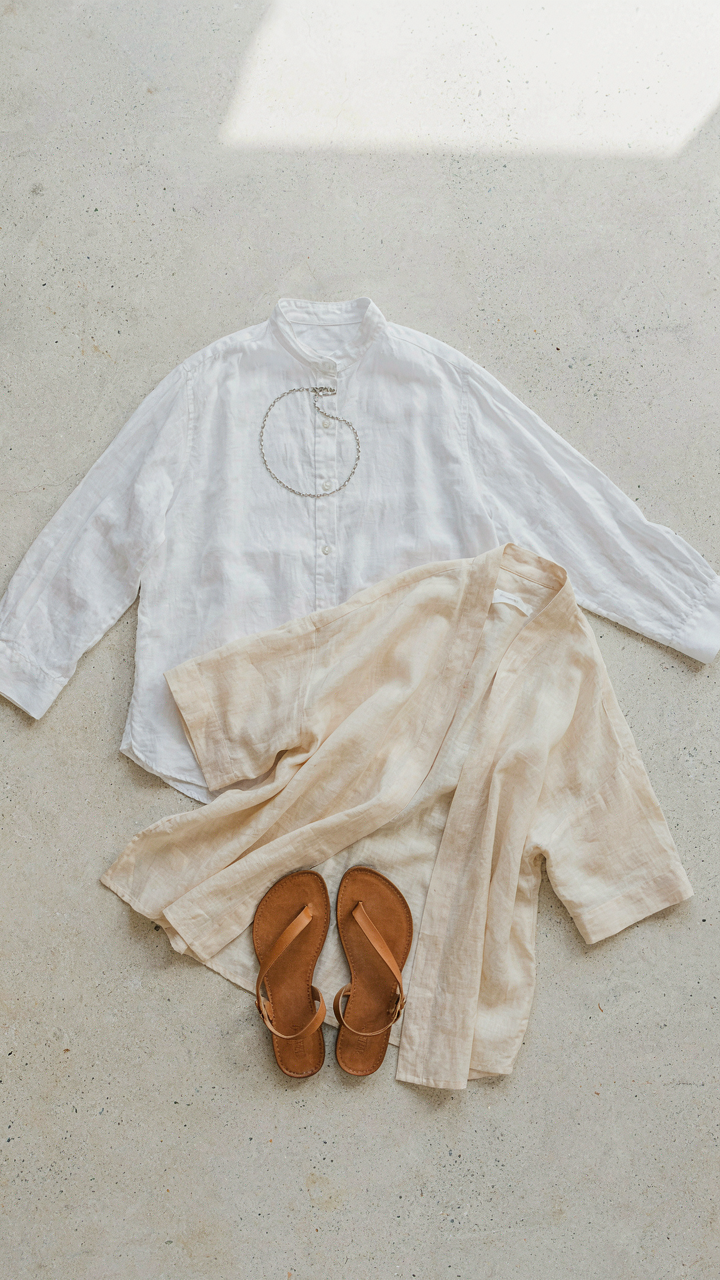
A white linen shirt works as the base. A lightweight overshirt and a simple necklace become your accents. Rotate those three across eight days. The constraint forces you to wash and rewear. You stop buying because the system works. This isn’t philosophy. It’s supply chain math applied to fabric instead of parts.
Beyond Resort Chic Outfits Women: The Fabric Intelligence

Natural Fibers Beat Marketing
You care about this section because you want permission to spend more money and feel smart about it. Here’s the mechanism: natural fibers operate on thermodynamic principles, meaning they regulate moisture and temperature through physical structure rather than chemical treatment. Cotton, linen, and silk have hollow or porous molecular chains that absorb and release sweat without trapping it against skin. This isn’t luxury positioning—it’s physics.
The reason minimalist summer outfits demand natural fibers comes down to longevity and compounding returns. A linen shirt worn forty times ages better than a synthetic equivalent worn the same number of times. Natural fibers don’t pill, don’t retain odor in the fiber itself, and don’t break down from repeated washing in the same way. You’re not buying fewer pieces because natural costs more; you’re buying fewer pieces because they actually last.
- Linen: Wrinkles intentionally, improves with washing, breathes more aggressively than cotton, ideal for layering pieces that need airflow.
- Cotton: Versatile across weight ranges, softens with age, holds dye cleanly, works as base layer or statement piece depending on weight.
- Silk: Temperature regulating in both heat and cold, smooth against skin reducing friction, expensive but rare in minimalist summer rotation so justifiable.
- Ramie and hemp blends: Stronger than cotton, reduce bacterial growth naturally, less common but superior longevity for basic shells and unstructured pieces.
- Linen cotton blends: Balance wrinkle resistance of cotton with breathability gains of linen, practical middle ground for pieces you wear repeatedly.
The compounding effect matters more than any single outfit. Natural fibers enforce constraint by refusing to hide poor fit or low quality. A poorly cut linen shirt announces itself immediately. Synthetics forgive sloppiness through stretch and sheen. In a minimalist system, that forgiveness is a liability because it lets you add pieces you don’t actually need.
Synthetics Serve One Purpose Only
Synthetics aren’t bad—they’re task-specific. The mistake everyone makes is treating them as default. Nylon and polyester excel at water resistance and UV protection, two actual mechanical functions. They don’t breathe like natural fibers, they trap heat, and they degrade faster under sun exposure than people assume. Most summer synthetics fail not because they’re cheap but because they’re applied to the wrong problem.
Use synthetics for one reason: when the garment must perform a job natural fibers can’t handle. A lightweight packable rain layer in nylon makes sense. A UV protection swim cover in polyester makes sense. A basic t-shirt in synthetic doesn’t—natural fibers handle that task better and last longer. The moment you start buying synthetic basics, you’ve stopped building a minimalist system and started accumulating replacements.
How To Style Silk Pants (And Other “Difficult” Staples)
Let Basics Do The Heavy Lifting
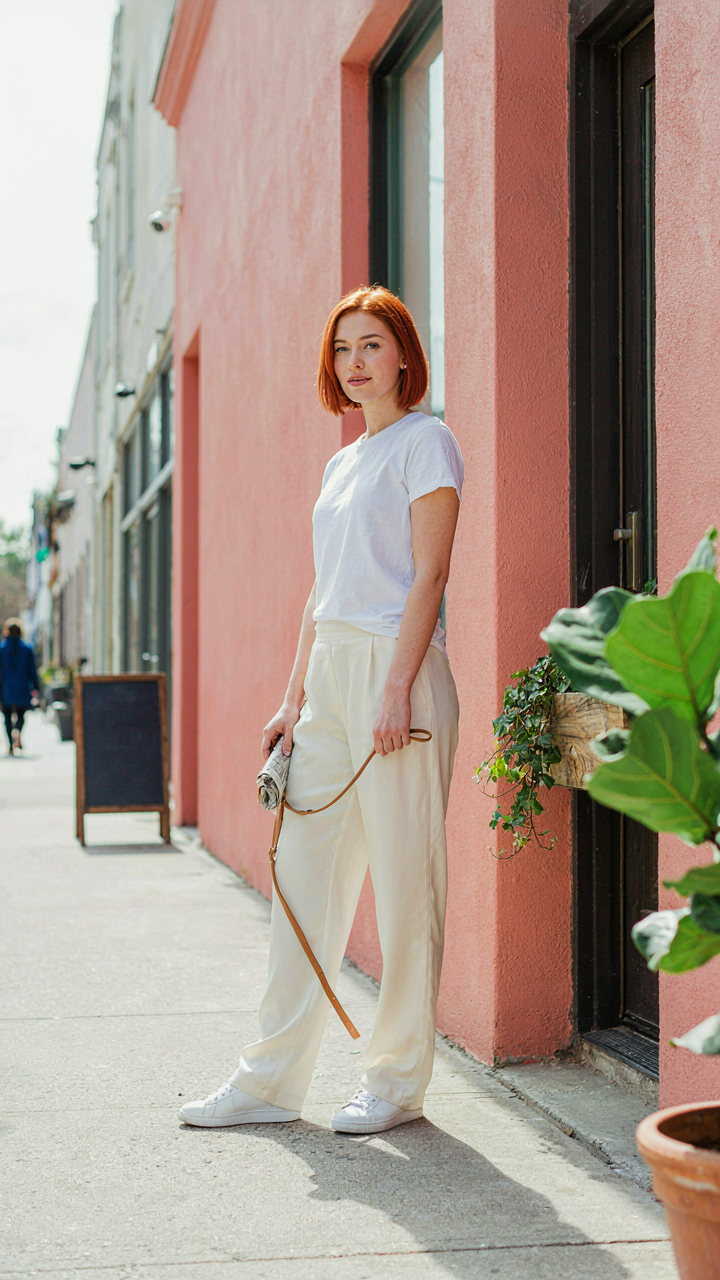
You’re worried silk pants look too expensive or too formal for casual wear. That’s the real concern. The mechanism is simple: a statement piece only reads as intentional when surrounded by restraint. Silk pants demand this contrast. Pair them with a plain white cotton tee or a basic linen shirt. The basics disappear. The silk becomes the only thing that registers. This is how you wear expensive-looking pieces without triggering the visual alarm that screams “trying too hard.”
The math here is counterintuitive. Most people add more pieces to justify a bold item. They layer it, accessorize it, style it into submission. Wrong move. Silk pants need white space around them. Wear them with a fitted white tee, neutral sneakers, and nothing else competing for attention. The outfit reads as clean, not costume. This is the actual rule expensive minimalists follow that nobody talks about plainly.
Restraint Multiplies Visual Impact
Accessories work like scarcity in economics. Every added piece reduces the relative value of every other piece. One gold ring stops traffic. Three gold rings become clutter. The moment you add a belt, a bag, and layered chains to silk pants, you’ve diluted the statement. You’ve turned it into decoration instead of design. Choose one accent piece. Let it breathe.
The practical protocol: pick silk pants, pick a neutral base layer, pick one accessory maximum. A single watch. A simple bag. A pair of sunglasses. That’s the frame. Anything beyond this creates visual noise that flattens the whole outfit. Restraint multiplies visual impact because your eye has nowhere else to land.
Chic Mom Outfits Summer: Practicality Meets Undeniable Presence

Fabrics That Actually Survive Contact With Reality
You want to look polished without constant maintenance because you’re afraid visible wear signals neglect. Here’s the mechanism: natural fibers with tight weaves resist pilling, staining, and degradation faster than loose-constructed synthetics. Linen wrinkles intentionally—it’s the fabric’s structure, not a flaw. Cotton-linen blends dry quickly after washing. High-quality jersey knits hold their shape through repeated wear and laundering. The cost per wear drops dramatically when a piece survives two summers instead of one.
Washability determines whether your outfit strategy dies in July or carries through August. Machine-washable fabrics in neutral colors hide sunscreen marks and playground dirt. Avoid anything requiring dry cleaning or hand-washing because you won’t maintain it consistently. Durable pieces reduce decision fatigue and the temptation to buy replacement items. Pick fabrics rated for 50+ wash cycles before visible degradation.
Layering As Thermal Regulation
Thermodynamics teaches us that temperature regulation depends on trapping or releasing air between layers. A minimalist summer wardrobe uses this principle instead of fighting it. One breathable base piece plus one lightweight cover-up handles morning chill, midday heat, and air-conditioned indoor spaces without carrying multiple outfits. Linen tanks paired with open overshirts solve this in two pieces instead of five.
The real win isn’t looking good in varied conditions—it’s moving through your day without constraint. Sleeveless bases retain flexibility in hot hours. Loose linen shirts or cotton cardigans layer effortlessly without adding bulk. Keep layers in the same color family so stacking them reads as intentional, not thrown together. Your outfit performs across a ten-degree temperature swing without requiring outfit changes.
Dinner Ideas Outfit: From Casual Comfort To Effortless Elegance

Dress Up A Core Piece With Intentional Accessories
You’re worried people will think you didn’t try. Here’s the mechanism: accessories don’t add complexity to minimalist outfits, they shift context. In semiotics, this is called a signifier swap. A plain linen shirt stays a linen shirt. Add a structured leather belt and a gold cuff, and the brain recodes the entire outfit as deliberate. The core piece doesn’t change. The signal does. Accessories aren’t decoration in minimalism, they’re the only variable that moves the needle on perceived effort.
The mistake most people make is treating accessories as additions instead of replacements. You don’t add a necklace and a bag and a watch and a ring. You swap one thing in. Wear the plain shirt with tailored trousers and a single gold pendant, or wear it with a woven leather belt and nothing else. The constraint forces intention. Remove the accessory and you return to baseline. That’s the power of the move. Pick one deliberate piece per outfit, not a collection of them.
Footwear: The Silent Determinant Of Formality
Shoes communicate formality faster than any other single element. People measure dress codes backward from footwear without knowing it. Wear a t-shirt and linen pants with canvas sneakers and everyone reads casual. Wear the same outfit with leather sandals or simple flat mules and it reads intentional. With a strappy sandal, it reads evening. With a structured heel, it reads formal. The outfit text stays static. The shoe determines the entire reading.
This is why minimalist summer dinner outfits collapse without the right footwear decision. A neutral linen shirt and neutral trousers have zero inherent formality. The shoe assigns it retroactively. For casual dinner, wear flat leather sandals or simple boat shoes. For elevated casual, wear a minimal mule or structured leather slide. For formal summer dinners, wear a thin-strapped sandal in metallic or neutral leather, or a low pump in suede. The shoe is the only piece doing the work. Choose it first, build backward.
Summer Trends Women: The Signal Vs. Noise Filter

What Actually Lasts Past August
You’re scanning trend reports because you’re afraid of buying wrong—of spending money on something that evaporates in two months and makes your outfit look dated. Here’s the mechanism: trends that survive are the ones solving a real problem, not the ones that look good in a photo. Fashion moves in cycles, but minimalism operates on a different axis. It rewards constraint, not novelty.
The items women actually wear year after year share one trait: they solve heat, movement, or silhouette problems without announcing themselves. Linen has survived because it breathes and wrinkles are expected. Neutral palettes endure because they compound—each piece works with everything else. Oversized cuts stuck around because they feel effortless and photograph well without trying.
- Linen and cotton blends: Breathable, wrinkle naturally, work across multiple seasons without feeling out of place in any one year.
- Neutral earth tones: Beige, cream, khaki, olive. They pair infinitely and never look like you’re chasing a specific trend.
- Loose, unfitted silhouettes: A-line skirts, straight-leg trousers, relaxed shirts. They solve the body-temperature problem without requiring a new body.
- Flat, minimal footwear: Leather sandals, canvas sneakers, simple loafers. They work with every outfit type and age gracefully.
- Oversized button-ups: Layer over tanks, wear solo, tie at the waist. One piece doing four jobs across seasons.
Micro-trends are the decorative layer—how you combine these core pieces. A trend might be “boxy proportions” or “statement sleeves,” but the base outfit underneath is always the same five pieces rotating. Track what solves problems. Ignore what just looks different.
Novelty Without Debt To It
Most advice says “add one trendy piece and balance it with basics,” which assumes you need permission to update. That’s backwards. You don’t integrate novelties—you audit whether they actually improve what you already wear.
A minimalist summer outfit works because each piece earns its space. If you own four white linen shirts and someone tells you cropped tanks are trending, the question isn’t “should I buy one?” It’s “does a cropped tank solve a problem my current pieces don’t?” If the answer is no, the trend is noise. If yes, it replaces something, not adds to it. The mechanism is replacement, not accumulation.
Summer 2026 will push certain proportions or fabric treatments. Your move is asking whether the core problem it solves is already handled. A new silhouette only matters if your existing clothes don’t work in the heat, don’t move right, or don’t fit your life. Keep the five pieces that do their jobs. Everything else is optional friction.
Women’s Fashion Summer: The Investment Mindset

Cost Per Wear: The True Measure Of Value
You want permission to spend money on clothes without feeling guilty about it. Here’s the mechanism that actually matters: cost per wear is borrowed from manufacturing economics, where throughput determines unit cost. Apply that logic to your closet. A forty-dollar linen shirt worn 60 times across three summers costs 67 cents per wear. A 120-dollar trend piece worn four times costs 30 dollars per wear. The math exposes what your gut already knows but won’t admit.
The mistake most people make is treating summer minimalism like deprivation instead of efficiency. You’re not buying less to punish yourself. You’re buying pieces that earn their place through repeated rotation. A neutral linen tank, a quality pair of shorts, and a lightweight overshirt compound in value every single time you reach for them. The investment mindset means you stop asking “Can I afford this?” and start asking “How many times will I wear this?”
Maintenance: Extending The Lifespan Of Your Chosen Few
Maintenance is preventive economics. Every piece you own shrinks your rotation pool, so each item must survive the full season. Linen wrinkles by design but doesn’t stain easily. Cotton blends hold color longer than pure cotton. Synthetic fabrics resist sun damage better than natural fibers but trap heat. Know what you own and what it requires. Washing in cold water, air drying, and storing garments flat prevents the degradation that forces replacement.
Most people ignore garment care until something breaks, then blame the piece instead of their handling. That’s backwards. A 60-dollar linen dress maintained properly lasts three to five summers. Thrown in a dryer and crammed in a drawer, it fails in one. The protocol is simple: hand wash or use a delicate cycle, dry flat or hang, fold loosely to prevent creasing damage. This turns your small collection into reliable infrastructure instead of disposable rotation.
Your Real Enemy Isn’t A Lack Of Clothes, But The Anxiety Of Appearing Unremarkable
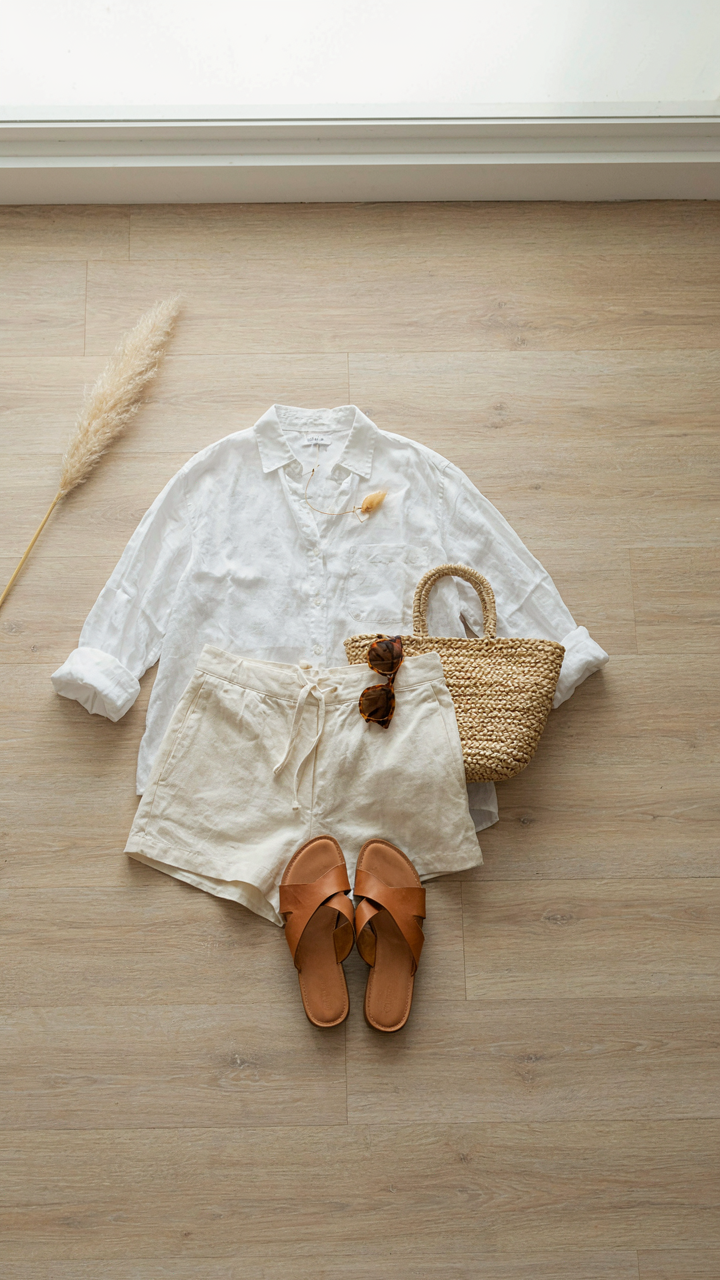
You don’t need more pieces. You need permission to stop performing. The minimalist summer outfit isn’t about looking cool with less. It’s about realizing that nobody remembers what you wore yesterday, but they remember how you moved through the room. Take three items from your closet right now. Wear them tomorrow. Notice how the mental space you freed up gets filled with actual confidence instead of outfit anxiety. Boring clothes worn with conviction beat interesting clothes worn with doubt.