

The Illusion Of Perfect Fit For Office Pants: Why It Holds You Back
The Myths That Waste Your Money
You’re looking for the magic fit because you’re terrified of looking unprofessional, and the fashion industry has weaponized that fear. The consensus says find your “true size” once and you’re done. That’s wrong. Your size changes seasonally, varies by fabric weight, and shifts based on how a brand cuts their patterns. A size 8 at one company is a size 10 at another. Chasing a fixed number is chasing nothing. What matters is how the pant sits on your actual body today.
The rise myth deserves direct attention. Fashion media pushes “mid-rise is flattering on everyone” as universal truth. It isn’t. Mid-rise works for specific torso-to-hip proportions. If you have a longer torso, mid-rise creates bunching at the waist and a shortened leg line. If you have shorter legs relative to torso length, it visually cuts you in half. The real mechanism: rise length is about where the waistband sits relative to your hip bone, not about what looks flattering in a magazine. Measure the distance from your natural waist to your hip bone, then find pants that match that measurement.
When Generic Advice Becomes A Trap

The anxiety isn’t random, it’s manufactured. Magazines and influencers sell fit as a personality problem: you just need more confidence, more body acceptance, more self-love. That’s gaslighting dressed up as empowerment. The actual problem is that clothing systems weren’t built to accommodate normal human variation. You’re not broken. The sizing infrastructure is.
This is why you end up with ten pairs of unworn pants in your closet. Generic advice tells you to “try things on” or “find what makes you feel good,” which sounds helpful but is operationally useless. You need a protocol instead. Measure your inseam from your natural waist to where you want the hem to hit. Document the rise measurement for cuts that work on your frame. Test new brands in one style first before buying multiples. Track which fabrics maintain structure versus stretching out after wear. The mechanism is specificity: the more variables you control, the fewer failed purchases you make.

Beyond Vanity: The Functional Imperatives Of Work Pants Women

How Movement Becomes Posture Becomes Credibility
You care about this section because you know, probably without saying it, that how you move in a room signals whether you belong there. The mechanics are simple: work pants either enable your natural range of motion or they constrain it. Biomechanics borrowed from athletic wear engineering shows that inseam length, rise height, and fabric stretch act as load distribution systems. Get any wrong and your body compensates with postural shifts that register as hesitation or fatigue to observers.
The common advice about “comfort” misses the actual mechanism. Comfort is output. The input is geometry. A rise that sits too low forces your pelvis into anterior tilt, which shortens your stride and rounds your shoulders forward. A rise too high locks your hips and makes sitting at a desk feel like containment. Optimal rise on work pants for women typically runs 9 to 11 inches, measured from the crotch seam to the waistband, because this centers your center of gravity above your legs rather than behind them. Test this by standing, walking ten steps, then sitting. If your posture changes between standing and sitting, your rise is wrong.
Fiber Longevity And The Cost Per Wear Equation
Fabric performance isn’t about thread count or thread names that sound impressive. It’s about fiber choice and weave density, which determine how fast the material breaks down under stress. Cotton blends perform differently than synthetic blends under repeated flexion and abrasion. A 65 percent polyester, 35 percent cotton blend resists wear better than pure cotton because polyester fibers have higher tensile strength and recover from compression faster. This matters because work pants worn three to five days per week in an office or active environment face constant micro-abrasion at the thighs, seat, and inseam.
Longevity scales directly with fabric weight measured in ounces per square yard. Work pants in the 9 to 10.5 ounce range last significantly longer than lighter weights because thicker fabric distributes impact stress across more fibers before any single fiber fails. Garment construction amplifies this: reinforced seams at stress points, proper thread tension during manufacturing, and gusseted crotches prevent tearing before fabric degradation becomes the limiting factor. To extend lifespan, wash in cold water, air dry, and avoid fabric softener, which coats fibers and accelerates pilling. Check the inseam and thigh area monthly for pilling or fraying. If pilling appears, the fabric is beginning its decline toward unwearability.
The “Adaptive Wardrobe” Protocol For Fitted Pants Women
Build Pants As System Components
You want work pants that feel tailored to you without the tailoring bill. Borrow from cybernetics: feedback mechanisms. A work pant functions as a modular component within a larger system—your actual work life, your body, your movement patterns. Most women treat pants as finished products. They’re not. They’re variables that require input.
The real leverage sits in treating a fitted pant as a base layer in a clothing system, not a standalone item. A pair of Banana Republic Sloan pants or Everlane’s structured trousers work because they accommodate adjustment. You can layer them differently, cuff them, tuck them, pair them with structured jackets or looser tops to shift how they read. The pant stays constant. Everything around it changes based on context.
Adjust Based On What Actually Happens
Most advice tells you to “invest in quality basics and build from there.” That’s incomplete. You adjust work pants in real time based on daily friction. Did the waistband dig during your afternoon meeting? Too tight. Did the fabric bag at the knees after sitting five hours? Wrong rise or cheap material. Did you move differently because the inseam was off by half an inch?
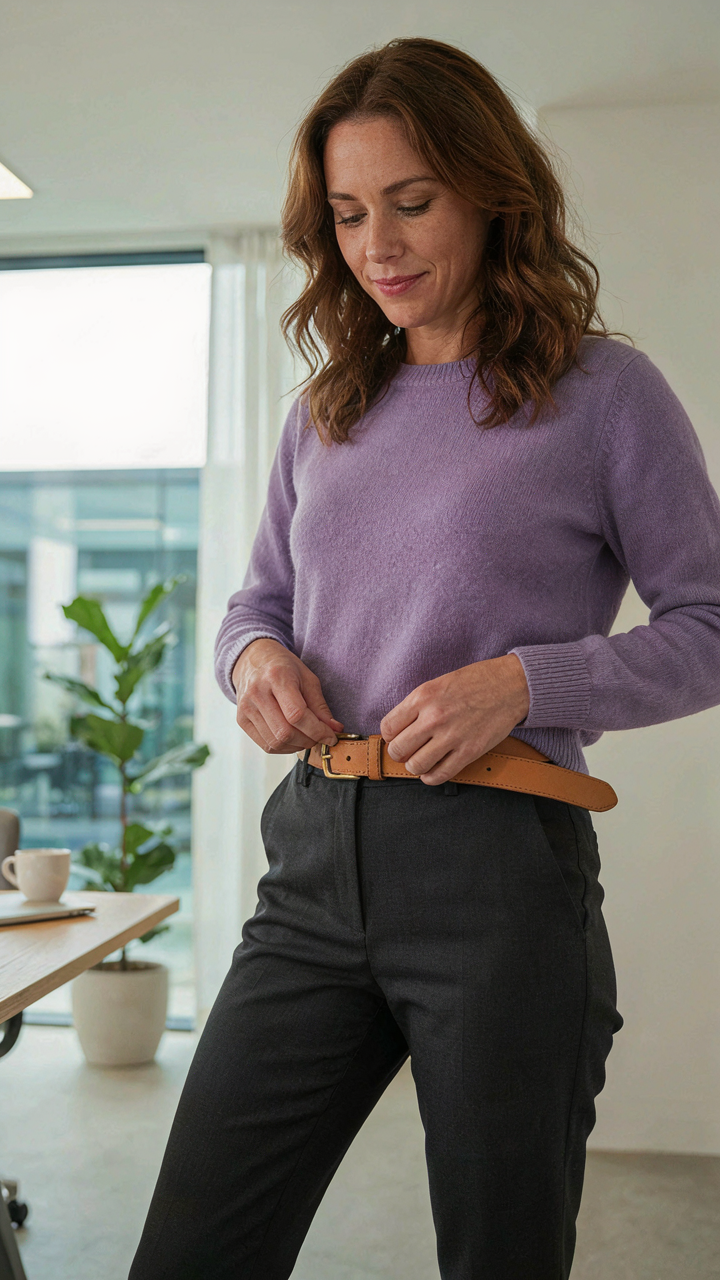
Map these observations into concrete changes: swap belt styles, experiment with tucking methods, test different shoe heights to recalibrate how the hem sits. Work pants that fit well don’t require perfection at purchase. They require a protocol. Wear them three times. Document what moves wrong. Adjust the variable you control. Repeat until the pant behaves like an extension of work, not an obstacle to it.
Deconstructing Business Casual Slacks: Fabric As Foundation
What Your Pants Are Actually Made Of
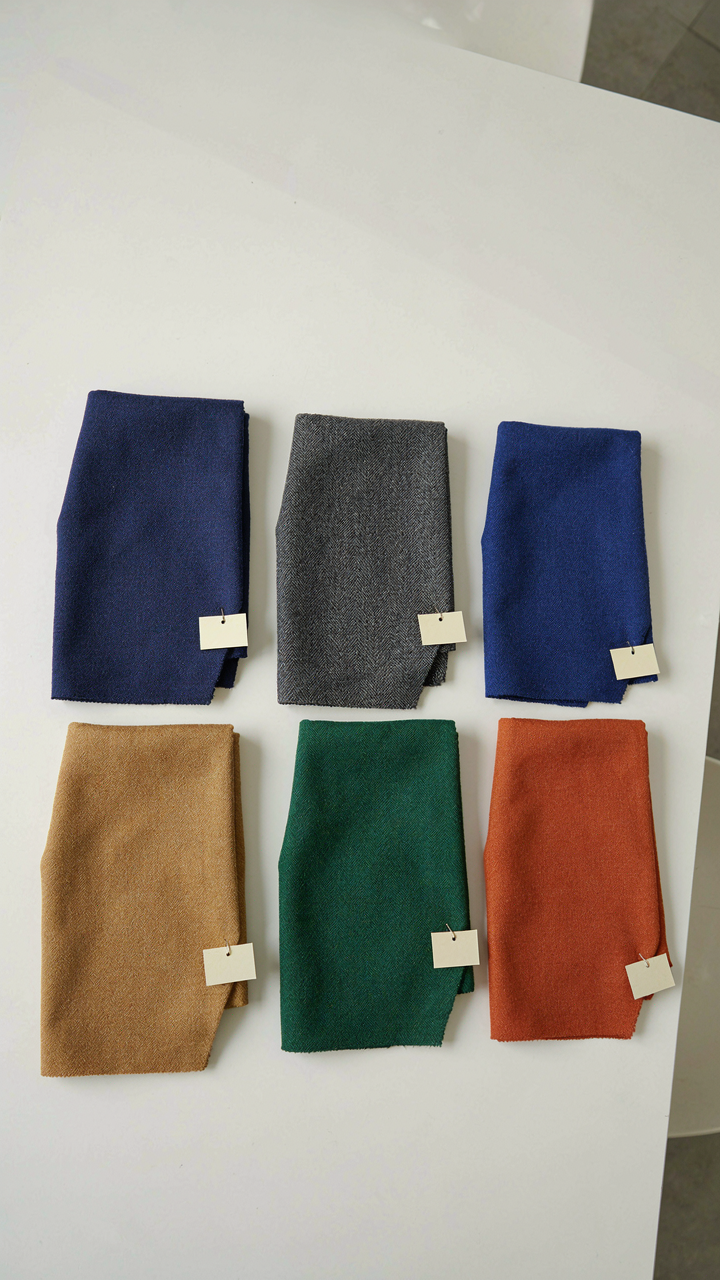
You care about this section because you don’t want to waste money on pants that fall apart or look cheap after three washes. Here’s the mechanism: fabric composition determines everything that follows—how the garment moves, how long it lasts, and whether it actually holds its shape under the stress of a workday. Cotton, polyester, wool, and their blends aren’t interchangeable. Each fiber has a tensile strength, a moisture absorption rate, and a recovery rate that dictate performance.
Most fabric labels list content as percentages, but retailers rarely explain what those percentages actually do. A 65/35 cotton-polyester blend behaves nothing like pure cotton because the synthetic fibers provide structure the natural fiber alone cannot maintain. The polyester molecules don’t absorb moisture like cotton does, which means sweat dries faster and the fabric resists wrinkling. Conversely, this same synthetic content reduces breathability and can trap heat against your skin. Understanding composition isn’t about preference—it’s about matching material behavior to your actual work environment.
Natural Fibers Versus Synthetics, No Debate
The common advice says natural fibers are always superior. That’s incomplete and keeps women buying expensive all-cotton pants that wrinkle by 10 AM and bag out by Thursday. Cotton breathes beautifully but has zero memory—it won’t snap back to shape after sitting all day. Polyester, conversely, resists wrinkles and holds its form but traps moisture. The real move is understanding that blends exist to solve this exact tension, not to cut corners.
A quality 55/45 cotton-polyester blend outperforms both pure fibers for work pants because it splits the difference: the cotton provides comfort and breathability while the polyester anchors the fabric’s structure and wrinkle resistance. Wool blends (typically 60 percent wool minimum) add durability and natural temperature regulation but cost more and require specific care. Your choice depends on climate, budget, and how many hours you spend sitting versus moving. The blend composition determines whether your pants look sharp at 5 PM or collapse by afternoon.
The Context First Method For Choosing Work Pants

Environment Determines Fit Tolerance
You’re hoping the right pants will fix a confidence problem you haven’t named yet. They won’t, but they will eliminate one variable: whether you’re dressed wrong for the room. Here’s the mechanism: different work environments enforce different tolerance levels for how pants fit. A law firm office has zero forgiveness for loose fabric or wrinkles. A creative agency tolerates slouch. A warehouse tolerates neither fit nor appearance. The pants that work in one context fail in another because the environment itself is making the judgment, not the pants.
Start by cataloging what people actually wear in your specific workplace, not what the handbook says they should wear. Observe the people three levels above you. Note whether pants break at the shoe, sit high or low, and whether anyone wears stretch blends or only natural fibers. This isn’t copying them. This is reading the real dress code that operates beneath the official one. Your pants must fit within the tolerance your environment allows, or they signal that you don’t belong there yet.
Movement Drives Practical Requirements
Most advice about work pants ignores what you actually do during a shift. You don’t stand in a mirror. You sit in meetings, walk between locations, reach for things on shelves, or bend to file documents. Each action demands different fabric behavior and panel construction. Sitting compresses the thigh and pulls the waistband. Walking stresses the inseam and heel area. Reaching requires shoulder mobility in a way that affects how the front rise sits. Bending loads the back panel and inner thigh.
Before buying, spend a single workday noting when your current pants feel wrong and where. Document it: does the waistband dig when sitting? Does the inseam pull? Does the back gap when you bend forward? These aren’t flaws in your body. They’re mismatches between the pants’ construction and your actual movement patterns. Buy based on what your job demands, not on what looks sharp standing still. The fit that survives your real workday is the only fit that matters.
The Unseen Value: Why Investing In Quality Work Pants Matters

The Math Behind Durability
You’re worried you’ll waste money on pants that don’t pan out. Here’s the actual mechanism: cost per wear is borrowed from economics, where you divide total spend by actual usage to expose true value. A 120 dollar pair worn 200 times costs 60 cents per wear. A 40 dollar pair that falls apart after 50 wears costs 80 cents per wear. The cheap option was never cheaper. Most people reverse this math because they only see the sticker price at checkout.
Quality work pants for women survive repeated washing, sitting, bending, and fabric stress that budget alternatives cannot handle. When fabric construction is weak, seams fail first. Waistbands lose elasticity. Zippers jam. You don’t get more years of wear. You get fewer months before replacement becomes mandatory, turning that “savings” into pure waste. Track actual wear days for any pants you own currently and calculate backward. The number will shock you into better decisions immediately.
Decision Fatigue Has A Real Cost
Most women own too many mediocre pants instead of a focused rotation of sharp ones, and this creates daily friction. Every morning you stand in front of a closet full of options that all fit poorly or look mismatched with your actual work style. You’re not choosing between pants. You’re choosing between versions of the same problem. Each choice burns mental energy. That depletion compounds through your day and into your work output.
Quality pants eliminate options by making each pair an obvious fit for specific contexts. You reach for the structured charcoal pair for client meetings. The navy chino for internal days. You spend zero energy on fit or appearance because that problem was solved at purchase. Your mental overhead drops. You make better decisions later because you didn’t waste decision capacity on clothing. Simplify your rotation to five well-fitting pairs maximum, rotating through them based on your actual work calendar, not impulse.
Beyond The Tag: How To Identify True Quality In Office Outfits

Where The Seams Actually Hold
You’re checking quality because you don’t want to look cheap, and you’re right to worry about that—but the real mechanism is durability disguised as aesthetics. Stitching is structural integrity. Weak seams fail under tension first at stress points: the crotch seam, inseam, and where the waistband attaches. A quality pair survives repeated wear cycles because the thread density and tension during manufacturing prevents fraying and separation.
- Inseam stitching: Should be a single, tight line with no gaps. Run your finger along it. Loose threads or skipped stitches mean the seam will split under normal movement within months.
- Crotch seam reinforcement: Quality work pants feature a box stitch or double-stitched X pattern here. Single stitching fails predictably in this high-stress zone regardless of fabric weight.
- Waistband attachment: Inspect where the waistband meets the body. Multiple parallel lines of stitching distribute stress. One thin line indicates cost-cutting that shows up as separation at the front rise.
- Hem stitching consistency: The hem should have even stitch length throughout. Uneven spacing signals rushed manufacturing and predicts unraveling after dry cleaning.
- Seam allowance width: Open the inseam slightly. Quality pants use wider seam allowances (half inch minimum) that allow for alterations and reduce splitting when fabric stretches.
Manufacturers cut corners on thread tension to speed production. When tension is too loose, the seam holds initially but fails after thirty to fifty wash cycles. Check by gently pulling opposite sides of a seam apart—quality stitching resists with clear tension, poor stitching separates with minimal force.
Hardware That Doesn’t Fail Mid Day
The zipper and button situation is where cheap work pants reveal themselves immediately. Most advice says “just check if it zips smoothly,” which misses the actual failure mechanism entirely. Zippers fail from metal fatigue and misalignment, not smoothness. A zipper that glides perfectly today strips its teeth under repeated cycles if the slider isn’t weighted correctly or if the fabric pucker underneath creates binding pressure.
Hardware quality correlates to cost of the metal itself. YKK zippers (the industry standard for reliable fasteners) have thicker sliders and better tooth spacing than unbranded alternatives. When the slider is too light or the teeth are stamped poorly, friction increases and the zipper seizes during normal use. Button attachment matters equally—buttons on quality pants use shank buttons with a thread-wrapped reinforcement underneath. The wrap distributes stress across more fabric surface, preventing buttons from tearing through under tension from sitting or bending.
The Minimalist’s Edge: Curating Essential Work Outfits Women

The Foundation Pieces That Do The Work
You want permission to buy less. That’s the real driver here. The mechanism is this: most women own too many pants that don’t work together because they treat each purchase as a standalone decision instead of a system. Borrow from inventory management—work pants need the same rotation principle warehouses use. You stock items that move, not items that sit. Two neutral trousers in different fabrics handle 80 percent of your weekly rotation. One pair in a structured wool blend for presentation days. One in a cotton-blend twill for regular operations. Both in black or charcoal.
The third piece is your variable. This is where you introduce one medium-tone neutral—olive, camel, navy, or gray depending on your industry and skin tone. This third pair solves the repetition problem without forcing you to think. You cycle these three pieces across five days minimum before washing. Most women buy a sixth pair they never wear because they didn’t engineer this rotation first.
Color Selection As A Filtering System
Forget the advice that says you need a rainbow. Wrong. Strategic color palettes operate like a filter in design systems—they eliminate decisions that don’t matter so you spend energy on decisions that do. Start with your workplace reality. Corporate finance demands blacks, navies, and grays. Creative agencies tolerate deeper tones but rarely require them. Tech companies have no dress code, which means you’re choosing colors for client meetings and internal presence, not compliance.
Pick your base color first—this is the shade that appears in 60 percent of your rotation. Then select one accent neutral that contrasts enough to feel intentional but doesn’t clash with any top you own. The third color works only if it lives in the same tonal family as your base. Mixing warm and cool undertones in your neutral pants creates visual friction that reads as indecision, not style. Buy all three pairs in the same brand and fit line so you don’t debug sizing across three different fit models.
Casual Office Clothes For Women: Blurring Lines, Not Standards

Comfort Without Surrendering Authority
You want permission to stop dressing formally without losing respect. The real mechanism is fabric recovery—how fast material returns to its original shape after movement. Structured fabrics hold authority signals longer than limp ones. When pants maintain their silhouette through sitting, standing, and reaching, they signal control. Stretch blends in work pants aren’t luxury; they’re the engineering that lets you move like a human while looking intentional. Cotton-elastane blends at 2 to 4 percent elastane recover faster than pure cotton. This isn’t comfort versus professionalism. It’s the physics of fabric memory solving the false choice.
Fit matters more than fabrication label. A well-fitted pant in ponte or cotton-elastane blend reads as deliberate even in relaxed cuts. The authority doesn’t come from stiffness; it comes from precision. Brands that cut with defined waistbands, tapered ankles, and structured seat panels maintain visual weight regardless of softness. Casual doesn’t mean sloppy construction. It means removing unnecessary bulk while keeping the shape intact. Fit the pants to your actual proportions first, then layer comfort on top.
Integrating Casual Into Professional Environments
Consensus says “just wear neutrals and nobody notices.” Wrong. People notice immediately. What they don’t react to is consistency. Smart casual integration requires one rule: replace formality signals with clarity signals. Instead of rigid structure, use clean lines. Instead of muted tones, use intentional color contrast. A charcoal pant paired with a crisp ivory shirt reads professional because the eye moves smoothly between them. The casualness isn’t the pant; it’s the absence of ornament.
Start by testing environments before committing to a style. Wear the casual pant once and observe what happens. No one commented or treated you differently? You’ve found your baseline. This is your starting point for expansion, not your ceiling. Build backward from there. If tailored blazers appear in your space, add one. If everyone wears sweaters, layer differently. The mechanism is observation then incremental adjustment. Don’t try to rewrite dress codes through boldness. Blend in by being cleaner and more intentional than the status quo.
The Daily Look Box: Assembling Your Go To Work Uniform

Building Combinations That Actually Work
You want this section to solve the real problem: decision fatigue masquerading as choice. The mechanism is constraint. In economics, binding constraints force efficiency. With work pants, your constraint is the number of tops and shoes you already own. Most women treat pants as independent pieces. They’re not. A pair of pants succeeds only inside a system of other clothes you wear repeatedly.
Start by identifying which three to five tops you wear most often. Then buy pants that work with all of them. This sounds obvious. It isn’t. Most buying happens in reverse: you find a pant you like, then scramble to find tops that match. You end up with orphaned pieces that create friction every morning. Reverse the priority. Pants are the base layer of your system. Everything else orbits them.
Rotation Patterns That Keep Pants Performing
The real advice about maintaining work pants ignores a simple fact: wear patterns matter more than wash frequency. A pant worn once per week and washed every four wears lasts longer than a pant worn daily and washed weekly. The fibers recover between wears. If you rotate three pants across a five-day week, each pant works only two days per week, giving fibers recovery time between uses.
Build your rotation around the fabric’s recovery window, not an arbitrary wash schedule. Most quality work pants in cotton blends need three days to fully recover their shape. That means five pants gives you true rotation. Four creates overlap stress. Six is excess inventory for most people. Wash every four wears regardless of the day count. This timing keeps the fabric stable and prevents color fading from over-washing.
The Real Obstacle Isn’t The Pants; It’s Your Outdated Understanding Of Professional Presentation In A Dynamic World

Most women still dress for the office their mothers worked in, not the one they actually inhabit. You think fit matters more than it does. You think looking “professional” means disappearing. It doesn’t. Today, go try on three pairs of work pants that actually make you move without thinking about moving. Buy the pair that makes you feel like you own the room, not the one that makes you invisible. Comfort and confidence aren’t luxury items anymore, they’re professional requirements.